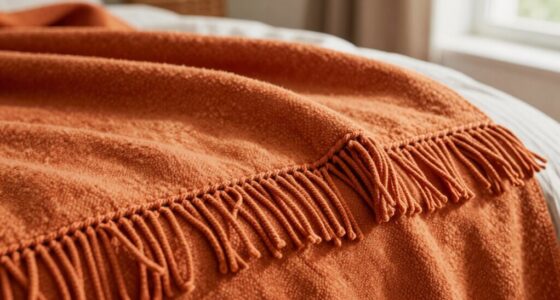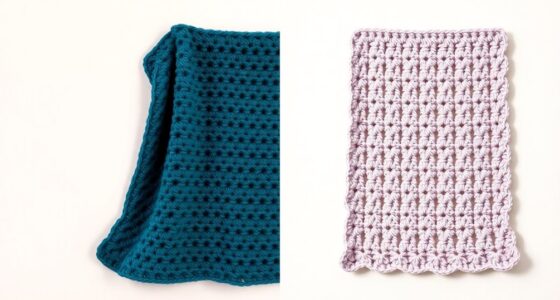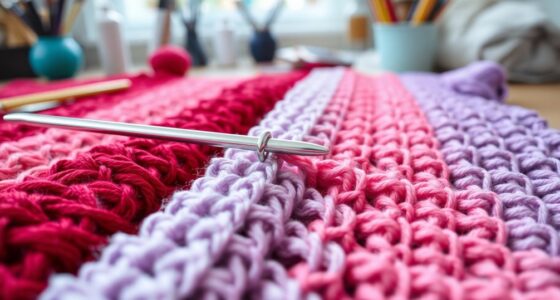

To get started with Tunisian crochet, choose smooth, evenly spun yarns that glide easily through your hook, making it easier to maintain consistent tension. Use a hook size suited to your yarn for neat stitches, and hold the yarn with a steady, comfortable grip. Practice slowly, adjusting tension as needed to create even fabric. Patience and regular practice will help you master this versatile technique—keep going to discover more ways to create textured, beautiful projects.
Key Takeaways
- Choose smooth, evenly spun yarns that glide easily through your hook for better stitch formation.
- Select an appropriately sized hook matching your yarn weight to maintain consistent tension.
- Practice holding the yarn with a steady, comfortable tension to achieve even, uniform stitches.
- Start with simple Tunisian stitch patterns, gradually exploring more complex stitches as confidence grows.
- Maintain patience and practice regularly to develop muscle memory and improve your Tunisian crochet skills.
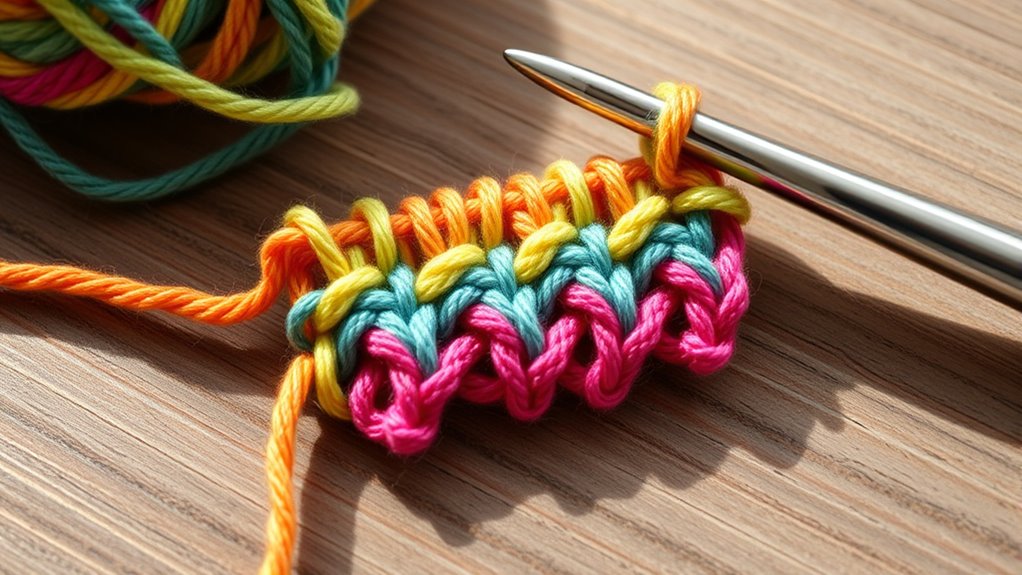
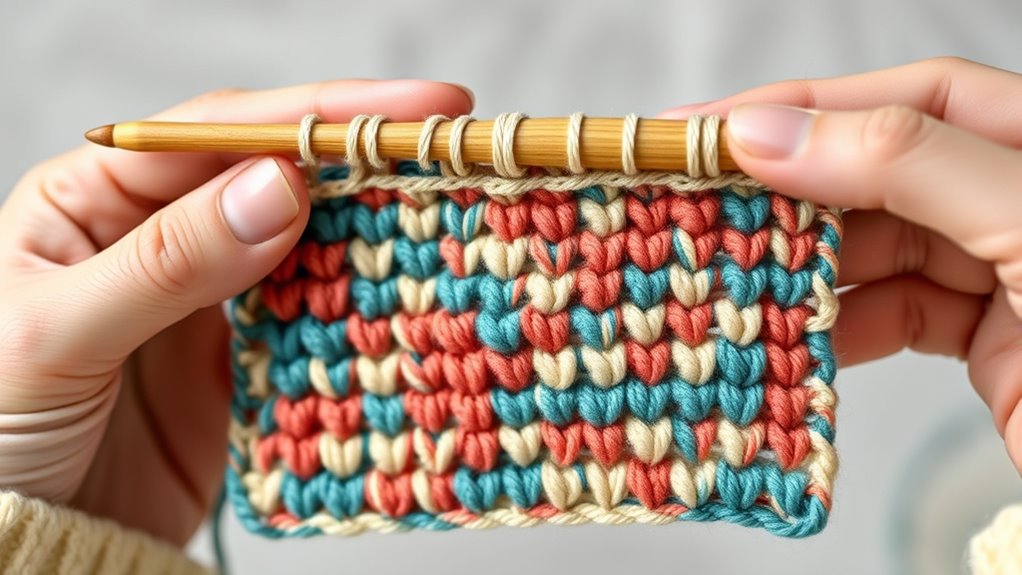
Tunisian crochet is a unique knitting technique that combines elements of crochet and knitting to create textured, dense fabrics. When you’re just starting out, one of the most important decisions you’ll make is selecting the right yarn. Look for yarns that are smooth and evenly spun, as these will glide easily through your hook and help you maintain consistent stitches. Natural fibers like cotton, wool, or blends work well because they provide good stitch definition and are easy to work with. Avoid overly fuzzy or textured yarns initially, since they can make it harder to see your stitches clearly and keep your tension even. As you progress, you can experiment with thick, chunky yarns or variegated colors to add visual interest to your projects.
Another key aspect to focus on early on is stitch tension. Maintaining consistent tension is essential for creating even, professional-looking fabric. When you hold the yarn, try to keep it at a comfortable, steady tension—neither too tight nor too loose. If your tension fluctuates, your fabric will become uneven, and your stitches might look irregular. Practice by working slowly at first, paying close attention to how tightly you pull the yarn through each stitch. Over time, your hand will develop muscle memory, and keeping a uniform tension will become second nature. It’s helpful to periodically check your work, pulling gently to see if your stitches are uniform in size and tightness. If you notice your stitches are too tight and difficult to work into, loosen your grip slightly; if they’re too loose and floppy, tighten your hold gently.
When beginning your Tunisian crochet journey, don’t rush. Take the time to experiment with different yarns and tension levels to find what feels most comfortable and produces the best results for you. A good rule of thumb is to keep your stitches slightly *more relaxed* than you might in traditional knitting, ensuring that your fabric remains flexible and even. Using a hook size that matches your yarn is also essential—if your stitches are too tight, switch to a larger hook; if too loose, try a smaller one. Additionally, choosing a comfortable grip can help improve your control and reduce fatigue during longer sessions. Remember, the key to mastering Tunisian crochet lies in patience and practice. With consistent effort and attention to yarn selection and stitch tension, you’ll develop the skills needed to create beautiful, textured projects that showcase this versatile technique.
Top picks for "tunisian crochet introduction"
Open Amazon search results for this keyword.
As an affiliate, we earn on qualifying purchases.
Frequently Asked Questions
What Types of Yarn Are Best for Tunisian Crochet?
You should choose yarn fiber options like wool, acrylic, or cotton for Tunisian crochet, as they offer good grip and stitch definition. Suitable yarn weights include worsted or DK, which provide manageable thickness and ease of handling. Avoid very fine or bulky yarns, as they can be tricky to work with. Select smooth, consistent yarns to guarantee even stitches and a beautiful finished project.
How Do I Choose the Right Tunisian Crochet Hook Size?
Sure, choosing the right Tunisian crochet hook size feels like rocket science, but it’s simpler than it sounds. You should pick a hook that matches your yarn weight, and don’t forget to take into account the hook material and ergonomic design for comfort. A larger hook makes loose stitches, while a smaller one tightens your work. Opt for a comfortable grip and a material that suits your style—metal, wood, or plastic.
Can Tunisian Crochet Be Used for Clothing and Accessories?
Yes, you can definitely use Tunisian crochet for clothing and accessories. It creates a dense, textured fabric perfect for stylish scarves, sweaters, and trendy bags. By exploring various Tunisian crochet patterns, you can craft fashionable accessories that stand out. Its versatility allows you to make everything from cozy garments to chic accessories, giving your wardrobe a unique, handcrafted touch. So, grab your hook and start designing your wardrobe staples today!
Are There Beginner-Friendly Tunisian Stitch Patterns?
Yes, there are plenty of beginner-friendly Tunisian stitch patterns. You should start with simple stitch patterns like the Tunisian knit and purl stitches, which are easy to learn and perfect for practice. Look for beginner tutorials online that guide you step-by-step. These tutorials help you master the basics quickly, making your first projects enjoyable and successful. Once comfortable, you can explore more intricate patterns.
How Do I Fix Common Mistakes in Tunisian Crochet?
Did you know that nearly 60% of Tunisian crocheters face tension issues? To fix common mistakes, start by fixing tension issues; loosen or tighten your yarn to achieve even stitches. When correcting dropped stitches, use a crochet hook to carefully pick them back up, ensuring your fabric stays consistent. Practice patience—over time, you’ll master tension control and easily fix mistakes, making your projects look professional.
Conclusion
So, now you’re practically a Tunisian crochet pro—no big deal, right? Just think, after all that fussing with stitches, you’ll be the envy of everyone who’s still stuck with boring old crochet. Who knew that turning a simple hook into a magic wand could be so addictive? Get ready to wow your friends with your new skills—because, honestly, who wouldn’t want to be the coolest crocheter around? Happy hooking!