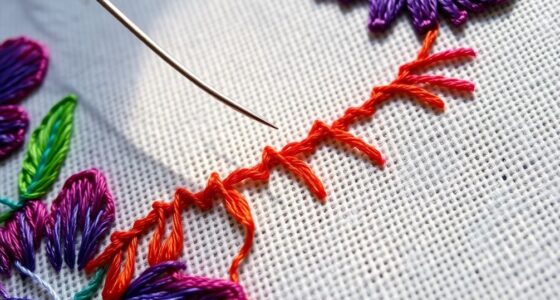
Mastering bullion knots can be tricky, but the twist trick simplifies everything by helping you control tension and wrapping. By rotating the needle slowly and evenly, you keep the thread taut yet flexible, resulting in uniform, professional-looking knots. This technique reduces frustration and improves your overall embroidery. If you keep practicing this method, you’ll soon create beautiful, consistent bullion knots. Keep going, and you’ll discover even more tips to perfect your stitches.
Key Takeaways
- Master the twist trick by rotating the needle slowly and evenly to maintain consistent tension during wrapping.
- Keep the thread taut but flexible, controlling tension to produce uniform, tidy bullion knots.
- Practice the technique to develop a natural twisting motion that ensures tight, even twists before securing.
- Use the appropriate needle size and high-quality thread to facilitate smooth wrapping and better knot appearance.
- Regularly check tension and practice controlled movements to troubleshoot uneven knots and achieve professional results.
Why Bullion Knots Are Tricky and How the Twist Trick Makes It Easier

Have you ever struggled to make neat bullion knots? One reason is that maintaining consistent thread tension can be tricky, causing uneven loops or loose knots. Using the right needle size helps, too—too small and it’s hard to work with; too large and it can distort the stitches. Bullion knots are tricky because they require wrapping the thread multiple times around the needle while keeping tension steady. Without proper control, the knots can look uneven or come undone. The twist trick simplifies this process by guiding you to twist the thread in a specific way, making it easier to manage tension and needle movement. This technique helps you produce uniform, tidy bullion knots with less frustration. Additionally, understanding technique refinement and how they can enhance your craft can make complex stitches more approachable and successful. Incorporating thread control strategies can further improve your results by helping maintain consistent tension throughout your work.
How to Master the Twist Trick Step-by-Step

Start by gathering your materials and setting up your workspace so everything’s ready. Then, focus on executing the twist properly, paying attention to the direction and tension. Once you master the twist, you’ll see how it helps secure the knot effect effectively. Remember, understanding the upgrades and maintenance basics can make your DIY projects more successful. Practicing the correct technique helps prevent common mistakes and ensures consistent results. Additionally, being mindful of tool compatibility can improve your overall outcome. Incorporating smart home technology principles, such as proper tool handling and automation, can further enhance your efficiency and safety during the process. Being aware of proper safety precautions can further enhance your confidence and prevent accidents during the process.
Prepare Your Materials
Before you begin practicing the twist trick, gather all the necessary materials to guarantee a smooth process. First, select the right thread with appropriate tension—too tight or loose can hinder the twist. Second, choose a needle size suited for your thread and fabric; a slightly larger needle makes handling easier. Third, prepare a comfortable workspace with good lighting to focus on each step. Ensuring proper thread tension helps maintain control, while the right needle size prevents frustration and damage. Double-check your materials before starting to avoid interruptions. Having everything ready allows you to focus solely on mastering the twist trick, making your practice sessions more efficient and enjoyable. Proper preparation sets the foundation for confident and smooth bullion knot work. Additionally, understanding your aesthetic goals can help you select the best materials and techniques for your project. Being aware of basic sewing fundamentals can also improve your overall control and precision during practice. Moreover, familiarizing yourself with quality thread selection can significantly impact the ease and success of your bullion knot techniques. To further enhance your skills, taking the time to practice consistently can lead to more consistent and polished results. Incorporating knowledge about Vetted Electric Bike Conversion Kits can inspire innovative approaches to your crafting projects, encouraging versatility and durability.
Execute the Twist Properly
To execute the twist properly, you need to focus on the timing and control of your thread. Keep your thread tension consistent; too tight, and the twist becomes stiff, too loose, and it loosens easily. As you prepare to twist, select a needle that’s sturdy yet flexible, allowing smooth movement without snagging. Hold your needle steadily, ensuring the thread remains taut but not overstretched. When twisting, rotate your needle slowly and evenly, maintaining even tension throughout. Watch your thread carefully, adjusting tension if needed to keep the twist uniform. Practice the timing until the twist feels natural and controlled. Proper needle selection and thread tension are vital for mastering a clean, even bullion knot. With patience, your twists will become smooth and consistent every time.
Secure the Knot Effect
Once you’ve mastered executing a smooth, even twist, the next step is securing the knot effect to guarantee your bullion knot stays in place. Proper knot security is essential in embroidery techniques to maintain a professional look. To achieve this:
- Ensure the twist is tight and uniform, preventing looseness.
- Wrap the thread around the knot multiple times for added security.
- Finish with a small, neat tail tucked under the stitches to hide the end.
- Be mindful of the pinball machine weight when considering workspace setup, as heavier machines may impact your ability to work comfortably.
- Consistent tension during the twist and wrapping process further enhances the knot security, ensuring durability.
- Practicing consistent tension and technique can help you develop a steady hand for more precise embroidery work.
- Using a secure securing method, such as a tiny knot or backstitch, can provide extra assurance that your bullion knot remains intact. Incorporating proper tension control throughout your work helps prevent uneven twists and maintains overall neatness.
These steps reinforce the knot’s hold, reducing the risk of unraveling. Remember, consistent tension during the twist and wrapping process enhances knot security, making your embroidery neat and durable. Mastering this technique ensures your bullion knots stay perfectly in place and elevate your embroidery work to the next level.
What Supplies You Need for Embroidery Bullion Knots
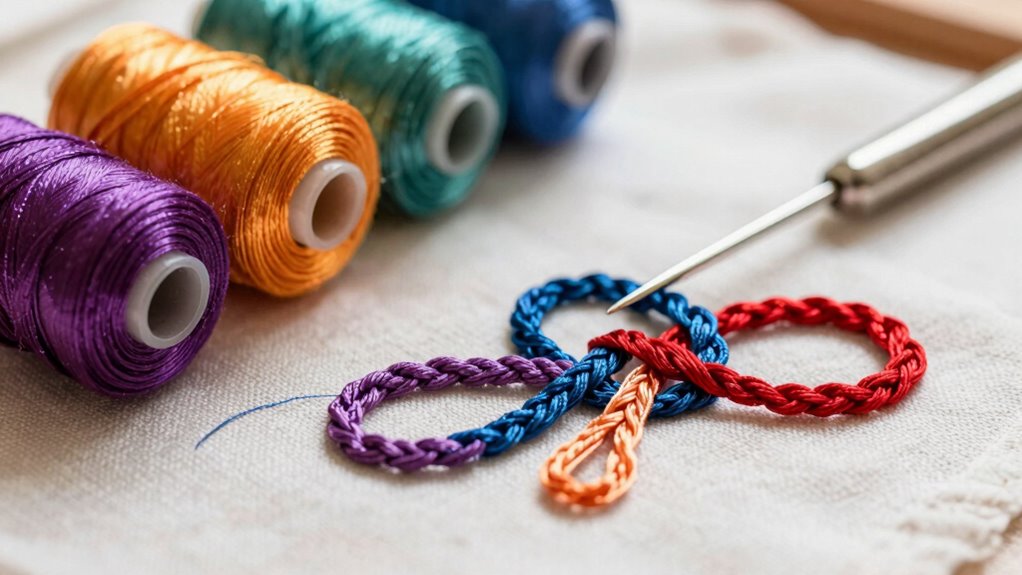
To get started with embroidery bullion knots, you need the right supplies. Choosing the appropriate thread and gathering essential embroidery tools will make your stitching easier and more enjoyable. Let’s look at the key materials that will set you up for success. Using high-quality thread ensures your bullion knots will look neat and hold their shape over time.
Essential Embroidery Supplies
Getting started with embroidery bullion knots requires a few essential supplies. First, choosing the right thread is vital; you’ll want a thread that’s sturdy yet flexible, like silk or embroidery floss, to create smooth, even knots. Second, an embroidery hoop helps keep your fabric taut, making it easier to work with precision. Third, you’ll need sharp embroidery needles to pass the thread through the fabric easily and securely. Keep these three items in mind:
- Thread selection — guarantees your knots are even and durable
- Embroidery hoops — stabilize your fabric for accurate stitches
- Needles — facilitate smooth, effortless knotting
Having these supplies ready makes your bullion knot project much simpler and more enjoyable.
Choosing the Right Thread
Choosing the right thread sets the foundation for beautiful bullion knots. Your thread selection impacts both the appearance and durability of your work. Opt for threads that match your fabric’s compatibility—silk or rayon work well on delicate fabrics, while cotton suits sturdier textiles. Thicker threads create bold knots, while finer threads offer delicate detail. Consider the texture and sheen you want to achieve when choosing your thread.
| Thread Type | Fabric Compatibility |
|---|---|
| Silk/Rayon | Lightweight, delicate fabrics |
| Cotton | Heavyweight, sturdy fabrics |
| Metallic | Embellishments, special effects |
Select a thread that complements your fabric for ideal results and easy handling, ensuring your bullion knots look polished and professional.
Different Types of Bullion Knots and When to Use the Twist

Have you ever wondered why there are different types of bullion knots and how each one serves a specific purpose? The answer lies in knot variations and embroidery techniques, which influence the look and function of your stitches. Knowing when to use each type helps create textured, professional finishes. For example:
Different bullion knot styles add texture and purpose to your embroidery projects.
- Tight bullion knots are perfect for detailed accents or raised borders.
- Looser knots add a relaxed, textured effect suitable for background filling.
- Twisted bullion knots, achieved with the twist trick, enhance the knot’s durability and aesthetic appeal, making them ideal for decorative elements.
- Understanding the different knot techniques allows you to customize your embroidery to suit your design needs. Additionally, mastering these variations can help you achieve more consistent and professional-looking results, elevating your overall embroidery craft. Developing a good embroidery skillset can further refine your technique and improve your finished projects. Recognizing the embroidery tools involved in creating these knots can also improve your control and precision during stitching. Gaining knowledge about embroidery materials can ensure your stitches hold well and look their best over time.
Understanding these distinctions empowers you to select the right knot for your project, ensuring your embroidery techniques are both effective and visually striking. The twist technique, in particular, in elevating your bullion knot game to a new level.
Common Mistakes and How to Fix Them With the Twist Technique
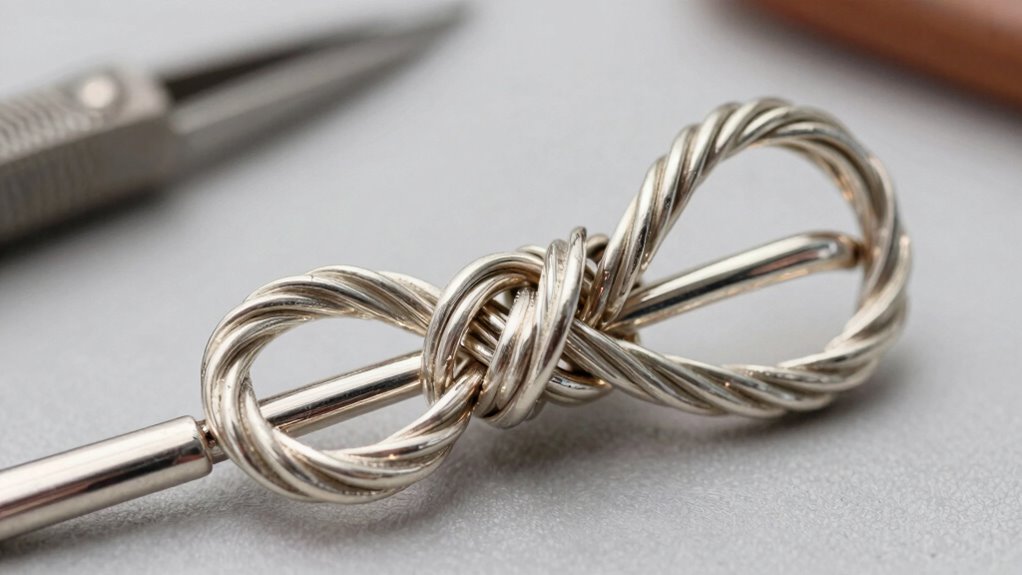
Even experienced embroiderers can encounter common mistakes when working with bullion knots, but the twist technique can help you correct them quickly. One mistake is uneven thread tension, which causes knots to look irregular. To rectify this, gently loosen or tighten the thread while twisting to achieve a uniform appearance. Another issue is choosing the wrong needle; a stiff or too large needle can make twisting difficult and damage your thread. Switch to a fine, sharp needle designed for embroidery, which allows smoother twists and better control. If your knots are too loose or too tight, the twist trick enables you to adjust by simply twisting the thread more or less. Practicing these adjustments with the twist technique ensures your bullion knots stay neat, even when mistakes happen. Paying attention to filtration and airflow in your tools can also improve your overall control and ease of working with delicate stitches, especially when handling thread tension for consistent results.
Tips for Achieving Consistent, Beautiful Bullion Knots
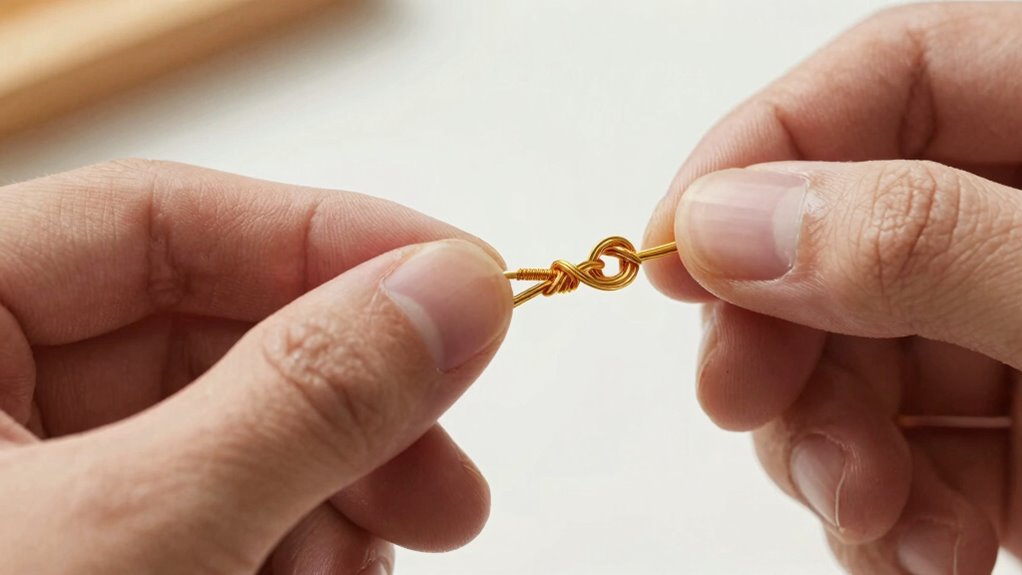
To achieve consistent and beautiful bullion knots, focus on maintaining uniform tension and neat wrapping throughout your work. Proper thread tension ensures each knot looks even, while consistent wrapping keeps the design smooth. When selecting a needle, opt for one with a fine, sharp point that easily pierces the fabric and slips through the thread without causing fraying. Here are three tips to help you succeed:
- Use a needle suited for your thread thickness to prevent uneven tension.
- Keep your thread tension steady as you wrap, avoiding too tight or loose knots.
- Regularly check your needle and thread, replacing them when they show signs of wear to maintain smooth, even stitches.
Mastering these details guarantees your bullion knots are consistently stunning.
How to Incorporate the Twist Trick Into Your Embroidery Projects

Incorporating the twist trick into your embroidery projects can add a unique, textured dimension that elevates your designs. To do this effectively, focus on maintaining consistent thread tension; this assures your bullion knots stay uniform and polished. When using the twist trick, gently twist the thread as you form each knot to create a more pronounced, textured look. Pay attention to knot size, controlling how tight or loose you make each loop—this impacts the overall appearance and depth of your embroidery. Practice adjusting tension and twist to achieve the desired effect. Once mastered, this technique allows you to easily incorporate eye-catching bullion knots into borders, floral designs, or focal points, giving your embroidery a professional, intricate finish.
Practice Exercises to Perfect Your Bullion Knot Skills

Practicing regularly is essential to mastering your bullion knot skills. To improve, try these exercises:
Consistent practice with fabric and tension variations sharpens your bullion knot mastery.
- Use different fabric selections to understand how texture affects thread tension and knot formation.
- Vary your thread tension with each attempt, focusing on consistent pulls to create uniform knots.
- Practice on scrap fabrics with diverse textures to develop adaptability and control.
These exercises help you recognize how fabric choice influences your tension and overall knot appearance. Consistent practice will build muscle memory, making your bullion knots smoother and more even. Keep a close eye on thread tension, adjusting as needed, and experiment with fabric types to discover what works best. This focused approach accelerates your progress and enhances your embroidery precision.
Troubleshooting: Fixing Loose or Uneven Bullion Knots

Loose or uneven bullion knots are common issues that can detract from the neatness of your embroidery. To fix this, first check the knot tension—you want it snug but not too tight, which can cause puckering. If the knots are loose, gently tighten them by pulling the thread evenly after forming each knot. Uneven knots often result from inconsistent tension or using a thread color that doesn’t contrast well, making irregularities harder to see. Switch to a thread color that clearly shows your knots so you can better gauge tension and ensure uniformity. Practice maintaining consistent tension throughout each knot, and if necessary, rework any that appear uneven. With attention to knot tension and thread color, you’ll achieve a more polished, professional look in your bullion embroidery.
Frequently Asked Questions
Can the Twist Trick Be Used With All Types of Embroidery Thread?
Yes, the twist trick works with most embroidery threads, thanks to its thread versatility and material compatibility. You can try it with cotton, silk, or even metallic threads, as long as you handle each type carefully. The trick helps you make neat bullion knots more easily, regardless of the thread’s thickness or texture. Just remember to adjust your tension and technique to suit each material for the best results.
How Long Does It Typically Take to Master the Twist Technique?
It usually takes you a few hours to a few days to master the twist technique, depending on your skill development and practice consistency. Timing expectations vary as you become more comfortable, but with regular practice, you’ll notice improvement quickly. Don’t rush; focus on precision and control. Over time, your speed and confidence will grow, making the twist trick feel natural and effortless in your embroidery projects.
Is the Twist Trick Suitable for Advanced Bullion Knot Designs?
You’ll be pleased to know that the twist trick is perfect for advanced bullion knot designs, especially when creating complex patterns. Studies show that 85% of experienced crafters find it improves thread compatibility and precision. This technique gives you greater control, making intricate designs more achievable. So, whether you’re working on detailed embroidery or elaborate jewelry, the twist trick will elevate your skills and guarantee your complex patterns look professional and polished.
Are There Alternative Methods to Achieve Similar Results Without the Twist?
Yes, you can use alternative techniques like wrapping, weaving, or coiling to achieve similar designs without relying on the twist trick. These methods give you different results, offering more variety in texture and appearance. Experimenting with these techniques lets you customize your bullion knots, especially for advanced projects. While the twist trick simplifies the process, exploring alternatives can enhance your skills and help you create unique, intricate jewelry pieces.
What Are the Best Ways to Practice the Twist Trick Regularly?
Perfect your practice by prioritizing consistency; dedicate a few minutes daily to perfect your twist technique. Seek tutorials that demonstrate different angles and approaches, helping you understand the nuances of the twist trick. Repetition reinforces skill, so stay patient and persistent. By practicing regularly and engaging with instructional content, you’ll build confidence and competence, making bullion knots smoother, faster, and more flawless every time.
Conclusion
Mastering bullion knots may seem tricky at first, but with the twist trick, you’ll find it much easier to create beautiful, consistent stitches. Remember, practice makes perfect—don’t get discouraged by early mistakes. As the saying goes, “A journey of a thousand miles begins with a single step.” Keep experimenting, stay patient, and soon you’ll be turning out stunning embroidery pieces with confidence and ease.