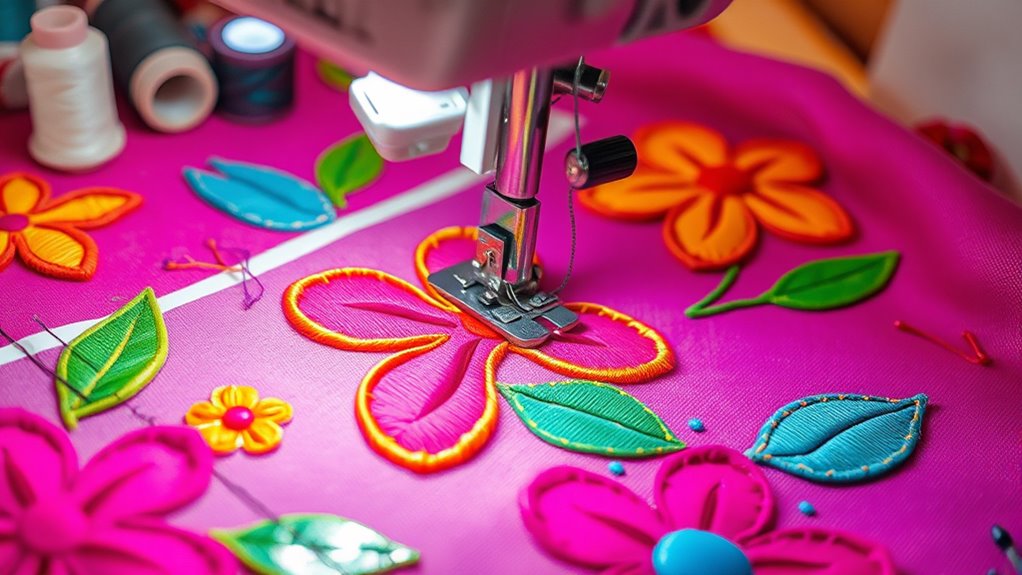
To use your sewing machine for appliqué designs, first select lightweight, tightly woven fabrics that feed smoothly through your machine. Use decorative stitches like satin or zigzag for finishing edges, adjusting the stitch width and tension as needed. Secure shapes with fusible web or pins, and control your machine’s speed for precision. Practice controlling stitch length and stitch style to create clean, professional-looking designs—if you keep exploring, you’ll discover more tips to perfect your appliqué skills.

Get business pricing on tools and workshop supplies
- Business-only prices and quantity discounts
- Tax-exempt purchasing
- Multiple users, one account, clear invoices
Key Takeaways
- Select appropriate lightweight, tightly woven fabrics and pre-wash to prevent shrinking and puckering.
- Use fusible web or adhesive to secure shapes before stitching for stability.
- Choose decorative stitches like zigzag or satin, adjusting width and length to match fabric and design.
- Control machine tension and speed for clean, precise appliqué edges and consistent stitching.
- Finish edges with narrow stitches or decorative patterns, and match threads for a seamless professional look.
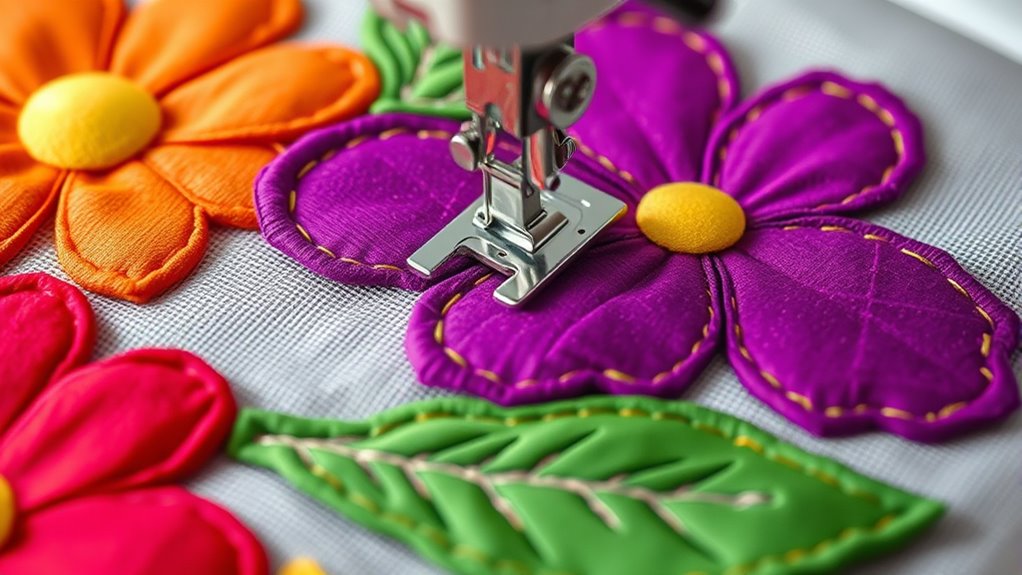
Machine appliqué is a popular quilting technique that allows you to add decorative shapes and designs quickly and precisely. Whether you’re embellishing a quilt top or creating intricate wall hangings, mastering machine appliqué can elevate your sewing projects. The first step is understanding how to select the right fabric. When choosing fabrics for appliqué, opt for lightweight, tightly woven materials like quilting cotton, which feed smoothly through your machine and adhere well. Consider contrasting fabrics to make your shapes pop or coordinating colors for a more subtle effect. Pre-washing your fabrics helps prevent shrinkage and warping after completing your project. Additionally, using fabrics with similar fiber content ensures even sewing and reduces puckering. Once you’ve settled on your fabric choices, you can focus on the decorative stitches, which truly define your appliqué work.
Your sewing machine’s decorative stitches are your best friends in appliqué. Many machines come with built-in stitch patterns specifically designed for applique edges, such as zigzag, satin, or decorative stitches. These stitches secure the raw edges of your fabric shapes while adding visual interest. Before starting, test your stitches on scrap fabric to see how they look and adjust the stitch width and length as needed. For a clean finish, select a narrow zigzag or satin stitch that closely follows the shape’s edge. You can also experiment with decorative stitches that mimic hand-stitched details for a more textured look. When stitching, keep your fabric flat and use plenty of pins or fabric clips to prevent shifting. Use a matching or contrasting thread based on your design intent. If you want a seamless look, choose a thread color that blends with your fabric, but for a bold statement, select a contrasting thread that highlights your stitching.
To further enhance your appliqué, consider using a fusible web or double-sided adhesive to temporarily hold your shapes in place before stitching. This simplifies the process and reduces puckering. As you sew around your shapes, keep a consistent seam allowance to maintain uniformity. Some sewists prefer a narrower zigzag stitch for delicate edges, while others opt for a wider stitch to create a more textured border. With practice, you’ll learn to control your machine’s stitch tension and speed for cleaner results. Remember, the key to successful machine appliqué lies in fabric selection and utilizing decorative stitches effectively—these elements work together to produce beautifully finished, professional-looking designs that showcase your creativity and sewing skills.
As an affiliate, we earn on qualifying purchases.
Frequently Asked Questions
Can I Use a Basic Sewing Machine for Complex Appliqué Designs?
Yes, you can use a basic sewing machine for complex appliqué designs, but it depends on its capabilities. If your machine has zigzag or decorative stitches and good control, you can manage intricate patterns. However, higher machine complexity with features like free-motion embroidery or multiple stitch options makes handling detailed appliqué easier. Assess your machine’s features carefully, and practice on scrap fabric before tackling your main project.
What Type of Thread Works Best for Machine Appliqué?
You’ll find that polyester thread works best for machine appliqué because it’s strong, smooth, and versatile. For seamless results, choose thread color coordination that matches or complements your fabric, depending on your desired look. Using high-quality thread minimizes tangling and guarantees durability, especially with intricate designs. Coincidentally, matching your thread to your fabric allows your appliqué to blend in beautifully or stand out, giving you control over your finished piece.
How Do I Prevent Puckering During Appliqué Sewing?
To prevent puckering during appliqué sewing, start by adjusting your machine’s tension—lower it slightly if puckering occurs. Use a stabilizer suited for your fabric; a lightweight tear-away or cut-away stabilizer provides extra support. Always test on scrap fabric first to find the right tension and stabilizer combination. Keep your stitches even and slow down your sewing speed for better control and smoother appliqué results.
Is Fusible Web Necessary for Machine Appliqué Projects?
Fusible web is like a trusty sidekick for your appliqué projects, making your work smoother. It’s not always necessary, but it’s highly recommended because it provides fabric stiffening and keeps your pieces in place. Using fusible web simplifies your process, reduces puckering, and guarantees cleaner edges. Without it, you might struggle with shifting fabric, making your appliqué look less polished. So, consider fusible web for professional, crisp results.
Can I Appliqué on Stretchy or Delicate Fabrics?
Yes, you can appliqué on stretchy fabrics and delicate textiles, but you need to be careful. Use a sharp, stretch or ballpoint needle to prevent snipping the fibers. Stabilize the fabric with lightweight, fusible interfacing or a tear-away stabilizer to avoid puckering. Sew slowly and use stretch stitches or a narrow zigzag to allow flexibility. This way, your appliqué stays smooth and secure on delicate or stretchy materials.
Conclusion
Now that you know how to use your sewing machine for appliqué, you’re ready to create stunning designs. Imagine turning a plain pillow into a vibrant masterpiece with a cheerful sunflower appliqué—just like Jane did for her living room décor. With practice, you’ll confidently customize projects and bring your ideas to life. So grab your fabric and machine—your next beautiful appliqué is just a stitch away!
Fall Picks
fall essentials
As an affiliate, we earn on qualifying purchases.