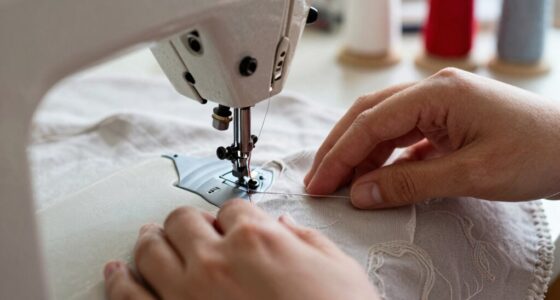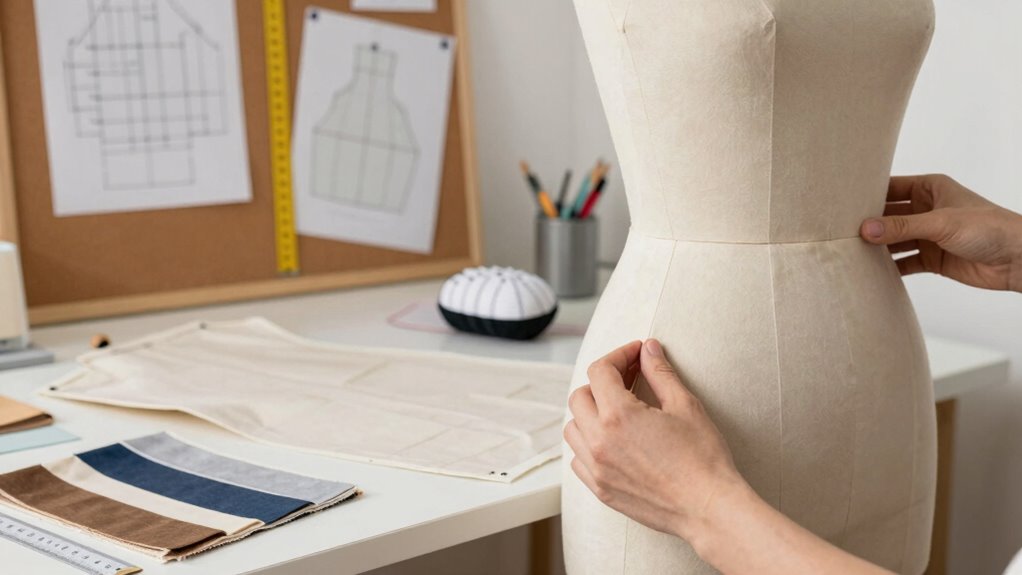
Before blaming your pattern for fit issues, check your fabric choice—it should match the pattern’s recommended weight and drape. Make certain you’re using consistent seam allowances and proper pressing techniques, which help stitches lie flat and shapes stay accurate. Verify your fabric grain is aligned correctly to prevent distortion. Often, fit problems stem from fabric or sewing errors, not the pattern itself. Keep exploring for more tips to achieve a perfect fit.

Get business pricing on tools and workshop supplies
- Business-only prices and quantity discounts
- Tax-exempt purchasing
- Multiple users, one account, clear invoices
Key Takeaways
- Verify that the fabric matches pattern recommendations for weight, drape, and fiber content.
- Ensure proper grain alignment and that the fabric is cut on-grain to prevent distortion.
- Check seam allowances are consistent and correctly sewn according to pattern instructions.
- Confirm that appropriate sewing techniques, including pressing and needle selection, were used.
- Consider fabric stretch and stability to address potential fit issues before blaming the pattern.
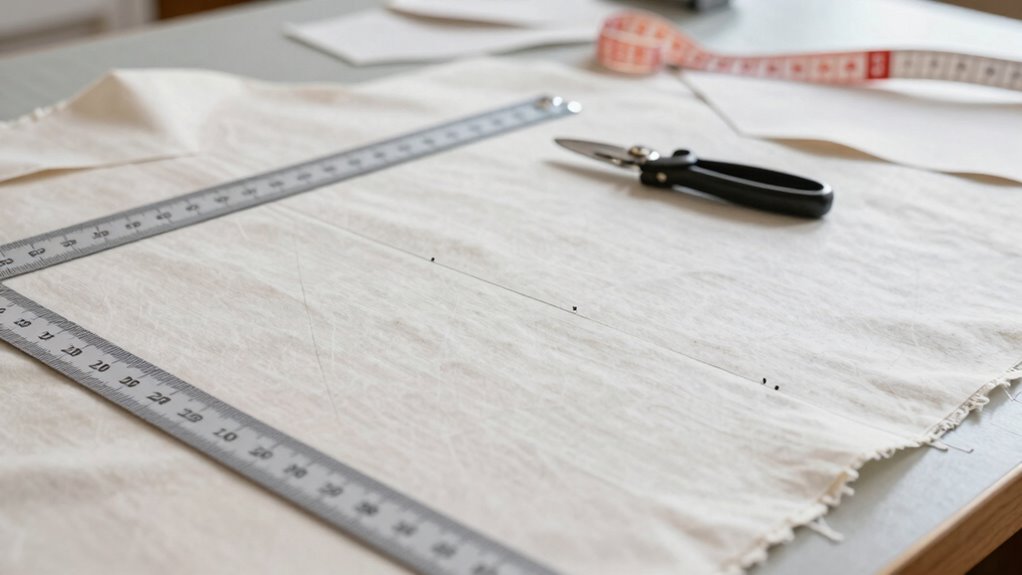
When your garment doesn’t fit quite right, it’s tempting to blame the pattern, but often the issue lies elsewhere. Before you toss your pattern aside, take a step back and examine other factors that could be causing the problem. First, consider your fabric selection. The type of fabric you choose has a significant impact on how your finished garment will turn out. If you’re working with a fabric that’s too stiff, too stretchy, or not stable enough, it can distort the fit or make it difficult to sew accurately. For example, using a fabric with excessive stretch in a fitted pattern can result in a garment that feels snug when you try it on, but then stretches out over time. Conversely, a fabric that’s too stiff might create a stiff silhouette or cause puckering along seams. Always match your fabric choice to the pattern’s recommendations, paying attention to weight, drape, and fiber content. This small step can save you from fit issues that aren’t the pattern’s fault.
Next, review your sewing techniques. Even the best pattern can produce poor results if it’s sewn with inconsistent seam allowances, improper finishing, or incorrect pressing. When you sew, pay close attention to seam allowances, ensuring they match the pattern instructions precisely. Skipping or altering seam allowances can lead to fit issues, especially in areas like the bust, waist, or hips. Also, take time to press your seams properly—pressing helps set the stitches and ensures the fabric lies flat, which directly influences how the garment fits. Using the right needle and thread for your fabric is equally important; a mismatched needle can cause skipped stitches or fabric puckering. If you’re new to sewing techniques, practicing on scrap fabric first can help you master the necessary skills before working on your final project. Additionally, understanding how fabric characteristics influence your sewing outcomes can help you troubleshoot fit issues more effectively. Recognizing how fabric stretch and stability affect construction can make a big difference in achieving a proper fit. Being aware of grain alignment is also crucial, as sewing off-grain can lead to skewed or misfitted garments. Moreover, understanding how fabric grain impacts the drape and fit can further refine your sewing process.
fabric weight and drape for sewing
As an affiliate, we earn on qualifying purchases.
As an affiliate, we earn on qualifying purchases.
Frequently Asked Questions
How Do Fabric Stretch and Recovery Affect Fit?
Fabric stretch and recovery directly impact fit by allowing garments to conform to your body and regain shape after movement. Understanding fabric composition helps you predict stretch percentage, which influences how well the fabric fits and moves with you. If the stretch percentage is too high or recovery is inadequate, your garment may feel loose or baggy over time. Consider these factors to guarantee a comfortable, well-fitting piece that maintains its shape.
Can Sewing Techniques Influence the Final Garment Fit?
Imagine your sewing machine as a skilled artist’s brush, shaping every stitch. Yes, sewing techniques influence your final garment fit. By adjusting pattern alterations and tweaking sewing machine settings—like stitch length and tension—you refine the fabric’s dance. Precise stitching guarantees seams lay flat and contours hug your body perfectly. Small changes in technique can transform a loose or tight fit into a beautifully tailored piece, elevating your sewing craft.
What Role Does Body Shape Play in Pattern Fitting?
Your body shape considerably impacts pattern fitting because body proportions and posture variations influence how garments fit and move. If your proportions differ from standard measurements, the pattern may need adjustments to accommodate shoulder width, bust, or hip size. Posture issues like slouching or uneven shoulders can also cause fit problems. To improve fit, consider customizing patterns based on your unique body shape and working on posture corrections.
How Do Seam Allowances Impact the Fit Adjustments?
Seam allowance adjustments are essential for fine-tuning your fit. By adding or reducing seam allowances, you can make precise pattern alterations using pattern alteration techniques. This allows you to take in or let out fabric without compromising the original design. Proper seam allowances give you the flexibility to improve fit comfortably, ensuring your garment contours perfectly to your body while maintaining the pattern’s integrity.
Should I Consider Pattern Size Grading for Better Fit?
Yes, you should consider pattern grading for better fit, especially if you notice size inconsistencies across different sizes. Pattern grading guarantees size consistency and accurate fit by adjusting pattern dimensions proportionally. This process helps prevent fit issues when sewing different sizes and guarantees a more tailored, comfortable garment. Incorporating pattern grading into your sewing routine improves overall fit and makes it easier to customize patterns to your body shape.
Conclusion
Before blaming your pattern for fit issues, remember that even the best design can falter if misjudged. It’s frustrating to face these setbacks, yet each mistake is a chance to learn and grow. Instead of giving up, embrace the process—perfection isn’t instant. When you check your fabric, measurements, and sewing techniques, you’re building resilience. Ultimately, patience transforms flaws into mastery, turning frustration into pride. Your journey from doubt to confidence is what makes your craft truly meaningful.
Halloween Picks
halloween
As an affiliate, we earn on qualifying purchases.