
To achieve crisp topstitching, you need consistent tension, sharp needles, and high-quality thread. Keep your fabric flat and handle it steadily while sewing. Avoid rushing, as it can lead to puckering or uneven stitches. Properly adjusting tension and choosing the right needle and thread make a big difference. Small technical details can transform your sewing from homemade to professional. Stick around to discover more tips that can elevate your stitches even further.

Get business pricing on tools and workshop supplies
- Business-only prices and quantity discounts
- Tax-exempt purchasing
- Multiple users, one account, clear invoices
Key Takeaways
- Proper thread tension keeps stitches even and flat, enhancing a crisp appearance.
- Using high-quality, sharp needles prevents skipped stitches and uneven topstitching.
- Matching thread type and color to fabric results in a professional, polished look.
- Consistent sewing speed and smooth fabric handling produce clean, straight stitches.
- Attention to detail and precise adjustments elevate topstitching from homemade to professional quality.
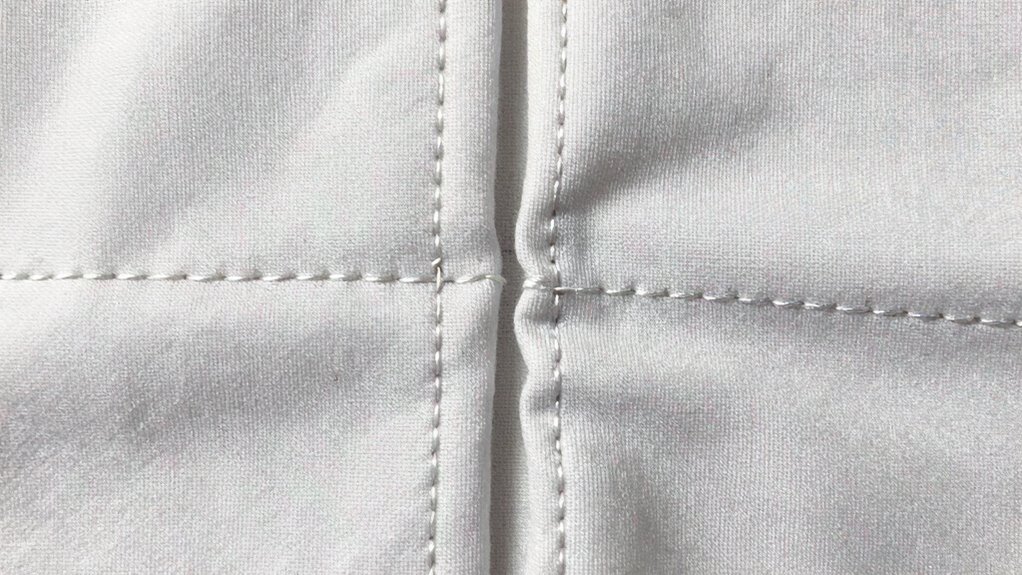
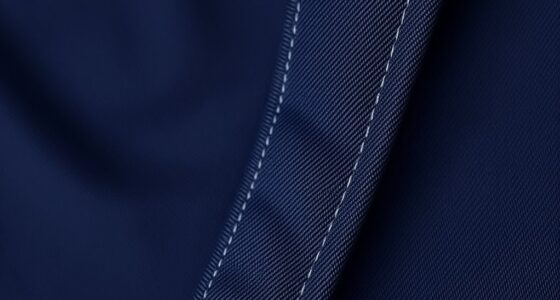
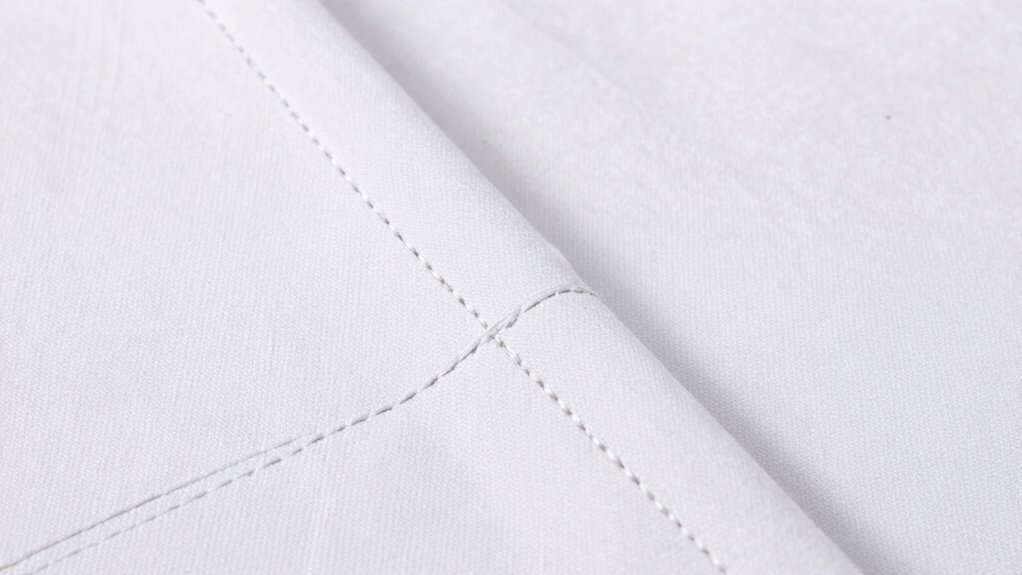
Topstitching can instantly elevate a garment’s appearance, but not all topstitching looks professional. If you want crisp, polished topstitching that enhances your sewing projects, paying attention to a few key details makes all the difference. Two of the most important factors are thread tension and needle quality. When these elements are properly adjusted and selected, your topstitching will look clean and consistent, giving your finished piece a professional touch. If not, the stitches can appear uneven, puckered, or sloppy, making even well-constructed garments look homemade.
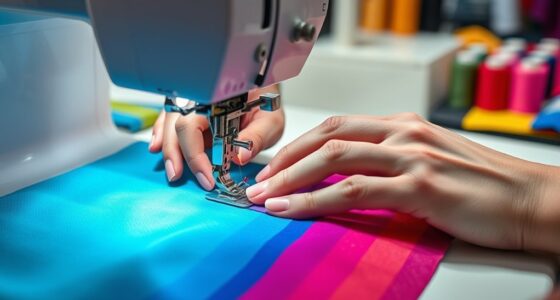
First, consider your thread tension. Correct tension ensures that your stitches sit neatly on the surface of the fabric without puckering or loose loops. Too tight, and the fabric pulls, causing puckering; too loose, and the stitches look loose and uneven. Adjust your tension dial gradually, testing on scrap fabric before working on your actual project. Achieving the right tension helps create a uniform row of stitches that sit flat and look intentional. It’s a subtle adjustment but crucial for a crisp finish. Using a tension gauge can help you more precisely set the tension for consistent results.
Proper thread tension is key for neat, flat topstitching that looks professional.
Next, focus on needle quality. Using a sharp, high-quality needle suited to your fabric type is essential. A dull or inappropriate needle can cause skipped stitches, uneven stitching, or damage to the fabric. For example, a finer needle works better on lightweight or delicate fabrics, while a sturdier needle is ideal for heavy denim or thick layers. When your needle is in good condition, your stitches will be more precise and even, contributing to a crisp appearance. Regularly changing your needle after every few projects or every few hours of sewing prevents issues like skipped stitches and uneven tension.
Additionally, your choice of thread matters. Opt for a high-quality thread that matches the fabric and provides smooth, consistent stitches. Using inexpensive or low-quality thread can lead to breakage, uneven tension, and a less professional look. When you combine the right thread with proper tension and a good needle, your topstitching will be even, straight, and sharp, elevating the overall quality of your garment. Proper thread management also plays a vital role in achieving a polished finish.
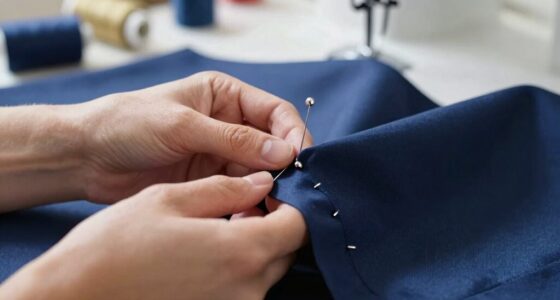
Finally, maintaining a steady sewing speed and keeping your fabric taut but not stretched also contribute to a crisp look. Move the fabric smoothly under the needle, and avoid rushing — this helps maintain even tension and stitch consistency. Paying close attention to your sewing technique and fabric handling can make a significant difference in the final appearance. When you pay attention to these details—thread tension, needle quality, and sewing technique—you’ll find that topstitching transforms from a simple finishing touch into a hallmark of your sewing skill.
As an affiliate, we earn on qualifying purchases.
Frequently Asked Questions
What Types of Thread Produce the Crispiest Topstitching?
For the crispiest topstitching, you should choose a strong, smooth thread like poly or polyester. These thread types provide better tension and a sharper finish. Opt for a fine thread thickness, such as 50 weight, for precise, crisp stitches. Consider thread color choices that contrast sharply with your fabric to make the topstitching stand out. Avoid thick or textured threads, which can look bulky and less professional.
How Does Fabric Choice Affect Topstitching Appearance?
Ever wonder why your topstitching varies in crispness? Your fabric choice plays a big role. Smooth, tightly woven fabrics like denim or twill give you sharp, clean stitches, while textured or stretchy fabrics can make stitches look uneven or homemade. Also, consider fabric textures and color contrast—using a contrasting thread on a plain fabric enhances topstitching, making it pop, while similar colors can hide imperfections, giving a more professional look.
Does Sewing Machine Tension Impact Topstitching Quality?
Yes, sewing machine tension impacts topstitching quality. If your tension is too tight or too loose, your stitches won’t lay flat or look even. Adjust your tension to match your thread color and fabric, and test with different stitching speeds. Using a consistent stitching speed helps maintain even tension, ensuring your topstitching looks crisp. Proper tension control results in professional-looking, durable topstitching every time.
What Role Does Needle Size Play in Topstitching?
Using the right needle size affects your topstitching’s appearance by ensuring smooth stitching and even tension. A larger needle can handle thicker thread color choices and longer stitch lengths better, preventing puckering. Conversely, a smaller needle works well with fine thread and shorter stitch lengths for a crisp look. Always match your needle size to your thread color and stitch length to achieve professional, crisp topstitching that enhances your project’s finish.
How Can I Fix Uneven or Puckered Topstitching?
Think of your topstitching as a river flowing smoothly. To fix uneven or puckered stitches, slow your stitching speed to give your fabric time to settle. Use thread color coordination to hide imperfections, and keep your fabric taut but not stretched tight. Practice maintaining consistent tension and stitch length. These steps help your stitching glide like a calm river, resulting in a crisp, professional finish.
Conclusion
So, next time you pick up your sewing needle, remember—it’s not just about stitching; it’s about transforming your project into a masterpiece that could rival a professional’s work. With a little patience and attention, your topstitching can look so crisp and flawless, people might mistake it for magic. Embrace the craft, practice relentlessly, and watch your homemade creations leap from charming to jaw-droppingly perfect—like they were stitched by a sewing wizard!
Halloween Picks
halloween
As an affiliate, we earn on qualifying purchases.