Precision in sewing begins long before you start stitching because careful planning and preparation set the stage for a polished finish. You need to choose the right fabric, align patterns properly, and handle materials carefully to avoid mistakes later. Paying attention to grainlines, pattern matching, and accurate cutting ensures your project turns out well. Mastering these early steps will help you achieve professional results—continue to discover how detailed preparation makes all the difference.
Key Takeaways
- Proper fabric selection ensures the project’s success and reduces the need for corrections later.
- Accurate pattern alignment prevents mismatched seams and ensures a professional finish.
- Careful fabric handling and precise cutting minimize waste and errors in the final product.
- Understanding pattern instructions guides correct construction and maintains symmetry.
- Ensuring fabric grain and alignment preserves the garment’s shape, durability, and appearance over time.
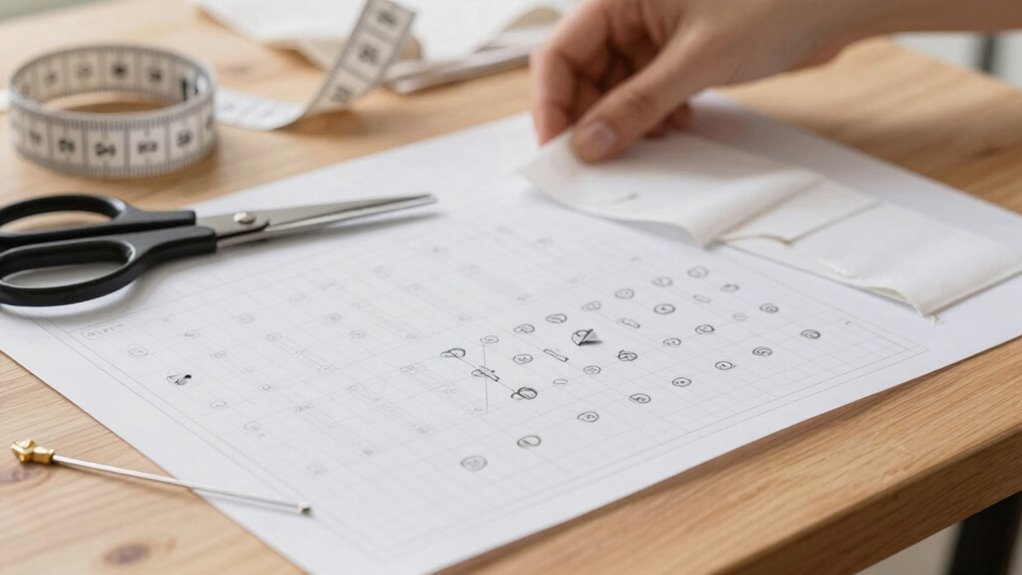
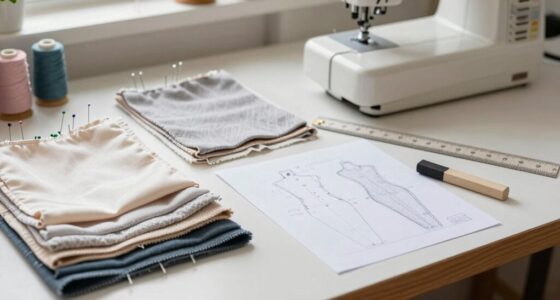
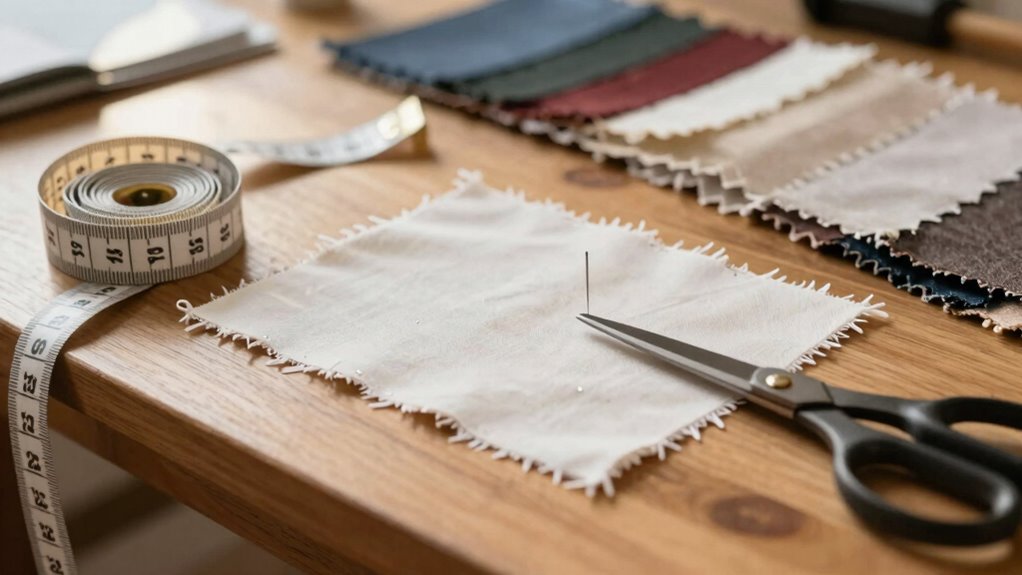
Before the first stitch is ever sewn, precision begins with careful planning and preparation. You need to start by selecting the right fabric, because your choice impacts every subsequent step. The fabric’s weight, texture, and drape influence how your project turns out, so choosing thoughtfully ensures a smoother process. For instance, lightweight fabrics require different handling than heavier materials, and understanding this helps you avoid mistakes that could compromise your final piece. Once you’ve picked the fabric, you must focus on pattern alignment. Proper pattern matching isn’t just about aesthetics; it’s about ensuring your finished item looks professional and consistent. Before you cut, take the time to lay out your fabric carefully, aligning the pattern pieces with the grainline and matching motifs across seams. This step demands precision and patience, but it pays off in the final product’s quality.
Your preparation also involves meticulously reading the pattern instructions and understanding the construction sequence. This foresight helps you cut accurately and avoid fabric waste. When cutting, you should pin or weight the pattern pieces securely to prevent shifting, which can throw off your pattern alignment. Every detail, from the placement of darts to the direction of fabric nap, plays a role in the overall look and durability of your project. If the pattern isn’t aligned properly at this stage, it’s nearly impossible to fix later without sacrificing symmetry or risking uneven seams. Additionally, understanding the importance of fabric grain ensures your finished piece maintains its shape and drape over time. Ensuring proper grain alignment during fabric handling can significantly influence the longevity and appearance of your finished item.
Ultimately, your attention to detail during fabric selection and pattern alignment lays the foundation for quality craftsmanship. When you’re precise from the beginning, sewing becomes a matter of following your well-prepared blueprint rather than fixing mistakes later. This approach not only elevates the look and durability of your finished piece but also makes the process more satisfying and less frustrating. Precision isn’t just about the sewing itself; it’s about the careful, deliberate actions you take long before you reach the sewing machine.

Headley Tools Rotary Cutter Set – 45mm Fabric Cutter, 5 Extra Rotary Blades, A3 Cutting Mat, Quilting Ruler and Sewing Clips, Craft Knife Set, Ideal for Crafting, Sewing, Patchworking,Turquoise
- Complete Crafting Set: Includes cutter, blades, mat, ruler, knife, clips
- 45mm Rotary Cutter: Ergonomic handle with safety features
- Ambidextrous Design: Blade fits both right and left-handed users
As an affiliate, we earn on qualifying purchases.
As an affiliate, we earn on qualifying purchases.
Frequently Asked Questions
How Does Planning Influence the Accuracy of the Final Product?
Your planning directly impacts the accuracy of your final product. By carefully selecting the right fabric, you guarantee ease of sewing and durability, reducing errors. Proper workspace setup helps you stay organized and focused, preventing mistakes caused by clutter or misplaced tools. When you plan ahead, you can anticipate challenges and adjust accordingly, leading to a more precise, professional-looking outcome with fewer revisions or setbacks.
What Tools Are Essential for Ensuring Initial Precision?
To guarantee initial precision, you need essential tools like marking techniques and seam allowances. Use a clear chalk or fabric pencil for accurate markings, helping you follow your pattern precisely. A ruler or measuring tape ensures consistent seam allowances, avoiding surprises later. Pins or clips keep your fabric aligned, maintaining accuracy during sewing. These tools help you start with a solid foundation, making the final product neat and professional.
How Does Fabric Choice Impact Overall Stitching Accuracy?
Your fabric choice can make or break your stitching accuracy—it’s that impactful! Smooth, tightly woven fabrics help maintain even stitch lines, while textured or stretchy textiles challenge your precision. Pay attention to fabric textures and match your thread selection accordingly; using the right thread enhances control and prevents puckering. Choosing the wrong fabric or thread can turn a straightforward project into a chaotic mess, so select wisely for flawless results.
What Role Does Workspace Organization Play in Precision?
Your workspace organization plays a vital role in precision by creating an ergonomic setup that minimizes fatigue and strain. When you reduce clutter, you can easily access tools and materials, which keeps your workflow smooth and focused. An organized space allows you to concentrate on your stitching, ensuring accuracy and consistent results. Prioritizing clutter reduction and ergonomic comfort helps you maintain steady hands and sharp focus, enhancing overall stitching accuracy.
Can Training Improve Pre-Stitching Preparation Skills?
Yes, training can definitely improve your pre-stitching preparation skills. Through proper training, you learn to check thread tension and adjust it for smooth stitches, reducing errors. You also become more mindful of seam allowance, ensuring consistent measurements. This focus on preparation helps you start each project with confidence, resulting in more precise sewing. Regular practice and instruction boost your skills, making pre-stitching routines second nature.
Conclusion
Remember, precision isn’t just about the final stitch—it’s the foundation you build long before the needle ever pierces fabric. Every careful measurement, every thoughtful planning step, is like laying down the blueprint for a masterpiece. When you start with this mindset, your work transforms from good to legendary—like crafting a tapestry so intricate, it could outshine the stars. So, take your time, plan meticulously, and watch your craft reach celestial heights.