To make your handmade clothes look polished, develop a consistent pressing routine tailored to each fabric type. Always test on small areas first, use the right iron temperature, and employ pressing cloths for delicate fabrics. Carefully press seams, darts, and curves with proper tools like a tailor’s ham, applying even pressure without overdoing it. Patience and attention to detail elevate your finish, and if you keep practicing, you’ll discover more tips to perfect your pressing technique.

Get tools and workshop supplies delivered free — and shop member deals
- Fast, free delivery on millions of items
- Access to Prime Big Deal Days deals on October 6–7
- Prime Video, Amazon Music and more included
Key Takeaways
- Use appropriate heat and steam settings tailored to each fabric type to prevent damage and ensure crisp results.
- Press seams and darts carefully, opening or shaping them with tools like a tailor’s ham for sharp, professional finishes.
- Always test on inconspicuous areas and use pressing cloths for delicate fabrics to avoid shine marks or scorching.
- Maintain consistent pressure and avoid excessive pressing time to preserve fabric integrity and achieve smooth surfaces.
- Incorporate fabric-specific techniques and patience to enhance the overall polished and professional appearance of handmade garments.
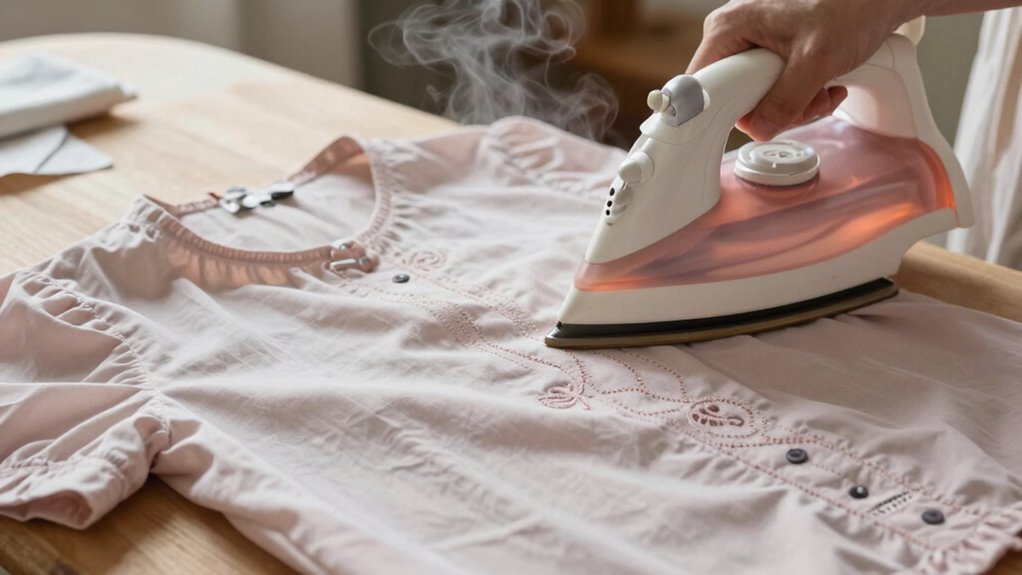
A well-executed pressing routine can transform handmade clothes from good to stunning, giving them a polished, professional finish. When you’re aiming for that perfect look, your fabric choice plays an essential role. Some fabrics, like silk or linen, respond beautifully to pressing, holding creases and smoothing out wrinkles with ease. Others, like knit or jersey, require gentler handling to prevent damage. Knowing how your fabric behaves helps you choose the right pressing tools and methods, guaranteeing you don’t accidentally distort or weaken the fibers. Your sewing techniques also influence how well your pressing routine works. For example, if you’ve sewn seams with precision and finished edges cleanly, pressing will enhance those details, making your garment look more refined.
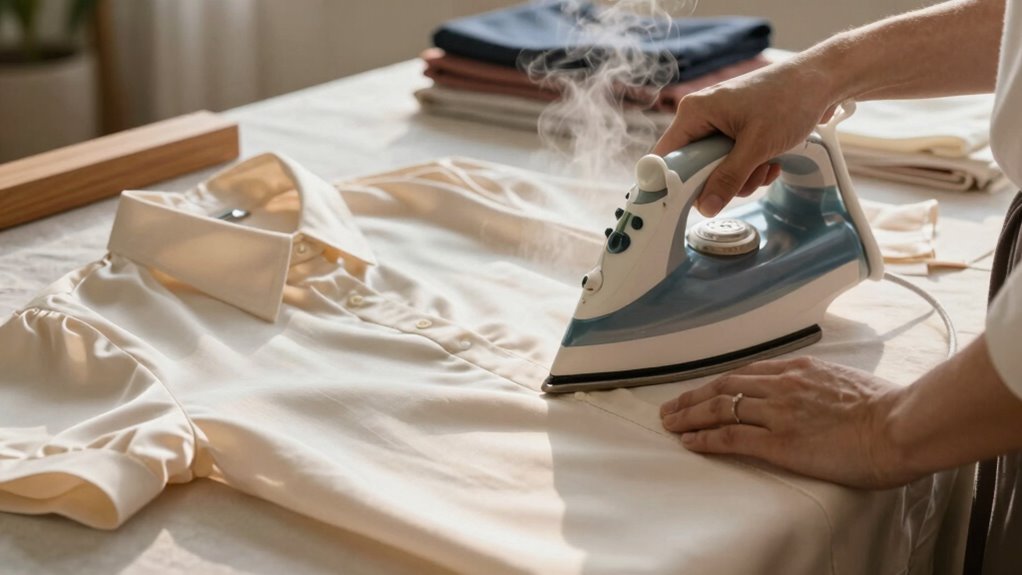
As you begin pressing, set your iron to the appropriate temperature for your fabric. Too hot, and you risk scorching delicate materials; too cool, and the fabric may not hold the pressed shape. Always test on a small, inconspicuous area first. Use a pressing cloth when needed, especially with delicate fibers like silk or chiffon, to prevent shine marks or scorching. When pressing seams, open them carefully and press each side flat, applying firm, even pressure. This helps set the seam and reduces puckering. For curved or tricky areas, use a tailor’s ham or point press to get sharp, neat results. Your goal is to smooth the fabric without stretching it out of shape, so avoid excessive pulling or pressing too long in one spot. Understanding fabric behavior can help you tailor your pressing approach for the best results. Additionally, incorporating proper pressing techniques ensures that the fabric retains its integrity and appearance. Developing a consistent pressing routine can also lead to more predictable and professional-looking results over time. Remember that patience and careful handling are key to achieving a polished finish.
Incorporating good sewing techniques can make your pressing routine more effective. For instance, stay-stitch curves before pressing to prevent stretching, or clip into seam allowances to help them lie flat. When pressing darts or pleats, press from the wrong side first to set the shape and then finish on the right side for a crisp finish. Remember that patience is key—rushing through pressing can lead to uneven results. Keep your iron moving, and don’t press with an overly heavy hand. Using steam can be a game-changer, especially for stubborn fabrics or thick seams. Just make sure your fabric is compatible with steam to avoid water spots or distortion. Incorporating fabric-specific techniques can also enhance your pressing results and protect delicate fibers from unnecessary damage.
Ultimately, a thoughtful pressing routine, combined with careful fabric selection and precise sewing techniques, elevates your handmade garments. The extra effort creates a clean, professional look that highlights your craftsmanship, making every stitch and seam stand out beautifully.
As an affiliate, we earn on qualifying purchases.
Frequently Asked Questions
What Tools Are Essential for Pressing Handmade Clothes?
You need a good iron with a steam function to effectively press handmade clothes, smoothing out wrinkles and seams. A pressing cloth is essential to protect delicate fabrics from direct heat and prevent shine or scorching. Additionally, a sturdy ironing board provides a stable surface. These tools help you achieve crisp, professional-looking finishes, ensuring your handmade garments look polished and well-crafted every time.
How Often Should I Press Handmade Garments?
You should press handmade garments after every wear to keep them crisp and clean. Regular pressing revitalizes fabric, prevents wrinkles, and maintains shape. Use storing techniques like hanging or folding to preserve your work, and incorporate fabric softening sprays for a fresh feel. Consistent pressing prevents stubborn creases, ensuring your handmade clothes look polished and professional every time you wear them. This routine keeps your creations looking their absolute best longer.
Can Pressing Damage Delicate Fabrics?
Pressing delicate fabrics can cause damage if you’re not careful, especially with improper pressing techniques. To prevent this, use a low heat setting, avoid direct contact with the iron, and consider fabric softening sprays for gentler results. Always test on a small area first. Proper pressing techniques preserve your fabric’s integrity, prevent shine or burn marks, and keep your handmade garments looking their best without risking damage.
What’s the Best Temperature Setting for Different Fabrics?
Did you know that using the right temperature can extend your fabric’s life by up to 50%? For fabric preparation, always check the care label and set your iron to the recommended temperature. Generally, low heat for delicate fabrics like silk, medium for cotton, and high for linen or denim. Use steam application wisely to avoid damage, ensuring a smooth, professional finish without risking heat damage.
How Do I Prevent Shiny Spots on Dark Fabrics?
To prevent shiny spots on dark fabrics, focus on proper ironing techniques and fabric sheen prevention. Always use a medium heat setting and test on a hidden area first. Keep the iron moving smoothly without pressing too hard, and use a pressing cloth to shield the fabric. This approach helps distribute heat evenly, minimizes direct contact, and keeps your dark garments looking their best without unwanted shine.
Conclusion
Mastering your pressing routine is like tending a delicate garden—each careful touch nurtures your handmade clothes to bloom beautifully. When you pay attention to the details, your garments don’t just look better; they tell a story of craftsmanship and care. Keep practicing, and your clothes will stand tall and proud, like a well-tended flower in full bloom. With a little effort, you’ll turn every piece into a work of art that’s ready to impress.
Fall Picks
fall essentials
As an affiliate, we earn on qualifying purchases.