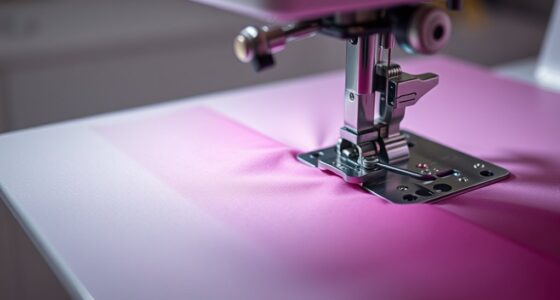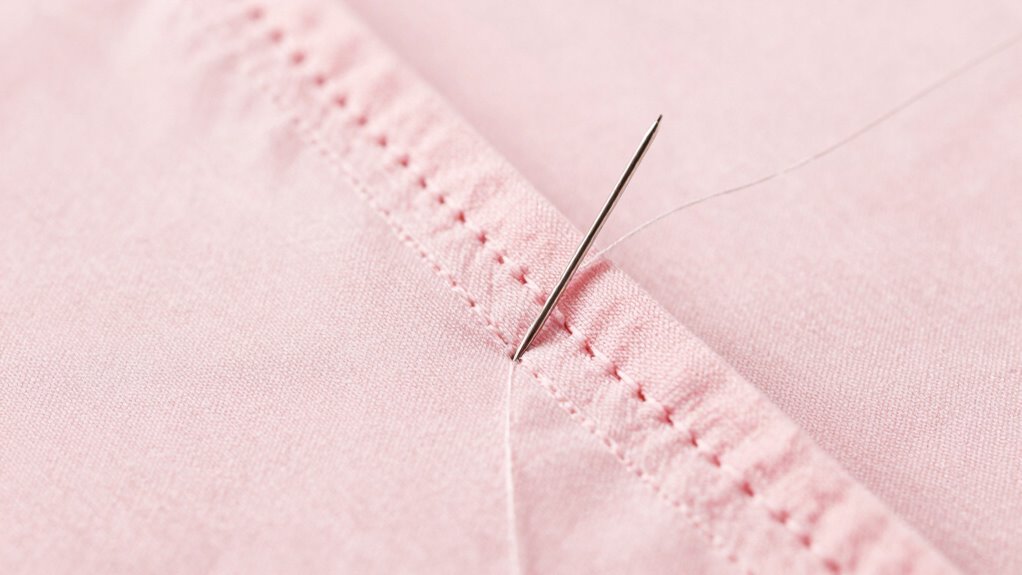

To handle tiny seam allowances cleanly, work slowly and mark your seam lines precisely with chalk or markers. Use a scant 1/8 inch seam allowance and sew carefully to stay accurate. Reinforce seams with secondary stitches or add seam tape for extra durability. Finish edges with French seams, zigzag, or serging to prevent fraying. Proper pressing and nesting seams open or to one side also help achieve a professional look. Keep these techniques in mind as you explore more tips.

Get business pricing on tools and workshop supplies
- Business-only prices and quantity discounts
- Tax-exempt purchasing
- Multiple users, one account, clear invoices
Key Takeaways
- Use precise marking tools like fabric chalk or markers to maintain accuracy in tight spaces.
- Sew slowly with a scant 1/8 inch seam allowance for better control and cleaner results.
- Reinforce seams with secondary stitching or seam tape to prevent fraying and improve durability.
- Finish raw edges with French seams, serging, or zigzag stitches to contain fraying in limited space.
- Press seams carefully open or to one side to reduce bulk and achieve a polished finish.
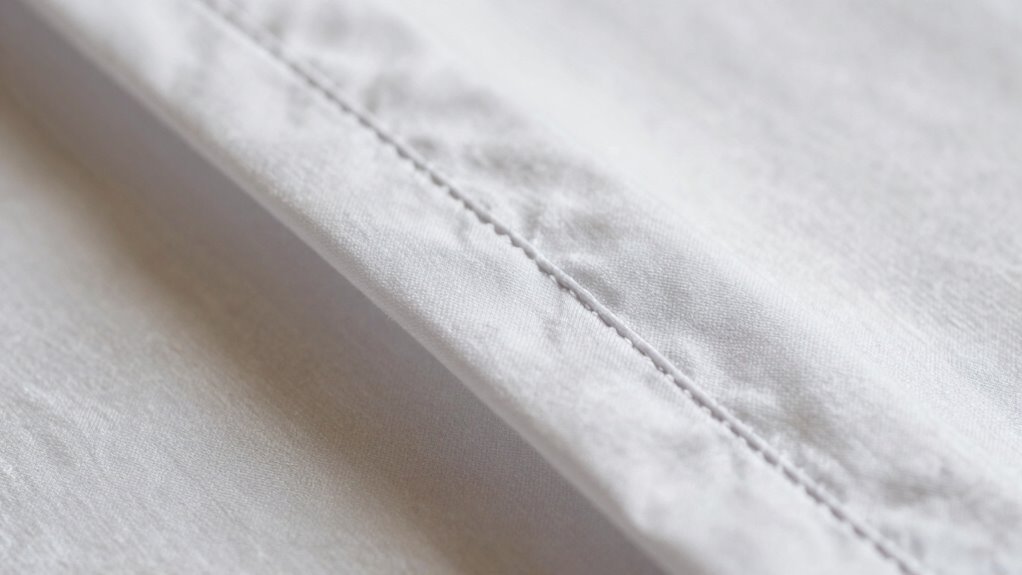
Dealing with tiny seam allowances can be tricky, but with the right techniques, you can achieve clean, professional finishes even in tight spots. Small seam allowances, often less than 1/4 inch, challenge you to prevent fabric fraying and guarantee seams stay strong. When working with narrow allowances, fabric fraying is a common concern because the raw edges tend to unravel easily, especially if the fabric is loosely woven or prone to fraying. To combat this, it’s essential to reinforce your seams early on. Using seam reinforcement techniques, like sewing a secondary line of stitching just inside the first, can help keep the fabric intact and prevent unraveling over time. Additionally, applying seam tape or fabric glue along the raw edges before stitching can provide extra durability, especially in areas subject to stress.
Another key step is to choose the right seam finish that works well within tight spaces. For tiny seam allowances, French seams or serging are often ideal because they encase the raw edges, preventing fabric fraying and creating a polished look. If you don’t have access to a serger, zigzag stitches or overlock stitches on your regular machine can serve as effective alternatives. These stitches bind the raw edges, reducing the risk of fraying and extending the seam’s lifespan. When sewing in small allowances, you need to sew slowly and carefully, ensuring accuracy and maintaining a consistent seam allowance. Using a scant 1/8 inch seam allowance can be beneficial, but it requires precision, so consider marking your seam line with fabric chalk or a fabric marker beforehand. Understanding fabric characteristics can significantly influence your choice of techniques and help you adapt to different textures and fraying tendencies. Recognizing how different fabrics fray or unravel easily will help you select the most suitable edge finishes and reinforcement methods. Paying attention to fabric properties can also guide you in choosing the best seam treatments for longevity.
Pressing your seams properly is also crucial. Press the seam allowances open or to one side, depending on the fabric and project, to reduce bulk and improve the finish. This step helps in achieving a neat look and makes it easier to topstitch if needed. If you’re working with delicate or fray-prone fabrics, consider using a lightweight interfacing or stabilizer to provide additional support during sewing. This extra layer can help maintain the integrity of tiny seam allowances and make sewing smoother. Paying attention to fabric characteristics and choosing appropriate techniques can significantly improve your results. Ultimately, handling tiny seam allowances demands patience and precision. Reinforcing seams is your best defense against fabric fraying, and selecting the right seam finish guarantees your project looks professional and lasts. With practice, you’ll develop a steady hand and an eye for detail that makes working in tight spaces much easier. By employing these techniques, you’ll consistently achieve clean, durable finishes even in the most challenging seam allowances.
fabric chalk marking pens for sewing
As an affiliate, we earn on qualifying purchases.
As an affiliate, we earn on qualifying purchases.
Frequently Asked Questions
Can Tiny Seam Allowances Be Stitched With a Regular Sewing Machine?
Yes, you can stitch tiny seam allowances with a regular sewing machine, but it takes care. First, trim the seam allowance close to the stitching line to reduce bulk and prevent fabric fraying. Use a sharp needle for precision. Be gentle and go slowly to guarantee even stitches. Proper seam allowance trimming helps handle tiny allowances cleanly, minimizing fabric fraying and ensuring a neat finish without damaging your fabric.
What Tools Are Best for Trimming Tiny Seam Allowances Precisely?
Think of trimming tiny seam allowances like wielding a fine-tuned scalpel—precision is everything. Use a small, sharp pair of scissors or a rotary cutter with a precision blade for accuracy. Seam allowance accuracy depends on steady hands and sharp tools. A seam ripper with a fine point also works for delicate trims. With these tools, you’ll master precision trimming and keep your seams neat and professional.
How Do I Prevent Fraying With Small Seam Allowances?
To prevent fraying with small seam allowances, focus on seam allowance maintenance by trimming excess fabric closely and using sharp tools. Incorporate effective edge finishing techniques like pinking shears, zigzag stitches, or serging to secure the raw edges. Applying a fray-preventive treatment like fray check or sealing edges with fabric glue also helps. These methods keep your seams clean, durable, and professional-looking, even with tiny allowances.
Are There Fabric Types That Handle Tiny Seam Allowances Better?
Certain fabric types handle tiny seam allowances better than others, especially those with little to no stretch like silk or linen. These fabrics maintain seam durability and resist fraying, making your finishing job smoother. But beware—stretch fabrics like jersey can complicate things, causing seams to weaken or fray easily. Choosing the right fabric for small seams is key to achieving clean, durable results without stress or surprises.
Should I Use Interfacing With Tiny Seam Allowances?
Using interfacing with tiny seam allowances can improve seam allowance stability and make fabric edge finishing easier. It provides extra support, preventing fraying and distortion, especially on delicate or slippery fabrics. Apply a lightweight fusible interfacing along the seam allowance before sewing, and press it in place. This technique helps create cleaner, more durable seams, making your finished project look professional and polished despite the small seam allowance.
Conclusion
Mastering tiny seam allowances takes patience and practice, but with the right techniques, you’ll handle them like a pro. Remember to reinforce, trim, and turn carefully to keep your seams neat and tidy. By blending boldness with precision, you’ll improve your sewing skills and produce polished projects. So, stay steadfast, practice persistently, and soon tiny seam allowances will become your sewing secret, showcasing your skill and style in every stitch.
Halloween Picks
halloween
As an affiliate, we earn on qualifying purchases.