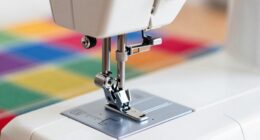
To keep your sewing machine running smoothly and avoid breakdowns, regularly clean out lint, dust, and loose threads, especially around the bobbin area. Check and adjust thread tension before starting each project, ensuring the tension dial is correct. Properly thread your machine and insert the bobbin correctly, making sure it spins clockwise. Conduct test stitches on scrap fabric to catch issues early. For more expert tips to maintain your machine’s performance, keep going to learn additional advice.
Key Takeaways
- Perform regular cleaning of the bobbin area to prevent lint buildup and ensure smooth thread flow.
- Check and adjust thread tension before each sewing session for consistent stitch quality.
- Properly thread the machine and ensure the bobbin is correctly placed to avoid thread jams and skipped stitches.
- Conduct test stitches on scrap fabric to verify tension and machine function before starting your project.
- Schedule routine maintenance and inspections to catch issues early and prolong your sewing machine’s lifespan.
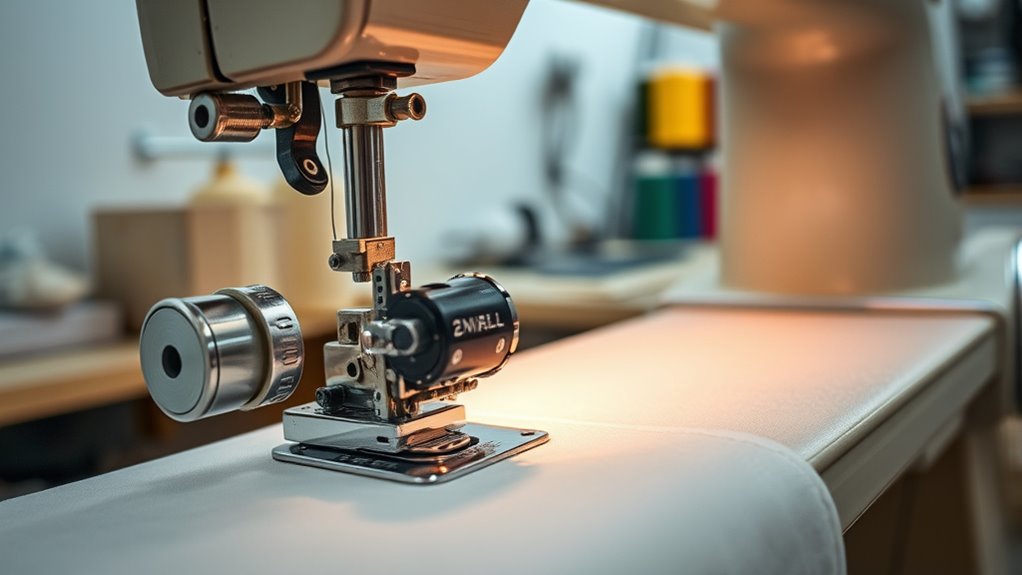
Ever wondered how to keep your sewing machine running smoothly for years to come? Proper maintenance is key, and a good starting point is understanding how to manage your machine’s thread tension and bobbin placement. When your thread tension isn’t set correctly, your stitches can become uneven, puckered, or even break. To prevent this, always check your tension dial before starting a project. If your stitches are loose or loopy, tighten the tension slightly; if they’re tight or the fabric puckers, loosen it. It’s a simple adjustment that makes a big difference. Remember also to guarantee your thread is properly threaded through all tension discs, as skipping this step can cause inconsistent tension and stitching issues. Once you’ve set the tension correctly, focus on your bobbin placement. A common mistake is inserting the bobbin incorrectly or not ensuring it’s seated properly in the bobbin case. Take a moment to double-check that the bobbin spins in the right direction—usually clockwise—when you gently pull the thread. An improperly placed bobbin can cause thread jams, uneven stitches, or skipped stitches. Make sure the bobbin case snaps securely into place, and that the thread is coming out smoothly when you start sewing. When you’re threading your machine, follow the manufacturer’s instructions carefully, especially around the bobbin area, to avoid threading errors that can cause tension problems. Regularly cleaning the bobbin area is equally important. Dust, lint, and loose threads tend to accumulate here, which can interfere with proper bobbin movement and tension. Use a small brush or a compressed air can to clear out any debris, and always wind a new bobbin from clean thread to prevent tangles or knots that could disrupt tension or cause jams. Additionally, opting for high-quality thread can significantly improve your sewing results by reducing lint buildup and thread breakage. Also, periodically check the bobbin case for any damage or burrs, as these can affect how smoothly the bobbin spins and tension maintains consistency. When you’re ready to start sewing, do a few test stitches on scrap fabric to ensure your tension and bobbin placement are correct. This quick check helps you avoid larger problems later on. Remember, maintaining correct thread tension and proper bobbin placement isn’t a one-time task; it’s part of a routine that keeps your machine functioning at its best. Taking these simple steps regularly will prevent many common sewing issues, saving you time and frustration, and extending the life of your machine. Proper care now means smoother sewing sessions and better results down the line.
Frequently Asked Questions
How Often Should I Replace My Sewing Machine Needle?
You should replace your sewing machine needle after every 8 to 10 hours of sewing or at the first sign of dullness or damage. Regular needle replacement improves stitch quality and prevents damage to your fabric or machine. Keeping fresh needles increases your sewing machine’s lifespan and ensures smooth operation. Don’t wait too long—changing needles regularly is a simple step that keeps your machine running efficiently and extends its overall lifespan.
Can I Use Household Oil on My Sewing Machine?
You shouldn’t use household oil on your sewing machine because it isn’t formulated for machine lubrication. Household oils can contain additives that may gum up the parts or cause damage over time. Instead, use a high-quality sewing machine oil designed specifically for this purpose. Regularly lubricating your machine with proper oil helps keep it running smoothly, prevents rust, and avoids unnecessary breakdowns, ensuring your sewing projects stay trouble-free.
What Should I Do if My Machine Makes Unusual Noises?
When your machine makes unusual noises, don’t ignore the troubleshooting sounds. First, stop sewing and check for tangled threads, lint buildup, or loose parts. Lubricate moving components if needed, but avoid over-oiling. If the noise persists, consult your sewing machine manual or contact a technician. Addressing these issues early prevents further damage, keeping your machine running smoothly and avoiding costly repairs down the line.
How Do I Troubleshoot Thread Tension Problems?
You can troubleshoot thread tension problems by first checking your thread tension adjustment; make certain it’s set correctly for your fabric and thread type. Next, examine your bobbin winding to ensure the bobbin is wound evenly and inserted properly. If stitches are uneven or looping, adjust the tension dial gradually and re-test. Regularly cleaning your machine and replacing worn parts also helps maintain proper tension and stitch quality.
Is It Necessary to Service My Machine Annually?
Yes, you should service your machine annually to keep it running smoothly. Regular servicing helps with machine calibration, ensuring stitches are even and consistent. It also includes checking the bobbin winding mechanism to prevent tangles and jams. By staying on top of maintenance, you reduce the risk of unexpected breakdowns and extend your machine’s lifespan. A professional tune-up keeps your sewing machine in top shape for all your projects.
Conclusion
By giving your sewing machine regular TLC, you’re like a skilled doctor tending to a patient—preventing problems before they start. Keep it clean, well-oiled, and properly maintained, and you’ll enjoy smooth stitching for years to come. Think of it as nurturing a trusted friend; the more attention you give, the longer it’ll serve you faithfully. So stay proactive, and your sewing machine will reward you with endless creative possibilities and reliable performance.