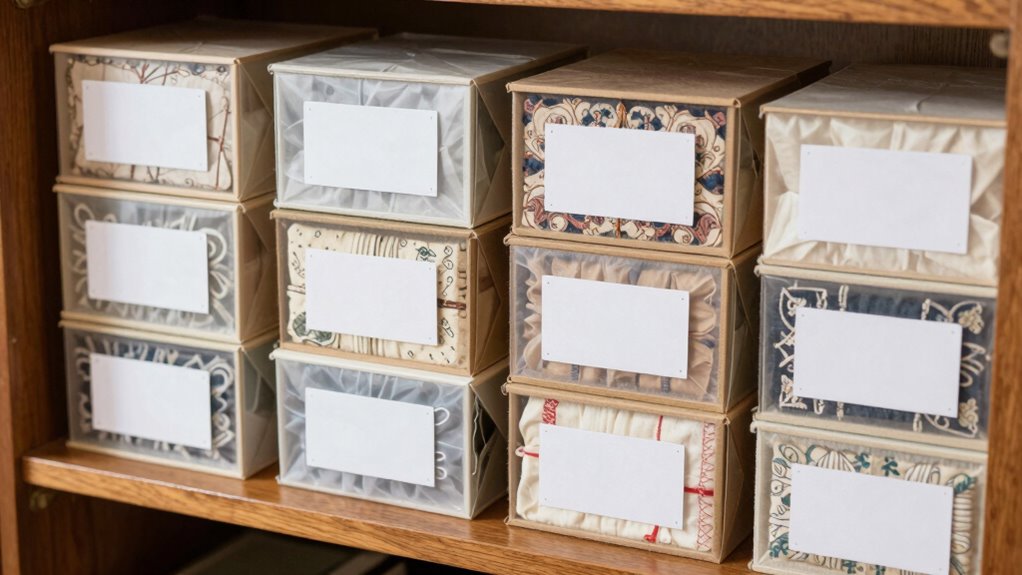

Investing in archival boxes for heirloom textiles is worth it when you want to preserve your family’s stories for the long term. These containers protect textiles from immediate damage, deterioration, and environmental factors. Using acid-free, eco-friendly materials supports ethical preservation while keeping textiles vibrant. If you want to guarantee your heirlooms last generations, choosing proper storage solutions is essential. Continued insights can help you make the best choices for lasting preservation.

Get business pricing on tools and workshop supplies
- Business-only prices and quantity discounts
- Tax-exempt purchasing
- Multiple users, one account, clear invoices
Key Takeaways
- Archival boxes provide long-term protection, preventing deterioration and damage to heirloom textiles.
- They are worth it when preserving valuable or delicate items that require acid-free, environmentally friendly materials.
- Using archival containers ensures textiles remain vibrant and intact for future generations.
- Proper storage with archival boxes supports adherence to preservation standards and ethical conservation practices.
- Investing in quality archival boxes is justified for significant heirlooms or items with sentimental or historical value.
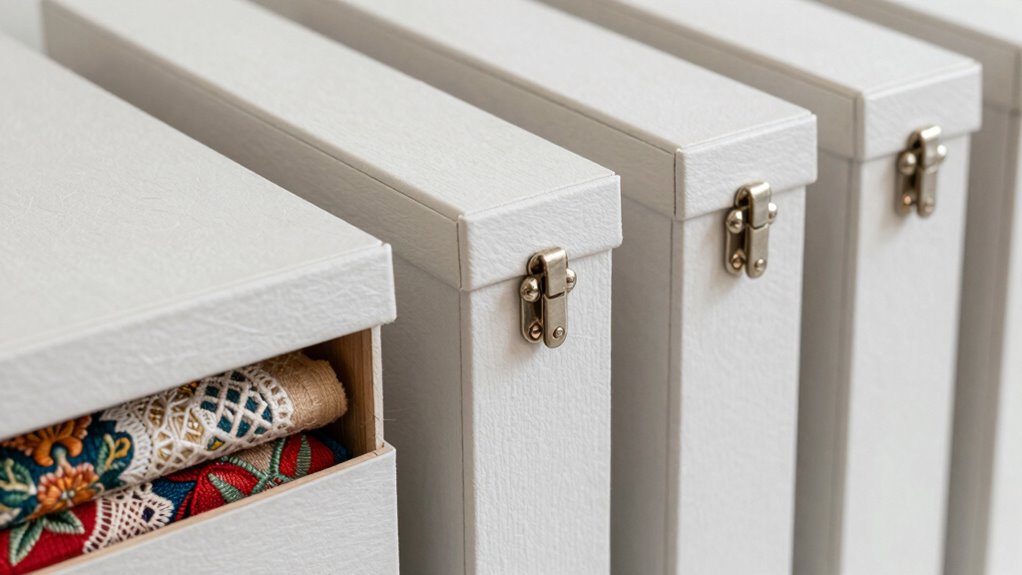
Ultimately, when you choose archival storage solutions, you’re making a proactive decision to honor your heirlooms’ longevity. It’s not just about protecting them from immediate damage but ensuring their story endures long into the future. With the right boxes, your cherished textiles will stay vibrant, intact, and full of history, ready to be passed down or displayed with pride. The peace of mind knowing you’re doing everything possible to preserve your family’s history makes the extra effort and expense well worth it. Incorporating sustainable living practices into your preservation efforts can also help reduce environmental impact while safeguarding precious heirlooms. Using environmentally friendly materials in your storage choices supports ethical conservation and ensures your heirlooms are preserved in harmony with nature. Additionally, selecting acid-free materials is crucial for preventing deterioration over time. Choosing archival-quality containers demonstrates a commitment to proper preservation techniques that protect heirlooms from long-term degradation. Being aware of archival standards can further guide you in making the best preservation decisions.
As an affiliate, we earn on qualifying purchases.
Frequently Asked Questions
How Long Can Heirloom Textiles Safely Stay in Archival Boxes?
You can usually keep heirloom textiles safely in archival boxes for decades if you maintain proper environmental control. These boxes protect against fabric deterioration caused by light, dust, and pests. Regularly monitoring temperature and humidity helps prevent mold and fiber breakdown. With ideal conditions—around 65-70°F and 50% humidity—your textiles can stay preserved for 50 years or more, ensuring they remain beautiful and intact for future generations.
Are Archival Boxes Suitable for All Types of Heirloom Textiles?
Archival boxes are suitable for many heirloom textiles, especially when fabric preservation and historical accuracy matter. They protect delicate fabrics from light, dust, and environmental changes, helping maintain authenticity. However, some textiles may require specific storage conditions, like humidity control or acid-free materials. Always assess each piece’s material and history to determine if an archival box is the best choice, ensuring your heirlooms stay preserved correctly.
What Is the Best Way to Clean Textiles Before Storing?
The best way to clean textiles before storing is to gently fabric clean using mild, pH-neutral detergents or professional cleaning methods for delicate fabrics. Make sure to thoroughly dry the textiles to prevent mold and insects, which is essential for proper storage preparation. Avoid harsh chemicals or washing machines that could damage heirloom textiles. Always handle with care, and if unsure, consult a textile conservation specialist.
Can Archival Boxes Prevent Damage From Pests and Mold?
Think of archival boxes as a fortress for your textiles, like a castle defending its treasures. They effectively prevent damage from pests and mold by creating a sealed, stable environment. Pest prevention stops insects from turning heirlooms into snack bars, while mold protection keeps fabrics from rotting. Using acid-free, sealed boxes, you safeguard your textiles’ longevity, ensuring they remain beautiful and intact for generations to come.
How Do I Choose the Right Size of Archival Box for My Textiles?
To choose the right size of archival box for your textiles, measure your items carefully, including any padding needed for protection. Guarantee the box material is compatible with textiles—acid-free and lignin-free are best. Opt for a box slightly larger than your items to prevent compression or damage. Also, label your box clearly for easy identification, using waterproof, archival-quality ink to maintain long-term preservation and organization.
Conclusion
Investing in archival boxes for your heirloom textiles gently preserves their story for future generations, allowing their beauty to quietly endure. While the choice may seem modest, it’s a subtle act of reverence, ensuring these treasured pieces remain untouched by time’s wear. By opting for quality storage, you honor the craftsmanship and memories woven into each fiber, creating a lasting legacy that speaks softly yet profoundly across the years.
Fall yard work Picks
leaf blowers
As an affiliate, we earn on qualifying purchases.