
TL;DR

Get business pricing on tools and workshop supplies
- Business-only prices and quantity discounts
- Tax-exempt purchasing
- Multiple users, one account, clear invoices
TikTok user Birdie Wood demonstrated turning chindi rag rugs into a loose, colorful window covering by separating the fabric strips and tying them to a curtain rod. Hunker reports that Wood bought her rugs at Five Below for $5 each; the finished look and amount of coverage depend on the rug and how the strips are arranged.
TikTok user Birdie Wood demonstrated a DIY alternative to conventional window treatments, turning chindi rag rugs into a loose, colorful covering by separating the fabric strips and tying them around a curtain rod. Hunker reported that Wood found her rugs at Five Below for $5 each, though the project’s final cost and coverage depend on the materials and window.
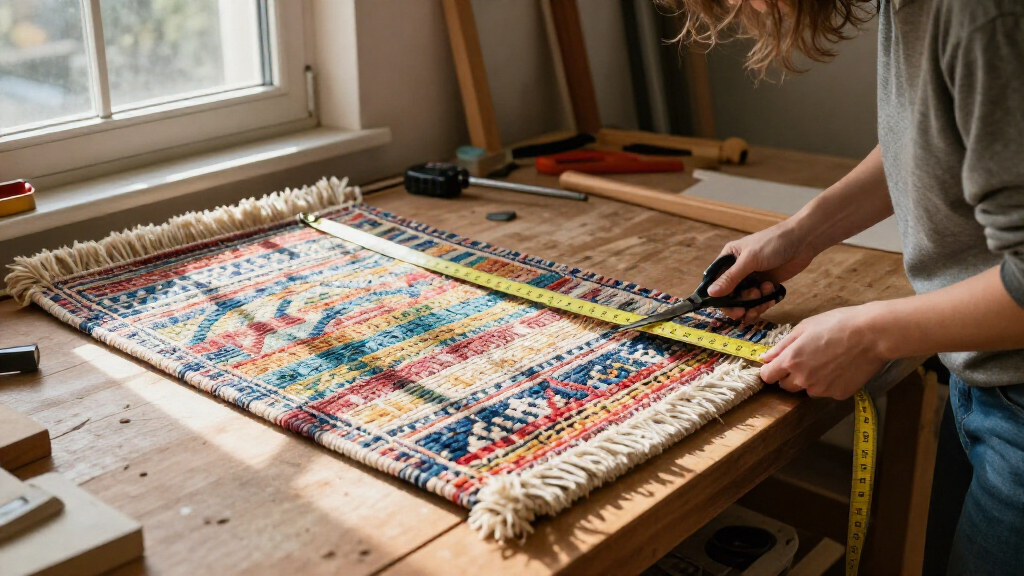
Chindi rugs are rag rugs made from strips of scrap fabric. In the project described by Hunker, the fabric is released from the rug’s sewn construction, then arranged as hanging strands. The report says Wood tied the strips over a rod, creating a flowing, uneven window treatment rather than a conventional panel.
To make a similar covering, the rug’s binding strings are cut so the fabric can be separated into individual strips. The strips can then be trimmed or joined to suit the desired length. Hunker says one option is a short valance; another is to combine different lengths for a varied edge. The strands can be looped through or knotted around a curtain rod.
The rug is the main material, but the project also calls for a curtain rod and sharp scissors, as well as time to separate the fabric. Hunker cited a $10 Cotton Craft Chindi Rag Rug sold on Amazon as another example, but that price is a source-reported listing, not a guarantee of current availability or cost. The article also describes alternatives such as using curtain clips, leaving an intact top section as a header, or attaching the strips to a horizontal ribbon so they move together.
A Low-Cost Alternative to Panels
The project offers renters and homeowners a way to reuse a floor covering as decorative window dressing, potentially avoiding the expense of buying ready-made curtains. The $5-per-rug figure reported for Wood’s materials gives readers a reference point, but it does not establish the total cost: a suitable rod may be needed, and the source does not say how many rugs were used or what size window was covered.
Its appeal is also visual. Hunker notes that chindi rugs often combine fabrics, colors and patterns that are less visible while the material is woven or twisted into rug form. Once separated, those differences become part of the display. That makes the idea more suited to people seeking a bohemian or maximalist look than to anyone after uniform, opaque panels.
Popular right now

Bose QuietComfort Wireless Bluetooth Headphones with Active Noise Cancellation, Mic, USB‑C Charging, Deep Bass, 24‑Hour Battery – White Smok

Samsung 42-Inch Class OLED S90F 4K Smart TV (2025)

Ninja Specialty Coffee Maker CM401, 10-Cup Carafe, Fold-Away Frother, Black
As an affiliate, we earn on qualifying purchases.
How the Rug Becomes a Curtain
The idea shifts a rug from floor covering to window treatment: instead of hanging a finished textile panel, the maker untwists or separates its fabric strips and attaches them to a support. Hunker presents the method as a DIY decor project inspired by Wood’s TikTok demonstration, rather than as a tested product or a standard window-covering system.
The report describes several ways to customize the result without changing the basic materials. Strips can be tied directly to a rod, secured with clips, or fixed to a horizontal band. A copper pipe is suggested as an alternative support. Other decorative options include gathering the strands with ribbon, braiding some together or adding beads. These are ideas in the report; it does not provide performance tests, installation measurements or detailed instructions for every variation.
““She found her rag rugs at Five Below for $5 each””
— Hunker, describing Wood’s materials
Coverage and Practical Limits
The source does not identify the number or dimensions of the rugs Wood used, the size of her window, or how much of it the finished treatment covers. It also does not say whether the strands block sunlight or provide privacy. Because the strips hang loosely, readers should not assume the project performs like lined curtains or blinds.
The report offers ideas, not a durability or safety assessment. It does not address how the fabric holds up over time, whether the strips shed, or whether the treatment is suitable near heat sources. Current retail prices and stock may also differ from the examples cited. The practical result will depend on the rug’s construction, the maker’s cutting and attachment method, and the intended use of the window covering.
Plan Before Cutting the Rug
Anyone considering the project can first measure the window and decide whether the goal is a full-length treatment, a valance or a decorative accent. Hunker’s instructions point to separating the rug’s binding strings, then trimming or joining strips before attaching them to a rod. Checking the fabric’s length and arrangement before making irreversible cuts may help reduce waste.
The next steps depend on the desired finish: tie strips directly to the rod for a loose drape, use clips or a fabric header for a more organized top edge, or attach the strands to a horizontal band so they move as one. The source does not announce a product launch or broader follow-up; the development is a creator’s DIY idea, and no additional testing or updates are provided.
Key Questions
What is a chindi rug?
A chindi rug is a rag rug made from strips of scrap fabric. Hunker describes using those strips as hanging material after separating them from the rug’s sewn construction.
How did Birdie Wood turn a rug into a window covering?
According to Hunker, Wood cut apart the rug’s fabric strands and tied the strips around a curtain rod. The strips then hung as a loose, colorful alternative to a conventional curtain panel.
How much did the rugs cost?
Hunker reports that Wood found her rugs at Five Below for $5 each. The report also cites a $10 online rug listing, but prices and availability can change, and neither figure includes the full cost of any rod or other materials.
Will the rug strips provide privacy or block sunlight?
The report gives no privacy or light-blocking measurements and does not describe the covering as a substitute for lined curtains or blinds. The coverage will depend on the rug, strip spacing and window size.
Can the design be customized?
Yes. Hunker describes varying strip lengths, making a short valance, using clips or a fabric header, and adding braids, ribbon or beads. These are suggested adaptations, not performance-tested instructions.
Source: hunker.com