

To stop losing patterns, create a simple, organized system that consolidates printed and digital files. Gather all your patterns into one central location, using labeled folders or binders for printed designs and clear digital folders for PDFs. Regularly review and declutter to stay organized, and use descriptive labels and visual cues for quick access. Using apps or tools can help maintain your collection long-term. Learn more to streamline your pattern storage easily.
Key Takeaways
- Consolidate all printed and digital patterns into a central, organized system using labeled folders, binders, or storage containers.
- Categorize patterns by style, type, or project with clear labels and visual cues like color-coding for quick identification.
- Use durable storage solutions such as labeled bins, clear containers, and accessible binders to protect and easily locate patterns.
- Implement routine maintenance by regularly reviewing, decluttering, and filing patterns immediately after use to prevent loss and clutter.
- Utilize digital tools like cloud storage, search functions, and tagging systems for efficient management and quick retrieval of PDF patterns.
Why Organized Patterns Save You Time and Reduce Stress
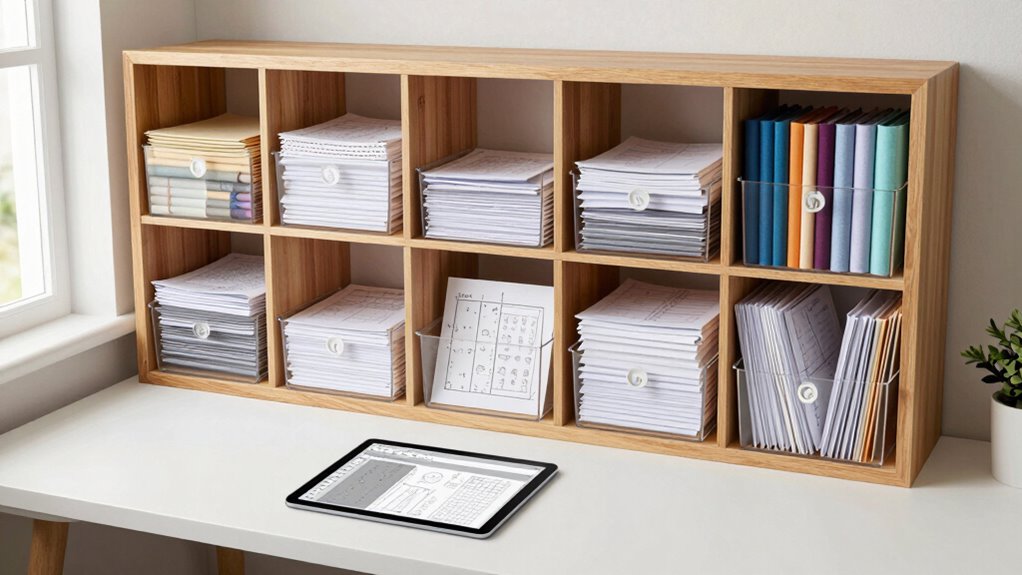
Have you ever found yourself wasting time searching for misplaced patterns or re-duplicating designs? When your patterns are organized, you save precious minutes that add up over time. Proper organization prevents pattern duplication, so you don’t accidentally print or cut the same pattern twice. Plus, organized storage enhances aesthetics, making your workspace inviting and easy to navigate. Clear labels, designated folders, and systematic filing help you quickly locate what you need, reducing frustration. When everything has its place, you spend less energy figuring out what to do next and more on your projects. An orderly system keeps your patterns accessible and reduces stress, letting you focus on creating instead of hunting. Implementing a systematic filing approach can streamline your process even further. Additionally, employing digital organization tools can further enhance your efficiency and ensure your patterns are always secure and easy to access. Incorporating color accuracy into your digital patterns ensures they stay true to your original designs, saving you time on adjustments later. Being aware of pattern storage best practices can help you maintain an organized collection that’s easy to update as your library grows. Regularly reviewing and decluttering your collection can also prevent unnecessary clutter and keep your storage organized and efficient. Ultimately, organized patterns make your sewing experience more enjoyable and efficient.
Gather All Your Patterns : Printed and Digital in One Place
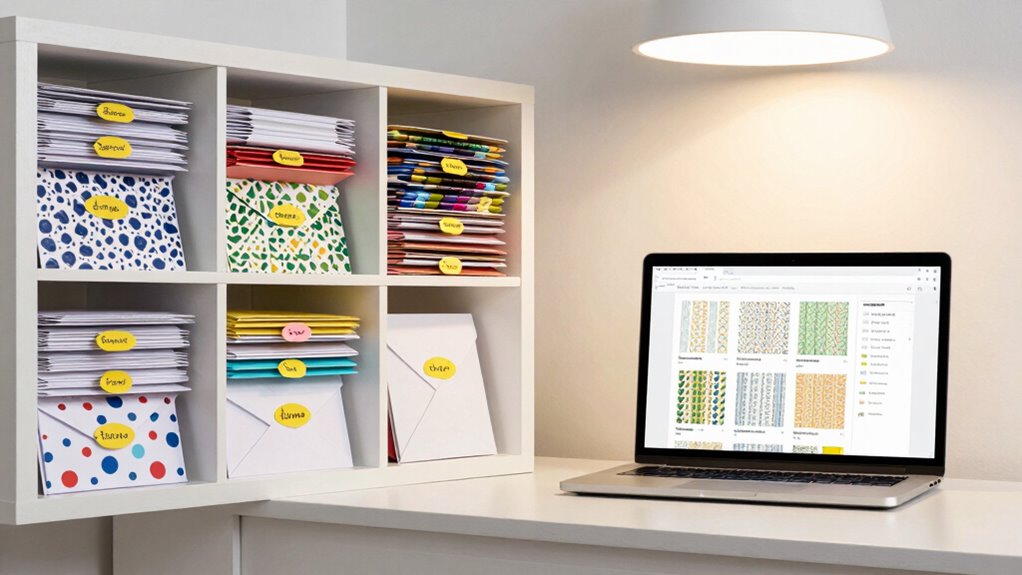
To effectively organize your patterns, start by gathering all printed and digital files into one central location. Collect every pattern, whether in folders, on USB drives, or stored in cloud services. This step guarantees you see the full scope of your pattern collection and prevents duplicates or missing pieces. Proper pattern storage begins with consolidating your files, making pattern organization easier and more efficient. Sort printed patterns into labeled folders or binders, and organize digital files by category or designer. Having everything in one place reduces the risk of losing patterns and streamlines your creative process. Once gathered, you can implement systems to keep your collection manageable, accessible, and ready for your next project. Additionally, considering the concept of Free Floating can help you develop flexible storage solutions that adapt as your collection grows.
Choose the Best Storage Solutions for Your Printed Patterns

Choosing the right storage solutions for your printed patterns is essential to keep them organized and easily accessible. Pattern shelving is a great option, allowing you to display and sort patterns vertically or horizontally, making retrieval quick. Use sturdy storage containers to protect patterns from dust, moisture, and damage. Clear containers help you see what’s inside without opening each one, saving time. Label each container or shelf clearly to avoid confusion and streamline your process. Consider dividing patterns by type, project, or designer for even better organization. Avoid overcrowding your shelves or containers, which can make finding specific patterns frustrating. Implementing a systematic approach to organizing your collection can greatly improve efficiency and reduce clutter. With the right combination of pattern shelving and storage containers, you’ll keep your collection neat, protected, and easy to browse whenever inspiration strikes.
Set Up a Digital System to Manage PDF and Downloaded Patterns
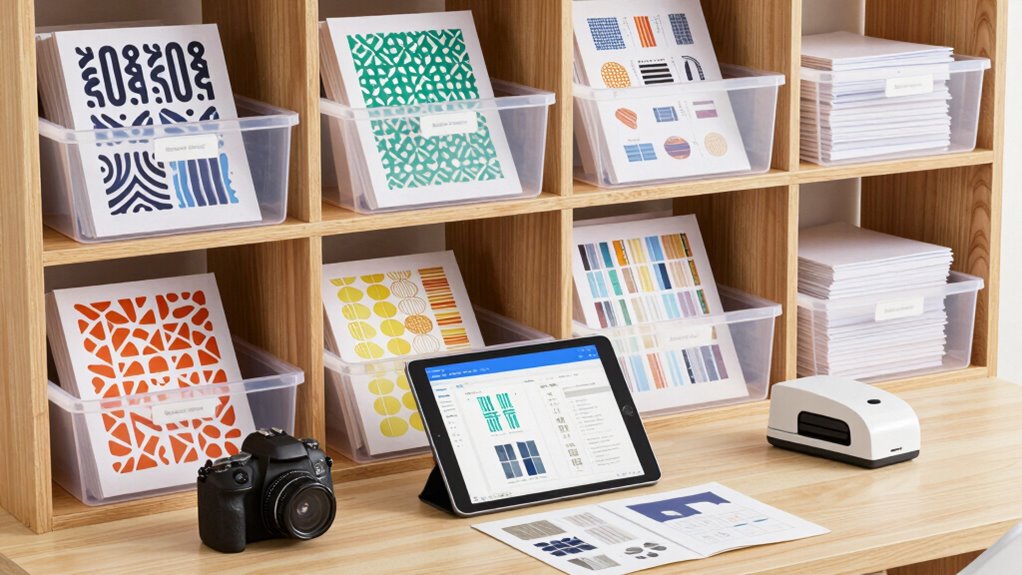
Setting up a digital system for your PDF and downloaded patterns can considerably streamline your organization process. Start by creating a dedicated folder on your computer or cloud storage platform for all pattern files. Use digital cataloging to label each pattern with clear, consistent names, including designer, pattern type, and size. Cloud storage services like Google Drive or Dropbox make it easy to access your patterns from any device and guarantee backups are automatic. Consider creating subfolders for different categories, such as garment type or project stage. This setup helps you quickly locate the patterns you need without sifting through endless downloads. Additionally, employing digital literacy skills can help you better navigate and utilize your digital storage system effectively. By establishing a structured digital system, you reduce clutter and prevent the frustration of lost or misplaced files, making your pattern management more efficient.
Label and Categorize Your Patterns for Easy Retrieval
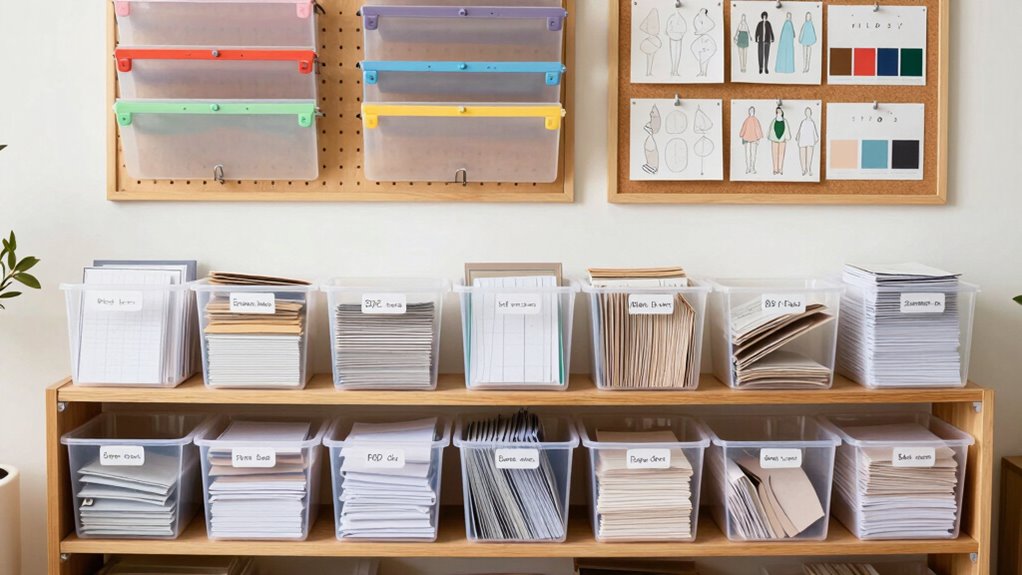
To find your patterns quickly, you need to label them clearly and organize them by style or type. Using accessible binders makes it easier to locate what you need without frustration. Proper labeling and categorizing save you time and keep your collection neat and manageable. Additionally, incorporating organized storage techniques can further improve your pattern retrieval process, ensuring your collection remains easy to navigate. Implementing essential oil inspired methods, such as color-coding or scent markers, can add an extra layer of organization, making pattern selection even more intuitive. Applying visual cues like tags or icons can also enhance quick identification and streamline your pattern management process. Employing risk management strategies from financial knowledge can help you safeguard your collection against loss or misplacement, ensuring your valuable patterns are always accessible when needed.
Use Clear Labels
When you clearly label and categorize your patterns, finding what you need becomes much faster and easier. Use specific, descriptive labels for each pattern, including project type, size, or difficulty level. This pattern labeling helps you quickly identify patterns at a glance. Whether storing printed or PDF patterns, digital cataloging allows you to organize files systematically, making retrieval seamless. Consistent naming conventions prevent confusion, saving you time searching through cluttered folders or stacks. Clear labels also reduce the risk of losing patterns altogether. Keep labels simple but informative, and consider color-coding or numbering systems to enhance visual organization. By investing a little time in effective pattern labeling and digital cataloging, you’ll streamline your storage system and enjoy more sewing and crafting time.
Organize by Style or Type
Have you ever spent extra time searching for a specific pattern because it was mixed in with others? Organizing by style or type makes pattern categorization quick and easy. Group patterns based on your styling preferences—whether it’s casual, formal, or seasonal. Use clear labels like “Summer Dresses” or “Men’s Shirts” to instantly identify what you need. This method reduces the chaos of a cluttered collection and helps you develop a system that fits your sewing habits. When patterns are sorted by style or type, you can locate them faster, saving time during project planning. Plus, it’s easier to see what kinds of patterns you own, so you can identify gaps or areas for new purchases. Staying consistent with your organization system ensures your collection remains manageable and accessible over time. Incorporating vintage storage techniques can also enhance durability and aesthetic appeal of your pattern collection. Stay organized by style or type for effortless pattern retrieval.
Store in Accessible Binders
Storing your patterns in accessible binders makes finding what you need quick and simple. Use clear binder labels and organize patterns by style, project, or fabric type to streamline pattern indexing. Label each binder on the spine with categories like “Dresses,” “Kids’ Clothing,” or “PDF Patterns” so you can identify contents at a glance. Inside, use dividers or tabs to further categorize patterns, making retrieval even easier. Keep patterns flat to prevent damage, and consider adding a master list inside each binder that summarizes its contents. This system reduces time spent searching and keeps your pattern collection organized. When you need a specific pattern, you’ll quickly locate it without rummaging through piles or losing track of important files. Proper binder labeling and categorization make your pattern storage efficient and accessible.
Create a Routine to Keep Your Pattern Files Organized

To keep your pattern files organized, you need to create a consistent routine. Start by designating a specific storage space that’s easy to access and maintain. Then, establish a regular filing schedule so your patterns stay tidy and easy to find whenever you need them. Incorporating trustworthy guidance into your system can help you stay confident that your files are always in order. Additionally, understanding the importance of organized storage can help you develop a system that ensures your patterns remain protected and readily available. Developing a systematic approach can also prevent clutter from accumulating and make it easier to locate patterns quickly when inspiration strikes. Using quality storage options can further enhance the durability and accessibility of your pattern collection. Recognizing how cultural heritage influences traditional designs can also inspire better categorization and preservation of patterns within your collection.
Designate Storage Space
Creating a designated storage space for your pattern files is essential to maintaining organization. Choose a specific area, like a shelf or cabinet, where all your patterns will go. Use storage bins to separate printed patterns from PDFs, keeping everything neat and easily accessible. Label the bins with clear label tags that specify the pattern type or project. This setup allows for local automation to remind you to put patterns back in their proper place. Incorporate digital organization strategies to complement your physical storage, ensuring your entire system remains streamlined. Make it a habit to return patterns to their designated bins after each project or session. Consistency is key—by creating a routine to put everything back in its spot, you’ll prevent misplaced patterns and save time searching. A well-organized storage space makes your pattern management more efficient and less stressful.
Establish Filing Routine
Establishing a consistent filing routine guarantees your pattern files stay organized and easy to find. Regular pattern sorting helps you maintain clarity and avoid clutter. Decide on specific days or times to file new patterns, whether printed or PDFs, so it becomes a habit. Develop simple filing habits, such as always labeling folders clearly and filing patterns immediately after printing or downloading. Use consistent naming conventions to make pattern retrieval effortless. Keep your storage system streamlined by regularly reviewing and discarding outdated or unused patterns. Incorporating organization strategies can further optimize your filing system for efficiency and ease of access. Employing proper odor management techniques, such as labeling and ventilating storage areas, can prevent musty smells that may develop over time. Implementing simple storage solutions can help you maximize space and keep your patterns neatly arranged. Additionally, considering climate control methods can protect your patterns from humidity and temperature fluctuations that might damage them over time. Over time, these filing habits turn organization into second nature, ensuring your pattern collection remains manageable and accessible whenever you need it.
Use Apps and Tools to Maintain Your Pattern Collection Long-Term
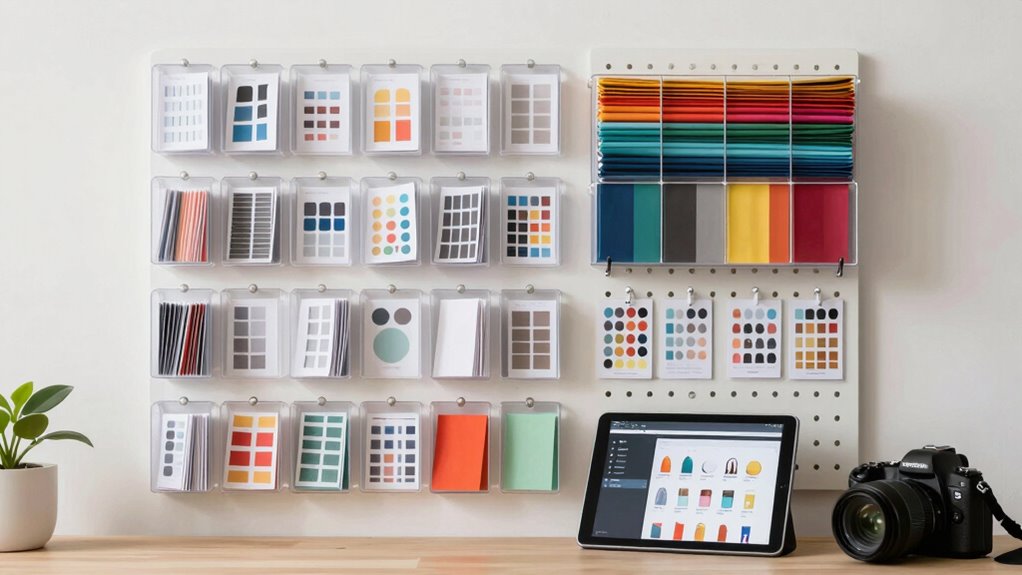
Using apps and tools to maintain your pattern collection makes it easier to organize, track, and access your patterns over time. Digital tools like cloud storage ensure your PDFs and scanned patterns are safely backed up and accessible from any device. Implementing tagging systems helps categorize patterns by type, project, or designer, making searches quick and efficient. To illustrate, here’s a comparison:
| Tool Feature | Benefit | Example Use |
|---|---|---|
| Cloud Storage | Safe, accessible storage | Save all PDFs in Google Drive |
| Tagging Systems | Easy pattern categorization | Tag by fabric type, difficulty |
| Organization Apps | Streamlined pattern management | Use Evernote or Notion |
| Search Function | Fast pattern retrieval | Find all “Summer Dresses” patterns |
| Backup Options | Data security and peace of mind | Regularly sync with cloud |
Using these tools keeps your collection organized, accessible, and protected long-term.
Troubleshoot Common Pattern Organization Challenges and Stay Flexible

Even with the best organization systems, you’ll inevitably encounter challenges like misplaced patterns, inconsistent labeling, or digital clutter that can disrupt your workflow. Pattern duplication can cause confusion, so regularly audit your collection to identify duplicates and consolidate files. Implement clear pattern version control by dating and labeling each pattern update, ensuring you’re working with the latest version. When digital clutter arises, set aside time to declutter and reorganize folders, keeping everything accessible. Flexibility is key—adapt your system as your collection grows or your needs change. Use tags or color coding to quickly locate patterns or track different pattern types. Staying proactive with these troubleshooting strategies helps you maintain a smooth, efficient pattern organization system that evolves with your sewing journey.
Frequently Asked Questions
How Often Should I Review and Update My Pattern Organization System?
You should review and update your pattern organization system every few months or after completing a major project. Regular pattern maintenance keeps your system efficient and prevents clutter. Conduct organizational audits to identify outdated or misplaced patterns, ensuring everything stays current. This routine helps you stay organized, saves time, and makes finding patterns easier, so you can focus on your projects without frustration.
What Are Some Affordable Storage Options for Large Pattern Collections?
Think of your pattern collection as a garden needing neat rows. For affordable storage, consider clear plastic bins or file boxes—they symbolize orderly growth. Use pattern categorization to keep everything accessible, and choose sturdy storage containers that protect your patterns. Repurpose old filing cabinets or use stackable crates for larger collections. These options keep costs low while ensuring your patterns stay organized and easy to find, like flowers in perfect bloom.
How Can I Prevent Digital Files From Becoming Corrupted or Lost?
You can prevent digital files from becoming corrupted or lost by creating regular digital backups on an external drive or cloud service. Guarantee your files are well-organized with clear, consistent file naming to avoid confusion. Additionally, use reliable storage solutions and update your backups frequently. This way, even if one copy gets corrupted, you’ll always have a secure, accessible version stored safely elsewhere.
Are There Specific Software Programs Recommended for Pattern Management?
Are there specific software programs recommended for pattern management? Absolutely. You should consider tools like Adobe Bridge or ACDSee for pattern cataloging and digital archiving. These programs let you organize, search, and back up your patterns efficiently. Do you want a simple, user-friendly interface? Then try tools like Google Drive or Dropbox, which also support seamless storage and sharing. Using dedicated software keeps your patterns safe and easily accessible.
How Do I Handle Pattern Duplicates or Outdated Versions Efficiently?
To manage pattern duplicates or outdated versions efficiently, start with pattern version control by labeling each file with the date or version number. Use duplicate pattern identification tools or manual checks to spot repeats. Regularly review your collection, archiving older versions separately. This keeps your storage organized, prevents confusion, and guarantees you always work with the latest pattern, saving time and reducing mistakes during your sewing projects.
Conclusion
By organizing your patterns, you’re building a well-stocked atelier where every piece is within reach, just like a craftsman’s toolbox at your fingertips. When you keep everything tidy—printed and digital—you’ll save time, reduce stress, and release your creativity with confidence. Think of your pattern collection as a garden; with regular care and attention, it flourishes effortlessly, ready to inspire your next project. Stay organized, and watch your sewing journey thrive.