Choosing between a straight stitch plate and a zigzag plate depends on your sewing project. If you’re working on precise seams, quilting, or delicate fabrics, a straight stitch plate provides better fabric control and helps prevent skipped stitches. For projects with stretch fabrics, finishing raw edges, or textured materials, a zigzag plate offers more flexibility. To guarantee ideal results, understanding when each plate truly makes a difference will keep your sewing smooth and mistake-free. Explore further for detailed guidance.
Key Takeaways
- The needle plate type matters when sewing specific fabrics or stitch types, such as straight stitches or zigzag stitches.
- Use a straight stitch plate for precise seams, quilting, or delicate fabrics to ensure accuracy and fabric stability.
- A zigzag plate is essential when sewing stretch fabrics or finishing raw edges with zigzag or decorative stitches.
- Proper needle plate selection prevents skipped stitches, fabric puckering, and machine jams during specific sewing tasks.
- Always verify compatibility and adjust settings accordingly to optimize stitch quality and machine performance.
What Is a Straight Stitch Plate and How Does It Differ From a Zigzag Plate?

A straight stitch plate is designed specifically for sewing straight stitches, with a narrow opening that guides the fabric smoothly under the needle. This plate helps maintain consistent stitch quality by reducing fabric movement during sewing. Proper thread tension is vital when using a straight stitch plate, as it guarantees even stitches and prevents puckering. Additionally, needle compatibility matters; you should use a standard sewing machine needle suited for straight stitching to avoid skipped stitches or damage. Unlike zigzag plates, which have a wider opening for multiple stitch types, the straight stitch plate limits your sewing to straight lines. Choosing the right plate ensures ideal tension, needle fit, and stitch precision, making it a key component for high-quality sewing projects. It’s also important to consider the material compatibility of your fabric to prevent snags or uneven stitches. Moreover, understanding the needle plate design can significantly influence the overall sewing outcome by ensuring the fabric remains aligned correctly during stitching. Additionally, selecting the appropriate sewing machine settings in conjunction with the plate can enhance stitch quality and fabric handling.
Why Is Choosing the Right Needle Plate Important for Your Sewing Projects
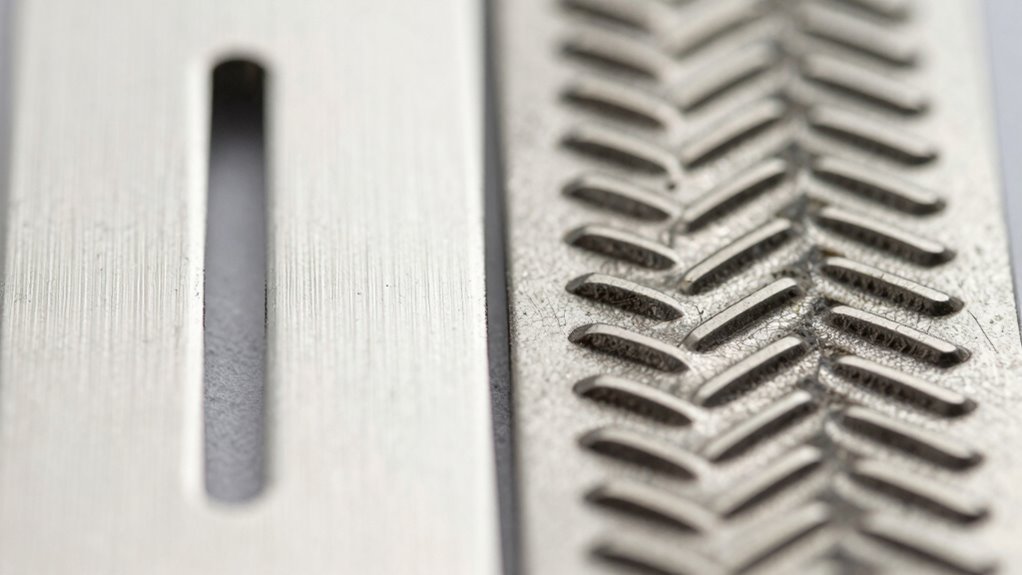
Choosing the right needle plate can reliably improve your stitch quality and guarantee your seams are even and professional-looking. It also helps you match the plate to your fabric type, preventing damage and achieving better results. Making the correct choice keeps your sewing projects smooth and frustration-free. Incorporating connected equipment into your setup can further enhance your control and precision during sewing.
Stitch Quality Enhancement
The right needle plate can considerably improve stitch quality by providing a smoother, more consistent surface for your fabric to glide over. This helps maintain proper thread tension, resulting in even stitches without puckering or skipped stitches. When the needle plate matches your project, it ensures the fabric stays aligned, especially along the seam allowance, preventing uneven stitching. A compatible plate reduces resistance and allows your machine to work efficiently, creating cleaner, more professional-looking seams. Proper stitch quality depends on how well the needle plate supports the fabric and maintains consistent contact with the feed dogs. Choosing the right plate minimizes tension issues and helps you achieve smooth, durable stitches, making your sewing projects look polished and precise. Understanding machine compatibility is essential for selecting the best needle plate for your specific sewing needs. Additionally, selecting the correct needle plate type can prevent unnecessary wear on your machine and extend its lifespan. Ensuring you use the appropriate sewing machine accessories helps maintain optimal performance and stitch quality over time. Properly matching needle plates to fabric types can also significantly reduce the need for rework and improve overall sewing efficiency. Recognizing the importance of material-specific plates can further enhance your sewing results by providing tailored support for different fabrics.
Fabric Compatibility Needs
Selecting the right needle plate directly impacts how well your machine handles different fabrics. For delicate materials like silk or chiffon, a straight stitch plate helps maintain proper thread tension and prevents puckering. Heavier fabrics such as denim or canvas require a zigzag plate to accommodate thicker layers and ensure smooth bobbin winding. Using the incorrect plate can cause skipped stitches or uneven tension, affecting the overall quality. Properly matching your needle plate to your fabric type allows for better control over thread tension, reducing the need for constant adjustments. It also ensures consistent bobbin winding, preventing thread breakage or tangling. Using the appropriate fabric compatibility can extend the lifespan of your machine and improve sewing efficiency. By choosing the right needle plate, you optimize your machine’s performance for each fabric, resulting in cleaner, more professional finishes.
How to Identify the Correct Needle Plate for Your Sewing Machine Model

Start by checking your sewing machine’s manual to find the specific needle plate recommended for your model. You should also match the model number on your machine to guarantee compatibility. This simple step helps you select the right needle plate quickly and accurately.
Check Machine Manual
To make certain you choose the right needle plate for your sewing machine, it’s essential to consult your machine’s manual. The manual provides specific details about compatible needle plates, ensuring you match the correct type to your model. It will guide you on adjusting thread tension properly for different plates, which directly impacts stitch quality. Additionally, the manual clarifies the recommended seam allowance settings for each plate, helping you achieve precise, consistent seams. Checking these specifications beforehand prevents potential damage or stitching issues. If you’re unsure about which needle plate fits your machine, always refer to the manual first. This step saves time, protects your machine, and guarantees your project’s success by ensuring you’re using the right equipment. Understanding machine compatibility is crucial for optimal sewing performance.
Match Model Number
Your sewing machine’s model number is the key to finding the right needle plate. It guarantees needle plate customization and guarantees sewing machine compatibility. Start by locating the model number, usually found on the front, side, or rear of your machine. Once you have it, consult the manufacturer’s manual or website to identify compatible parts. Matching the model number prevents installing incompatible plates that could affect stitch quality or damage your machine. Many brands offer original replacement needle plates designed specifically for each model, so always verify the number before purchasing. If you’re considering a different stitch plate, double-check the compatibility to avoid issues. Correctly matching your model number simplifies needle plate customization and ensures your sewing machine operates smoothly.
When Should You Use a Straight Stitch Plate? Key Sewing Projects and Scenarios

A straight stitch plate is ideal for projects that require precise, strong seams and minimal fabric shifting. It’s perfect when working with fabric thicknesses that demand careful control or when sewing detailed, intricate designs. Using a straight stitch plate guarantees maximum sewing precision, helping you achieve clean, professional results. Consider these scenarios:
- Quilting, where accurate seam allowances matter
- Sewing fine fabrics like silk or chiffon that can easily shift
- Topstitching and decorative seams needing neat, consistent stitches
- Piecing small fabric pieces for patchwork or appliqué projects
- When working with delicate or thick fabrics that benefit from enhanced stability to prevent fabric slipping.
In these cases, the straight stitch plate provides the stability and control you need to maintain accuracy, especially when working with delicate or thick fabrics. It’s your go-to choice for projects where seam strength and precision are critical.
How to Know When to Switch to a Zigzag Plate (and Why It Matters)
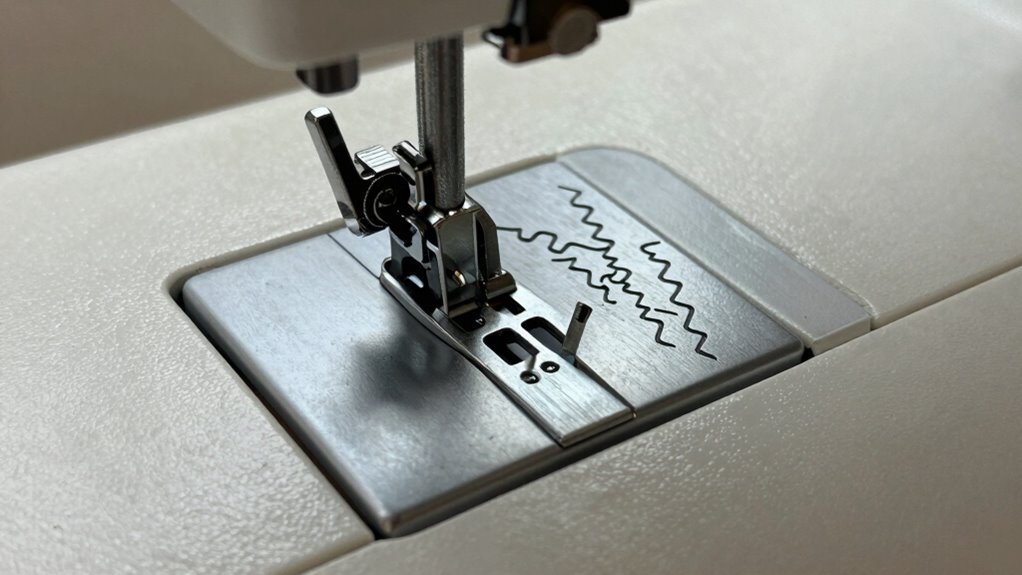
Switching to a zigzag plate becomes necessary when your sewing projects demand more flexibility, especially for finishing raw edges, preventing fraying, or creating stretch seams. If you notice that your current needle plate isn’t compatible with zigzag stitches or if you’re struggling with sewing textured or stretchy fabrics, it’s time to contemplate a change. The right sewing machine accessories, like a zigzag plate, ensure smooth operation and prevent skipped stitches. Pay attention to needle plate compatibility; not all plates fit every machine model. Using a dedicated zigzag plate allows you to sew with confidence, especially when working on projects that require zigzag stitches or specialty finishes. Knowing when to switch helps you achieve professional results and extends your machine’s versatility.
Common Mistakes to Avoid When Using the Wrong Needle Plate

Using the wrong needle plate can lead to a range of sewing issues that compromise your project’s quality. One common mistake is neglecting to adjust thread tension, which can cause puckering or uneven stitches. Another mistake is using an incompatible plate that affects bobbin winding, resulting in thread jams or inconsistent bobbin tension. Additionally, failing to check if the plate matches your stitch type can cause skipped stitches or fabric damage. Finally, using the wrong plate without testing can lead to needle breakage or fabric snags. Be sure to verify the needle plate’s compatibility with your machine and project. Properly setting thread tension and ensuring correct bobbin winding are essential to avoid these mistakes and achieve professional results. Understanding the importance of the correct needle plate helps prevent many common sewing problems.
Signs Your Stitch Quality Is Suffering Because of the Needle Plate

If your stitches start to look uneven, skipped, or puckered, it’s a clear sign that your needle plate might be causing problems. A worn or misaligned needle plate can interfere with fabric movement, especially with delicate or thick fabric types. This can lead to inconsistent stitches and a compromised sewing quality. Regular sewing machine maintenance helps identify issues early, but paying attention to stitch appearance is key. Additionally, improper air purifier maintenance can introduce dust or debris into your sewing space, affecting machine performance. Properly maintaining both your sewing machine and air quality can help ensure consistent stitching results. Staying aware of needle plate alignment can also prevent many common sewing issues before they arise.
How to Change Needle Plates Safely and Step-by-Step
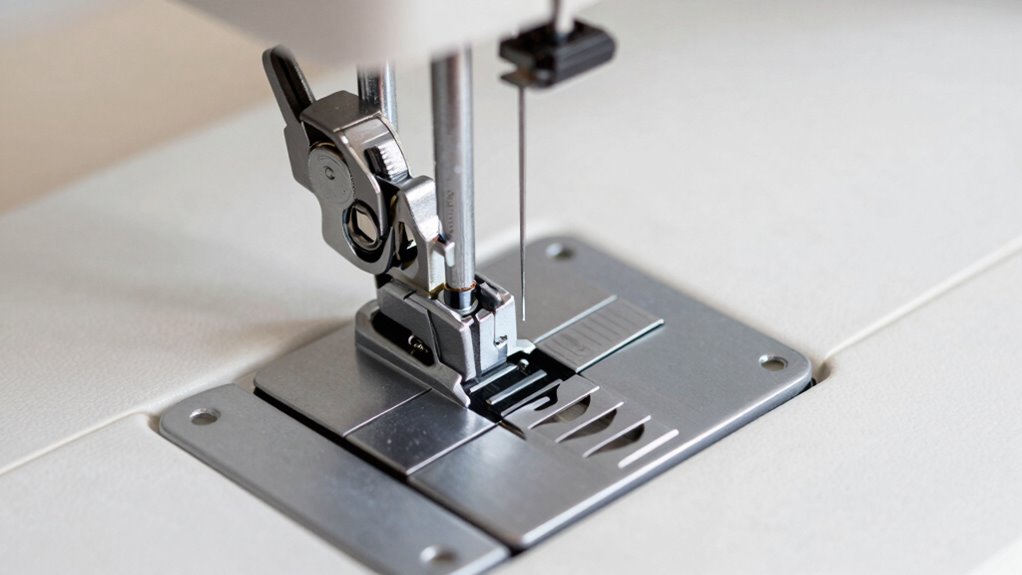
Changing your needle plate safely is vital to prevent damage to your machine and guarantee smooth sewing. First, turn off and unplug your machine to avoid accidental injury. Remove the presser foot and needle to access the plate easily. Carefully unscrew the existing needle plate, keeping track of the screws. When installing the new plate, ensure it’s aligned correctly with the feed dogs and that the screw holes match. Tighten screws securely but avoid overtightening, which could crack the plate. While changing the needle plate, check the thread tension and bobbin winding setup to ensure they’re properly adjusted for your new setup. Additionally, it’s helpful to consult your machine’s manual for specific guidance on needle plate compatibility and proper installation procedures. Proper alignment ensures smooth fabric feed and prevents sewing issues.
- Use the correct screwdriver size to prevent stripping screws
- Clean lint and debris from the bobbin area
- Confirm the feed dogs move smoothly with the new plate
- Test stitch on scrap fabric before sewing your project
Final Tips: Deciding Between a Straight Stitch and Zigzag Plate for Your Sewing Needs
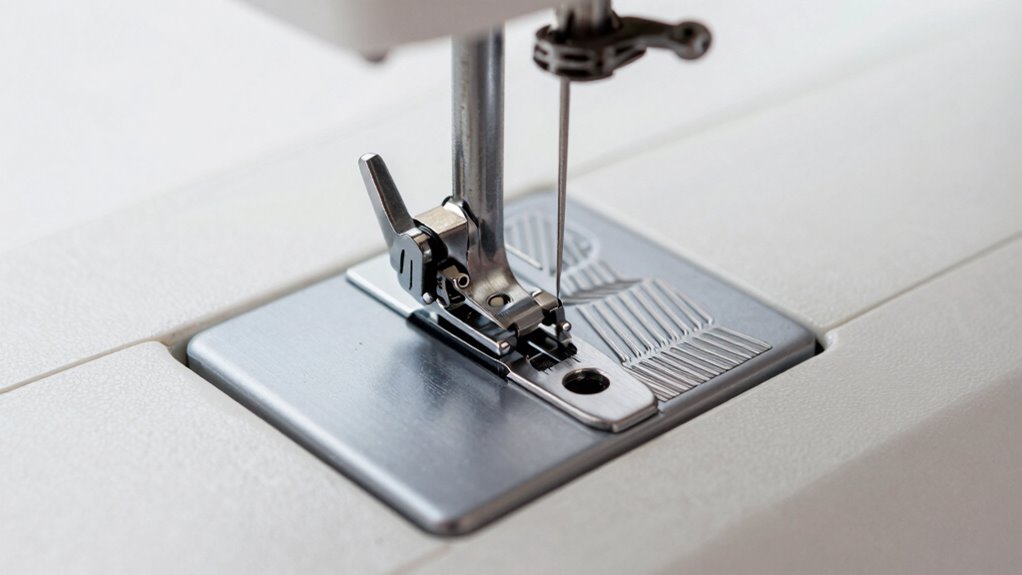
Choosing the right needle plate depends on the type of stitches you’ll be sewing most often. If you primarily do straight stitches, a straight stitch plate helps maintain consistent stitch quality and reduces fabric friction. For zigzag or decorative stitches, a zigzag plate provides the necessary clearance and smooth operation. Consider your machine’s thread tension—using the correct tension guarantees even stitches and prevents puckering. Also, check your bobbin case; some plates are better suited for specific bobbin mechanisms, which affects stitch formation and tension stability. Ultimately, selecting the appropriate plate can improve your sewing experience, reduce fabric jams, and enhance stitch precision. Take time to evaluate your projects and sewing style to decide which plate best supports your needs. Understanding sewing machine components can help you make more informed choices.
Frequently Asked Questions
Can I Use a Zigzag Plate for Straight Stitches?
You can use a zigzag plate for straight stitches, but compatibility issues might arise. The zigzag plate isn’t designed for precise straight stitching, which could cause fabric slipping or uneven stitches. For the best results, stick to the straight stitch plate when doing straight stitches, as it provides a smoother, more accurate stitch. If you don’t have one, consider alternative options like adjusting your settings or using a different plate to guarantee quality stitching.
Are All Sewing Machine Needle Plates Interchangeable?
Like a vintage record player, not all sewing machine needle plates are interchangeable. You must check your machine’s model and compatibility. Some accessories, like straight stitch or zigzag plates, are designed for specific stitches. Using the wrong plate can affect stitch quality and machine maintenance. Always consult your sewing machine manual before swapping plates to guarantee proper fit and function, avoiding unnecessary wear or damage.
How Does the Needle Plate Affect Stitch Tension?
Your needle plate directly impacts tension consistency and stitch quality. If the plate isn’t suited to your fabric or stitch type, you might notice uneven tension, skipped stitches, or puckering. Using the correct needle plate guarantees the fabric feeds smoothly, maintaining even tension throughout your sewing. When you choose the right plate, your stitches stay balanced, your tension remains consistent, and your project achieves a professional, polished look.
Is It Necessary to Change Plates for Decorative Stitches?
You don’t always need to change plates for decorative stitches, but plate compatibility is important. If your current needle plate isn’t designed for decorative stitches, you might experience issues like skipped stitches or uneven tension. To guarantee smooth sewing, check if your plate supports the specific decorative stitches you want to use. Using the correct plate helps maintain stitch quality and prevents frustration during your sewing projects.
What Tools Are Needed to Replace a Needle Plate Safely?
To replace a needle plate safely, you’ll need a screwdriver compatible with your machine, typically a small Phillips or flat-head. Check your tool compatibility to guarantee it fits properly. Before starting, follow safety precautions: unplug your machine, wear safety glasses if needed, and work on a clean, stable surface. Carefully loosen screws, remove the old plate, and secure the new one, making sure everything is aligned correctly.
Conclusion
Think of your needle plate as the foundation of a sturdy bridge. Choosing the right one guarantees your stitches cross smoothly and confidently, connecting your ideas to reality. When you pick the perfect plate for each project, sewing becomes a seamless journey rather than a shaky crossing. So, trust your instincts, switch plates when needed, and build your sewing skills on a solid, well-supported base—your creations will thank you.