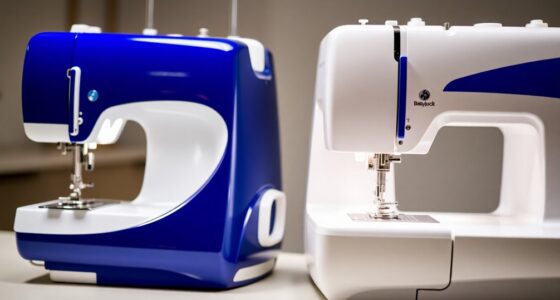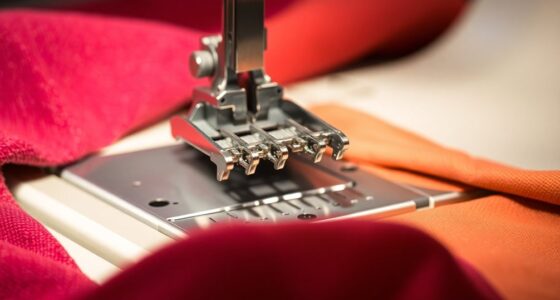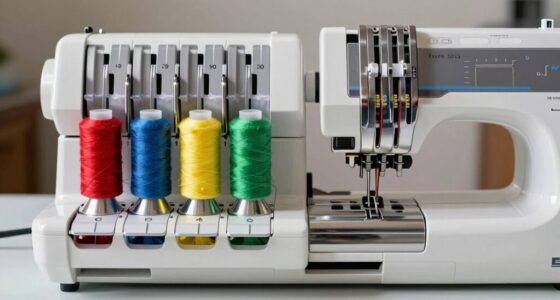
A serger speeds you up when finishing raw edges, assembling knit fabrics, or creating professional seams in one step. It reduces sewing time and gives a polished look. However, it can slow you down on detailed projects like topstitching, embroidery, or handling delicate fabrics, which need careful adjustments. If you want to learn when a serger truly boosts efficiency—while recognizing its limits—keep exploring these helpful tips.
Key Takeaways
- A serger speeds up finishing raw edges and assembling knit fabrics, saving time on standard sewing projects.
- It slows down when detailed topstitching or embroidery requires precision and careful fabric handling.
- Beginners may experience delays due to threading, tension adjustments, and setup time, reducing initial speed benefits.
- For delicate fabrics or projects needing exact seam allowances, a standard sewing machine offers better control.
- Sergers enhance efficiency in producing professional, stretchable seams but are less effective for intricate, decorative stitching.
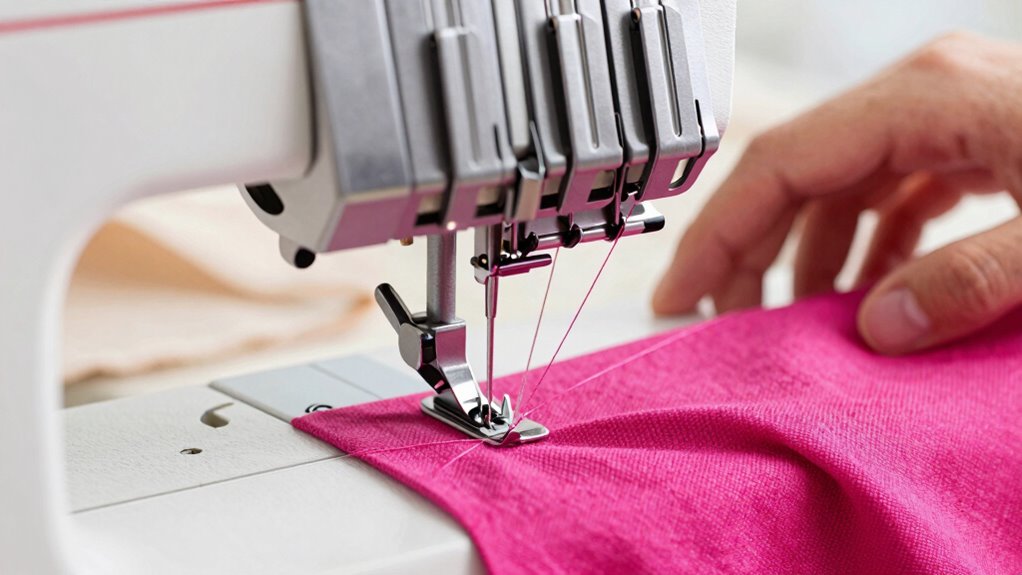
A serger, also known as an overlock machine, can considerably boost your sewing speed and quality—if you know when and how to use it. It’s a powerful tool for fabric finishing, allowing you to create professional-looking edges and seams quickly. When used correctly, it enhances sewing precision, making your projects look polished and durable. However, it’s not always the best choice for every situation. Understanding when a serger speeds you up and when it might slow you down is key to maximizing its benefits.
For tasks like finishing raw edges or assembling knit fabrics, a serger is a game-changer. It cuts, sews, and finishes in one smooth operation, dramatically reducing your sewing time. If you’re working on projects that require a clean, stretchable seam—such as activewear or T-shirts—using a serger allows you to achieve a professional finish effortlessly. Its ability to produce neat, elastic seams means your garments will hold up better over time, and the fabric finishing will look seamless. This efficiency comes with increased sewing precision, as the machine guides the fabric consistently through multiple threads, resulting in uniform stitches and a polished look. Understanding serger functions can help you optimize its use and avoid common pitfalls. Additionally, proper threading and tension settings are crucial for smooth operation and consistent results.
A serger streamlines finishing raw edges and sewing stretchy seams for a professional, polished look.
But, there are times when a serger might slow you down rather than speed you up. If you’re working on intricate topstitching, detailed embroidery, or projects that demand precise seam allowances, a standard sewing machine may be more suitable. Sergers are limited in their stitch variety and don’t handle detailed topstitching well, which could lead to more rework and frustration. Additionally, for projects with multiple layers or delicate fabrics requiring careful handling, setting up and adjusting a serger can be time-consuming compared to a regular machine. In such cases, the learning curve can also temporarily hinder your progress until you gain more experience. In these situations, the speed advantage diminishes, and you might find yourself fighting the machine rather than working efficiently.
Another consideration is the learning curve. If you’re new to sewing, mastering a serger’s settings and threading can initially slow you down. It takes practice to achieve consistent fabric finishing and sewing precision. Once you’re comfortable, however, the speed benefits are undeniable. But rushing into complex projects without sufficient experience might result in errors that slow you down and compromise the finished quality.
serger sewing machine for beginners
As an affiliate, we earn on qualifying purchases.
As an affiliate, we earn on qualifying purchases.
Frequently Asked Questions
Can a Beginner Operate a Serger Effectively?
Yes, a beginner can operate a serger effectively with some practice. Focus on adjusting thread tension correctly and selecting the right needles for your fabric. Take your time to learn how each setting impacts your stitches, and don’t rush through threading. As you gain confidence, you’ll find that a serger speeds up your sewing projects, making finishing touches faster and more professional-looking.
What Fabrics Are Best Suited for Serging?
You should choose fabrics that are stable and easy to handle for serging, like woven cottons, linen, and canvas. These fabrics provide good seam durability and don’t stretch excessively, making them ideal for beginners. Avoid highly stretchy fabrics, such as Lycra or spandex, unless you’re experienced, as they can cause skipped stitches or puckering. Selecting the right fabric guarantees smooth operation and professional-looking seams.
How Do I Troubleshoot Common Serger Issues?
To troubleshoot common serger issues, start by checking thread tension; uneven stitches often result from incorrect tension settings. Next, inspect needle alignment—misaligned needles can cause skipped stitches or fabric damage. Make sure the threads are correctly threaded through all guides and tensions. Regularly clean the machine to remove lint and dust, which can impede performance. Adjust tension and needle alignment as needed, and test on scrap fabric before resuming your project.
Is Maintenance Required for a Serger?
Think of your serger as a high-performance car—you need regular maintenance to keep it running smoothly. Yes, maintenance is required. You should routinely check thread tension and replace needles every few projects to prevent issues. Ignoring these steps is like neglecting oil changes; it can cause jams or skipped stitches. A little upkeep guarantees your serger stays speedy and reliable, saving you time and frustration in the long run.
Can a Serger Replace a Regular Sewing Machine?
A serger can’t fully replace a regular sewing machine because it specializes in finishing edges and creating seams quickly, but it lacks the versatility for detailed stitching, buttonholes, or precise control. You need to adjust thread tension and stitch length on both machines depending on your project. While a serger speeds up seam finishing and edge finishing, a regular sewing machine remains essential for more intricate, detailed work.
Conclusion
So, while a serger can be your swift partner in crafting perfect seams and finishing touches, it’s wise to remember that sometimes, it’s better to let patience lead the way. Rushing through with a speedy machine might save time, but it can also leave you a bit tangled in frustration. Embrace its quickness when needed, but don’t forget that taking a gentle, deliberate approach often results in the most beautifully finished projects.