When choosing a pressing surface, consider the size and project type. For garments, opt for smaller, padded mats or adjustable ironing boards to control heat and prevent distortion. For quilts, go for large, sturdy tables that support big panels and even heat distribution. Pay attention to heat settings suited for different fabrics, and look for surfaces with good insulation. If you want to master selecting the best surface for your projects, there’s more to explore below.

Get business pricing on tools and workshop supplies
- Business-only prices and quantity discounts
- Tax-exempt purchasing
- Multiple users, one account, clear invoices
Key Takeaways
- Select smaller, padded or adjustable surfaces for precise garment pressing; opt for larger, sturdy tables for quilts.
- Ensure even heat distribution and control, tailored to fabric types, to prevent damage and achieve smooth results.
- Use surfaces with adjustable temperature settings for delicate fabrics and higher heat for sturdier materials.
- Consider size and area to prevent shifting and creases—smaller for garments, larger for quilts.
- Choose surfaces with insulation and consistent heat to maintain fabric integrity and improve pressing quality.
Are you unsure which pressing surface is best for your needs? Choosing the right pressing surface depends heavily on what you’re pressing—garments or quilts—and the specific fabric types you’re working with. Garments require a surface that allows for precise control, smooth pressing, and minimal distortion, while quilts need a larger, flat area to accommodate their size without creating unwanted creases. Your choice influences not only the quality of your finished project but also the longevity of your fabrics.
Choosing the right pressing surface depends on whether you’re working with garments or quilts and the fabric types involved.
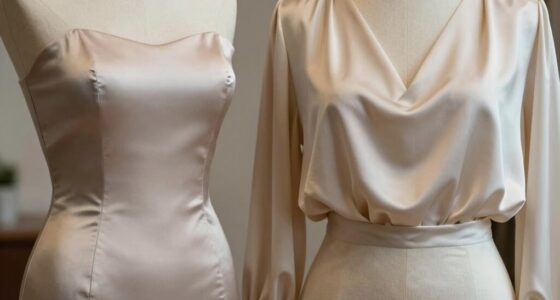
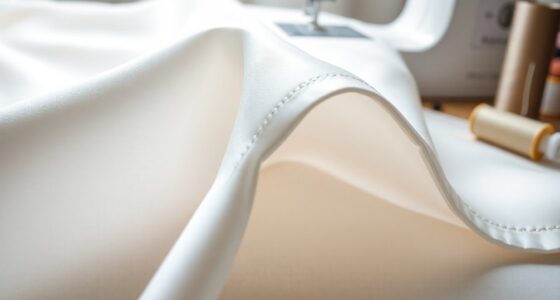
When pressing garments, a smaller, padded surface like a pressing mat or a dedicated ironing board with adjustable height often works best. These surfaces offer better control over heat application, especially when working with delicate fabric types like silk, chiffon, or linen. The fabric types you use dictate the heat settings you should select; delicate fabrics require lower heat to prevent scorching or melting, while sturdier fabrics like cotton or denim can handle higher temperatures. Using the correct heat settings ensures your fabric remains intact and looks professional. A good pressing surface for garments also provides a smooth, even heat distribution, which prevents shiny marks or shiny fabric spots caused by excessive heat. Additionally, choosing a surface with consistent heat distribution can help maintain the integrity of delicate fabrics during pressing.
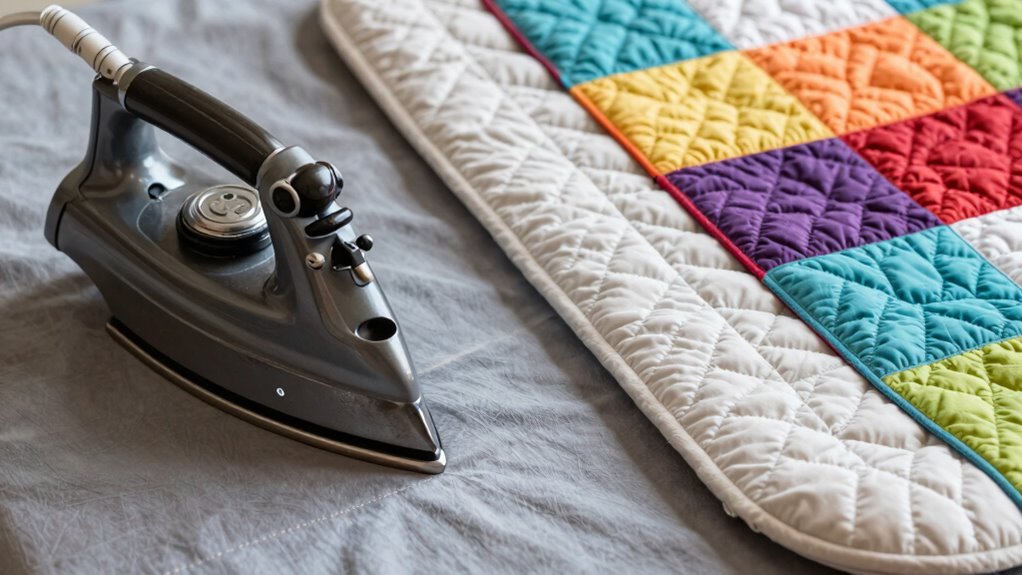
In contrast, quilting demands a larger, flat pressing surface—preferably a wide, sturdy table or a dedicated pressing station—so you can press large sections without shifting or creating new creases. Quilts often contain thicker layers and multiple fabrics, so the pressing surface needs to accommodate the whole quilt block or panel at once. For quilting, you’ll want a surface that allows for consistent heat distribution across its entire area, preventing uneven pressing that can distort the quilt’s shape. When working with quilt fabrics, you also need to think about the fabric types involved; some may be more sensitive to heat, requiring lower heat settings. Using a pressing surface with a built-in pressing mat or a heated pressing station can help evenly distribute heat and pressure, resulting in crisp seams and smooth, flat quilt tops. Additionally, understanding fabric properties can help you select the optimal pressing method for different projects. Moreover, selecting a surface with appropriate insulation can prevent heat loss and ensure more consistent results.
Furthermore, considering the type of pressing surface can influence your overall pressing results and the ease of use during your sewing projects. Ultimately, whether you’re pressing garments or quilts, understanding fabric types and adjusting heat settings accordingly is key. An appropriate pressing surface complements these adjustments by providing stability, even heat, and enough space for your project. For garments, focus on control and precision; for quilts, prioritize size and even heat distribution. By matching your pressing surface to your project’s needs, you’ll achieve better results, protect your fabrics, and make pressing a much more enjoyable part of your sewing process.
adjustable ironing board for sewing
As an affiliate, we earn on qualifying purchases.
As an affiliate, we earn on qualifying purchases.
Frequently Asked Questions
Can I Use the Same Pressing Surface for All Fabrics?
You can’t always use the same pressing surface for all fabrics because fabric compatibility varies. Delicate or heat-sensitive materials need a softer, more gentle surface, while heavier fabrics require a durable one that withstands frequent use. Choose a pressing surface that matches your fabric type to prevent damage and guarantee longevity. Investing in a versatile, durable surface helps you handle different fabrics effectively without compromising quality or safety.
How Do I Clean and Maintain Different Pressing Surfaces?
To clean and maintain different pressing surfaces, you should regularly wipe them with a damp cloth, ensuring fabric compatibility and avoiding damage. For surfaces prone to stains or residue, use gentle cleaning agents suitable for their material. Check surface durability by avoiding abrasive cleaners, which can cause scratches or wear. Proper maintenance extends the lifespan of your pressing surfaces and keeps your fabrics safe from unwanted marks or damage.
What Is the Ideal Size for a Pressing Surface?
You should choose a pressing surface that’s large enough for your projects, typically at least 24×36 inches, to accommodate both garments and quilts comfortably. Make sure it’s compatible with different fabrics to prevent damage, and opt for a surface with good surface durability to withstand frequent use. A sturdy, appropriately sized pressing surface makes pressing easier and safer, helping you achieve smooth, professional results every time.
Are Portable Pressing Surfaces Effective for Large Projects?
Portable pressing surfaces can be surprisingly effective for large projects, providing incredible convenience without sacrificing quality. While they might seem small compared to traditional ironing boards, their portability offers unmatched flexibility, letting you tackle big tasks with ease. You gain quick setup, space-saving storage, and the ability to work anywhere. For large projects, portable surfaces boost efficiency, making even massive quilts or extensive garment collections manageable and less overwhelming.
How Does Pressing Surface Material Affect Garment or Quilt Quality?
Your pressing surface material substantially impacts garment and quilt quality by influencing fabric finishes and pressing temperature control. A smooth, heat-resistant surface helps prevent sticking, scorching, or shiny spots, ensuring your fabric’s texture stays intact. Choosing a surface that maintains consistent heat allows you to press at the correct temperature, which preserves the fabric’s finish and prevents damage. This careful selection results in professional-looking, well-pressed garments and quilts.
Conclusion
When selecting a pressing surface, consider the type of items you’ll handle most often. For instance, if you frequently press delicate garments, a smooth, heat-resistant surface like a silicone mat works well. Conversely, quilts benefit from a larger, cushioned surface to prevent creases. Imagine a quilter who switches between a padded pressing mat for quilts and a flat, heat-resistant board for garments—tailoring your surface choice to each task guarantees perfect results and extends your equipment’s life.
Fall yard work Picks
leaf blowers
As an affiliate, we earn on qualifying purchases.