Fabric backings provide essential support and stability for your structured sewing projects. They help keep fabrics from stretching, warping, or fraying over time, ensuring your seams stay crisp and your finished items look professional. Different backings suit various fabrics and project needs, from lightweight stabilizers to heavy-duty upholstery fabrics. Using the right backing improves durability and control, making complex embellishments easier. If you want to master how to choose and apply backings, you’ll find helpful details ahead.

Get business pricing on tools and workshop supplies
- Business-only prices and quantity discounts
- Tax-exempt purchasing
- Multiple users, one account, clear invoices
Key Takeaways
- Fabric backings provide stability and support, preventing stretching, warping, and maintaining shape in structured sewing projects.
- Different types of backings, like fusible interfacing or sturdy canvas, are chosen based on fabric weight and project needs.
- Using backings ensures precise seams, controls fraying, and reinforces stress-prone areas for durability.
- Proper backing application helps achieve crisp edges, sharp corners, and supports complex embellishments.
- Overall, backings enhance the project’s stability, appearance, and longevity, resulting in professional, polished finishes.
Fabric backings play a crucial role in providing stability and support to various textiles and upholstery projects. When you’re working on structured sewing projects, choosing the right backing can make all the difference in how your finished piece looks and holds up over time. Backings help prevent fabric from stretching or warping, guaranteeing that your project maintains its shape and structure. This is especially important when you’re incorporating embellishment techniques, as stable fabric provides a solid foundation for adding decorative elements without distorting the design. You want your embellishments to sit perfectly and stay in place, and that’s where a good backing comes into play. It supports the main fabric, so any embroidery, appliqué, or beading doesn’t pull or bunch, maintaining a clean, professional appearance.
Fabric backings provide essential support, ensuring stability and a professional finish for all your sewing and embellishment projects.
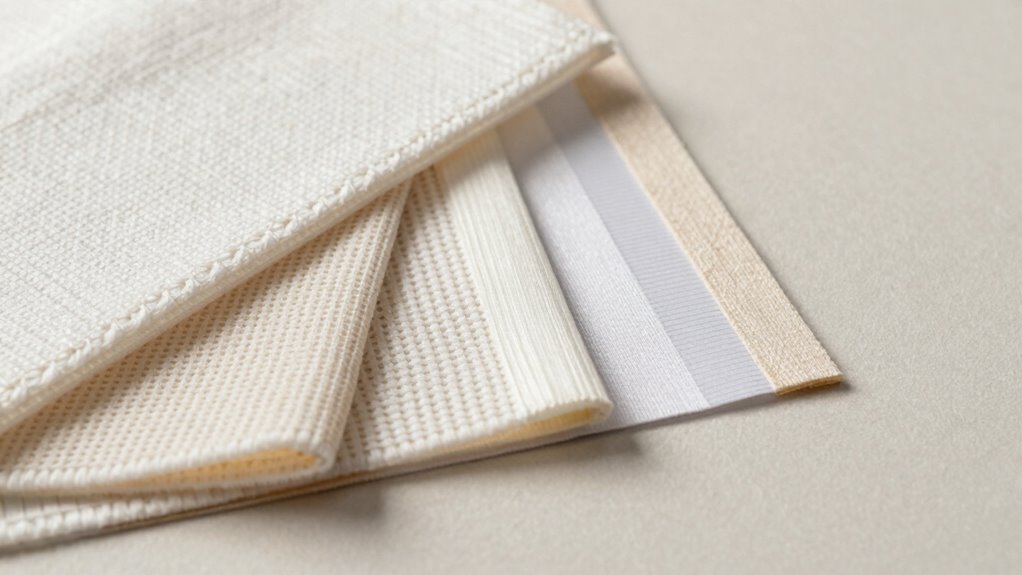
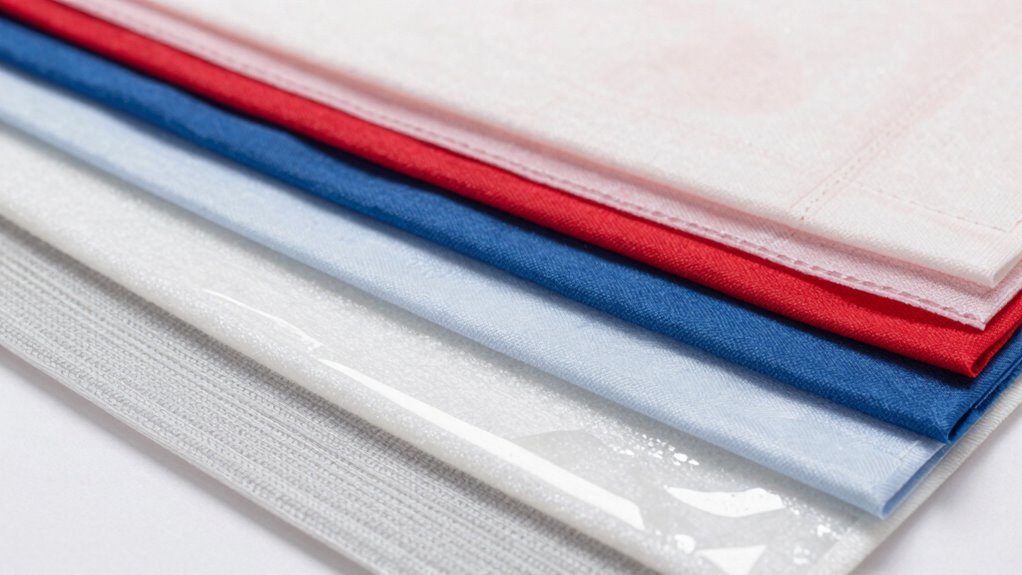
The choice of fabric backing depends on your project’s needs. For example, when working with delicate or lightweight fabrics, you might opt for a fusible interfacing or a lightweight stabilizer that adheres to the fabric, giving it extra support without adding bulk. For heavier upholstery projects, a sturdier backing such as moleskin or cotton canvas can provide the necessary strength and durability. The goal is to select a backing that enhances fabric stability without compromising the overall look and feel of your project. This balance ensures your sewn item remains durable yet aesthetically pleasing. Proper application of backing also helps in achieving precise seams, which are essential for a professional finish. Using the right backing material can also help in controlling fraying and shifting during sewing, leading to a neater, more polished result. Additionally, understanding the different types of stabilizers available can help you tailor your backing choice to specific project requirements.
Using fabric backings is also about precision. When you’re sewing intricate designs or structured pieces, the backing acts as an essential layer that helps you achieve crisp seams and sharp corners. It prevents fraying and shifting during sewing, which can be a challenge when working with multiple layers or delicate textiles. Many sewists also use backing materials to reinforce areas that will undergo stress, like handles or corners, giving your project longevity and resilience. Proper backing application improves your control over the fabric, making it easier to execute complex embellishment techniques accurately. Additionally, selecting the appropriate backing can contribute to the overall fabric stability, ensuring your project remains intact and visually appealing over time. Recognizing the differences between various stabilizers can also help in selecting the most suitable material for your specific sewing needs.
Ultimately, fabric backings are more than just support—they’re a foundational element that influences the quality and finish of your structured sewing projects. By carefully selecting and applying the right backing, you ensure your textiles stay stable, your embellishments look flawless, and your finished piece maintains its intended shape and function. Whether you’re creating decorative cushions, intricate embroidery, or sturdy upholstery, a thoughtful choice of backing elevates your craftsmanship and results in a polished, professional outcome.
As an affiliate, we earn on qualifying purchases.
Frequently Asked Questions
Can Fabric Backings Be Reused for Different Projects?
Yes, fabric backings can be reused for different projects if you remove them carefully. Start with gentle backings removal to avoid damaging the fabric. Once removed, store the backings flat or rolled to prevent creases, and keep them in a clean, dry place. Follow storage tips like labeling and protecting them from dust. Reusing backings saves money and time, making your sewing projects more sustainable and efficient.
How Do I Choose the Right Backing for Delicate Fabrics?
When choosing the right backing for delicate fabrics, opt for a lightweight, soft backing fabric that provides gentle support without causing damage. Look for backing fabric choices like silk organza or fine muslin, which offer delicate fabric support. Test different options on a scrap piece first to see how they interact with your fabric. Always prioritize smooth, non-abrasive backings to maintain the delicate fabric’s integrity and appearance.
Are There Eco-Friendly Fabric Backing Options Available?
They say “every little bit helps,” and eco-friendly fabric backings do too. Yes, biodegradable adhesives and organic cotton options are available, making your sewing projects more sustainable. These choices reduce environmental impact and are safe for delicate fabrics. By selecting these materials, you guarantee your creations are eco-conscious without sacrificing quality. So, when planning your next project, look for biodegradable adhesives and organic cotton backing to keep your craft green and beautiful.
How Do Fabric Backings Affect Sewing Machine Tension?
Fabric backings can profoundly affect your sewing machine tension by altering fabric stability. When you add a backing, you might need to make tension adjustments to prevent puckering or uneven stitches. A stable backing helps maintain even tension, but if it’s too thick or stiff, you may need to tighten or loosen your tension settings. Always test on scrap fabric first to find the right tension adjustment for smooth, professional results.
Can Fabric Backings Be Applied After the Project Is Completed?
You can definitely apply fabric backings after completing your project, but it’s a bit like putting the cart before the horse. Use temporary adhesion methods, such as fusible web or spray adhesive, to attach the backing securely. Keep in mind, backing removal might be tricky once set, so make certain you’re ready to peel it off if needed. Always test on scrap fabric first to prevent any surprises.
Conclusion
So, next time you’re diving into a structured sewing project, remember that choosing the right fabric backing isn’t just a detail—it’s a game-changer. Funny how a simple layer can make all the difference, isn’t it? As you get more comfortable, you’ll find that the perfect backing naturally appears, almost like a happy coincidence. Trust your instincts and enjoy the process—your sewing projects will thank you for it!
Halloween Picks
halloween
As an affiliate, we earn on qualifying purchases.