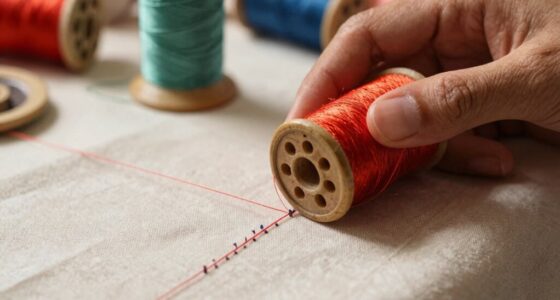
To mark fabric effectively, start by preparing it with washing and ironing to guarantee a smooth, clean surface. For simple lines, use tailor’s chalk, applying gentle pressure for clear markings that wash or brush away easily. For more precise or temporary marks, choose suitable pens like water-soluble or air-erasable types, following manufacturer instructions for removal. You can also use tracing paper by placing it over your pattern and tracing with compatible tools, then transferring the design onto fabric. Continue to explore these methods to master your craft.
Key Takeaways
- Choose appropriate marking tools based on fabric type and marking purpose, ensuring they are easy to remove later.
- Use tailor’s chalk for visible, erasable lines by applying gentle pressure; test on a small area first.
- Select suitable marking pens—water-soluble, air-erasable, or permanent—according to whether markings need to be temporary or permanent.
- For tracing paper method, place tracing paper over the pattern, trace with compatible tools, then transfer lines by positioning traced side down on fabric.
- Always test marking methods on a small, inconspicuous fabric area to ensure erasability and fabric safety.

Marking methods on fabric are essential tools for anyone involved in sewing, tailoring, or quilting. Properly marking your fabric ensures accuracy and helps you achieve professional results. Before you start marking, you should focus on fabric preparation. This means washing, ironing, and stabilizing your fabric to remove wrinkles and creases that could interfere with precise markings. Once your fabric is smooth and clean, you’re ready to select the right marking tools. Choosing the appropriate tools depends on your fabric type, the markings’ purpose, and how easily they can be removed later.
Using the right marking tools is vital. Chalk is a popular choice because it’s easy to see and simple to erase. You might prefer tailor’s chalk, which comes in various colors, allowing you to choose one that contrasts well with your fabric. To use chalk effectively, run it along the pattern lines or directly mark the fabric, applying gentle pressure to create clear, visible lines. Be cautious, though—chalk can sometimes smudge or fade if you handle the fabric too much. For delicate fabrics, consider using a chalk pencil or chalk wheel, which produce finer lines that won’t damage the material.
Choosing the right marking tool, like tailor’s chalk, ensures clear, erasable lines on fabric without damage.
Pens are another common marking tool. Fabric marking pens come in water-soluble, air-erasable, or permanent varieties. Water-soluble pens are excellent for temporary markings; they dissolve with a damp cloth or water, leaving no trace once your sewing is complete. Air-erasable pens can be removed with a special eraser or by simply pressing with heat, like an iron. Permanent markers, on the other hand, are best avoided unless you’re certain the markings won’t need to be removed, as they can be difficult to erase and might stain delicate fabrics.
Tracing paper is a versatile method for transferring patterns onto fabric. To use it, place the tracing paper over your pattern and trace with a marking tool that’s compatible with your fabric. Then, position the tracing paper with the traced side down onto your fabric, and trace over your lines again, pressing firmly to transfer the markings. This method is especially helpful for complex designs or when you need multiple copies. Remember, whichever marking method you choose, always test it on a small, inconspicuous area of your fabric first. This way, you’ll confirm it’s easy to remove and won’t damage your material. Additionally, understanding the importance of proper marking techniques can maximize accuracy and lead to better sewing results.
Frequently Asked Questions
Are There Eco-Friendly Marking Options for Fabric?
Yes, there are eco-friendly markers for sustainable fabric marking. You can choose eco-friendly markers made from biodegradable or non-toxic materials that minimize environmental impact. These options are safe for you and the planet, providing a sustainable way to mark fabric without harmful chemicals. Look for brands committed to eco-conscious practices, ensuring your sewing projects stay green while giving you effective, safe tools for your creative work.
How Long Do Chalk Marks Typically Last?
Chalk marks on fabric usually last through the entire sewing process but can fade or smudge with handling or washing. Fabric marking longevity depends on chalk durability, which varies by brand and type. For best results, choose high-quality chalk designed for fabric, and test it on a scrap first. Typically, chalk marks are easily removable with brushing or light washing, making them ideal for temporary markings.
Can Tracing Paper Be Reused on Different Fabrics?
Tracing paper can’t be reused on different fabrics because its fabric marking durability is limited; it’s designed for one-time transfer. When you attempt to reuse it, the marks often fade or become smudged, making it unreliable. For multiple fabrics, consider using reusable options like tracing paper with carbon or transfer pens, which offer better tracing paper reuse and maintain clear markings across various projects.
Which Marking Method Is Best for Delicate Fabrics?
For delicate fabrics, you want the gentlest marking method—chalk or tracing paper. Chalk is easily brushed away, leaving no residue, perfect for fabric dyeing and sewing patterns. Tracing paper, when used with a light hand and appropriate transfer techniques, minimizes damage. Both methods guarantee your fabric stays pristine, allowing you to mark accurately without compromising its delicate fibers or affecting your overall sewing project.
How Do I Remove Stubborn Ink or Chalk Markings?
To remove stubborn ink or chalk marks, you can try gentle ink removal techniques like dabbing with rubbing alcohol or using a stain remover. For persistent chalk marks, lightly dampen the fabric and gently scrub with a soft brush or cloth. Always test a small hidden area first to avoid damage. Patience and gentle methods help prevent fabric damage while effectively clearing stubborn markings.
Conclusion
Now that you know how to use chalk, pens, and tracing paper on fabric, you’re practically a sewing superhero! With these tools, you’ll conquer any project, transforming raw fabric into stunning masterpieces. No mistake is too big, no detail too tiny—your creativity knows no bounds. Embrace these marking methods and watch your sewing skills soar to legendary heights. Get ready to make magic happen, because your fabric journey is about to become legendary!