Fabric pilling happens when tiny fiber balls form on your clothes due to friction, wear, or washing. It’s more common with synthetic fibers like polyester and loose weaves, but natural fibers like silk resist it better. To prevent pills, wash gently, turn clothes inside out, and use fabric softeners. Taking care of your fabrics can help, and if you keep going, you’ll discover simple ways to minimize and fix pilling effectively.
Key Takeaways
- Fabric pilling occurs when loose fibers tangle into small balls on the surface due to friction and fiber shedding.
- Synthetic fibers like polyester shed more, increasing pill formation, while natural fibers are generally more resistant.
- Tightly woven fabrics and smooth fibers reduce pilling by minimizing fiber loosening and surface fuzz.
- Early detection involves inspecting for fiber lifting, fuzzy patches, or tiny fiber balls, especially in high-friction areas.
- Prevent pilling by gentle washing, turning clothes inside out, avoiding overloading, and choosing fabrics with durable finishes.

Brother Sewing Machine, XM2701, Lightweight Machine with 27 Stitches, 6 Included Sewing Feet
27 Unique built-in stitches: The XM2701 includes 27 built-in stitches including decorative, blind hem, zigzag, and stretch stitches...
As an affiliate, we earn on qualifying purchases.
What Is Fabric Pilling and Why Does It Happen?

Fabric pilling occurs when tiny balls of fiber form on the surface of your clothing or textiles. This happens because of the fiber composition and fabric weave. Certain fibers, like polyester or wool, are more prone to pilling due to their fiber strength and surface texture. Synthetic fibers tend to shed more, leading to pills over time, while natural fibers like cotton usually resist pilling unless blended with synthetics. The fabric weave also influences pilling; tightly woven fabrics are less likely to pill than loosely woven ones because fibers are held securely in place. When fibers rub against each other during wear or washing, loose fibers break free and tangle into pills. Fiber fragility is a key factor in understanding how easily pills can form. Understanding these factors helps you anticipate which fabrics are more resistant to pilling and how to care for them. Additionally, innovative fabric treatments can reduce pilling and extend the lifespan of textiles.
Brother CS7000X Computerized Sewing and Quilting Machine, 70 Built-in Stitches, LCD Display, Wide Table, 10 Included Feet, White
70 UNIQUE BUILT-IN STITCHES: The Brother CS7000X sewing and quilting machine includes 70 built-in stitches including utility, decorative,...
As an affiliate, we earn on qualifying purchases.
How to Spot Pilling Early on Your Clothes
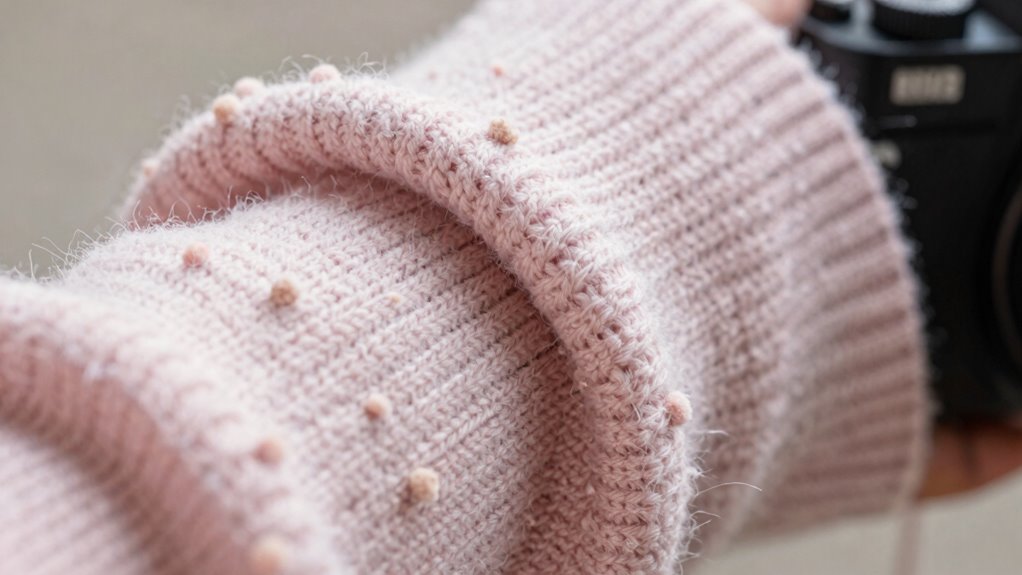
To spot pilling early, check your clothes for fibers lifting or small fuzz balls starting to form. Feel the fabric for a rough texture or tiny bumps that weren’t there before. Also, watch for subtle color changes that indicate fibers are coming loose. Monitoring the fabric’s fiber integrity can help you detect pilling before it becomes more noticeable. Additionally, inspecting areas prone to friction, such as underarms or seams, can provide early signs of pilling fabric wear. Regularly examining high-friction zones helps prevent significant pilling fabric deterioration.
Check for Fibers Lifting
Because fibers tend to lift before they form visible pills, checking for loose threads is an effective way to spot early signs of pilling. Look closely at your fabric’s surface for any fiber lifting or loose surface fibers that might indicate pilling is starting. These tiny, raised fibers are often the first clue before pills become noticeable. To better understand what to look for, consider this table:
| Fiber Behavior | What to Watch For |
|---|---|
| Fiber Lifting | Small surface fibers lifting away |
| Loose Threads | Threads pulling away from fabric |
| Surface Fibers | Slightly raised fibers on fabric |
| Early Pilling | Tiny, almost invisible fiber balls |
Regularly inspecting your clothes helps catch pilling early, saving your garments from further damage. Additionally, understanding the fiber behavior can help you identify and prevent pilling more effectively. Recognizing the fiber composition of your textiles can also guide you in choosing more pilling-resistant fabrics, as some fibers are naturally less prone to pilling. Being aware of fabric types and their tendencies can further improve your pilling prevention strategies. For example, selecting natural fibers like wool or cotton may require different care compared to synthetic fibers.
Feel for Rough Texture
Feeling for roughness is an effective way to detect early pilling on your clothes. Gently run your fingertips over the fabric feel, paying attention to any areas that feel uneven or slightly coarse. Pilling often begins as tiny bumps or rough patches that disrupt the smooth fabric surface. By regularly checking for this rough texture, you can catch pilling before it becomes more noticeable or difficult to remove. Focus on high-friction zones like underarms, cuffs, and seams, where fibers tend to loosen faster. The fabric feel changes subtly at first, so trust your sense of touch. Early detection allows you to address pilling promptly, keeping your clothes looking fresh and well-maintained. Recognizing fabric deterioration early can also help you identify when it’s time to replace or repair garments to prevent further damage. Regular inspection of fabric wear can extend the lifespan of your wardrobe and maintain a polished appearance. Paying attention to fiber quality can help you select more durable fabrics that resist pilling over time. Additionally, understanding material resilience can guide you in choosing fabrics that withstand regular friction better, reducing the likelihood of pilling. Incorporating Glycolic Acid into your skincare routine may also improve skin texture, making it easier to detect uneven areas or rough patches on your clothing.
Observe Color Changes
Small, subtle color changes on your fabric often signal early pilling. You might notice areas where the color appears uneven or slightly faded, which can be an early sign of fiber agitation. Pay close attention to color fading, as it may indicate fibers shedding or pilling beneath the surface. Additionally, look for signs of dye transfer—where dyes from the fabric migrate onto other garments or surfaces—since this can also suggest pilling is beginning. Being aware of fabric quality can also help predict how prone your clothes are to pilling, making it easier to take preventive measures. Regularly inspecting your clothes after washing allows you to spot these subtle signs sooner. Acting promptly, such as gently removing pills or avoiding abrasive contact, can prolong your garments’ lifespan and keep their appearance fresh. Recognizing early signs through visual inspection can save you time and money on repairs or replacements. Moreover, understanding how fiber type affects pilling can help you choose fabrics less susceptible to this issue, especially when selecting garments made from synthetic fibers that tend to pill more than natural ones. You may also consider fabric treatments that help reduce the likelihood of pills forming.

Brother Sewing and Quilting Machine, XR3774, 37 Built-in Stitches, Wide Table, 8 Included Sewing Feet
37 UNIQUE BUILT-IN STITCHES: The Brother XR3774 includes 37 built-in stitches including blind hem, decorative and quilting stitches...
As an affiliate, we earn on qualifying purchases.
Common Causes of Fabric Pilling in Different Materials
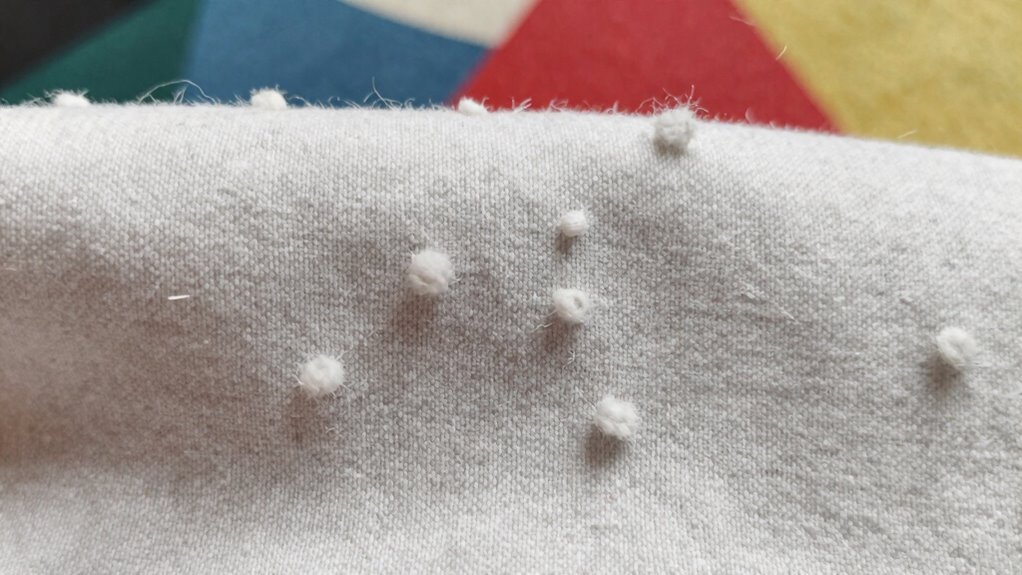
Fabric pilling occurs when fibers loosen and tangle into small balls on the surface of your clothing or textiles. Different fiber types are more prone to pilling; for example, polyester and acrylic tend to pill more easily than natural fibers like cotton or wool. The structure of synthetic fibers makes them more likely to shed fibers during wear. Fabric treatments also influence pilling; fabrics with a soft or brushed finish can trap loose fibers, increasing pilling risk. Additionally, fabrics that haven’t been properly finished or treated with anti-pilling agents are more vulnerable. Friction from washing, rubbing against other surfaces, or frequent use accelerates fiber loosening. Proper fabric selection and gentle washing techniques can significantly reduce pilling over time, especially when combined with effective fabric finishes. Understanding the importance of fiber type and how it affects pilling can help you make better choices for durable textiles. Incorporating fabric maintenance practices can further extend the lifespan of your textiles and prevent unwanted pilling.

SINGER® Heavy Duty 4452 (Grey) High Speed Sewing Machine + Accessories | 32 Built-In Stitches Deliver 110 Stitch Applications | 50% More Power for Thick Fabrics, 1100 Stitches/Min, 1-Step Buttonhole
ENHANCED PIERCING POWER: Stronger motor provides more power for sewing multiple layers and thicker fabrics.
As an affiliate, we earn on qualifying purchases.
Easy Home Tips to Prevent Pilling on Your Clothes

To keep your clothes looking their best and prevent pilling, simple home care practices can make a big difference. First, use fabric softening products in your laundry to reduce friction between fibers, which helps prevent pilling from forming. Be gentle when washing delicate fabrics, and turn clothes inside out to minimize wear on the surface. Prompt stain removal is also essential, as stains can weaken fibers and increase pilling risk. Avoid overloading your washing machine, as excess agitation causes fibers to rub together more aggressively. Additionally, opting for gentle cycle settings and air drying instead of high-heat dryers can preserve fabric integrity. Understanding fiber durability and how it affects pilling can further help maintain your clothes’ appearance and keep pilling at bay. Implementing proper laundry practices can further help maintain your clothes’ appearance and keep pilling at bay.
How to Care for Pilled Fabrics and Make Them Last Longer
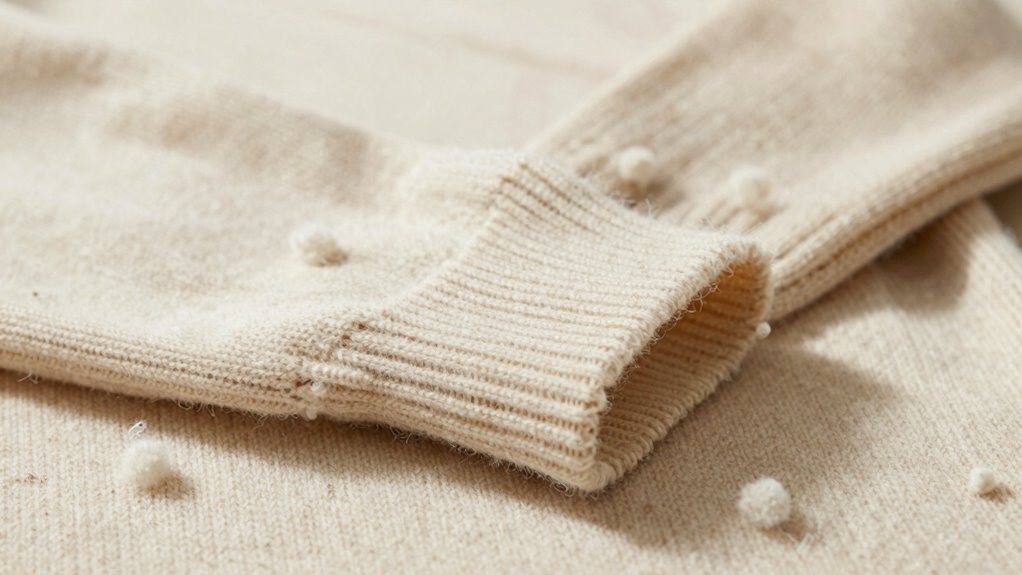
To keep pilled fabrics looking their best, use gentle washing techniques that minimize stress on the fibers. Proper storage, like folding instead of hanging, helps prevent new pills from forming. Taking these simple steps can extend the life of your clothes and keep them looking fresh longer.
Gentle Washing Techniques
When dealing with pilled fabrics, gentle washing techniques are essential to prevent further damage and prolong their lifespan. Use cold or lukewarm water and avoid harsh detergents that can weaken fibers. Skip fabric softeners, as they can leave residues that trap lint and contribute to pilling. Instead, opt for mild, pH-balanced detergents designed for delicate fabrics. After washing, avoid tumble drying, which can cause friction and worsen pilling; instead, lay your clothes flat or hang them to air dry. If you need to tumble dry, choose a low heat or delicate setting, and consider using a fabric softener sheet to reduce static and friction. Proper handling during washing and drying helps maintain fabric integrity and keeps your garments looking newer longer.
Proper Storage Methods
Proper storage is key to preventing further pilling and extending the life of your fabrics. To achieve this, focus on good fabric organization—fold or hang your garments carefully to avoid unnecessary friction. Use breathable storage containers or garment bags for delicate or pilled fabrics, which help reduce snagging and surface wear. Regular closet maintenance is essential; keep similar fabrics together and avoid overcrowding, so clothes don’t rub against each other. Store items in cool, dry places away from direct sunlight, which can weaken fibers over time. Avoid hanging heavy sweaters or knits that can stretch or distort. Proper storage not only protects your fabrics but also makes it easier to identify pilled items for quick treatment or repair, ultimately prolonging their lifespan.
When to Fix Pilling Yourself and When to Seek Help
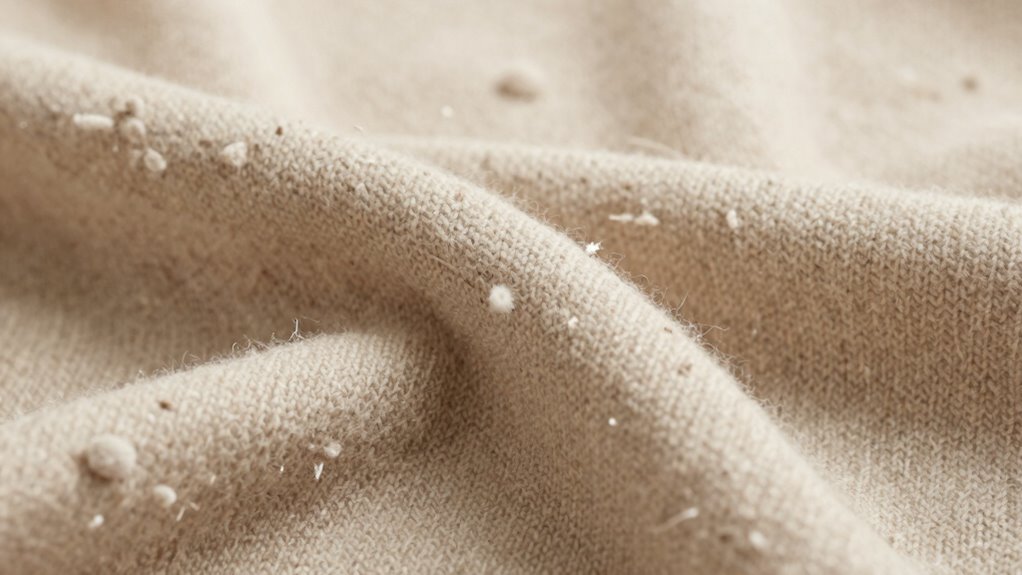
Deciding whether to fix fabric pilling yourself or seek professional help depends on the extent and location of the damage. For minor pills on less visible areas, DIY fixes are often sufficient and simple. Consider these points:
- Is the pilling superficial or deep?
- Are you comfortable using fabric shavers or tweezers?
- Will fixing it yourself risk damaging the fabric further?
- Is the item valuable or delicate, warranting professional repair?
If the pilling is light and manageable, DIY fixes can save you time and money. However, for extensive or delicate fabric damage, seeking professional repair ensures your item stays intact and looks its best. Knowing when to do it yourself versus when to entrust a pro preserves your clothing and prolongs its life.
Which Fabrics Are Less Prone to Pilling and Why

Fabrics made from smoother, tightly woven fibers tend to resist pilling better than those with looser or fuzzier textures. Natural fibers like silk, linen, and tightly woven wool are less prone to pilling because their fibers are smooth and less likely to develop fuzz. Similarly, high-quality synthetic blends designed with tightly spun fibers can reduce pilling, especially if they incorporate treatments that minimize fuzz formation. Avoid fabrics with fuzzy or loosely spun fibers, which tend to pill more easily. Choosing fabrics with a smooth surface, whether natural or synthetic, helps prevent the formation of pills. Understanding the fiber structure and weave tightness allows you to select fabrics that stay looking newer longer, reducing the need for frequent pilling prevention.
Frequently Asked Questions
Can Fabric Pilling Be Completely Prevented?
You can’t completely prevent fabric pilling, but proper fabric treatment can minimize it considerably. Avoid pilling myths like thinking washing alone solves everything; instead, use gentle cycles and fabric softeners. Always turn clothes inside out and wash with similar textures to reduce friction. While no method guarantees zero pilling, these tips help extend your garment’s appearance and durability, making your clothes look newer longer.
Does Washing Frequency Affect Pilling Severity?
Washing frequency definitely impacts pilling severity, so you should be selective with your schedule. Too frequent washing can weaken fibers, causing more friction and pills, while infrequent washing might let dirt and oils build, also increasing pilling risk. To boost fabric longevity and minimize pills, wash wisely—use gentle cycles, avoid over-washing, and turn garments inside out. Proper care keeps your clothes looking fresh and pill-free longer.
Are There Specific Detergents That Reduce Pilling?
Yes, certain detergents can reduce pilling. Look for fiber-specific formulas designed to protect delicate fibers, as they contain gentle detergent ingredients that minimize fiber abrasion. These specialized formulas help maintain fabric integrity by reducing friction during washing. Avoid harsh chemicals and opt for detergents formulated for your specific fabric type, which can markedly lower the chances of pilling and keep your clothes looking newer longer.
How Does Fabric Weight Influence Pilling Propensity?
You’ll find that fabric weight, influenced by fabric density and fiber composition, impacts pilling. Heavier fabrics with high density tend to resist pilling better because they have fewer loose fibers that can tangle and form pills. Conversely, lightweight fabrics with looser fiber structures are more prone to pilling, especially if made from short or low-quality fibers. Choosing fabrics with ideal density and durable fiber blends helps reduce pilling over time.
Can Fabric Pilling Be a Sign of Poor Quality?
Yes, fabric pilling can be a sign of poor quality, but it’s not always the case. If your garment shows pilling quickly, it might have low fabric durability or a fiber composition prone to pilling. High-quality fabrics usually resist pilling longer due to better fiber quality and construction. So, while pilling can indicate inferior quality, sometimes even durable fabrics with delicate fibers may pill, especially with frequent use.
Conclusion
So there you have it—your ultimate guide to dodging pesky fabric pills. With these tips, you’ll outsmart pilling and keep your clothes looking fresh longer. Because nothing says “fashion icon” like a sweater free of fuzz balls, right? Just remember, even the best care can’t turn back time—so embrace the pill, or fight it tooth and fiber. Either way, your wardrobe will thank you for the effort!