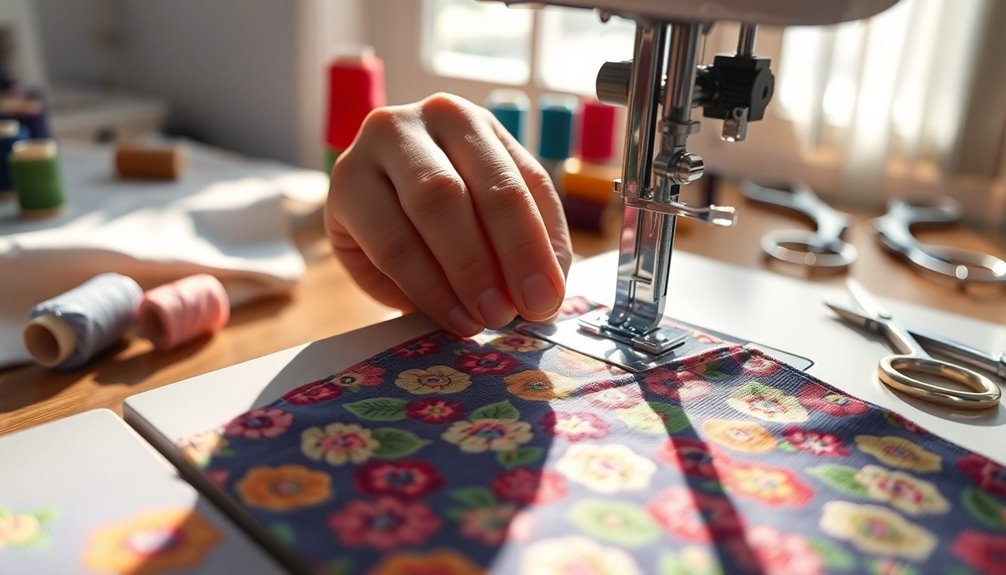
To sew without a presser foot, focus on controlling the fabric with your hands while maintaining a steady speed. Use an embroidery hoop for better grip and keep your fingers away from the needle. Adjust the top thread tension to avoid breakage, and always practice on scrap fabric to build confidence. With a bit of practice, you'll master this technique, and you might find tips to enhance your sewing experience later on.

Get business pricing on tools and workshop supplies
- Business-only prices and quantity discounts
- Tax-exempt purchasing
- Multiple users, one account, clear invoices
Key Takeaways
- Focus on hand positioning to guide the fabric and avoid accidents while sewing without a presser foot.
- Use an embroidery hoop to maintain better control and stability of the fabric as you sew.
- Adjust the top thread tension to prevent breakage and ensure even stitches during the sewing process.
- Practice on scrap fabric to build confidence and familiarize yourself with your machine's behavior.
- Always sew at a slow speed to enhance control and reduce the risk of needle-related accidents.
Popular right now

De'Longhi Stilosa Compact Manual Espresso Machine with Milk Frother

Breville Bambino Espresso Machine, Brushed Stainless Steel

Philips 4400 Series Fully Automatic Espresso Machine with LatteGo Milk System
As an affiliate, we earn on qualifying purchases.
Understanding the Role of a Presser Foot
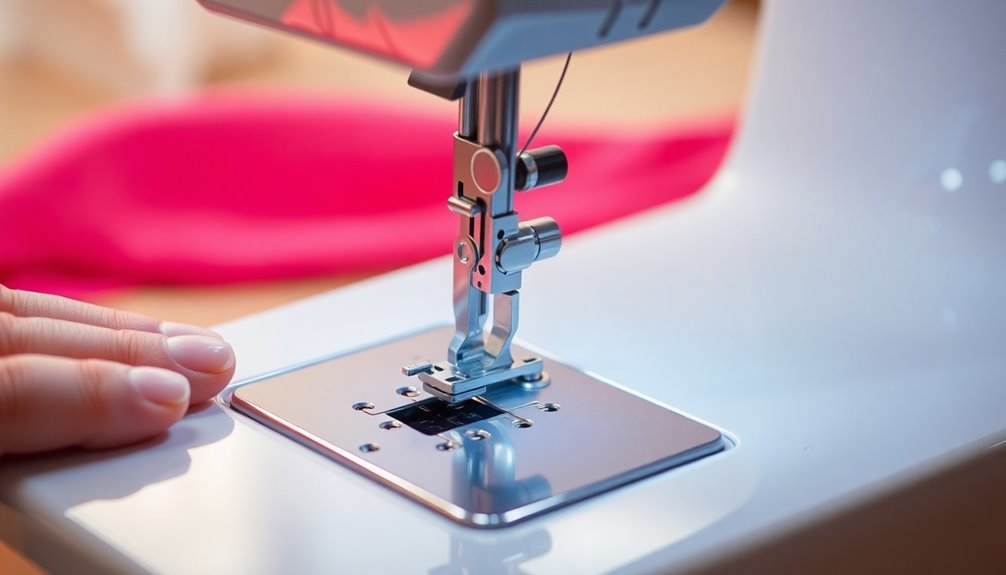
While you might think a presser foot is just an accessory, it actually plays an essential role in your sewing process. This tool attaches to the ankle of your sewing machine, holding the fabric in place and ensuring smooth movement during stitching.
Different types of presser feet, like the straight foot or walking foot, serve specific tasks, improving stitch quality and consistency. For beginners, using a presser foot is important; without it, you may encounter uneven stitching and increased risk of accidents.
Techniques for Sewing Without a Presser Foot
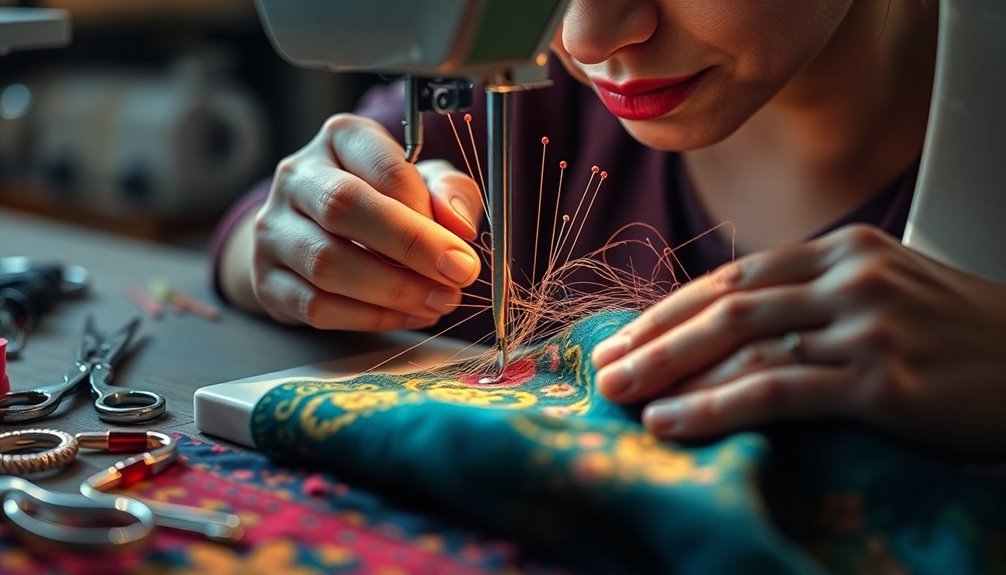
Sewing without a presser foot opens up a world of creative possibilities, but it also demands a bit more skill and attention. To master free motion quilting, focus on hand positioning to avoid needle accidents. Using an embroidery hoop can help control fabric movement and maintain even tension.
| Technique | Tips |
|---|---|
| Adjust Top Thread Tension | Prevents thread breakage |
| Practice on Scrap Fabric | Builds confidence and technique |
| Awareness of Machine Behavior | Avoids uneven stitches |
Exploring Alternative Sewing Feet
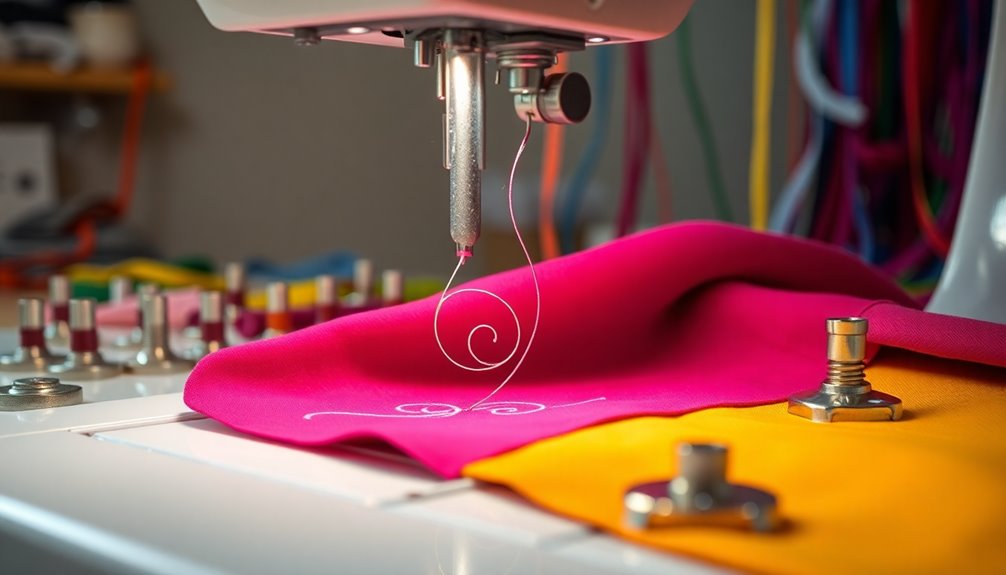
When you want to enhance your sewing experience, exploring alternative sewing feet can make a significant difference.
For instance, a walking foot helps feed multiple layers of fabric evenly, making it perfect for quilting and thicker materials. If you're into free motion quilting, the darning foot allows you to move the fabric in any direction, releasing your creativity.
Additionally, a zipper foot is essential for sewing close to zipper edges, ensuring precise installation. Don't forget the sid foot, specialized for stitching in the ditch, which provides accurate seam lines on quilted projects.
Just make sure these alternative sewing feet are compatible with your sewing machine, as they aren't always universal across different models.
Happy sewing!
Safety Precautions When Not Using a Presser Foot
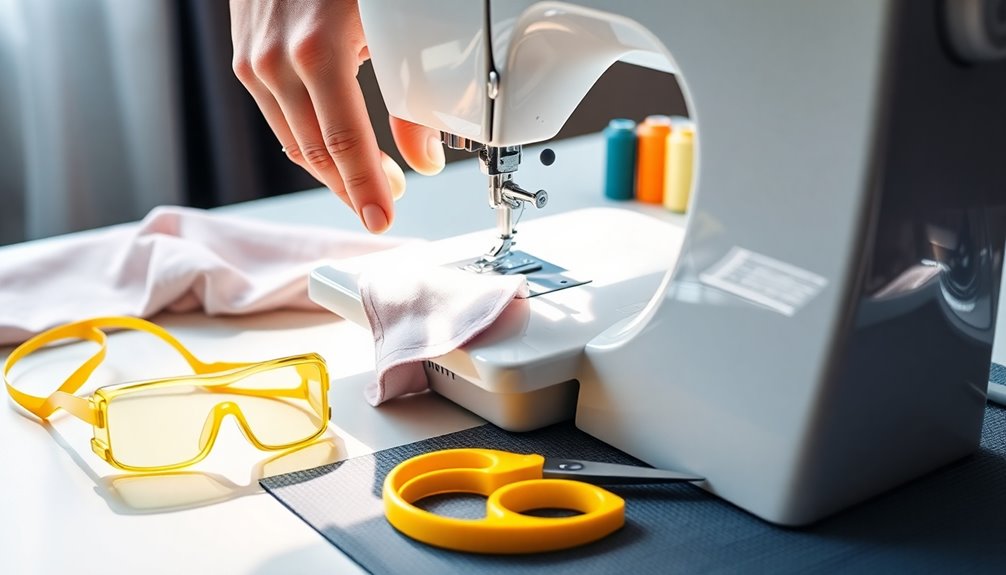
Using a presser foot typically stabilizes your fabric, but if you're opting to sew without one, it's crucial to prioritize safety.
First, always be mindful of needle safety; your fingers are at risk of coming into contact with the needle during free motion sewing. To minimize sewing accidents, practice slow and careful stitching to enhance your technique.
Keep your hands away from the needle while maneuvering the fabric, and consider using a hoop to control quilt movement more effectively. This can provide added stability while sewing.
Finally, stay aware of your machine's behavior, adjusting your movements as needed to mitigate risks. Additionally, understanding emotional dysregulation can help you remain calm and focused during the sewing process. By following these safety precautions, you can enjoy a safer sewing experience without a presser foot.
Tips for Successful Free Motion Quilting
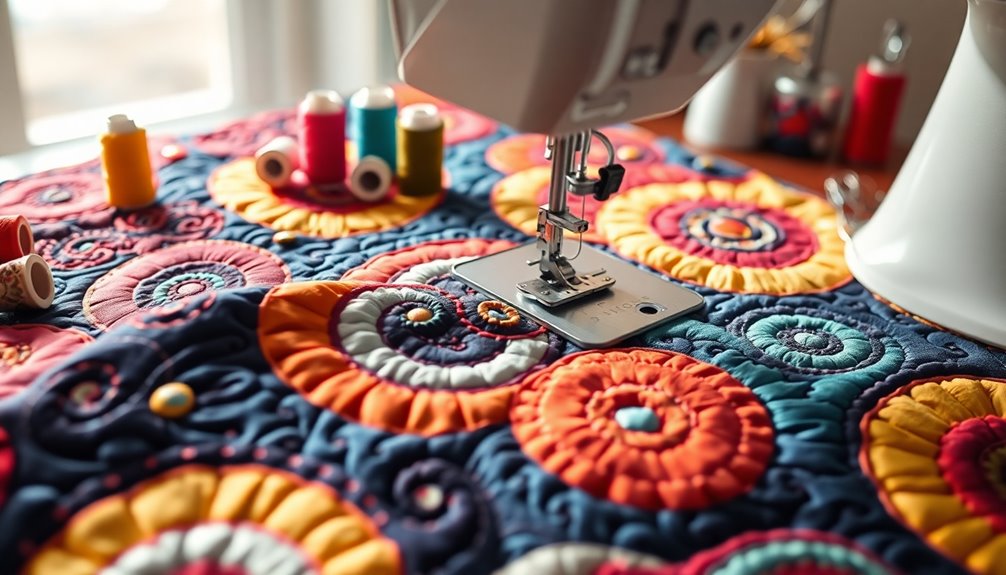
While free motion quilting can be a rewarding experience, it requires practice and technique to achieve great results.
Start at a slow speed to gain control over the fabric, which helps prevent needle accidents and allows for precise stitching. Use a larger eye needle, like an Organ needle, to accommodate thicker threads and reduce breakage.
Before you begin, adjust the top thread tension to guarantee even stitches and avoid snapping.
Don't forget to practice on scrap fabric; this helps you get familiar with how your machine behaves without a presser foot.
Finally, consider using a hoop to guide the quilt fabric and maintain stability, enhancing your control and improving the overall stitch quality during your free motion quilting journey.
Frequently Asked Questions
Is It Possible to Sew Without a Presser Foot?
Yes, it's possible to sew without a presser foot, but you'll need to be careful.
Techniques like free motion sewing can help, but they require practice to master.
Keep in mind that your machine's design plays a vital role; some machines struggle without a presser foot.
You might face issues like uneven stitches or skipped threads, so make sure to adjust your tension properly to achieve the best results.
Can You Sew on a Sewing Machine Without a Foot Pedal?
Imagine you're a skilled conductor, guiding an orchestra with precision. Yes, you can sew on a sewing machine without a foot pedal.
By using the hand wheel, you control the rhythm, ensuring each stitch flows like music. This method demands your focus, as moving too quickly might lead to a jarring discord in your fabric.
With practice, you'll develop a steady pace, allowing you to create beautiful, even stitches without the foot pedal's assistance.
What Are the Disadvantages of Hand Sewing?
When you choose hand sewing, you'll notice several disadvantages.
It's often much slower than machine sewing, especially for larger projects, which can be frustrating. Your stitches mightn't be as uniform, leading to less durable seams.
You may also experience hand fatigue from extended periods of sewing. Plus, hand sewing limits you to basic stitches, lacking the intricate designs and precise tension control that a sewing machine can provide.
What Is the Alternative to the Foot Pedal on a Sewing Machine?
If you're looking for alternatives to the foot pedal on a sewing machine, you've got several options.
Many machines come with a knee lift that lets you control the presser foot with your knee, keeping your hands free.
There's also the start/stop button for a more intuitive experience.
Plus, a speed control slider allows you to adjust sewing speed easily, and using the hand wheel can help with detailed stitching tasks.
Conclusion
As you glide your fabric beneath the needle, imagine the rhythmic dance of your hands guiding each stitch, free from the constraints of a presser foot. You're crafting with fluidity, creating a tapestry of colors and textures that come alive under your fingertips. Embrace this newfound freedom, and let your creativity flow like a gentle breeze through an open window. With each stitch, you're not just sewing; you're weaving your unique story into every piece you create.