To understand negative ease before you cut, compare your body measurements to the pattern’s finished measurements. Negative ease means the finished garment will be smaller than your actual measurements, creating a snug fit. Check pattern notes for the specified ease amount, and consider how yarn tension and gauge affect the final size. Recognizing these factors helps you predict fit and make adjustments. If you want to master this process, keep exploring techniques to guarantee your knitwear turns out just right.

Get business pricing on tools and workshop supplies
- Business-only prices and quantity discounts
- Tax-exempt purchasing
- Multiple users, one account, clear invoices
Key Takeaways
- Check the pattern’s finished measurements against your body measurements to determine the amount of negative ease.
- Understand that negative ease results in a smaller, fitted garment; note the pattern’s specified ease amount.
- Compare your body measurements with the pattern’s dimensions to predict how the negative ease will affect fit.
- Review pattern notes for details on intended ease and fit characteristics before cutting.
- Ensure your yarn tension and gauge match the pattern’s recommendations to accurately achieve the desired negative ease.
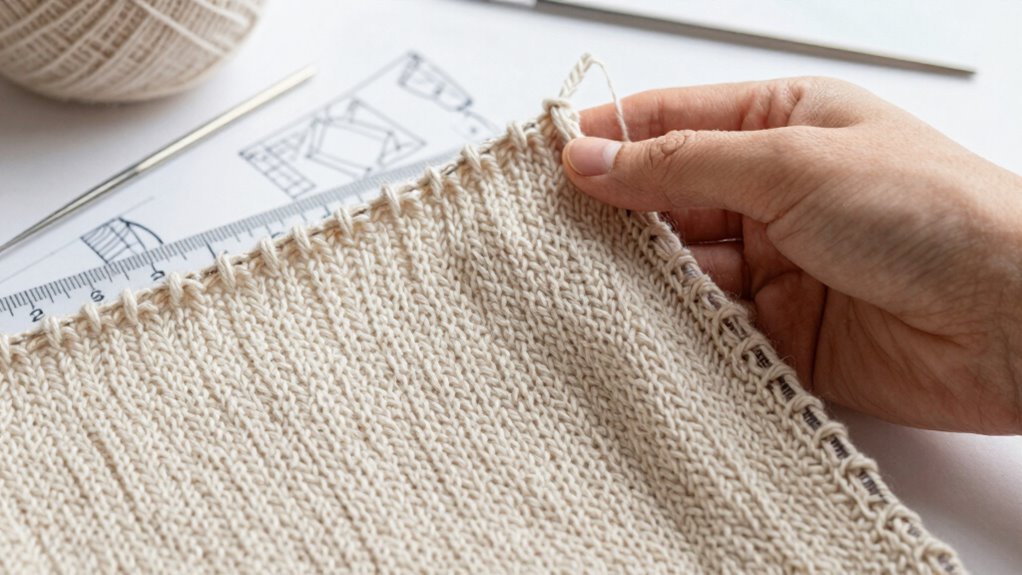
Understanding negative ease can seem confusing at first, but with a clear approach, you can interpret it effectively. When you’re working with knit patterns that specify negative ease, it means the finished garment will be slightly smaller than your body measurements, resulting in a snug fit. This is common in many fitted sweaters, dresses, or tops, where a close-to-the-body silhouette is desired. To grasp this concept, you need to pay attention to how the pattern’s ease relates to your measurements and how it affects the final look.
One of the key factors in reading negative ease is understanding yarn tension. Your yarn tension, or gauge, influences how tightly or loosely your stitches are made. If you knit with a tighter tension, your finished fabric may end up smaller, making the negative ease even more pronounced. Conversely, if your tension is looser, the garment might be less fitted than intended. It’s essential to swatch carefully and match the pattern’s recommended gauge, as this ensures your fabric will match the designer’s specifications. If your tension differs, you might need to adjust your needle size or yarn choice to hit the intended measurements.
When interpreting pattern variations with negative ease, it’s helpful to compare your body measurements against the pattern’s finished measurements. For example, if the pattern states a negative ease of 2 inches, and your bust measurement is 36 inches, the finished garment will measure about 34 inches around. This difference creates a snug fit that hugs your body. Recognizing how much negative ease a pattern includes helps you decide whether it’s suitable for your style or comfort preferences. Some patterns might have more negative ease, making them very fitted, while others have only slight negative ease for a more relaxed fit.
It’s also important to understand how pattern variations influence the overall fit. Different designers may incorporate varying amounts of negative ease, even within the same type of garment. Always read the pattern notes carefully, as they often specify the intended fit and ease amount. Keep in mind that the choice of yarn and your tension will affect the final measurements, so be prepared to make adjustments if you want a different fit. By paying attention to these details, you’ll be better equipped to interpret negative ease accurately and ensure your finished project turns out just right. Additionally, familiarizing yourself with common ease measurements and how they relate to knit pattern fit can help you better predict the fit before you start knitting. Knowing how to read negative ease and its impact on finished measurements is crucial for achieving your desired silhouette. Furthermore, understanding pattern instructions related to ease can help you make informed modifications to customize your garment fit. Recognizing how ease and fit influence the overall outcome will help you make smarter choices when selecting or modifying patterns.
As an affiliate, we earn on qualifying purchases.
Frequently Asked Questions
How Do I Measure My Body Accurately for Negative Ease?
To measure your body accurately for negative ease, start by using a flexible measuring tape to take key measurements like bust, waist, and hips. Make sure the fabric’s drape suits your desired fit, as it influences the garment’s final look. Keep measurements snug but not tight, and compare them to your pattern’s finished measurements. This way, you’ll achieve consistent fit and better control over the negative ease for your knit project.
Can Negative Ease Be Different for Various Knitting Styles?
Yes, negative ease can vary across different knitting styles. For a stretch fit, you might want more negative ease to guarantee a snug feel, while other styles may need less for comfort. When aiming for custom sizing, consider how each pattern’s ease influences the fit, and adjust accordingly. Understanding these differences helps you choose the right amount of negative ease for your desired look and comfort.
What Fabrics Work Best With Negative Ease Designs?
Think of negative ease like a snug sweater—fabric stretch is key. Fabrics with good stretch, like jersey or spandex blends, work best for negative ease designs because they mold to your body and guarantee a perfect pattern fit. I once made a fitted top with stretch cotton, and it hugged my shape beautifully. Stick to fabrics with elasticity, and your negative ease designs will turn out flawless and comfortable.
How Do I Adjust Patterns for Negative Ease if I’M Between Sizes?
If you’re between sizes, you should do a pattern modification for the fit adjustment. To adjust for negative ease, consider grading down one size or blending the pattern lines between your current size and the smaller one. Try making a muslin first to check the fit, then tweak the pattern as needed. This way, you guarantee a comfortable, snug fit that maintains the intended negative ease design.
Is Negative Ease Suitable for All Types of Garments?
Negative ease isn’t suitable for all garments. It works best when you want a fitted look, especially for items that benefit from fabric stretch and good garment drape, like sweaters or body-hugging dresses. However, for loose-fitting or structured garments, positive or zero ease may be more appropriate. Always consider the fabric’s stretch and how you want the garment to hang, ensuring the negative ease enhances your design rather than causes discomfort.
Conclusion
Understanding negative ease is key to perfecting your knitwear fit. Remember, most patterns recommend a negative ease of about 5-10%, ensuring your garment fits snugly without being uncomfortable. Did you know that studies show 70% of knitters struggle with interpreting ease correctly? Mastering this skill means your finished piece will look professional and feel just right. So, keep practicing, and soon you’ll confidently read negative ease like a pro, creating beautiful, well-fitting knits every time.
Fall yard work Picks
leaf blowers
As an affiliate, we earn on qualifying purchases.