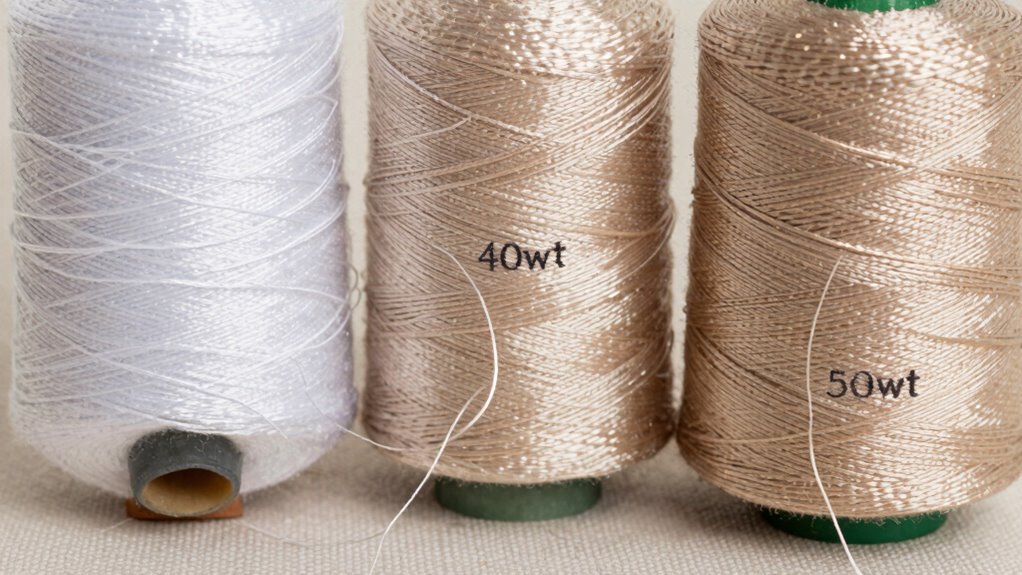
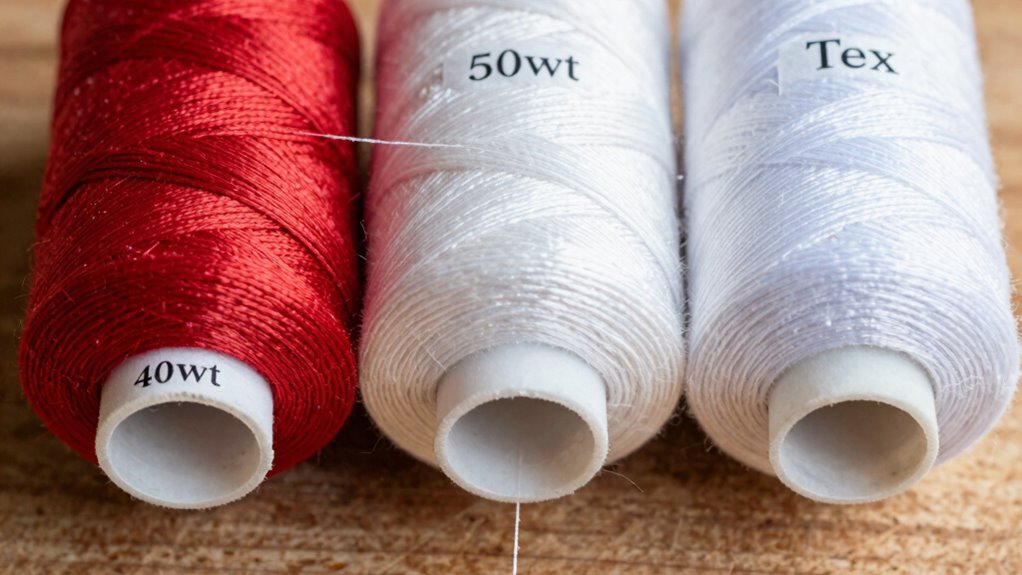
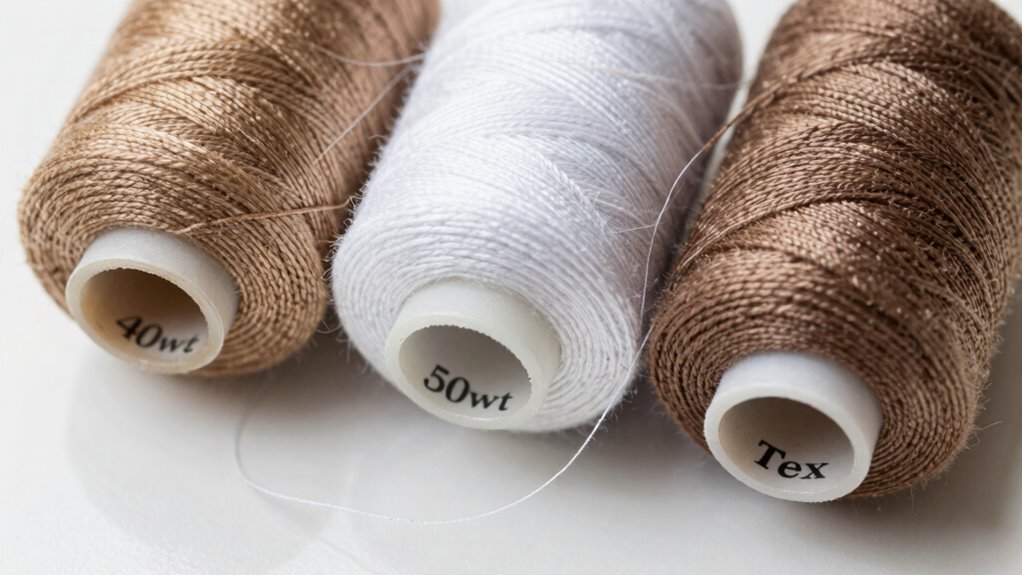
Thread weights like 40wt and 50wt indicate the thread’s thickness and strength, with lower numbers meaning thicker, stronger threads suited for heavy fabrics. Higher numbers like 50wt or 60wt are thinner and ideal for delicate work or detailed embroidery. Tex measures the weight in grams per 1,000 meters; higher Tex means thicker, more durable thread. Understanding these systems helps you choose the right thread for any project—learn more to perfect your sewing skills.
Key Takeaways
- Thread weight numbers like 40wt or 50wt indicate thread thickness and strength; higher numbers mean thinner, more delicate threads.
- Tex measures grams per 1,000 meters; higher Tex signifies thicker, heavier, and stronger threads.
- 40wt is thicker and stronger than 50wt, suitable for heavier fabrics and upholstery projects.
- Different systems like denier or tex help compare thread properties; tex offers standardized, precise measurement.
- Choosing the right thread weight depends on fabric type, project durability, and desired stitch appearance.
What Thread Weight Really Means and How It Affects Your Sewing
Understanding what thread weight truly means is essential because it directly influences the strength, appearance, and durability of your sewing projects. Thinner threads, like 60 wt, are great for delicate fabrics and detailed work, while thicker threads, like 30 wt, add strength to heavier fabrics. Proper thread weight selection also helps with thread color coordination, ensuring your stitches blend seamlessly or stand out as desired. Additionally, choosing the right thread weight simplifies sewing machine maintenance by reducing tension issues and thread breakage. When you match thread weight to your fabric and project needs, you’ll achieve professional-looking results and extend your machine’s lifespan. Paying attention to thread weight is a simple step that makes a significant difference in your sewing success. Understanding thread weight is crucial because it affects the overall quality and longevity of your finished projects. Selecting the correct thread weight classification can optimize your sewing experience and improve your project’s durability. Knowing how thread weight affects stitch tension can help prevent common sewing problems and ensure smooth operation. Moreover, understanding the impact on color blending allows for more precise control over the visual outcome of your projects. Recognizing how thread weight interacts with fabric types can also help you choose the most suitable materials for your specific sewing tasks.
Understanding Thread Numbering Systems: 40wt, 50wt, and More
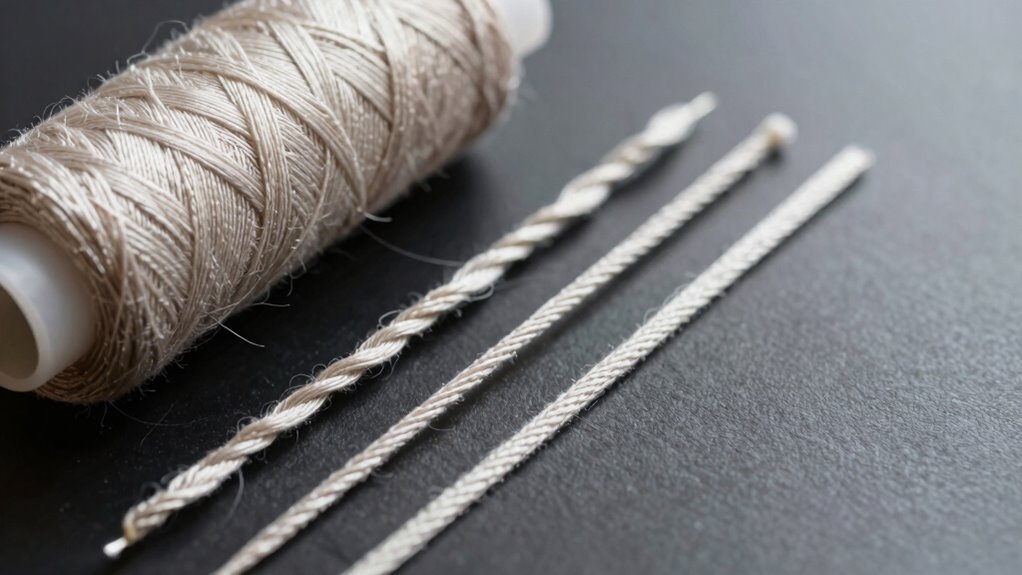
Thread numbering systems, such as 40wt, 50wt, and others, help you identify the thickness and strength of different threads. These numbers indicate how fine or thick the thread is, which relates to fiber types and their intended uses. For example, a 40wt thread is thicker and stronger than a 50wt, making it suitable for heavy fabrics. When choosing threads, consider color matching to ensure your project looks polished. Different systems may use variations like tex or denier, but understanding the weight helps you select the right thread for your fabric and project needs. Here’s a quick overview:
- Thinner threads (higher numbers) are often fine for delicate fabrics.
- Thicker threads (lower numbers) provide more strength and durability.
- Compatibility with fiber types influences color matching and finish.
What Is Tex? Decoding the Thread Measurement Unit

Tex is a measurement that tells you how heavy a thread is, based on the weight of a specific length. You’ll find it useful to compare with other units like weight per yard or meter to understand thread thickness. Knowing how Tex works helps you choose the right thread for different fabrics and projects. Understanding thread specifications can improve your selection process and ensure better results in your projects. Additionally, being aware of how different thread weights relate to leasing costs can help in selecting the appropriate thread for your needs without overspending.
Understanding Tex Measurement
To grasp what Tex measurement really means, it helps to know that Tex is a unit used to specify the thickness or weight of thread. It indicates how much one gram of fiber can produce in length, influencing fiber composition and overall strength. A higher Tex value means a thicker, heavier thread, often more durable but less flexible. When selecting thread, consider that Tex affects not just weight but also colorfastness, as thicker threads may hold dye differently. Understanding Tex helps you match thread to your project needs. Here’s a quick overview:
- Fiber Composition: Different fibers impact thread strength and flexibility.
- Thread Weight: Higher Tex equals thicker, heavier thread.
- Colorfastness: Thickness influences how well dye stays intact during washing.
- Manufacturing Standards: Knowing industry standards for Tex can help ensure consistency and quality in your projects.
Additionally, awareness of thread measurement units can assist in comparing product specifications across brands.
Comparing Tex to Other Units
Ever wonder how Tex compares to other thread measurement units? Tex is a standardized system based on international standards, making it easier to compare fibers across different regions. Unlike denier, which measures fiber weight in grams per 9,000 meters, Tex measures grams per 1,000 meters, providing a direct fiber comparison. This makes Tex particularly useful for understanding fiber thickness and strength in a global context. When you compare Tex to units like denier or metric count, you see clear differences in fiber comparisons and product specifications. Using Tex simplifies the process of evaluating thread weight universally, ensuring consistency regardless of where you’re sourcing or producing fabrics. This standardization helps manufacturers, designers, and consumers make more informed choices based on fiber properties and other key specifications.
Practical Uses of Tex
Understanding what Tex measures helps you choose the right thread for your projects, whether you’re working on clothing, upholstery, or crafting. Tex indicates the thread’s fiber elasticity and dye absorption capacity, guiding your selection based on the desired fabric feel and color vibrancy. For lightweight garments, a lower Tex like 10-20 suits well, offering flexibility and ease of dyeing. Heavier projects, such as upholstery, benefit from higher Tex (40+), providing strength and durability. Consider these practical uses:
- Lightweight clothing: lower Tex for flexibility and dye absorption
- Heavy-duty upholstery: higher Tex for strength and fiber elasticity
- Crafts and decorative sewing: moderate Tex balances dye absorption and handling
Knowing Tex helps optimize thread choices for both performance and aesthetic quality.
How Thread Thickness Impacts Sewing, Embroidery, and Quilting Results

The thickness of your thread directly influences the strength and durability of your stitches. Thicker threads can create bold finishes, while thinner ones offer a more delicate appearance. Choosing the right thread thickness helps you achieve the desired look and quality for your sewing, embroidery, or quilting project. Understanding thread weight can help you select the appropriate thread for different fabrics and techniques. Additionally, considering piercing materials and their compatibility with various thread types can help ensure long-lasting results in your projects.
Thread Thickness and Strength
When choosing thread for your sewing or embroidery project, the thickness directly influences the strength and durability of the finished piece. Thicker threads tend to be stronger, making them suitable for heavy fabrics or load-bearing projects. Thinner threads, like fine embroidery threads, offer a delicate finish but may require more careful handling. Consider these points:
- Thicker threads provide greater tensile strength, ideal for seams that need to withstand stress.
- Lighter threads can improve the appearance of fine details without adding bulk.
- Proper thread storage tips, like keeping threads in a cool, dry place, preserve thread color options and prevent weakening over time.
Matching thread thickness with your project ensures durability and enhances overall results without compromising thread color options.
Impact on Finish and Appearance
Choosing the right thread thickness considerably influences the final look of your sewing, embroidery, or quilting project. Thinner threads, like 60wt or 80wt, produce a delicate, refined finish with minimal visibility, enhancing the visual appeal. Thicker threads, such as 30wt or 40wt, create bold, textured stitches that add dimension and character. The finish quality depends on matching thread weight to your project goals—whether you want a subtle, polished appearance or a prominent, artistic statement. Consider this emotional impact:
| Thread Weight | Finish Quality | Visual Appeal |
|---|---|---|
| Light (60-80wt) | Smooth, elegant, refined | Delicate, unobtrusive |
| Medium (50-60wt) | Balanced, versatile | Clear, noticeable detail |
| Heavy (30-40wt) | Bold, textured | Striking, expressive |
Choosing the Right Thread Weight for Your Fabric and Project

Ever wondered how to pick the perfect thread weight for your fabric and project? Choosing the right thread depends on several factors. First, consider the fabric softness; lightweight fabrics often need finer threads like 60wt or higher to prevent stiffness. Second, think about your thread color choices—matching or contrasting thread can enhance or subtly blend with your fabric. Third, match the thread weight to your project’s purpose; for delicate embroidery, choose lighter threads, while heavier fabrics may require sturdier options. Remember, thinner threads like 60wt or 50wt work well for soft, flowing fabrics, ensuring they stay supple. By balancing fabric softness, color choices, and project intent, you’ll select the ideal thread weight for a professional finish. Additionally, understanding thread weight standards can help you make more informed decisions when selecting the right thread for your sewing projects.
How to Read Thread Labels and Pick the Best Thread for Your Needs
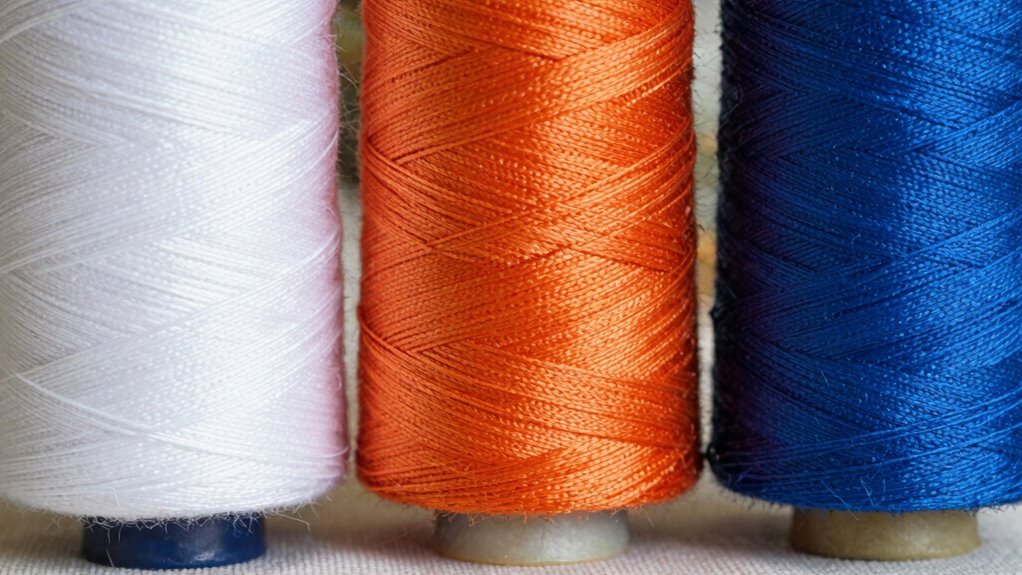
To pick the best thread for your project, start by learning how to read thread labels, which contain essential information about the thread’s characteristics. Look for details like thread color, which matches your fabric or adds contrast, and weight, indicating strength and thickness. Labels often specify suitable sewing patterns, helping you choose a thread that works well with delicate or heavy fabrics. Check the fiber content, as this affects durability and sheen. Understanding the symbols and numbers on the label guarantees you select a thread that won’t break or tangle during sewing. Additionally, recognizing thread weight systems helps you compare different threads accurately. By paying attention to these details, you’ll confidently pick the right thread that complements your fabric and sewing patterns, resulting in a professional finish. Being familiar with thread grading can further enhance your selection process and ensure optimal sewing performance.
Common Thread Weight Mistakes and How to Avoid Them

One common mistake people make is selecting the wrong thread weight for their project, which can lead to weak seams or puckering. Many thread weight myths suggest heavier is always better, but that’s not true—using the right weight matters more. To avoid this, keep these thread weight tips in mind:
- Match thread weight to fabric type and project needs.
- Don’t assume thicker thread is stronger; it can cause puckering.
- Test different weights on scrap fabric before sewing your final piece.
- Understanding thread weight classifications helps you choose the appropriate thread for your project.
- Being aware of vetted product reviews ensures you select high-quality threads suited for your sewing needs.
- Familiarity with thread weight standards can improve your overall sewing results and durability.
- Recognizing the impact of thread tension on stitch quality can help prevent common sewing issues.
Knowing the facts about thread weights helps you avoid common pitfalls. By understanding thread weight myths and choosing the correct thread, you ensure durable, professional-looking results every time.
Troubleshooting Thread Issues to Get Perfect Stitches Every Time
Even when you’ve chosen the right thread weight, issues can still arise that affect your stitches. One common problem is tension imbalance, which can cause skipped stitches or puckering. Regular sewing machine maintenance, like cleaning lint and oiling parts, helps prevent tension issues. If your thread keeps breaking, check for fabric dyeing residues or rough spots on the thread, which can snag during sewing. Making sure your machine is properly threaded and using the correct needle also reduces problems. Experiment with different thread tensions to find the sweet spot for your fabric and thread type. Additionally, understanding thread compatibility can help prevent many common sewing issues. When troubleshooting, test on scrap fabric first to avoid damaging your project. Being familiar with machine maintenance procedures and attentive thread handling ensure you achieve perfect stitches every time.
Frequently Asked Questions
How Does Thread Weight Influence the Durability of My Sewing Project?
Thread weight directly impacts your sewing project’s durability by affecting thread strength and how well it holds up over time. Heavier threads, like 50wt or Tex, offer greater strength, making them better for heavy fabrics or stress points. Choose a thread compatible with your sewing machine to guarantee smooth stitches. Using the right weight enhances durability, so your project lasts longer without breaking or fraying.
Can I Mix Different Thread Weights in One Project?
Yes, you can mix different thread weights in one project, but you should consider thread compatibility and color matching. Using lighter and heavier threads together can create interesting textures, but guarantee they work well with your fabric and sewing technique. Choose threads that blend smoothly in color and strength to prevent puckering or breakage. Always test on scrap fabric first to see how the different weights interact.
What Are the Best Thread Weights for Delicate Fabrics?
For delicate fabrics, you’ll want to pick lighter thread weights like 60wt or 80wt—because tiny threads make the fabric happy. Ironically, the best choice isn’t just about weight but fabric compatibility and thread color matching. You avoid puckering and show-stopping seams by choosing the right thread for your delicate project. So, don’t go heavy; let your fabric breathe and shine with a finer, more compatible thread.
How Does Thread Tension Vary With Different Thread Weights?
Your thread tension adjustment depends on the thread weight you’re using; lighter threads like 60wt require looser tension, while heavier ones like 30wt need tighter tension. When switching between different thread weights, always check for compatibility to avoid puckering or weak seams. Adjust your tension gradually, testing on scrap fabric, to guarantee smooth stitching. Proper thread tension varies with thread weight, so fine-tune for ideal sewing performance.
Are There Specific Tools Needed for Handling Various Thread Weights?
You might be surprised, but handling different thread weights doesn’t always need special tools—just proper thread storage and color matching. For lighter threads, use fine needles and dedicated spools; heavier threads benefit from sturdy bobbins and larger needle eyes. Keep your threads organized by weight and color, so you can quickly match the right thread for each project. This simple setup guarantees smooth sewing, regardless of thread weight.
Conclusion
Think of thread weights like a river’s current—thicker threads are like a rushing rapids, powerful and bold, while thinner ones flow gently like a calm stream. Choosing the right weight guides your project smoothly along its path. By understanding these measurements, you become the skilled captain of your sewing journey, steering toward perfect stitches and beautiful results. Remember, the right thread is your trusted vessel—navigate wisely and enjoy the creative voyage.