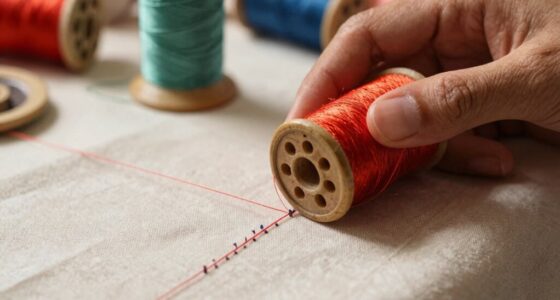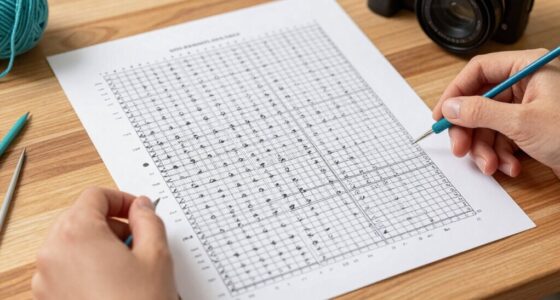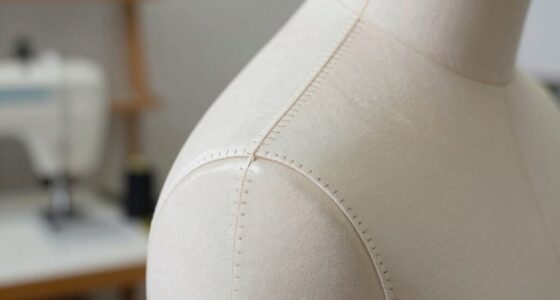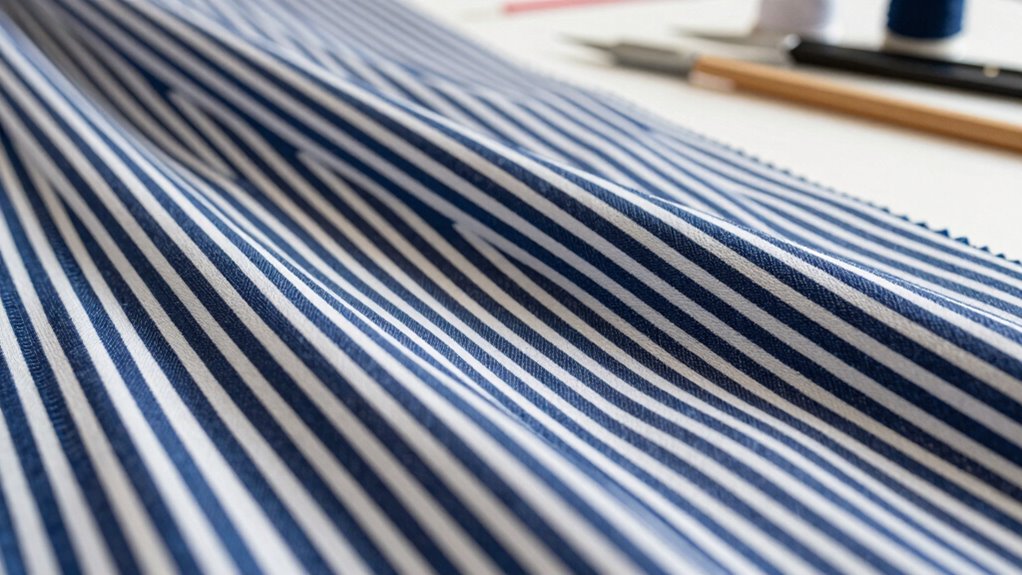

To use directional prints without regrets, plan your layout carefully before cutting, paying attention to how patterns flow and align across pieces. Choose fabrics with complementary colors and scales, and consider the orientation to create movement or visual interest. Rotate or flip fabric sections to match directions and optimize usage. Consistent planning helps prevent mistakes and guarantees a polished look. Keep experimenting and stay mindful of pattern placement—more tips will help you master this craft.

Get tools and workshop supplies delivered free — and shop member deals
- Fast, free delivery on millions of items
- Access to Prime Big Deal Days deals on October 6–7
- Prime Video, Amazon Music and more included
Key Takeaways
- Plan fabric layout and print direction before cutting to ensure seamless flow and visual harmony.
- Match print directions across pieces for consistent alignment and avoid a chaotic appearance.
- Visualize how motifs will flow from one piece to the next to maintain cohesive design.
- Use strategic pattern placement and fabric rotation to highlight desired areas and create interest.
- Experiment with fabric placement and consider fabric grain to achieve a polished, intentional look.
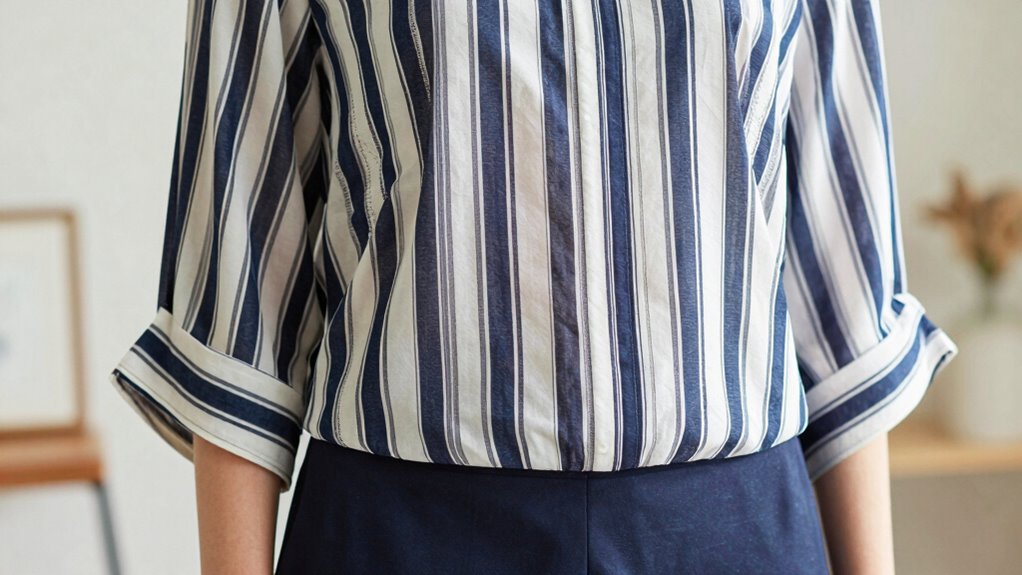
Have you ever wondered how to make the most of directional prints in your sewing or quilting projects? These prints, with their distinct lines or motifs that run in a specific direction, can add a dynamic touch to your creations. However, they require careful planning to avoid misaligned patterns or awkward fabric arrangements. To start, consider fabric coordination. When working with directional prints, it’s essential to choose fabrics that complement each other in color and scale. Think about how the print’s direction will flow across your project—will it create a seamless look or appear disjointed? Coordinating fabrics with similar directions or complementary motifs simplifies this process and helps achieve a cohesive design. For example, if you’re making a quilt, selecting fabrics where the directional patterns are aligned can prevent your project from looking chaotic or mismatched. It’s also helpful to cut your pieces with the print’s direction in mind, ensuring the motifs flow naturally from one piece to the next, enhancing visual harmony. Paying attention to fabric grain can further improve the overall look and durability of your project. When pattern mixing with directional prints, consider how different orientations can be used to highlight specific sections or create visual interest. When combining different prints, pay attention to their directions to avoid visual confusion. You might choose to pair a bold, vertically oriented stripe with a smaller, more subtle print that runs in the same direction. Alternatively, mixing orientations intentionally—such as pairing a horizontal stripe with a vertical one—can create a striking, modern contrast. Just remember, consistency is key. If you’re mixing multiple directional prints, plan your layout carefully so the directions work together rather than fight each other. Use pattern placement to your advantage by rotating or flipping fabric pieces to match directions or create interesting visual effects. Additionally, understanding fabric layout can help you optimize your fabric usage and improve alignment accuracy. Taking the time to visualize your design before cutting can save you from costly mistakes and help you achieve the desired effect. Keep in mind that some prints lend themselves better to certain designs; for instance, florals with flowing motifs work well in garments or quilts where you want a sense of movement. Embracing pattern symmetry in your layout planning can also contribute to a more balanced and harmonious final piece. Ultimately, mastering directional prints hinges on thoughtful fabric coordination and deliberate pattern mixing. Take your time planning your layout, visualize how the prints will align, and don’t be afraid to experiment with fabric placement. When you approach directional prints with intention, you’ll avoid regrets later on and craft projects that look polished and intentional. With patience and careful consideration, you’ll turn what seems like a complex element into a unique feature that elevates your sewing and quilting projects.
As an affiliate, we earn on qualifying purchases.
Frequently Asked Questions
Can Directional Prints Be Used for All Fabric Types?
Directional prints can be used on many fabric types, but you should consider fabric durability and potential color fading. For sturdy fabrics like denim or canvas, directional prints work well and last longer. However, on delicate fabrics like silk or chiffon, the print might fade faster or get damaged during washing. Always check the fabric’s care instructions and test a small area first to guarantee the print maintains its look over time.
How Do I Match Patterns on Seams?
You carefully align your fabric, eyes narrowing as you match the pattern at the seams—suddenly, a slight misstep could ruin the entire look. To guarantee perfect seam matching, pin your pattern pieces precisely, paying close attention to the pattern’s flow. Use chalk or fabric markers to mark key points, then sew slowly, adjusting as needed. Pattern alignment is essential; it’s what transforms a good project into a flawless masterpiece.
Are Directional Prints Suitable for Children’s Clothing?
Yes, directional prints are suitable for children’s clothing, especially when you focus on pattern symmetry and fabric versatility. You can align patterns on seams to create a balanced look, making the outfit visually appealing. Choose fabrics with clear directional designs, and plan your cuts carefully to prevent mismatched patterns. This approach guarantees your child’s clothing looks intentional and stylish, while also making the most of the fabric’s natural flow and design.
How to Alter Directional Prints if Mistakes Are Made?
Ever wondered how to fix a misaligned directional print? You can carefully undo the stitching and re-align the fabric to correct the print. Focus on fabric alignment, making sure the pattern matches perfectly before resewing. For minor mistakes, use fabric paint or markers to adjust the print. Wouldn’t it be great if you could master print correction and turn mistakes into creative features? Just take your time and stay patient!
Can I Mix Directional Prints With Non-Directional Patterns?
Yes, you can mix directional prints with non-directional patterns if you pay attention to pattern alignment and fabric compatibility. To make it work, guarantee the directional prints are aligned properly at seams, matching motifs for a seamless look. Choose fabrics that complement each other in weight and texture to avoid mismatched draping or stiffness. This approach creates visual interest without overwhelming your design, giving a cohesive yet dynamic appearance.
Conclusion
Remember, using directional prints is like steering a ship—you want to chart a clear course. I once chose a bold, patterned fabric for a dress, only to realize the print’s direction made me look wider. By paying attention to the print’s flow, you avoid costly fashion mishaps. Think of your fabric as a roadmap; follow its lines wisely to guarantee your style stays on course. Trust your instincts, and your wardrobe will always sail smoothly.
Halloween Picks
halloween
As an affiliate, we earn on qualifying purchases.