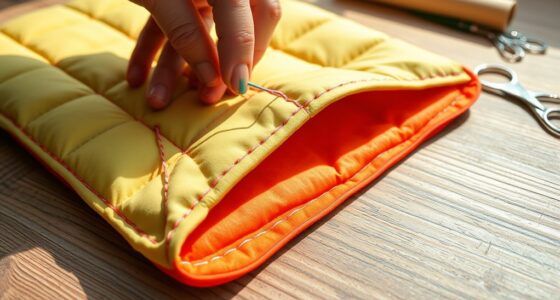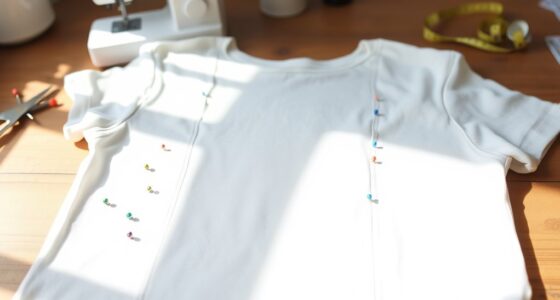
To add in-seam pockets to a dress or skirt, start by carefully marking the pocket placements along the side seams, ensuring they’re symmetrical and comfortably positioned. Cut pocket pieces slightly larger than needed, and interface the openings for durability. Sew the pockets into the side seams with neat, precise stitching, finishing the edges for a clean look. For a polished result, paying attention to detail is key—continue exploring for step-by-step tips and techniques.
Key Takeaways
- Sew side seams for in-seam pockets, aligning pocket openings with the side seams for a seamless look.
- Use matching fabric for pockets and ensure precise marking for proper placement before sewing.
- Cut pocket bags slightly larger than desired, interface openings if needed, and prepare for attachment.
- Attach pocket bags to side seams, sew along marked lines, and finish openings with turned-under seams or hems.
- Reinforce pocket openings and ensure seams are secure for durability and a polished, functional finish.
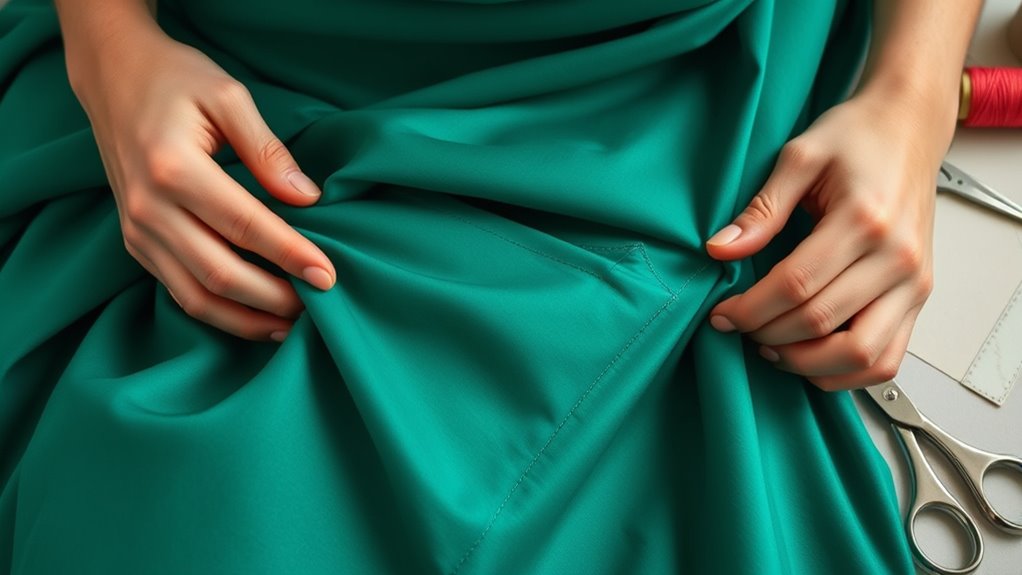
Ever wondered how to add functional and stylish in-seam pockets to your garments? The key lies in understanding pocket placement and fabric selection. When you’re customizing a dress or skirt, deciding where to position the pockets can make all the difference in both comfort and appearance. Typically, in-seam pockets are sewn directly into the side seams of your garment, so you want to choose a spot that’s accessible yet discreet. You might prefer placing them just below the waistline for easy access or slightly lower for a more relaxed look. Keep in mind that the pocket opening should be aligned with the side seam to maintain a clean, seamless look. Mark your pocket placement carefully with tailor’s chalk or fabric markers before cutting to ensure symmetry and proper fit. Using professional equipment like sharp scissors and proper sewing tools can make the process smoother and result in cleaner seams.
Fabric selection plays an essential role in the success of your in-seam pockets. It’s best to use the same fabric as your garment, especially if you want a subtle, integrated appearance. However, if you’re aiming for a bit of contrast or added detail, choosing a complementary or contrasting fabric for the pocket facings can create a stylish accent. Avoid stiff or bulky fabrics that might distort the pocket opening or make the pocket less comfortable to use. Lightweight, smooth fabrics tend to work best, as they drape well and won’t create unnecessary bulk. If the main fabric is thick or textured, consider interfacing the pocket area to reinforce the seam and prevent sagging or stretching over time.
Choose lightweight, smooth fabrics for seamless, comfortable in-seam pockets that blend effortlessly with your garment.
Once you’ve decided on the pocket placement and fabric, it’s time to cut your pocket pieces. Cut two pocket bags from your fabric, making sure they are slightly larger than your desired pocket opening to allow for seam allowances. For added durability, you can interface the pocket openings or the entire pocket bag. When sewing, start by attaching the pocket bags to the side seams, aligning the edges carefully and sewing along the marked lines. Remember to leave the top edge open for access, then finish the pocket opening with a clean, finished edge—either by turning under the seam or using a narrow hem.
Adding in-seam pockets might seem straightforward, but the details—like precise pocket placement and thoughtful fabric selection—are what make the difference between a functional addition and a design flaw. Take your time to plan, measure, and sew carefully, and you’ll end up with a polished, practical feature that elevates your dress or skirt.
Frequently Asked Questions
Can I Add Pockets to a Lined Dress Without Sewing Through the Lining?
You can add pockets to a lined dress without sewing through the lining by carefully choosing your pocket placement and using sewing techniques that minimize lining interference. Opt for pocket bags that attach only to the outer fabric, avoiding the lining altogether. You might also consider attaching pocket facings or using an invisible stitch, ensuring your sewing techniques keep the lining intact while securely attaching the pockets.
What Type of Fabric Is Best for In-Seam Pockets?
For perfect in-seam pockets, pick practical, pliable fabric types that won’t pucker or protrude. Cotton, chambray, or lightweight denim are excellent pocket fabric options because they’re durable and easy to sew. These fabric types blend seamlessly into your dress or skirt, providing a smooth, stylish silhouette. Your pockets will stay secure, and your fabric choices will make sewing simple and satisfying, creating pockets that practically pop with perfection.
How Do I Reinforce Pocket Openings for Durability?
To reinforce pocket openings, you should add pocket reinforcement stitches along the edges to prevent tearing or fraying. Use small, tight stitches to strengthen fabric stability and ensure durability. Consider applying a strip of interfacing or extra fabric behind the pocket opening for extra support. Reinforcing the corners with bar tacks or backstitching also helps, especially in high-stress areas, extending the life of your in-seam pockets.
Will Adding Pockets Change the Fit of My Dress or Skirt?
Adding pockets can slightly alter the dress fit, especially if you choose a bulky or poorly placed pocket. If you carefully consider pocket placement, keeping it discreet and aligned with the garment’s natural lines, you’ll mitigate any impact on comfort or fit. For a smoother look, opt for flat or slim pockets. Ultimately, thoughtful placement ensures your dress remains flattering while offering the convenience of pockets.
Are There Any Beginner-Friendly Tools Recommended for This Modification?
Did you know that 65% of people find sewing in-seam pockets easier with the right tools? For beginner-friendly pocket placement, start with a seam ripper and fabric chalk to mark your spots accurately. Use a ruler for straight lines, and choose fabric scissors to prevent fraying. These simple tools help guarantee your fabric selection and pocket placement turn out neat and professional, even if you’re new to sewing.
Conclusion
Think of your dress or skirt as a blank canvas, waiting for a splash of personality. Adding in-seam pockets is like planting tiny treasures just beneath the surface, hidden yet ready to surprise. With a few simple stitches, you turn everyday into extraordinary, transforming your garment into a story you tell with every step. Embrace the craft, and watch how a small detail can unlock endless confidence and charm—your very own secret garden of style.