
To repair holes and tears seamlessly, you’ll focus on fabric blending and dye matching. Carefully select threads that match the texture, weight, and weave of your fabric, and examine the damaged area for consistency. Use custom dye blends to perfectly match the color, applying them gradually to blend edges seamlessly. With fine stitches and gentle pressing, you can make repairs nearly invisible. Keep exploring these techniques, and you’ll discover how to make your repairs truly undetectable.
Key Takeaways
- Match fabric’s texture, weight, and weave pattern to select threads that blend seamlessly.
- Create and test custom dye mixtures for precise color matching on hidden fabric areas.
- Use fine stitches and mimic original stitching patterns to ensure authenticity and invisibility.
- Gently press repaired areas with a low-heat iron to blend fibers and conceal repairs effectively.
- Focus on detail, tension, and fiber integrity to restore garments seamlessly and maintain their original appearance.
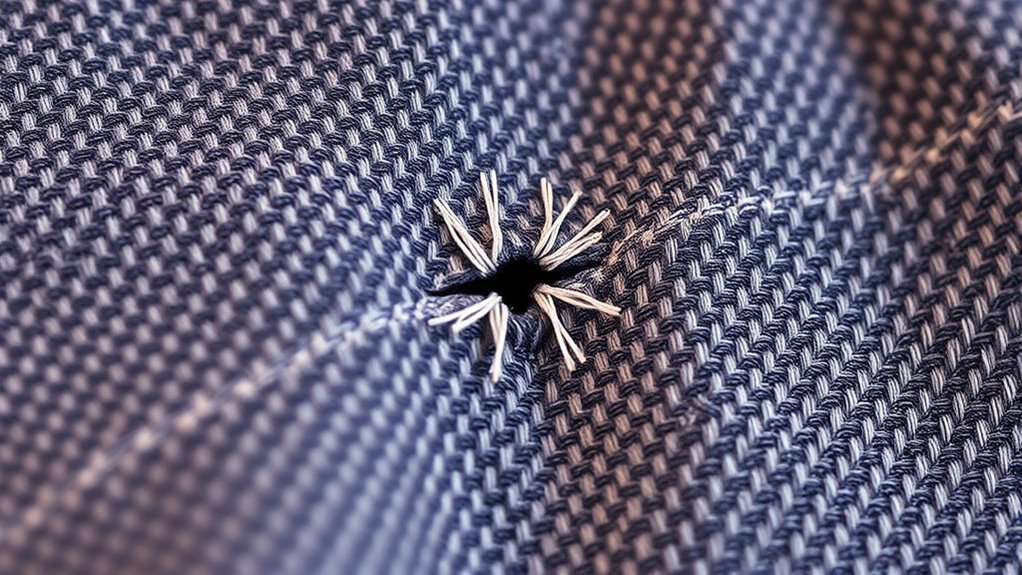
Invisible mending is a delicate craft that restores damaged fabric so seamlessly that the repair is virtually undetectable. When you choose this technique, you’re opting for a method that preserves the original look and feel of your garment, making it appear as if the damage never happened. The key to successful invisible mending lies in meticulous fabric blending and precise dye matching. These two components ensure that your repair blends flawlessly with the surrounding material, maintaining the fabric’s integrity and appearance.
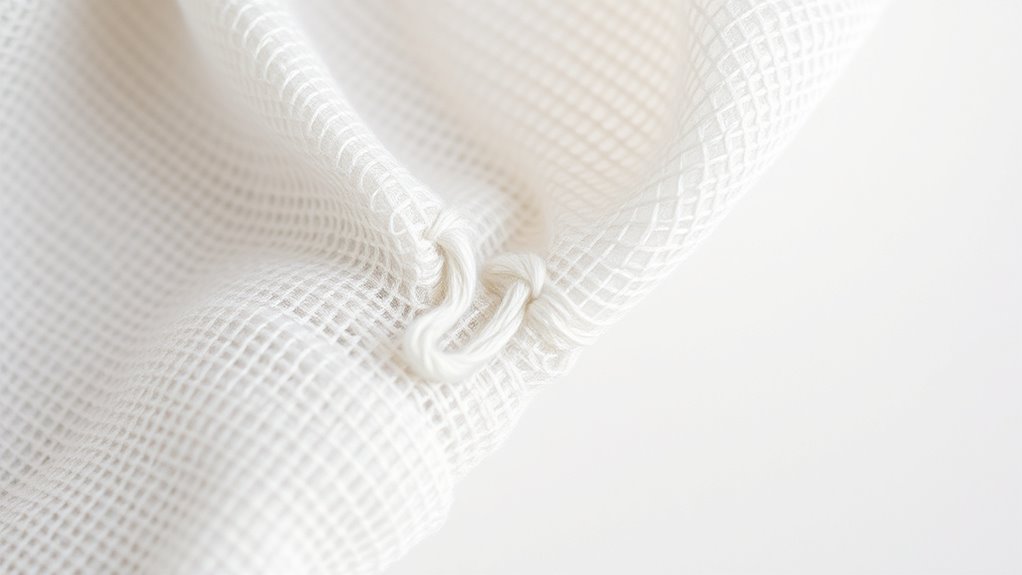
Fabric blending involves selecting threads that closely match the original fabric’s texture, weight, and weave pattern. You’ll need to carefully examine the damaged area and compare it with the undamaged sections, paying close attention to the fabric’s grain, sheen, and fiber type. The goal is to choose threads that integrate seamlessly, so the repair isn’t obvious upon close inspection. Whether you’re working with silk, wool, or cotton, the right thread ensures that your mended area remains consistent with the rest of the fabric.
Dye matching is equally critical. You want your repair to be invisible not only in texture but also in color. To achieve this, you may need to create a custom dye mixture that matches your fabric’s hue perfectly. This process involves testing small amounts of dye on a hidden part of the fabric or on a swatch that closely resembles the original. Adjusting the dye’s color gradually allows you to fine-tune the match, ensuring the repaired area doesn’t stand out. When applying the dye, work slowly and carefully, blending the edges of the repair to avoid harsh lines or color discrepancies.
As you perform the mending, work patiently, focusing on small, precise stitches. Use fine needles and thread to delicately weave the fibers back into position, mimicking the original stitching pattern as closely as possible. Pay attention to tension and stitch length to avoid puckering or unevenness. When you’ve finished, gently press the repaired area with a low-heat iron, if appropriate, to help the fibers settle and blend further. Ensuring proper fabric care will prolong the durability of your repair and prevent further damage.
In the end, invisible mending demands a keen eye for detail and a steady hand, but the result is worth it. Your repaired garment will look as if it’s been untouched, retaining its original beauty and durability. With the right techniques of fabric blending and dye matching, you can restore your favorite pieces to their former glory without anyone ever knowing they were ever damaged.
Frequently Asked Questions
What Fabrics Are Best Suited for Invisible Mending?
You should choose fabrics with high durability and tight weaves for invisible mending, like wool, silk, or fine cotton. These textiles respond well to delicate stitching and help maintain the garment’s integrity. Additionally, pick fabrics whose color closely matches the repair area to ensure seamless blending. By focusing on fabric durability and textile color matching, you can achieve a nearly invisible repair that preserves your garment’s original look.
How Long Does an Invisible Mend Typically Last?
Like a whisper of fabric magic, an invisible mend can last for years if you care for it properly. Typically, its durability depends on the fabric and mending technique, but with good maintenance tips—like gentle washing and avoiding harsh detergents—you can extend its lifespan. Expect a well-done invisible mend to stay seamless for quite some time, making your repair almost undetectable and ensuring your garment looks fresh longer.
Can Invisible Mending Be Done at Home?
Yes, you can do invisible mending at home if you’re comfortable with DIY techniques. To start, verify your fabric is compatible with the mending method you choose. Use fine, matching thread and a small needle for precision. Carefully follow step-by-step instructions to sew the tear or hole seamlessly. Practice on scrap fabric first to build confidence, and take your time for the best, nearly invisible results.
Is Special Equipment Required for Invisible Mending?
They say “a stitch in time saves nine,” and for invisible mending, you’ll need specialized tools or repair kits. While you can attempt some techniques at home, using the right equipment guarantees seamless results. These kits include fine needles and thread designed for delicate fabrics. With patience and the proper tools, you can achieve professional-looking repairs without needing extensive experience or expensive equipment.
How Much Does Professional Invisible Mending Usually Cost?
Professional invisible mending typically costs between $50 and $200, depending on the size and complexity of the repair. You should consider the cost estimates alongside service quality, as higher prices often reflect skilled craftsmanship and better materials. Investing in quality guarantees your garment’s repair remains discreet and durable, giving you peace of mind that your clothing looks seamless and well-maintained long-term.
Conclusion
Now that you know the art of invisible mending, you can seamlessly repair holes and tears, almost like a master forger of fabrics. With patience and the right techniques, your garments will look as pristine as if untouched by time’s relentless march. Think of yourself as a modern-day Robin Hood, restoring beauty to worn treasures in a world filled with the hum of a distant steampunk city. Your clothes will tell stories, unmarred by the passage of years.