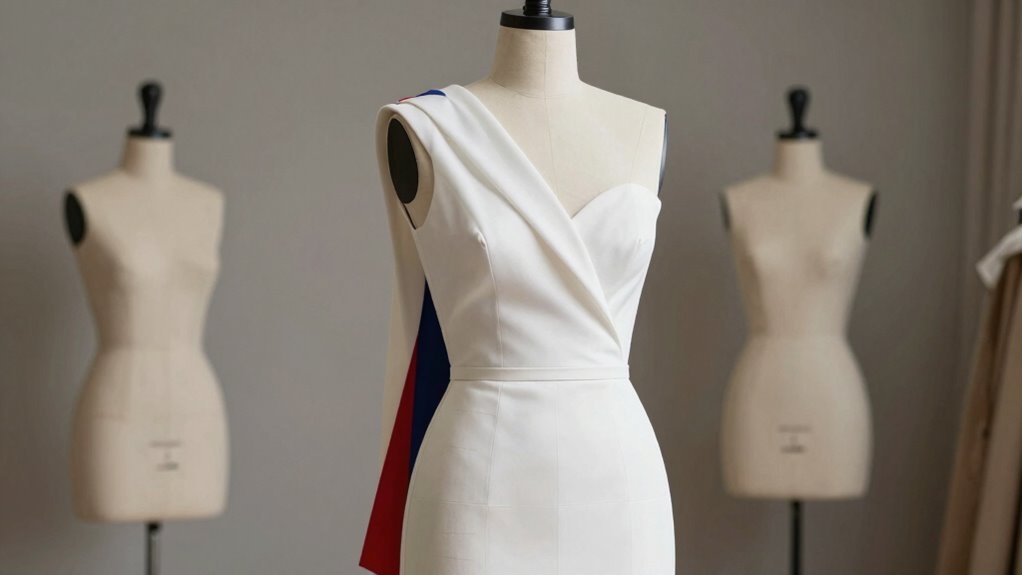

Professional dress forms matter for draping practice because they give you a realistic, stable surface to work on, helping you understand how fabrics behave on three-dimensional shapes. They allow you to make precise adjustments for a better fit and visualize your designs more clearly. By practicing on quality forms, you build confidence and improve your craftsmanship. Keep exploring to discover how these tools can transform your draping skills and design process.

Get business pricing on tools and workshop supplies
- Business-only prices and quantity discounts
- Tax-exempt purchasing
- Multiple users, one account, clear invoices
Key Takeaways
- They provide a realistic 3D surface for accurate fabric manipulation and draping practice.
- Adjustable features ensure precise fitting and better garment fit development.
- Their stability and consistency enable reliable repeated experimentation and learning.
- Understanding form structure enhances fabric behavior comprehension during draping.
- High-quality dress forms help identify and troubleshoot fit issues early in the design process.
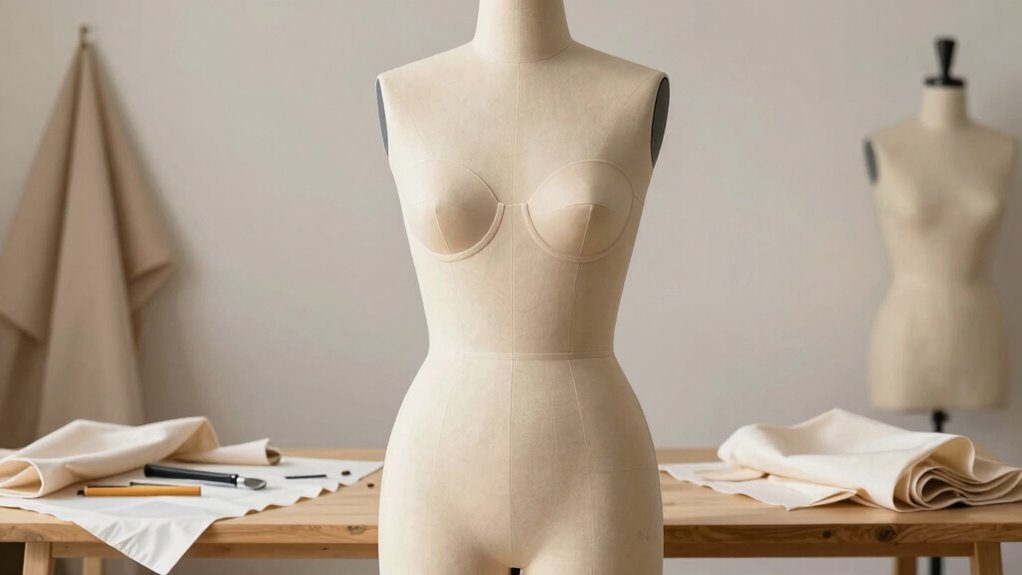
Have you ever wondered why dress forms are essential for draping practice? The answer lies in how they help you develop your skills and improve your craft. When working with dress forms, you gain a better understanding of fabric selection and how different materials behave on a three-dimensional surface. Choosing the right fabric is critical because it influences how your garment will drape and fit. A professional dress form provides a consistent, stable base that allows you to experiment with various fabrics and see firsthand how they respond when manipulated. This hands-on experience is indispensable for understanding the nuances of fabric weight, stretch, and texture, which are difficult to grasp through sketches or flat patterns alone. Additionally, practicing on a high-quality dress form helps you develop a keen eye for fabric behavior, which is an essential design skill for creating well-fitted garments. Developing a strong grasp of fabric behavior through consistent practice can significantly enhance your overall craftsmanship. A reliable form also helps you understand the importance of fabric drape, which varies greatly depending on the form’s surface and material. Using a high-quality dress form enhances your garment fitting process. It acts as a stand-in for a real body, giving you a realistic platform to drape and pin fabric as you design. Unlike flat patterns, which only show you a two-dimensional view, draping on a dress form allows you to visualize the final look in three dimensions. This makes adjustments easier and more precise, ensuring that the fit is accurate and flattering. A professional dress form’s adjustable features—such as height, bust, waist, and hip measurements—give you control over the fit, helping you refine your techniques and achieve a polished result. When you drape directly on the form, you can see how the fabric falls and interacts with curves, which sharpens your eye for fit issues that might not be obvious otherwise. Furthermore, professional dress forms provide consistency. When testing new designs or practicing techniques repeatedly, you want a reliable base that doesn’t shift or distort. This consistency allows you to focus entirely on fabric behavior and fitting adjustments without worrying about the form’s stability. Fabric behavior can vary greatly depending on the form’s surface and material, so a high-quality form ensures accurate representation. To further enhance your draping skills, it’s beneficial to understand the structure of different dress forms and how their construction impacts fabric behavior. Over time, this improves your confidence and skill in creating well-fitted garments. It’s also easier to troubleshoot fitting problems early in the process—saving you time and fabric waste—when you can manipulate the fabric directly on a form that mimics a human body. Ultimately, investing in a professional dress form can elevate your design process and help you develop a more intuitive understanding of garment construction.
professional dress form for draping
As an affiliate, we earn on qualifying purchases.
As an affiliate, we earn on qualifying purchases.
Frequently Asked Questions
How Do I Choose the Right Dress Form Size?
To choose the right dress form size, measure your bust, waist, and hips accurately. Look for forms with adjustable features to customize the fit as you work. Consider fabric types of the form—foam, fiberglass, or plastic—based on your draping needs. Opt for a size that closely matches your measurements to guarantee precise fitting and easier draping practice, helping you develop your skills effectively.
What Materials Are Best for Dress Forms?
You should choose dress forms made of sturdy materials like fiberglass or polyurethane foam, as they offer excellent durability for frequent draping practice. Fabric choices matter less since the form’s surface isn’t typically covered, but smooth, non-porous materials make pinning easier and prevent damage. Don’t overlook durability considerations—investing in a high-quality material guarantees your dress form lasts longer and withstands repeated use, making your learning process more effective.
How Long Do Dress Forms Typically Last?
Dress forms typically last several years, especially if they’re made with durable fabrics and have adjustable features. Fabric durability plays a big role in how well they hold up over time, resisting tears and wear. Adjustable features allow you to customize the form easily, extending its usability. Proper care and storage also help maximize their lifespan, ensuring they remain reliable tools for your draping practice for years to come.
Can Dress Forms Be Customized for Unique Body Shapes?
Think of a dress form as a tailor’s canvas—yes, it can be customized for your unique body shape. With various customization options, you can achieve body shape accuracy, ensuring your draping practice reflects real-world fit. This personalized touch helps you better understand proportions and fit, making your designs more precise and professional. Custom dress forms transform your creative process into a tailored journey, perfectly fitting your artistic vision.
Are There Affordable Options for Beginner Dress Forms?
Yes, there are budget options for beginner dress forms that are beginner-friendly. You can find affordable dress forms made of lightweight materials like foam or plastic, which are easy to manipulate and perfect for practicing draping. Look for models with adjustable features and realistic measurements, as these make learning easier. These options help you develop your skills without a hefty investment, making them ideal for those starting out.
Conclusion
Using professional dress forms for draping practice truly makes a difference. Some might think they’re unnecessary or too costly, but the benefits outweigh the expense. With a well-made form, you gain accuracy, confidence, and consistency in your designs. Plus, it’s a worthwhile investment in your skills as a fashion designer. Don’t let doubts hold you back—embrace the tools that can elevate your craft and help you create your best work yet.
Fall Picks
fall essentials
As an affiliate, we earn on qualifying purchases.