The best textile and fiber art books balance visual inspiration with practical guidance, and I’d choose Textilepedia: The Complete Fabric Guide as the best overall starting point for its broad reference value. For hands-on exploration, Inventive Weaving on a Little Loom focuses on a specific tool and gives beginners a clear way into weaving, while The Art and Science of Natural Dyes suits readers drawn to material experiments. The main tradeoff is breadth versus depth: survey books offer many ideas, while technique-led titles give more focused instruction. Some books emphasize contemporary art and artist perspectives rather than step-by-step projects. Read on for the full comparison and recommendations by interest and experience.

Get business pricing on tools and workshop supplies
- Business-only prices and quantity discounts
- Tax-exempt purchasing
- Multiple users, one account, clear invoices
Complete the kit


Key Takeaways
- Textilepedia stands out as the broadest reference pick, while the more focused technique books make better choices when you already know what you want to learn.
- Inventive Weaving on a Little Loom is the clearest fit for readers who want a defined beginner path into a particular craft rather than a wide-ranging art survey.
- The Art and Science of Natural Dyes and Nalbinding – It’s Not Knitting address specialized interests that general fiber-art overviews may only touch on.
- Several titles favor visual discovery and contemporary practice—such as 1,000 Artisan Textiles and Textiles x Art—over project-by-project teaching.
- Books on fabric manipulation overlap in subject but serve different needs: Layered Cloth foregrounds artistic examples, while The Art of Manipulating Fabric is the more direct technique-focused choice.
| Textile Artist: Layered Cloth: The Art of Fabric Manipulation |  | Best for Fabric Manipulation | Format: Book | Subject: Textile art | Technique focus: Fabric manipulation | VIEW LATEST PRICE | See Our Full Breakdown |
| Cloth Stories: Capturing Domestic Life in Textile Art |  | Best for Narrative Textile Art | Subject: Textile art | Theme: Domestic life | Stated focus: Capturing everyday life through textiles | VIEW LATEST PRICE | See Our Full Breakdown |
| Textilepedia: The Complete Fabric Guide |  | Best Fabric Reference | Subject: Textiles and fabrics | Stated format: Fabric guide | Scope: Fabric reference | VIEW LATEST PRICE | See Our Full Breakdown |
| Mixed Media Textile Art in Three Dimensions |  | Best for 3D Mixed-Media Work | Format: Book | Subject: Textile art | Approach: Mixed media | VIEW LATEST PRICE | See Our Full Breakdown |
| Textile Fine Art: Conversations with Artists Creating by Hand |  | Best for Artist Perspectives | Subject: Textile fine art | Stated approach: Conversations with artists | Practice focus: Creating by hand | VIEW LATEST PRICE | See Our Full Breakdown |
| Stitch, Fibre, Metal & Mixed Media: Inspiration, Projects & Techniques for Textile Artists |  | Best for Mixed-Media Experimentation | Format: Book | Subject: Textile art | Materials covered: Stitch, fibre, metal, and mixed media | VIEW LATEST PRICE | See Our Full Breakdown |
| The Art and Science of Natural Dyes: Principles, Experiments, and Results |  | Best for Natural Dye Study | Subject: Natural dyes | Focus: Principles, experiments, and results | Field: Textile and fiber arts | VIEW LATEST PRICE | See Our Full Breakdown |
| Dimensional Cloth: Sculpture by Contemporary Textile Artists |  | Best for Textile Sculpture Inspiration | Subject: Dimensional textile art | Focus: Sculpture | Featured perspective: Contemporary textile artists | VIEW LATEST PRICE | See Our Full Breakdown |
| The Art of Textile & Fiber Crafts: A Practical Guide to Cloth, Thread, Yarn, Needlework, Construction, Repair, and Handmaking |  | Best Broad Practical Reference | Subject: Textile and fiber crafts | Materials covered: Cloth, thread, and yarn | Craft areas: Needlework, construction, repair, and handmaking | VIEW LATEST PRICE | See Our Full Breakdown |
| Nalbinding – It’s Not Knitting: Heritage Techniques for the Contemporary Textile Crafter |  | Best for a Distinct Heritage Technique | Format: Book | Subject: Nalbinding | Technique type: Heritage textile technique distinct from knitting | VIEW LATEST PRICE | See Our Full Breakdown |
| The Art of Manipulating Fabric |  | Best for Fabric-Surface Techniques | Title: The Art of Manipulating Fabric | ASIN: 0801984963 | Subject: Fabric manipulation | VIEW LATEST PRICE | See Our Full Breakdown |
| 1,000 Artisan Textiles: Contemporary Fiber Art, Quilts, and Wearables |  | Best for Contemporary Art Inspiration | Title: 1,000 Artisan Textiles: Contemporary Fiber Art, Quilts, and Wearables | ASIN: 1592536093 | Subject: Contemporary artisan textiles | VIEW LATEST PRICE | See Our Full Breakdown |
| Inventive Weaving on a Little Loom: Discover the Full Potential of the Rigid‑Heddle Loom, for Beginners and Beyond | 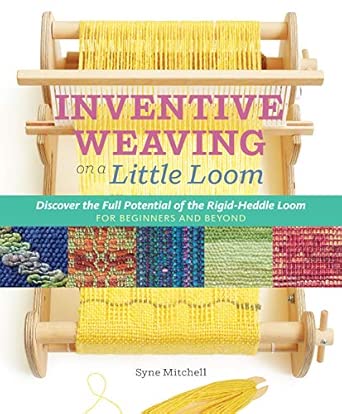 | Best for Rigid-Heddle Loom Learners | Title: Inventive Weaving on a Little Loom: Discover the Full Potential of the Rigid‑Heddle Loom, for Beginners and Beyond | ASIN: 1603429727 | Subject: Rigid-heddle loom weaving | VIEW LATEST PRICE | See Our Full Breakdown |
| Textiles x Art: How Textiles Are Shaping Contemporary Art |  | Best for Contemporary Art Context | Title: Textiles x Art: How Textiles Are Shaping Contemporary Art | ASIN: 1760765511 | Subject: Textiles in contemporary art | VIEW LATEST PRICE | See Our Full Breakdown |
| Fiber Craft Heritage: Easy-to-Learn Textile Techniques from the Stone Age to Today, with 52 Try-It Projects |  | Best for History-Minded Hands-On Learning | Title: Fiber Craft Heritage: Easy-to-Learn Textile Techniques from the Stone Age to Today, with 52 Try-It Projects | ASIN: 0764369628 | Format: Book | VIEW LATEST PRICE | See Our Full Breakdown |
| textile and fiber art book | Subject | ASIN | Format |
|---|---|---|---|
| Textile Artist: Layered Cloth: | Textile art | 1782213341 | Book |
| Cloth Stories: Capturing Domes | Textile art | 1849948186 | Not specified in provided data |
| Textilepedia: The Complete Fab | Textiles and fabrics | 9887711098 | — |
| Mixed Media Textile Art in Thr | Textile art | 1849946922 | Book |
| Textile Fine Art: Conversation | Textile fine art | 1529437318 | Not specified in provided data |
| Stitch | Textile art | 1782217886 | Book |
| The Art and Science of Natural | Natural dyes | 076435633X | — |
| Dimensional Cloth: Sculpture b | Dimensional textile art | 0764355368 | — |
| The Art of Textile & Fiber Cra | Textile and fiber crafts | B0GZ5R5GHL | Not specified in the provided product data |
| Nalbinding | Nalbinding | 178994306X | Book |
| The Art of Manipulating Fabric | Fabric manipulation | 0801984963 | Not specified |
| 1,000 Artisan Textiles: Contem | Contemporary artisan textiles | 1592536093 | Not specified |
| Inventive Weaving on a Little | Rigid-heddle loom weaving | 1603429727 | Not specified |
| Textiles x Art: How Textiles A | Textiles in contemporary art | 1760765511 | Not specified |
| Fiber Craft Heritage: Easy-to- | Textile techniques and fiber crafts | 0764369628 | Book |
More Details on Our Top Picks
Textile Artist: Layered Cloth: The Art of Fabric Manipulation
Layered cloth and fabric manipulation give this title a focused place in a textile-art library: it is aimed at makers who want cloth itself to become the subject and structure of the work. Compared with Mixed Media Textile Art in Three Dimensions, its emphasis is narrower, making it a better match for artists exploring surface, folds, and layered fabric rather than building sculptural forms from mixed materials. That focus is also its main limitation: the available details do not establish how many techniques, projects, or step-by-step instructions it contains. I would choose it for a specific interest in manipulated cloth, not as a general textile reference or a survey of fiber art.
Pros:- Direct focus on fabric manipulation
- Centers layered cloth as an artistic material
- More specialized than broad mixed-media or textile overviews
Cons:- Provided details do not confirm project count or level of instruction
- Narrow subject focus may leave readers wanting other textile techniques
Best for: Textile artists focused on layered fabric and manipulation who want a subject-specific book rather than a broad craft survey.
Not ideal for: Readers seeking a verified project count, beginner curriculum, or wide-ranging guide to different fibers and textile methods.
- Format:Book
- Subject:Textile art
- Technique focus:Fabric manipulation
- Material focus:Layered cloth
- Intended audience:Textile artists
- ASIN:1782213341
Our verdict“Choose this for a focused exploration of manipulated, layered fabric; choose a broader textile guide if you want instruction across multiple methods.”
Cloth Stories: Capturing Domestic Life in Textile Art
Domestic life as subject matter sets this book apart from technique-led choices such as Textile Artist: Layered Cloth. Its title points toward textile work that records personal settings and everyday experience, which may appeal to makers interested in narrative, memory, and the meaning carried by cloth. That makes it a distinct choice for readers who want artistic context rather than a general fabric reference. The available product information does not specify techniques, project instructions, or the book’s format, so I would not treat it as a confirmed how-to manual. Compared with Textile Fine Art, its stated focus is more specific: domestic life, rather than conversations with artists across handmade fine art.
Pros:- Clearly defined subject focus on domestic life
- Offers a narrative angle distinct from technique-centered titles
- May suit artists developing personal or place-based textile work
Cons:- Available details do not establish its techniques or instructional depth
- Narrow theme may not suit readers seeking a broad fiber-art survey
Best for: Textile artists developing work about home, memory, and everyday domestic experience.
Not ideal for: Readers who need confirmed step-by-step projects, technique lists, or a reference guide to fabric types.
- Subject:Textile art
- Theme:Domestic life
- Stated focus:Capturing everyday life through textiles
- Format:Not specified in provided data
- Technique details:Not specified in provided data
- ASIN:1849948186
Our verdict“Pick this for a domestic-life and storytelling focus, but choose a technique-specific book if practical instruction is your priority.”
Textilepedia: The Complete Fabric Guide
Fabric knowledge, rather than a specific art technique, is the distinguishing promise of this title. That makes it a potentially useful companion for artists choosing materials, while Textile Artist: Layered Cloth is the more direct pick for someone seeking a defined creative approach. The title describes a guide to fabric, but the provided information does not verify its contents, organization, or coverage, so I would avoid assuming it includes swatches, detailed fiber comparisons, or project instruction. Its reference-oriented positioning may suit makers who want to understand cloth before working with it; it is less clearly suited to readers looking for a project-led book or contemporary-art discussion such as Textile Fine Art.
Pros:- Explicit fabric-guide focus
- Potentially complements project and technique books
- Material-centered scope differs from art-history and artist-conversation titles
Cons:- Provided data does not confirm which fabrics or properties are covered
- No verified project format or instructional level is available
Best for: Textile makers who want a fabric-focused reference to support material selection and creative planning.
Not ideal for: Readers looking primarily for hands-on projects, a specific technique course, or artist interviews.
- Subject:Textiles and fabrics
- Stated format:Fabric guide
- Scope:Fabric reference
- Technique details:Not specified in provided data
- Project details:Not specified in provided data
- ASIN:9887711098
Our verdict“Consider this as a fabric reference if material knowledge is your goal, but choose a technique book for confirmed making instruction.”
Mixed Media Textile Art in Three Dimensions
Three-dimensional textile art is the clearest reason to choose this book: it pairs fabric-based work with a mixed-media approach and a sculptural outcome. That makes it a stronger match for artists who want work to project into space than Textile Artist: Layered Cloth, whose stated focus is fabric manipulation and layered surfaces. The broader mixed-media framing may also invite combinations of materials, though the available description does not identify specific media, projects, or skill level. Compared with a fabric reference such as Textilepedia, this is oriented toward making art rather than understanding cloth as a material. Its scope is still specialized, so readers seeking flat surface techniques or a broad textile overview may find it too focused.
Pros:- Explicit focus on three-dimensional textile art
- Mixed-media framing supports work beyond cloth alone
- Offers a clear alternative to surface-focused fabric manipulation titles
Cons:- Provided details do not identify specific materials or techniques
- Three-dimensional focus may not fit readers seeking flat textile work
Best for: Textile artists interested in combining materials and developing sculptural or otherwise three-dimensional work.
Not ideal for: Readers mainly seeking fabric reference information, flat textile techniques, or a broad introduction to fiber crafts.
- Format:Book
- Subject:Textile art
- Approach:Mixed media
- Dimensional focus:Three-dimensional
- Specific materials:Not specified in provided data
- ASIN:1849946922
Our verdict“Choose this for mixed-media textile work with a sculptural direction; pick Layered Cloth for a narrower focus on fabric surfaces.”
Textile Fine Art: Conversations with Artists Creating by Hand
Conversations with handmade textile artists make this the most artist-centered choice in this group. Rather than promising a material guide like Textilepedia or a focused method like Textile Artist: Layered Cloth, it presents fine art through the perspectives of people creating by hand. That angle may help readers think about artistic process and intention, but the available details do not confirm the interview format, techniques covered, or inclusion of practical exercises. I would select it for insight into artists’ approaches, not as a substitute for step-by-step instruction. Its fine-art emphasis also makes it less directly useful to readers who want a broad craft primer or a tightly defined project path.
Pros:- Features conversations with textile artists
- Focuses on handmade fine art
- Provides an artist-perspective alternative to technique-centered books
Cons:- Provided details do not confirm practical exercises or project instructions
- Specific interview subjects and techniques are not supplied
Best for: Textile-art students and makers who value artist perspectives and handmade fine-art practice over project instructions.
Not ideal for: Beginners looking for confirmed step-by-step lessons, or readers who need a fabric encyclopedia or technique workbook.
- Subject:Textile fine art
- Stated approach:Conversations with artists
- Practice focus:Creating by hand
- Format:Not specified in provided data
- Project details:Not specified in provided data
- ASIN:1529437318
Our verdict“Choose this for perspectives on handmade textile fine art, not as your main resource for learning a specific technique.”
Stitch, Fibre, Metal & Mixed Media: Inspiration, Projects & Techniques for Textile Artists
Stitch, Fibre, Metal & Mixed Media suits textile artists who want to push beyond cloth and thread into work that combines contrasting materials. Its mix of inspiration, projects, and techniques gives readers both visual prompts and ways to start making, rather than focusing only on finished-art examples. Compared with Dimensional Cloth, which centers on sculptural textile work, this book’s stated scope is broader in materials and mixed-media practice. That range is its advantage, but it may offer less depth for someone seeking a single, closely defined discipline. The description does not specify project difficulty, materials lists, or the amount of step-by-step instruction, so readers who need a tightly structured beginner course may prefer a more focused technique guide. I’d choose it for cross-material exploration, not as a reference for mastering one craft.
Pros:- Brings stitch, fibre, metal, and mixed media into one textile-art framework.
- Combines project ideas with technique coverage and inspiration.
- Encourages experimentation beyond conventional cloth-based work.
Cons:- The available description does not establish how detailed or sequential the project instructions are.
- Its broad material scope may provide less depth on any one technique than a specialized guide.
- No difficulty levels or required-material details are provided.
Best for: Textile artists who already work with fabric or stitch and want project prompts for combining textiles with metal and other media.
Not ideal for: Beginners seeking a clearly leveled, step-by-step course or makers focused on one material or technique.
- Format:Book
- Subject:Textile art
- Materials covered:Stitch, fibre, metal, and mixed media
- Content:Inspiration, projects, and techniques
- Approach:Practical and exploratory
- ASIN:1782217886
Our verdict“Choose this for broad mixed-media prompts across textile and metal, but pick a focused technique book if you need structured instruction.”
The Art and Science of Natural Dyes: Principles, Experiments, and Results
The Art and Science of Natural Dyes is the most focused choice here for readers interested in how natural color is produced and explored. Its title signals a blend of principles, experiments, and results, making it a better fit for methodical dye study than the broader mixed-material prompts in Stitch, Fibre, Metal & Mixed Media. That emphasis can help readers connect hands-on trials with the ideas behind them, rather than treating dyeing as a collection of isolated recipes. The tradeoff is its narrow subject: it is not presented as a general guide to textile construction, embroidery, or fiber-art composition. The available product information gives no details about specific dye plants, fibers, or project difficulty, so I would not choose it when a precise curriculum or a wide range of textile techniques is the main goal.
Pros:- Concentrates on natural dyes rather than treating color as a small part of a wider craft guide.
- Pairs principles with experiments and reported results, according to the title.
- Offers a research-minded complement to project-led books such as Stitch, Fibre, Metal & Mixed Media.
Cons:- Its single-topic focus offers little stated coverage of other textile techniques.
- The available description does not identify dye sources, fibers, or specific procedures.
- No experience level or project scope is provided.
Best for: Textile artists and hands-on learners who want a focused resource for exploring natural dye principles through experiments.
Not ideal for: Readers seeking a broad textile-art survey, detailed coverage of stitching and construction, or confirmed plant-specific dye instructions.
- Subject:Natural dyes
- Focus:Principles, experiments, and results
- Field:Textile and fiber arts
- Approach:Study and experimentation
- Specific dye sources:Not specified in the provided product data
- ASIN:076435633X
Our verdict“Pick this if natural dyeing is your main area of study; skip it if you want a general-purpose fiber-art handbook.”
Dimensional Cloth: Sculpture by Contemporary Textile Artists
Dimensional Cloth is the art-led pick for readers drawn to fabric as a sculptural material rather than a flat surface. Its stated focus on sculpture by contemporary textile artists gives it a different role from Stitch, Fibre, Metal & Mixed Media, which is described as including projects and techniques across several materials. Here, the strongest reason to choose the book is its subject: three-dimensional textile work and the artists making it. That focus may help readers expand their visual vocabulary, but the available information does not confirm that it teaches construction methods or offers step-by-step projects. I’d treat it as a source of sculptural approaches and artistic reference, not assume it can replace a practical instruction manual. Readers wanting broad craft coverage may find its narrow sculptural lens limiting.
Pros:- Centers three-dimensional work rather than flat textile surfaces.
- Frames the subject through contemporary textile artists.
- Offers a distinct visual-art perspective compared with technique-led mixed-media books.
Cons:- The provided data does not confirm step-by-step instruction or project patterns.
- Its sculpture focus may not serve readers seeking a broad textile craft reference.
- No details are supplied about featured artists, materials, or image content.
Best for: Textile artists, art students, and makers seeking contemporary examples of cloth used in three-dimensional sculpture.
Not ideal for: Readers who need confirmed project instructions, beginner techniques, or coverage of textile crafts beyond sculpture.
- Subject:Dimensional textile art
- Focus:Sculpture
- Featured perspective:Contemporary textile artists
- Material focus:Cloth
- Instructional content:Not specified in the provided product data
- ASIN:0764355368
Our verdict“Choose this for a focused look at contemporary textile sculpture, not as your primary how-to guide.”
The Art of Textile & Fiber Crafts: A Practical Guide to Cloth, Thread, Yarn, Needlework, Construction, Repair, and Handmaking
The Art of Textile & Fiber Crafts has the widest practical remit in this batch: it covers cloth, thread, and yarn alongside needlework, construction, repair, and handmaking. That makes it a useful candidate for readers who want to move among making and mending, rather than specialize in natural dyes or textile sculpture. Compared with The Art and Science of Natural Dyes, it trades depth in one process for a broader range of craft topics; compared with Nalbinding – It’s Not Knitting, it is positioned as a general guide rather than a single-technique study. The breadth is also its main risk: the provided description does not show how much instruction each area receives or which skills are covered in depth. I’d favor it as a wide-ranging starting reference, not a substitute for specialist guidance.
Pros:- Covers cloth, thread, and yarn across multiple textile-craft activities.
- Includes repair as well as construction and handmaking.
- Offers a broader practical scope than the dye- or nalbinding-focused books in this group.
Cons:- The broad subject range may leave less room for detailed treatment of each craft.
- The provided data does not identify specific techniques, projects, or skill levels.
- Readers looking for contemporary textile-art analysis may prefer an art-focused title.
Best for: Home textile makers and repair-minded crafters who want one practical guide spanning needlework, construction, and mending.
Not ideal for: Readers pursuing advanced instruction in one specific discipline or seeking confirmed project details and skill levels.
- Subject:Textile and fiber crafts
- Materials covered:Cloth, thread, and yarn
- Craft areas:Needlework, construction, repair, and handmaking
- Format:Not specified in the provided product data
- Skill level:Not specified in the provided product data
- ASIN:B0GZ5R5GHL
Our verdict“Choose this for a broad practical overview of making and repairing textiles, but seek a specialist book for advanced technique instruction.”
Nalbinding – It’s Not Knitting: Heritage Techniques for the Contemporary Textile Crafter
Nalbinding – It’s Not Knitting earns its place by focusing on a historic looped-textile method that differs from the familiar structure of knitting. The book’s combination of heritage techniques and contemporary patterns gives curious makers a route from learning an older craft to applying it in current projects. Compared with The Art of Textile & Fiber Crafts, it offers a narrower subject but a clearer specialist identity; unlike The Art and Science of Natural Dyes, its emphasis is on making structures rather than coloring materials. That specificity is appealing if you want a fresh skill, though it also limits the book’s relevance for readers seeking general textile instruction. The provided description does not state the difficulty level, so beginners may want to check whether its teaching style matches their needs before choosing it as a first craft book.
Pros:- Focuses on nalbinding as a technique distinct from knitting.
- Connects heritage methods with contemporary crafting.
- Includes patterns as well as technique coverage, according to the description.
Cons:- The specialized subject may have limited use for makers who do not plan to practice nalbinding.
- The provided data does not state a difficulty level.
- It is not positioned as a general guide to textile and fiber crafts.
Best for: Knitting or fiber-craft enthusiasts who want to learn a distinct heritage technique and adapt it to contemporary projects.
Not ideal for: Readers looking for a broad textile-art survey, a knitting manual, or instruction with a clearly stated beginner level.
- Format:Book
- Subject:Nalbinding
- Technique type:Heritage textile technique distinct from knitting
- Content:Techniques and patterns
- Intended application:Contemporary textile crafting
- Difficulty level:Not specified in the provided product data
- ASIN:178994306X
Our verdict“Choose this if you want to learn nalbinding specifically; choose the broader practical guide if you need coverage across several crafts.”
The Art of Manipulating Fabric
The Art of Manipulating Fabric is the technique-led choice for readers who want to alter cloth itself through shaping and surface manipulation. Its title points to a focused subject rather than a broad survey of fiber art, making it a useful counterpoint to 1,000 Artisan Textiles, which presents a range of finished contemporary work. I’d choose this book when the goal is to explore how fabric can be changed and developed as a material, not simply to browse examples.
The tradeoff is the limited information available about its contents: the supplied product details don’t confirm specific techniques, project formats, or difficulty levels. Readers seeking a verified step-by-step course may prefer Inventive Weaving on a Little Loom, whose description explicitly promises projects and troubleshooting. This pick is best for fabric-focused makers comfortable choosing a book around its subject rather than a confirmed project list.
Pros:- Focused subject offers a clear direction for fabric-centered study.
- Provides a distinct technique-oriented alternative to contemporary-work collections.
- May suit makers who want to explore cloth beyond its flat, unaltered form.
Cons:- The supplied details do not specify which manipulation techniques are covered.
- No project count, format, or skill level is provided.
- The narrow subject may be less useful to readers seeking a broad survey of textile art.
Best for: Fabric artists and textile makers seeking a book centered on manipulating cloth as a material.
Not ideal for: Beginners who need confirmed step-by-step instructions, project counts, or a clearly stated skill level.
- Title:The Art of Manipulating Fabric
- ASIN:0801984963
- Subject:Fabric manipulation
- Category:Textile and fiber art
- Format:Not specified
- Project count:Not specified
Our verdict“Choose this for a focused exploration of fabric manipulation, but look elsewhere if you need confirmed project instructions or coverage details.”
1,000 Artisan Textiles: Contemporary Fiber Art, Quilts, and Wearables
1,000 Artisan Textiles is the broad visual pick in this group, bringing together contemporary fiber art, quilts, and wearable work. That range makes it a better fit for browsing across forms than The Art of Manipulating Fabric, whose subject is narrower and technique-centered. I’d recommend it to readers who want to see how textile materials appear in finished artworks and garments, or who need varied visual references before choosing a direction for their own practice.
Its breadth is also the tradeoff: the supplied description doesn’t establish whether the book includes instructions, artist commentary, or detailed explanations of individual techniques. Readers who want to make along with a book may get more practical direction from Inventive Weaving on a Little Loom. Treat this as an inspiration-led collection, not a confirmed instructional manual; the available information also leaves its organization and depth unclear.
Pros:- Covers fiber art, quilts, and wearable work within one collection.
- Offers a wider range of finished textile forms than a single-technique guide.
- Useful as a visual prompt source for makers developing their own ideas.
Cons:- The supplied description does not confirm instructional content or project directions.
- No details are provided about how the works are selected or organized.
- The scope may favor browsing over focused study of a particular technique.
Best for: Textile artists, quiltmakers, and wearable-art enthusiasts looking for varied contemporary visual references.
Not ideal for: Readers who want verified step-by-step projects, technique lessons, or a stated beginner-to-advanced learning path.
- Title:1,000 Artisan Textiles: Contemporary Fiber Art, Quilts, and Wearables
- ASIN:1592536093
- Subject:Contemporary artisan textiles
- Coverage:Fiber art, quilts, and wearables
- Format:Not specified
- Project count:Not specified
Our verdict“Pick this for broad contemporary textile inspiration, not for a project-based course or a detailed technique manual.”
Inventive Weaving on a Little Loom: Discover the Full Potential of the Rigid‑Heddle Loom, for Beginners and Beyond
Inventive Weaving on a Little Loom is the clearest practical learning choice here: it covers rigid-heddle loom fundamentals, projects, troubleshooting, and techniques for more experienced weavers. That makes it more useful for building a specific skill than 1,000 Artisan Textiles, which is described as a collection of contemporary works rather than a how-to guide. Beginners can use the fundamentals as a starting point, while experienced makers have a reason to keep going beyond basic setup.
The defined loom focus is both its strength and its limit. Its instructions and project ideas are aimed at rigid-heddle weaving, so they may not transfer directly to other loom types or to non-weaving practices such as fabric manipulation. Compared with Fiber Craft Heritage, which ranges across historical techniques and many kinds of hands-on projects, this book offers a narrower but more sustained path into one form of weaving.
Pros:- Introduces rigid-heddle loom fundamentals for beginners.
- Includes techniques aimed at experienced weavers as well as newcomers.
- Project ideas give readers a practical route to applying the instruction.
- Troubleshooting guidance can help readers work through common weaving problems.
Cons:- Focuses exclusively on rigid-heddle looms.
- Its weaving emphasis offers less variety than a broad historical or visual textile collection.
Best for: New and developing weavers with a rigid-heddle loom who want fundamentals, projects, and room to progress.
Not ideal for: Textile makers using other loom types or readers seeking a cross-disciplinary survey of fiber techniques.
- Title:Inventive Weaving on a Little Loom: Discover the Full Potential of the Rigid‑Heddle Loom, for Beginners and Beyond
- ASIN:1603429727
- Subject:Rigid-heddle loom weaving
- Skill range:Beginners and beyond
- Content:Fundamentals, advanced techniques, projects, and troubleshooting
- Format:Not specified
Our verdict“Choose this if you want a practical learning path on a rigid-heddle loom; skip it if your textile interests center on other tools or techniques.”
Textiles x Art: How Textiles Are Shaping Contemporary Art
Textiles x Art takes an art-world perspective, looking at how textile techniques and materials shape contemporary artistic practice. It suits readers curious about textiles as a form of contemporary art, rather than primarily as a craft to learn. Compared with 1,000 Artisan Textiles, which is described as a collection of works across fiber art, quilts, and wearables, this book’s stated emphasis is the relationship between textiles and broader contemporary art.
That angle makes it a distinct choice for art students, curators, and makers thinking about context, but it may be less useful to someone seeking instructions at the worktable. The available description doesn’t specify projects, named artists, or the depth of its coverage, so buyers can’t judge those details from the supplied information. For hands-on skill building, Inventive Weaving on a Little Loom makes a more explicit promise; choose this one for ideas about textiles’ place in modern art.
Pros:- Connects textile materials and techniques with contemporary artistic practice.
- Offers an art-context perspective distinct from technique manuals.
- Can help readers think about textiles beyond conventional craft categories.
Cons:- The supplied description does not confirm hands-on projects or technical instruction.
- No details are provided about featured artists or the scope of examples.
- Readers seeking a visual survey or structured learning sequence may need more information before choosing.
Best for: Art students, textile artists, and readers interested in how textile methods enter contemporary art practice.
Not ideal for: Makers looking for confirmed step-by-step projects, practical technique instruction, or a specified artist directory.
- Title:Textiles x Art: How Textiles Are Shaping Contemporary Art
- ASIN:1760765511
- Subject:Textiles in contemporary art
- Focus:Influence of textile techniques and materials on modern artistic practice
- Format:Not specified
- Project count:Not specified
Our verdict“Choose this for context on textiles in contemporary art, rather than as a practical project book.”
Fiber Craft Heritage: Easy-to-Learn Textile Techniques from the Stone Age to Today, with 52 Try-It Projects
Fiber Craft Heritage links textile techniques to a long historical arc, from the Stone Age to the present, and pairs that survey with 52 try-it projects. That combination gives it a more varied hands-on scope than Inventive Weaving on a Little Loom, which concentrates on one loom type. I’d point curious beginners and history-minded makers toward this book when they want to sample techniques rather than follow a single craft in depth.
The breadth comes with a likely tradeoff: a book spanning many eras and techniques may offer less sustained instruction in any one method than a dedicated guide. Its project count is clear, but the supplied description doesn’t name the techniques, materials, or difficulty levels involved. Readers seeking contemporary art context may prefer Textiles x Art; those wanting a defined weaving curriculum should choose the rigid-heddle guide instead.
Pros:- Connects textile techniques across a broad span of history.
- Includes 52 hands-on projects for active learning.
- Offers wider technique variety than a guide devoted to one loom type.
Cons:- The supplied details do not identify the techniques covered by the projects.
- Project difficulty and material requirements are not specified.
- Broad historical coverage may leave less room for deep instruction in any one technique.
Best for: Curious beginners and history-minded crafters who want a wide-ranging introduction with hands-on projects.
Not ideal for: Experienced specialists seeking in-depth instruction in one textile method or readers focused only on contemporary art.
- Title:Fiber Craft Heritage: Easy-to-Learn Textile Techniques from the Stone Age to Today, with 52 Try-It Projects
- ASIN:0764369628
- Format:Book
- Historical coverage:Stone Age to today
- Project count:52
- Subject:Textile techniques and fiber crafts
Our verdict“Choose this for historical range and a large set of try-it projects, but select a specialist guide for depth in one craft.”
How We Picked
I compared these books by the kind of help they offer a textile or fiber artist: technique instruction, project usefulness, breadth of reference, visual inspiration, and attention to materials. I also considered how clearly a title serves a particular reader, from a beginner seeking a manageable first craft to an experienced maker looking for new processes or contemporary art context. A book’s subject matter matters as much as its scope: a focused guide can be a stronger choice than a broad survey when it delivers the kind of learning a reader needs.
The ranking gives priority to books with wide usefulness across interests, then distinguishes specialized titles by the strength of their fit for a particular purpose. Reference and practical guides rank ahead of inspiration-led collections for readers seeking repeat use, while visual surveys remain strong choices for readers who value artist examples and fresh directions. I treat these as different forms of value, not interchangeable books; a title can be an excellent pick for one reader and a poor match for another.
| textile and fiber art book | Format |
|---|---|
| Textile Artist: Layered Cloth: | Book |
| Cloth Stories: Capturing Domes | Not specified in provided data |
| Textilepedia: The Complete Fab | — |
| Mixed Media Textile Art in Thr | Book |
| Textile Fine Art: Conversation | Not specified in provided data |
| Stitch | Book |
| The Art and Science of Natural | — |
| Dimensional Cloth: Sculpture b | — |
| The Art of Textile & Fiber Cra | Not specified in the provided product data |
| Nalbinding | Book |
| The Art of Manipulating Fabric | Not specified |
| 1,000 Artisan Textiles: Contem | Not specified |
| Inventive Weaving on a Little | Not specified |
| Textiles x Art: How Textiles A | Not specified |
| Fiber Craft Heritage: Easy-to- | Book |
Factors to Consider When Choosing Best Textile And Fiber Art Books
Before choosing, decide whether you want to learn a process, solve material questions, or gather visual ideas. Textile and fiber art books can look similar on a shelf yet serve very different roles. These points can help you choose a book you’ll return to, rather than one that only matches a broad interest in textiles.
Choose Instruction or Inspiration First
Project-led books and art surveys answer different questions. Instruction is useful when you want to practice a process, follow a sequence, or build a skill from a clear starting point. Inspiration collections can help you study how artists combine materials and develop a personal direction, but they may not explain how to reproduce a technique. A common mistake is buying an image-rich survey while expecting a lesson plan. If you want both, pair one practical guide with one visual reference instead of expecting a single book to do both jobs.
Match the Book’s Scope to Your Next Project
A broad textile reference is handy when you are still exploring, but it can devote less space to any one method. A specialized title can offer more depth on topics such as dyeing, weaving, or fabric manipulation, though it may have little relevance to other projects. Choose based on what you are likely to make in the near term, not only on what sounds interesting. Readers often overestimate how much they will use an encyclopedic guide and underestimate the value of a focused book they can keep beside their work. If your interests change often, breadth may matter more than detail.
Check Whether Materials and Methods Fit Your Setup
Some textile processes call for particular tools, fibers, workspace, or cleanup routines. A book may introduce an appealing technique that is impractical in a small home or with materials you cannot readily source. Before choosing, scan for the methods you want to try and note whether they rely on specialized equipment or controlled working conditions. Natural dyeing, for example, involves material choices and process variables that are different from a stitching or weaving project. Buying a book around a technique you can actually practice makes its guidance more useful.
Decide How Much Art Context You Want
Some books approach textiles as contemporary art, emphasizing artists, ideas, and finished work; others focus on craft knowledge and making. Neither approach is a substitute for the other. Art context can help you see textiles beyond their function and spark new ways to work, but it may leave practical questions unanswered. Technique guides can help you make, though they may provide less discussion of artistic practice. If you want a book for both studio use and visual research, check that its balance matches your reason for buying.
Look for a Teaching Style You Will Use
Instructions can be organized as standalone projects, technique demonstrations, reference entries, or historical and artist-led discussions. A step-by-step format suits readers who want a sequence to follow, while reference-style material is easier to revisit when a specific question comes up. Project counts alone do not tell you whether the guidance fits your learning style. Think about whether you prefer to copy a sample, adapt a method, or browse examples before starting. A book that matches how you learn is more likely to become a working resource rather than occasional shelf reading.
Pay for Depth When You Need Repeat Reference
A more specialized or detailed book makes sense when it addresses a process you expect to practice repeatedly. If you are still deciding whether a technique interests you, a broad introductory guide or a visually rich survey can be a lower-commitment way to explore. Avoid paying for breadth you will not use or for technical detail that exceeds your current goals. Experienced makers may value nuanced material and process coverage, while beginners can benefit more from accessible entry points. The right choice depends on what the book will help you do after the first read.
Frequently Asked Questions
Which book should I choose if I’m new to textile and fiber art?
Start with a book whose subject and teaching format match one craft you want to try, rather than assuming the broadest title will be easiest to learn from. Inventive Weaving on a Little Loom is a focused option for readers curious about rigid-heddle weaving, while Fiber Craft Heritage offers a wider range of accessible techniques and try-it projects. If you are unsure which processes appeal to you, a broad guide can help you explore before committing to a specialist subject. Check that the book gives enough instruction for independent practice, since inspiration alone may not answer beginner questions. Choose a first book around a project you can realistically attempt.
Are visual survey books useful if I want to learn techniques?
They can help you understand how textile artists use texture, structure, and materials, but visual surveys are not always designed as how-to manuals. Books such as 1,000 Artisan Textiles and Textiles x Art are better suited to browsing work and gathering ideas than following a detailed lesson sequence. If you want to make similar work, pair a survey with a practical guide in the relevant process. Look for captions or explanations that identify materials and methods, but do not assume every image includes replicable instructions. This distinction can prevent disappointment when choosing an art-focused book for studio use.
Should I buy a broad textile reference or a book on one technique?
Choose a broad reference when you are exploring several kinds of textile work or want a book to consult across projects. A focused title is a better fit when you have a clear goal, such as learning natural dyeing, nalbinding, or fabric manipulation. Broad books can introduce many subjects without giving each one extensive instruction; specialist books may offer depth but sit unused if your interests shift. One useful approach is to begin with a general guide and add a specialist book once you know which process holds your attention. The best match depends on whether you need range now or detail for a specific practice.
Can these books help me choose materials for a project?
Some can, particularly reference-oriented or process-focused titles, but material guidance varies widely across this lineup. Textilepedia is the strongest broad match for readers seeking fabric knowledge, while books centered on a specific process may explain materials in that narrower setting. An art survey may show a wide range of fibers and finished work without providing enough detail to select supplies. Before relying on a book for purchasing decisions, check whether it names material properties and explains why a particular fiber suits a technique. This matters when substitutions could change the result or make a process harder to manage.
What should I choose if I want a textile art book as a gift?
For someone whose interests are not yet clear, choose a broad, visually engaging book that can prompt new ideas without assuming a particular tool or skill level. If you know the recipient’s practice, a focused book on weaving, dyeing, or another technique can feel more personal and may be more useful. Avoid selecting a specialist guide solely because its topic sounds unusual; the recipient may lack the equipment or interest to use it. Consider whether they prefer artist profiles and visual research or direct project instruction. A gift that matches their way of making is more likely to become part of their creative routine.
Conclusion
For the broadest single reference, I’d choose Textilepedia: The Complete Fabric Guide as the best overall pick. Readers who want a focused, hands-on starting point should look to Inventive Weaving on a Little Loom for beginners and Fiber Craft Heritage for a wider sampler of techniques; those seeking value from a practical, reusable reference may prefer The Art of Textile & Fiber Crafts. For a more specialized or premium-feeling choice, The Art and Science of Natural Dyes suits process-led experimentation, while Textiles x Art offers contemporary art context. If you want fabric manipulation, compare Layered Cloth with The Art of Manipulating Fabric: choose the former for artistic examples and the latter for a more direct technique focus.
Fall yard work Picks
leaf blowers
As an affiliate, we earn on qualifying purchases.