
TL;DR

Get business pricing on tools and workshop supplies
- Business-only prices and quantity discounts
- Tax-exempt purchasing
- Multiple users, one account, clear invoices
Hunker reported on a DIY window cornice made by TikToker Jennifer Kilpatrick using foam board, repurposed bedding and tape. The materials cost about $25, according to the report, but the hanging method relies on hooks and adhesive strips, so suitability may depend on the wall, window size and finished weight.
Hunker has reported on a DIY foam-board window cornice shared by TikToker Jennifer Kilpatrick, who made a structured covering for her daughter’s apartment using foam board, repurposed bedding and duct tape. The materials cost about $25, according to Hunker, offering a lower-cost way to cover curtain hardware or blinds without installing a traditional custom treatment.
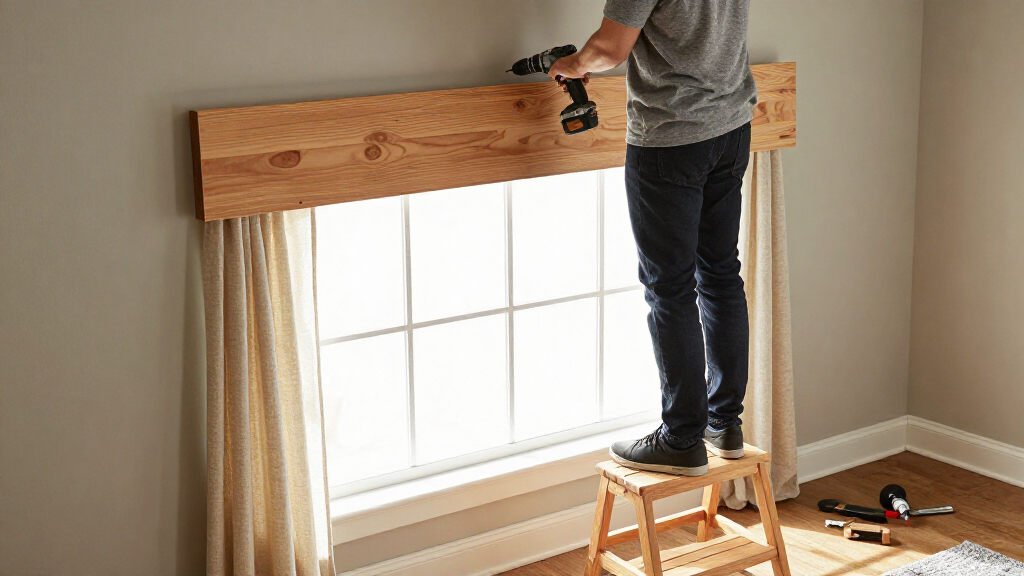
The project is closer to a cornice board, or pelmet, than a conventional valance. A cornice is a rigid, box-like structure fitted above a window; a valance is generally fabric that hangs across the top. Both can hide curtain rods or blind hardware, but the foam-board version creates a more tailored shape, Hunker reported.
For the frame, Kilpatrick cut foam board into one long piece spanning the area above the window and two shorter side pieces. The side pieces set how far the cornice projects from the wall: Hunker said about 4 inches may work over thin blinds, while covering thicker curtains may call for pieces at least 7 inches deep. Kilpatrick joined the boards with duct tape.
She covered the frame with fabric, using old bedding as a low-cost option. The fabric is cut larger than the boards, pulled tightly around the edges and secured at the back with tape and sewing pins. Hunker put the basic material cost at around $25, but the total can vary if buyers need fabric, extra supplies or larger boards. The report described the estimate as a materials cost, not a quote for every window or a guarantee of a particular result.
A Lower-Cost Cover for Window Hardware
Custom window treatments can be expensive, and renters or students may be reluctant to make permanent changes to a room. This project offers a temporary-looking, customizable option that can disguise hardware while adding fabric and shape above a window. Reusing bedding may reduce costs further, while discounted fabric or curtain panels provide alternatives when suitable scraps are unavailable.
The low price does not mean the method fits every room. The frame’s size, depth and fabric affect its weight, and the hanging approach depends on the wall and the condition of the finish. Hunker’s report presents the DIY as an affordable option, not as a tested installation for all surfaces or window dimensions.
As an affiliate, we earn on qualifying purchases.
From TikTok Tutorial to Apartment Project
According to Hunker, Kilpatrick made the treatment for her daughter’s apartment, where a temporary installation was a priority. The report says she posted a video of the project and later shared a follow-up tutorial after viewers asked how she hung it. One commenter described the look as “bougie on a budget,” a phrase that became part of the project’s appeal.
For the hanging method shown in the follow-up, Kilpatrick used two OOK Monkey Hooks inserted into drywall on opposite sides of the window, with the hooks turned upward. She made small openings in the fabric-covered side pieces, pressed the frame onto the hooks, then used Command Strips at the bottom. Hunker recommends using a level and getting help with larger windows. The report also notes that white tape may be less visible than black tape beneath light-colored fabric.
““Cheap, custom window valance built off vibes & false confidence””
— Jennifer Kilpatrick, in her TikTok caption, as quoted by Hunker
Fit, Weight and Wall Compatibility
The report does not state the exact dimensions of Kilpatrick’s finished cornice, its total weight, or how long it remained installed. It also does not establish whether the hooks and adhesive strips will hold on every type or condition of wall. Installation results may vary with window width, fabric choice, frame depth and the surface being used.
Hunker’s approximate $25 figure covers the basic materials described, but the source does not provide a full cost breakdown for every possible version. It is unclear whether a larger window, purchased fabric, batting or replacement supplies would keep the total near that estimate. The article also does not report independent testing of the assembly or its holding strength.
Measure Before Making the Frame
Anyone considering the project should first measure the full area to cover, including the window’s side molding, and check how far the treatment must extend to clear blinds or curtains. The amount and weight of fabric should be considered before choosing the foam-board dimensions and hanging method. Hunker suggests having another person help with a larger installation and using a level to check alignment.
The next step is deciding whether suitable bedding or fabric is already available, then checking that the chosen hooks and adhesive products are appropriate for the wall and the assembled frame. Kilpatrick’s follow-up video showed her installation process, but the source does not announce a later test or update on durability.
Key Questions
What is the DIY window treatment?
It is a foam-board cornice, also called a pelmet, covered in fabric. Unlike a soft valance that hangs across a window, it has a rigid, box-like shape designed to sit above the window and conceal hardware.
How much does the project cost?
Hunker estimates the basic materials at about $25. The actual total may differ if you need to buy fabric or other supplies, or if your window requires a larger frame.
Can renters use this approach?
Kilpatrick made the project for her daughter’s apartment and used hooks and Command Strips rather than describing a permanent fixture. However, the source does not confirm that the method is suitable for every rental wall, so check the wall surface and applicable lease rules before installing it.
How deep should the side pieces be?
Hunker says about 4 inches may be adequate over thin blinds. If the treatment must cover thicker curtains, the report suggests side pieces at least 7 inches deep.
Will the hanging method work on any wall?
The report shows Monkey Hooks inserted into drywall and Command Strips used at the lower sides. It does not establish that this setup will hold on all wall types or with every fabric and frame weight; check product instructions and the condition of the wall before use.
Source: rss
Halloween Picks
halloween
As an affiliate, we earn on qualifying purchases.