
TL;DR

Get business pricing on tools and workshop supplies
- Business-only prices and quantity discounts
- Tax-exempt purchasing
- Multiple users, one account, clear invoices
Hunker has published a DIY project for turning old socks into small decorative pumpkins using stuffing and yarn or twine. The instructions call for cutting off the sock’s calf, filling the foot, shaping a stem and adding ridges; the finished decorations can be stored and reused, though their durability depends on materials and handling.
Hunker has published a fall DIY for making small decorative pumpkins from old socks, stuffing and yarn or twine. The project offers a way to reuse socks that are still in usable condition and create fabric decorations that can be stored between autumn seasons, rather than discarded after a single display.
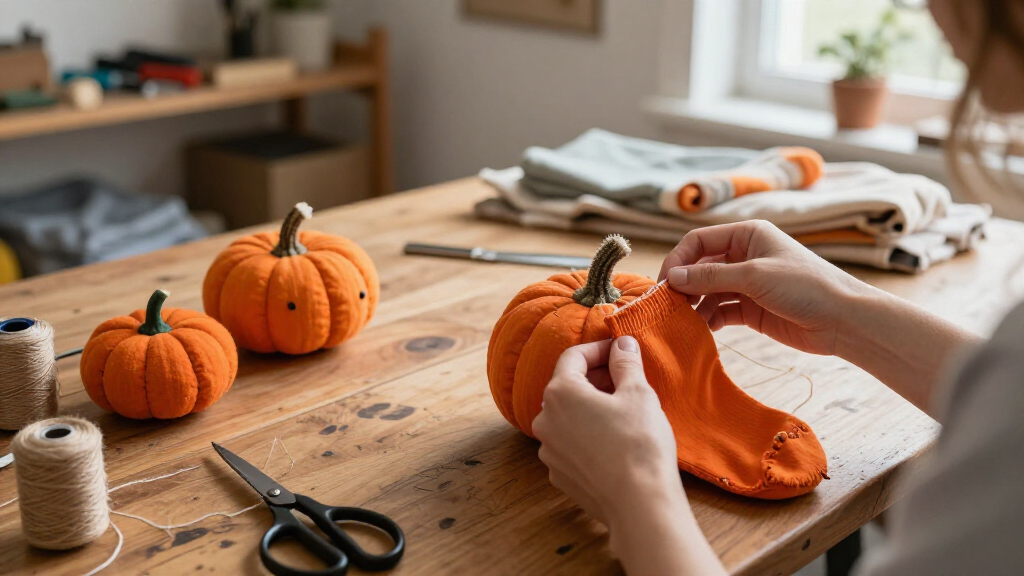
The instructions call for a sock without holes or runs, stuffing such as polyfill, and twine or yarn to form the pumpkin’s ridges. The maker cuts the sock near the heel to remove the calf portion, fills the foot section while leaving about an inch at the opening, then twists the top into a stem while shaping the filled sock into a ball.
To create the pumpkin shape, the guide says to sew through the center from top to bottom and pull the thread tight, forming grooves around the body. Twine or yarn can then be wrapped around the stem. The source also suggests ribbon as an alternative for the decorative wrapping.
For filling, Hunker lists cotton balls, dried beans or rice as alternatives to pillow stuffing. These materials will give the finished decoration a different feel. Suggested finishing touches include dried or felt leaves and small felt shapes; googly eyes are another option for a playful design. The instructions are for decoration, not for making a food-safe or edible item.
A Reusable Alternative to Fresh Gourds
The project gives households a small-scale way to reuse textiles that might otherwise be thrown away, while making decor that does not rely on a fresh pumpkin. Hunker says the sock versions will not rot on a porch like natural gourds and can be put away for use in a later autumn season.
The approach also allows for individual designs without carving or painting a pumpkin. A patterned or brightly colored sock can become part of the decoration, and details such as leaves or felt shapes can be added to suit the display. That flexibility may appeal to people who want seasonal decor from materials already at home, although the source does not quantify how much money or waste the project might save.
As an affiliate, we earn on qualifying purchases.
From Worn Socks to Fall Decor
The Hunker report frames the project as an option during the season for decorative pumpkins, when people may be putting autumn displays on porches or indoors. Unlike a fresh gourd, a fabric pumpkin does not need to be replaced because it has started to decay, according to the article. Its advice is to choose a sock that is no longer wanted for wearing but remains in relatively good condition, so the fabric can hold the stuffing.
The basic method uses a sock’s foot as the pumpkin body and the gathered opening as the stem. Sewing through the center helps create ridges, while twine, yarn or ribbon adds definition around the stem. Hunker also mentions pairing the sock pumpkins with linen-wrapped DIY pumpkins, but provides no testing or comparative information about how long either type of decoration lasts.
“Choose a sock that you’re finished wearing, but that’s still in relatively good condition — no holes or runs.”
— Hunker
Durability Depends on Materials
The source does not provide a publication date, a tested estimate of how long the decorations last, or instructions for cleaning them. It also does not specify the best needle, thread or stitch for different sock fabrics. While Hunker describes the pumpkins as reusable, their durability is not independently tested in the supplied report and may vary with the fabric, filling, sewing and storage conditions.
The article gives a general sewing method but no measurements for sock size or stuffing quantity. The finished decorations’ size and firmness are therefore left to the maker. It is also unclear whether dried beans or rice would be suitable for long-term storage in every environment; the source only lists them as possible fillers.
Make and Store the Decorations
Readers who want to try the project can begin by choosing a clean, intact sock and deciding whether to use pillow stuffing, cotton balls or another listed filler. After cutting, filling and shaping it, they can sew the ridges and add a stem wrap or decorative details. The result can be displayed with other autumn decor and then stored when the season ends, as Hunker suggests.
The report describes a craft project rather than a scheduled event or product launch, so it gives no later milestone. Any questions about care, storage life or the best materials for a particular sock remain for makers to resolve through their own use; the source offers no follow-up testing.
Key Questions
What do I need to make a sock pumpkin?
Hunker lists an intact old sock, stuffing such as polyfill, and yarn or twine. A needle is used to sew through the center and form the ridges. Optional decorations include felt or dried leaves, felt shapes and googly eyes.
Can I use something other than pillow stuffing?
Yes. The guide suggests cotton balls, dried beans or rice. It says those alternatives will give the finished pumpkin a different feel.
How are the pumpkin ridges formed?
The instructions call for sewing through the center of the stuffed sock from top to bottom and pulling tightly. This gathers the fabric into ridges around the pumpkin body.
Can the sock pumpkins be used again next year?
Hunker says they can be stored and reused because they do not rot like fresh pumpkins. The article does not give a tested lifespan or specific storage instructions.
Source: rss
Halloween Picks
halloween
As an affiliate, we earn on qualifying purchases.