
TL;DR

Get business pricing on tools and workshop supplies
- Business-only prices and quantity discounts
- Tax-exempt purchasing
- Multiple users, one account, clear invoices
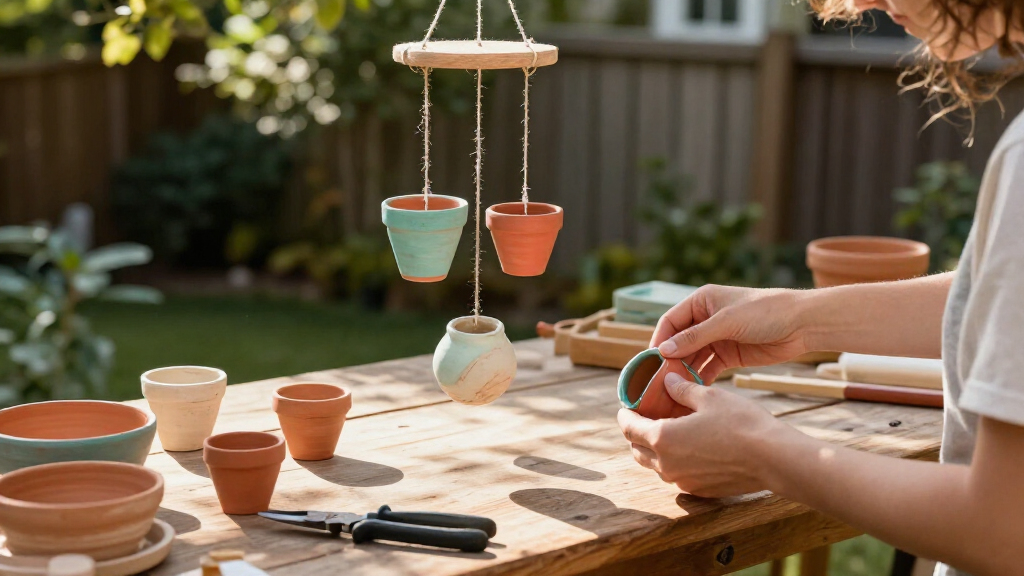
A Hunker report describes a DIY wind chime made by tying four rounded miniature clay pots to twine and gathering the strands on a ring. The pots can be hand-painted and sealed for outdoor use, but the finished chime should be hung in a sheltered spot and brought inside during strong winds.
A DIY wind chime made from four miniature clay pots is the subject of a Hunker craft report featuring a design by TikTok creator @RosaOrtiz003. The project uses twine to suspend the pots close enough to tap together in a breeze, offering a handmade alternative to conventional metal-tube chimes.
The method calls for four rounded miniature clay pots, sturdy twine, scissors and a metal or wooden ring. A separate length of cord is cut for each pot, with extra left for knots and adjustments. The twine is wrapped around each pot’s narrow neck, just below its flared rim, then secured so the pot hangs upright. The rim helps keep the cord in place.
The strands are tied to the ring at slightly different lengths, with the pots positioned near enough to gently knock against one another. The source recommends testing the spacing before tightening the knots. It also says more pots can be used, while cautioning against making the finished piece too heavy. If rounded pots are unavailable, small terracotta flowerpots can be used, though they create a different shape.
Painting is optional. Hunker describes Ortiz’s hand-painted floral details and suggests painting the pots before attaching the twine. Acrylic paint, brushes and a compatible outdoor clear sealer are listed as optional supplies. Painted pots should dry fully before hanging, and the report advises moving the chime indoors during strong winds to reduce the risk of breakage.
A Small-Scale Patio Craft
The project offers readers a way to make a personalized outdoor decoration with basic craft supplies rather than power tools or a large construction project. Its appeal is partly practical: paint colors and patterns can be chosen to match a patio, garden or nearby flowers, while leaving the pots unpainted keeps the design simpler.
The source does not present the wind chime as a tested product or quantify its sound, durability or weather resistance. Its central idea is a straightforward craft: use the pots’ shape and the movement of the breeze to create gentle contact between them. The guidance about keeping the chime lightweight and bringing it in during strong winds is relevant because clay pots can break if they strike hard or fall.
Popular right now

Ninja Specialty Coffee Maker CM401, 10-Cup Carafe, Fold-Away Frother, Black

KitchenAid Artisan 5-Quart Tilt-Head Stand Mixer, Almond Cream

Apple AirPods Pro 3 Wireless Earbuds with Active Noise Cancellation
As an affiliate, we earn on qualifying purchases.
How the Hanging Design Works
In the video described by Hunker, Ortiz ties small, rounded clay pots onto separate twine strands and gathers those strands at a ring. The pots’ narrow necks and flared rims provide a place for the cord to sit, while their curved bodies give the finished chime a different silhouette from familiar metal tubes.
Hunker frames the design as adaptable rather than fixed. The pots can be left plain or decorated, and the number of strands may change as long as the result does not become too heavy. The report does not provide a measured hanging length, a specific twine thickness, or a sound comparison with store-bought chimes, so builders will need to adjust spacing and materials for their own setup.
“The pots dangle close enough to gently tap against one another when the wind blows.”
— Hunker, describing the TikTok video by @RosaOrtiz003
Durability Depends on Setup
The source does not specify the twine’s weight rating, a recommended hook or a tested hanging location. It also gives no information about how long the pots or paint last outdoors, how loud the chime is, or how the design performs in different weather. The suggestion to use an outdoor-compatible sealer is general; the report does not identify a brand or product.
Because the pots are clay, their safety and longevity will depend on how securely they are tied and where the chime hangs. The report advises using a secure hook in a sheltered spot and taking the chime indoors during strong winds, but it does not describe a formal test of the construction.
Build, Test and Hang Carefully
The next steps for anyone trying the project are to paint the pots first if desired, allow the paint and sealer to dry completely, and then tie and arrange the strands. Before hanging the chime, test the pot spacing and knot security, then place it on a secure hook in a sheltered location. Check it periodically for loose cord or signs of damage, and bring it inside when strong winds are expected.
Hunker’s report does not announce a follow-up test or additional instructions. The final sound and appearance will depend on the pots, spacing, and outdoor conditions selected by the maker.
Key Questions
What supplies are needed for the clay-pot wind chime?
The basic supplies are four miniature clay pots, sturdy twine, scissors and a metal or wooden ring. Acrylic paint, brushes and an outdoor-compatible clear sealer are optional.
How are the pots attached?
Wrap a length of twine around each pot’s narrow neck, just beneath the flared rim, and tie it securely. Attach the free ends to a ring, adjusting the lengths so the pots hang at slightly different heights.
Do the pots need to be painted?
No. Painting is optional. If decorating the pots, the report recommends doing so before tying them to the strands and allowing the paint and sealer to dry fully before hanging.
How should the finished chime be protected?
Hang it from a secure hook in a sheltered spot and bring it indoors during strong winds, which could cause the clay pots to break.
Source: hunker.com