Bulky seams can ruin your garment’s fit, making it uncomfortable and unflattering. By using seam grading, you can distribute fabric layers evenly, reducing bulk and encouraging a smoother silhouette. Proper seam allowances and techniques help guarantee seams lie flat and contour to your body shape, enhancing comfort and finish. If you want to learn how to perfect your seam grading skills and improve your sewing results, keep exploring these essential tips.
Key Takeaways
- Bulky seams often cause discomfort and disrupt the garment’s silhouette, making fit less flattering.
- Seam grading evenly distributes fabric layers, reducing bulk and improving the overall fit.
- Proper seam grading ensures seams lie flat, contour to the body, and enhance garment appearance.
- Selecting stable fabrics and adjusting machine tension prevent puckering and bulkiness in seams.
- Mastering seam grading techniques leads to smoother, more comfortable, and better-fitting garments.
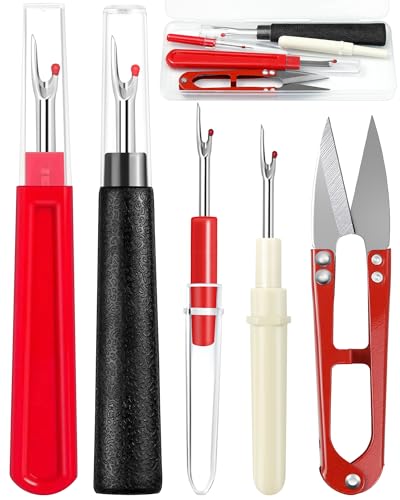
FIVEIZERO Seam Rippers for Sewing – 2 Big and 2 Small Stitch Remover Tools, Thread Ripper, Embroidery Removal Tool with Thread Snips
- Set Includes 4 Seam Rippers: 2 large and 2 small tools in vibrant colors
- Includes Precision Sewing Scissors: Razor-sharp stainless steel for clean cuts
- Durable and Versatile Design: Protective mini ball safeguards fabric
As an affiliate, we earn on qualifying purchases.
As an affiliate, we earn on qualifying purchases.
What Are Bulky Seams and Why Do They Ruin Your Fit?

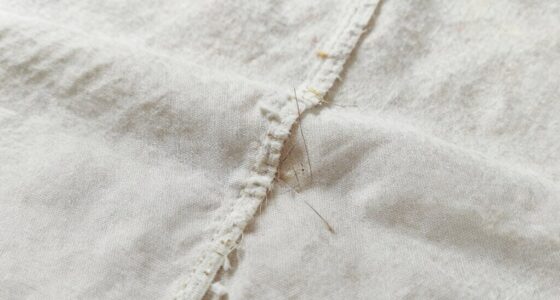
Have you ever noticed how some seams feel thick or uneven, making your clothes less comfortable and less flattering? These bulky seams often occur because of fabric textures or excess seam allowance. When seams aren’t properly reinforced, they become thick and stiff, disrupting the garment’s smooth silhouette. Seam reinforcement involves techniques like grading and trimming, which help reduce bulk and create a sleeker finish. Without this, seams can poke out or cause puckering, ruining the overall fit. Bulky seams draw attention away from the design and can make even well-made clothing feel uncomfortable. Proper seam grading ensures that the fabric layers are evenly distributed, preventing unnecessary thickness and enhancing both comfort and appearance. This is essential for achieving a polished, professional look. Additionally, adopting innovative manufacturing processes can further improve seam quality and garment fit.
How Seam Grading Improves the Fit of Your Garments

Seam grading markedly enhances how your garments fit by ensuring that fabric layers are smoothly joined without creating bulk or unevenness. By carefully adjusting seam allowances at each sewing line, seam grading distributes fabric thickness evenly, which improves overall comfort and appearance. This process is especially important when dealing with fabric stretch, as it allows seams to accommodate movement without puckering or stress points. Additionally, seam grading strengthens seam reinforcement, making your garment more durable and resistant to wear. When seams are properly graded, they lie flat and contour well to your body, resulting in a polished, professional look. Proper seam allowances facilitate accurate grading and help achieve a superior fit. Mastering sewing techniques like seam grading is essential for achieving a perfect fit, especially in complex garments or those made from stretch fabrics, where precision matters most. Paying attention to fabric properties during grading can further optimize the garment’s fit and longevity. Incorporating techniques for seam stability can also prevent seams from unraveling or becoming misshapen over time. Utilizing proper pressing methods during construction can further enhance seam flatness and durability.
The Basic Principles Behind Seam Grading Explained
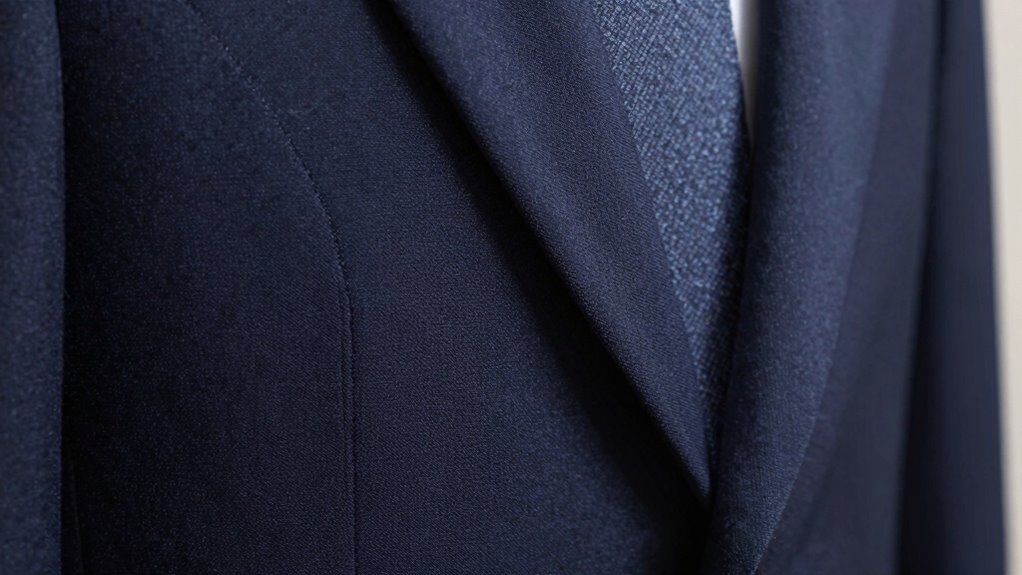
Understanding the basic principles behind seam grading is essential to achieving well-finished garments. Seam grading involves adjusting seam allowances to accommodate fabric stretch and body curves, preventing bulky seams and poor fit. Proper grading guarantees seams are smooth and comfortable, especially in areas with more fabric tension. It’s about balancing seam allowances across different pattern sizes to maintain consistent fit.
| Fabric Stretch | Seam Allowances |
|---|---|
| Varies by fabric | Differ across pattern sizes |
| Needs careful adjustment | Ensures proper fit |
| Affects seam flexibility | Prevents bulkiness |
Identifying Seams That Need Grading in Your Projects
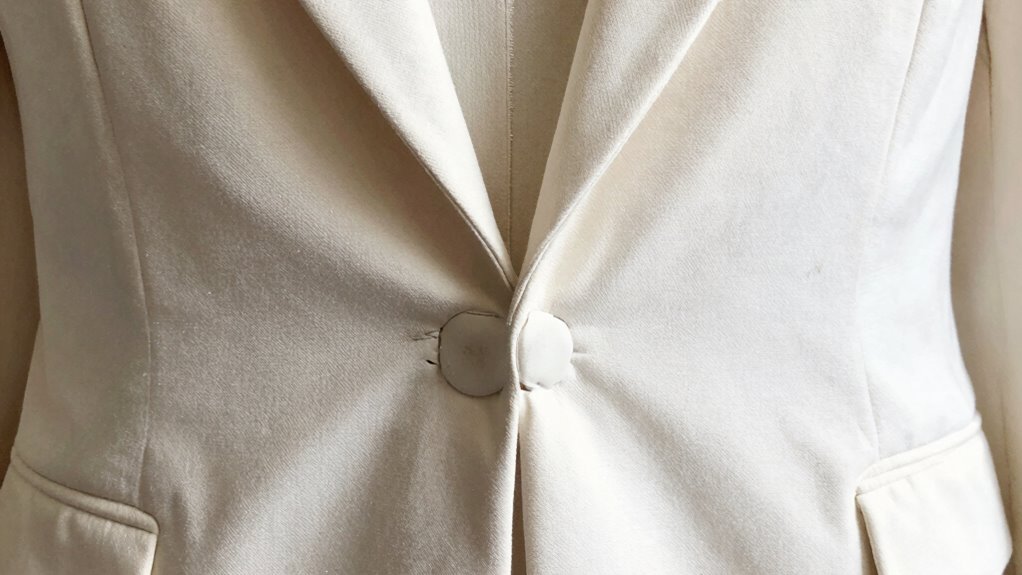
When evaluating your garment project, spotting which seams need grading is key to achieving a polished fit. Start by examining areas with fabric stretch, especially around curved seams like armholes or side seams, where excess bulk can cause discomfort. Check the seam allowance; if it looks uneven or bulky in certain sections, grading can help smooth the transition. Pay attention to seams that connect different fabric types or thicknesses, as these often require grading to prevent puckering. Also, observe how the fabric behaves when stretched; if a seam becomes distorted or pulls excessively, grading might be necessary to distribute the fabric more evenly. Recognizing the importance of sound healing science can also inspire techniques for precise seam adjustments. Additionally, understanding free floating techniques can help in achieving a more natural and flexible seam line. Proper seam grading is essential for custom fit and durability, ensuring your finished garment looks professional. Being aware of fabric behavior during construction allows you to anticipate potential issues and address them early. Incorporating knowledge of market trends can help tailor your grading approach to current styles and demands. Identifying these signs ensures you focus your grading efforts where they’ll make the most difference, resulting in a better fit and cleaner finish.
Step-by-Step Guide to Seam Grading for Better Fit
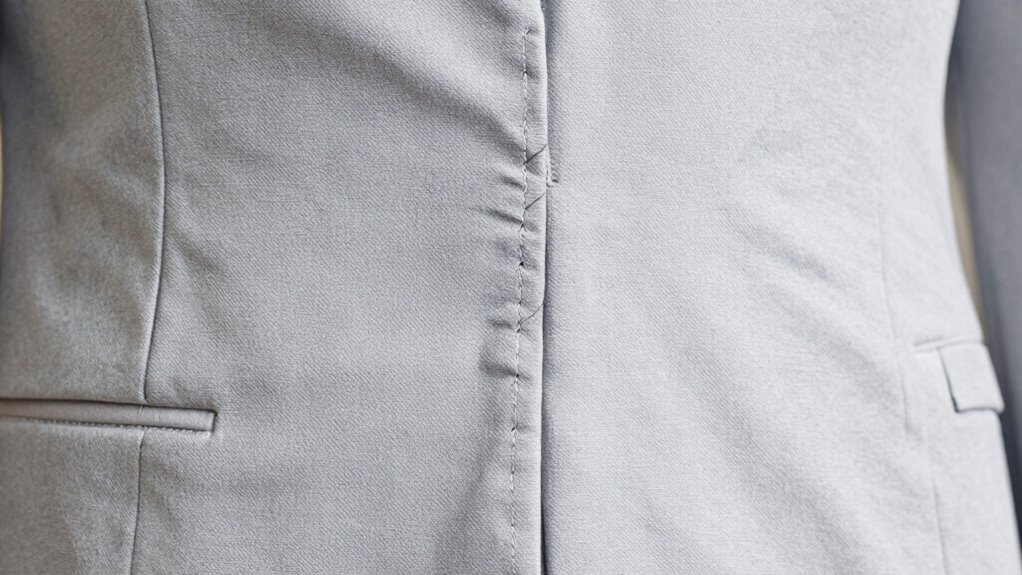
To get started with seam grading, you need to identify where seam variations occur in your pattern. Next, select the right grading tools that suit your project, ensuring accuracy. Proper measurement techniques are essential for consistent results, especially when working with precision tools. Finally, execute the grading process gradually, making adjustments as needed for a better fit. Incorporating project management support can help streamline the grading process and ensure consistency throughout your project.
Identify Seam Variations
Identifying seam variations is a crucial step in seam grading because it helps you recognize how different areas of a garment fit and move. Pay attention to fabric stretch, as some sections may need more or less ease to accommodate movement comfortably. Examine the seam allowances around each area—wider allowances might be necessary in high-stretch zones to prevent bulking or puckering. Notice where seams contour closely to the body or where they allow extra room for flexibility. Understanding these differences enables you to adjust grading lines accurately, ensuring a balanced fit. Additionally, fabric behavior plays a significant role in how seams perform and should be considered when analyzing seam variations. By carefully analyzing seam variations, you can determine where to add or reduce fabric, ultimately creating a smoother, more comfortable finished garment.
Choose Proper Grading Tools
Choosing the right grading tools is essential for achieving a precise and consistent fit in seam grading. Your choice depends on fabric selection, as different fabrics behave differently during handling and sewing. For delicate or stretch fabrics, you’ll need specialized tools like fine rulers or flexible grading sticks, ensuring accuracy without damaging the material. For more stable fabrics, standard grading rulers or pattern notches work well. The key is to match your tools to your pattern’s accuracy needs, ensuring measurements are precise. High-quality tools help you maintain pattern integrity and avoid uneven seam allowances. Investing in the correct grading tools streamlines your process, reduces errors, and guarantees a better fit. Additionally, understanding the design thinking principles behind problem-solving can help you select the most effective tools for each project fabric behavior. Proper fabric handling techniques can further enhance the accuracy and quality of your grading process. Recognizing how different fabric types respond to manipulation can improve your grading precision and overall garment fit.
Execute Seam Gradually
Ever wondered how to guarantee your seam grading results in a perfect fit? The secret is executing the process gradually. Start by making small, incremental adjustments rather than large ones, allowing you to control fabric stretch and seam reinforcement effectively. As you work, visualize: – Carefully easing seams to prevent fabric distortion – Reinforcing seams at critical points to maintain strength – Adjusting gradually to accommodate fabric stretch without creating bulk This step-by-step approach ensures you avoid uneven grading or puckering, especially with fabrics prone to stretch. Incorporating consistent seam allowances into your process helps maintain uniformity and precision. Patience is key—by proceeding gradually, you can fine-tune the fit precisely, reducing bulky seams and achieving a sleek, professional finish. Remember, meticulous seam grading enhances comfort and durability, making the effort well worth it.
Common Mistakes to Avoid When Grading Seams

When grading seams, you need to pay close attention to details to avoid common mistakes. Ignoring seam allowances can lead to inaccurate fits, while overlooking pattern symmetry might cause uneven seams. Rushing through seam marking often results in misaligned lines, compromising the overall quality of your work. Incorporating connected equipment and proper app guidance can also enhance your precision and consistency in seam grading. Additionally, understanding the importance of accurate measurements ensures that the final garment fits as intended and reduces the need for costly adjustments later. Using proper tools like seam gauges and grading rulers can further improve accuracy. Being familiar with field recording techniques can also help in documenting your grading process effectively, ensuring consistency across projects. To achieve a professional finish, adopting best practices in sewing is essential for maintaining quality and efficiency.
Ignoring Seam Allowances
Ignoring seam allowances during grading is a common mistake that can lead to inaccurate results and poorly finished seams. When you overlook seam allowances, you risk uneven fabric tension and inconsistent seam widths, which compromise the garment’s fit. Without accounting for seam allowances, the grading process becomes less precise, causing bulky seams or gaps. Paying close attention to fabric behavior during grading can help anticipate and mitigate these issues. To avoid this, remember:
- Carefully measure seam allowances to ensure consistent grading.
- Adjust for fabric tension, which can vary and affect seam accuracy.
- Keep seam allowances uniform across all pattern pieces to maintain balance.
Overlooking Pattern Symmetry
Overlooking pattern symmetry can lead to uneven grading and misaligned seams, which affect the overall fit and appearance of your garment. When your pattern isn’t symmetrical, grading seams unevenly can cause distortions, making the garment look unprofessional. Pay close attention to pattern symmetry during marking and grading. Also, consider the fabric’s stretch properties; fabrics with significant stretch require different grading techniques to maintain symmetry and fit. Ignoring pattern symmetry can result in uneven seam allowances and distorted shapes, especially in curved areas. Ensuring your pattern is symmetrical before grading helps maintain balance and proportion. Adjust your grading approach based on fabric stretch to prevent asymmetry from affecting the final fit. Correct pattern symmetry is essential for seamless, well-fitted garments.
Rushing Seam Marking
Are you rushing through seam marking? If so, you risk misaligning fabric and creating uneven seams. Proper seam marking is essential for accurate fabric alignment and smooth grading. When you hurry, you might skip precise measurements, leading to inconsistencies. This can cause bulky seams or poor fit once sewn. To avoid this, focus on careful marking, ensuring patterns are aligned correctly before transferring lines. Pay attention to these details:
- Double-check pattern pieces for symmetry
- Use sharp tools for clear seam lines
- Take your time matching fabric edges precisely
Rushing compromises the quality of your seam grading, making seams bulky or uneven. Slow, deliberate seam marking ensures each seam is accurately graded, resulting in a professional finish and a better fit.
Tools and Techniques for Seam Grading at Home or in the Studio
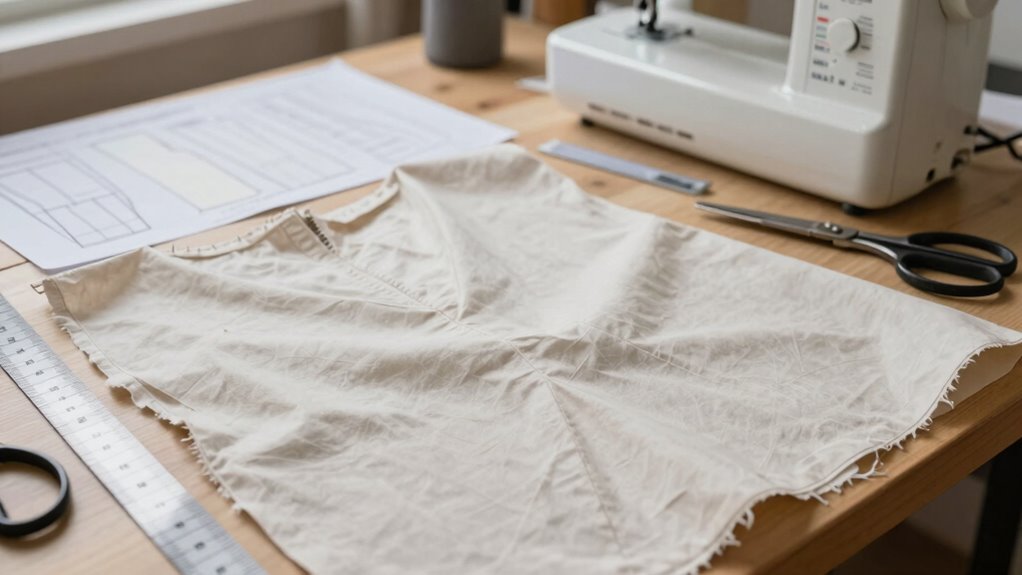
To effectively grade seams at home or in your studio, you need the right tools and techniques that guarantee accuracy and consistency. A clear understanding of fabric stretch helps you choose the correct seam allowance, as stretchy fabrics require different grading methods. Use a ruler or a grading gauge to measure seam allowances precisely, ensuring uniformity across all sizes. Mark your seam lines with fabric chalk or a fabric-safe marker for sharp, clear guides. When grading, start with small, incremental adjustments—usually a quarter to half an inch—depending on fabric behavior. Keep your measurements consistent, especially when working with fabrics that have significant stretch, to prevent bulky seams and improve fit. With the right tools and techniques, seam grading becomes a straightforward process.
Real-Life Examples of Seam Grading Transforming Garments

When you apply seam grading techniques in real projects, the results can dramatically improve the fit and finish of your garments. For example, adjusting seam allowances in areas with fabric stretch prevents puckering and maintains comfort. Seam reinforcement becomes vital in high-stress zones, like armholes or side seams, ensuring durability without adding bulk. You might notice a fitted dress that previously looked bulky at the seams now lying smoothly against your body.
- A tailored blazer with graded lapels that fit perfectly, avoiding bunching or gaps
- A stretchy activewear top with seam reinforcement that withstands frequent movement
- A dress with graded seams that contour to the body, eliminating bulky or uneven areas
Seam grading truly transforms garments by enhancing fit and longevity.
Troubleshooting Seam Grading Issues and Fixes
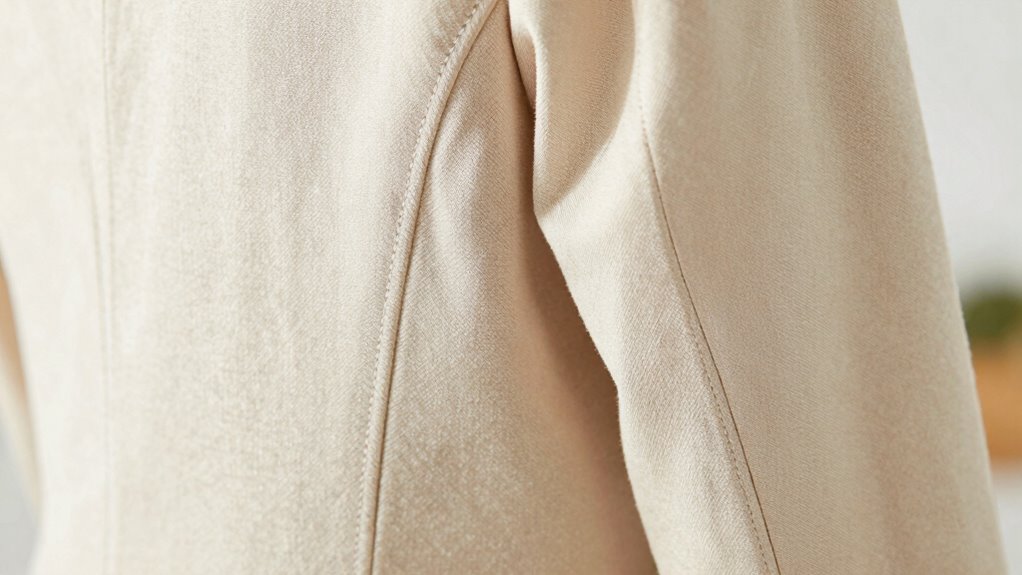
Troubleshooting seam grading issues requires careful observation to identify the root causes of problems like puckering, unevenness, or gaps. Fabric distortion often occurs when seam allowances aren’t graded properly, causing extra bulk or tension in certain areas. Check if your seam allowances are consistent and appropriately reduced for each grading level. If you notice puckering, it might mean the fabric is stretching or pulling at the seam allowances, so adjust your seam allowance widths or press them flat before sewing. Unevenness can also stem from inconsistent grading or misaligned seam allowances. Always ensure your fabric is stable and your seam allowances are pressed correctly. Addressing these issues early helps prevent bulky seams and improves your garment’s fit, making seam grading a powerful tool in your sewing arsenal.
Tips to Incorporate Seam Grading Into Your Sewing Routine

Ever wondered how to make seam grading a seamless part of your sewing routine? Incorporating seam grading effectively starts with mindful fabric selection and maintaining proper seam tension. To streamline this process, consider these tips:
- Choose fabrics with stable fibers that respond well to grading, preventing puckering or stretching.
- Adjust seam tension on your machine to ensure smooth, even stitches, especially when working with multiple fabric layers.
- Practice consistent grading techniques across projects to develop muscle memory and achieve uniform results.
Frequently Asked Questions
Can Seam Grading Be Applied to All Types of Fabrics?
Seam grading can be applied to most fabric types, but its effectiveness depends on fabric stretch and seam flexibility. For stretchy fabrics, you might need to adjust seam allowances to accommodate elasticity, ensuring comfort and a smooth fit. For non-stretch fabrics, seam grading helps prevent bulk, improving seam smoothness. Always consider fabric properties before applying seam grading to achieve the best fit and durability without compromising the fabric’s natural qualities.
How Does Seam Grading Affect the Durability of the Garment?
Seam grading acts like a sturdy backbone, boosting seam strength and enhancing your garment’s durability. It carefully distributes fabric stress, preventing weak spots that could tear or fray over time. This technique respects fabric flexibility, allowing your clothing to move naturally without compromising its integrity. As a result, your garment becomes more resilient, standing up to daily wear and tear while maintaining a sleek, comfortable fit.
Is Seam Grading Necessary for Beginner Sewists?
Seam grading isn’t necessary for beginner sewists, but it can make your projects look more professional. If you’re working with fabric stretch or trying beginner techniques, seam grading helps reduce bulk and improve fit. It’s a valuable skill to learn early on, especially as you tackle more complex fabrics. Starting with basic techniques, you can gradually incorporate seam grading to enhance your sewing quality and comfort in finished garments.
What Are the Cost Implications of Incorporating Seam Grading?
Adding seam grading can slightly increase your production costs due to more precise cutting and additional time, but it often offsets fabric waste by reducing the need for rework. While there’s a small upfront investment, the improved fit can attract more customers and justify higher prices. Overall, seam grading balances higher initial costs with long-term savings on fabric and better product quality, making it a smart choice for efficient production.
Can Seam Grading Be Automated With Sewing Machines?
A stitch in time saves nine, and automation tools are making seam grading easier. Yes, some sewing machines now incorporate machine learning to automate seam grading, streamlining the process and reducing manual effort. These advanced machines can adapt to different fabric types and fit requirements, making your workflow more efficient. While full automation varies, investing in such technology can markedly improve consistency and quality in your garment production.
Conclusion
Seam grading isn’t just a technique—it’s your secret weapon for flawless fit. Imagine your garments draping perfectly, free of bulky seams that distract and detract. With a little practice, you’ll master this skill and transform your sewing projects from ordinary to extraordinary. So, why settle for less when your perfect fit is just a graded seam away? Embrace the power of seam grading and let your creations speak for themselves—beautiful, comfortable, and impeccably tailored.