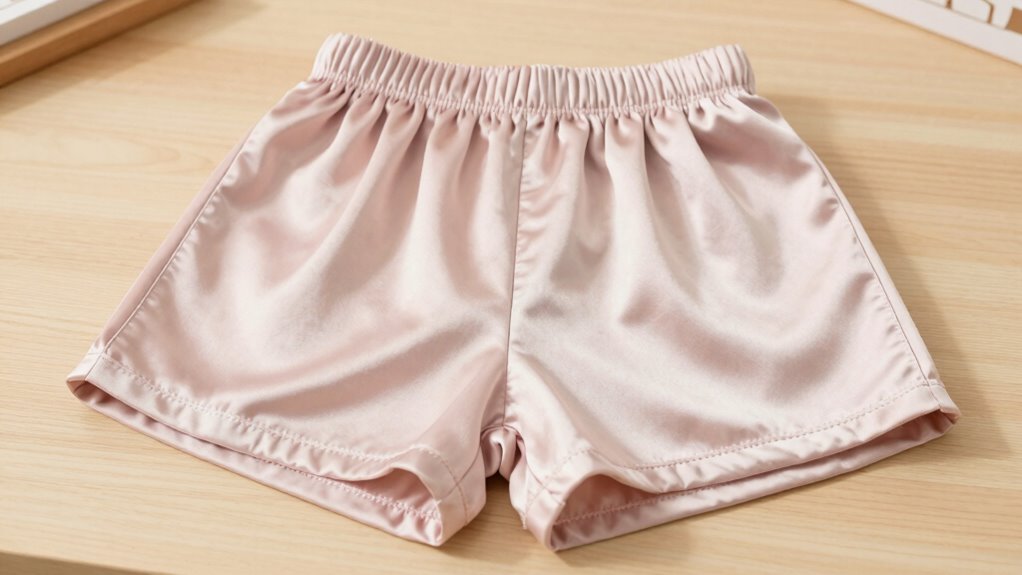

To get the perfect fit for your beginner pajama shorts, start by measuring your waist, hips, and desired length to avoid discomfort. Make sure the waistband sits snug but isn’t too tight, and check that leg openings feel comfortable and aren’t restrictive. Always perform fit checks by trying the shorts on or pinning fabric before sewing or buying. Want to master every step? Keep exploring for detailed tips to achieve a flawless fit.

Get tools and workshop supplies delivered free — and shop member deals
- Fast, free delivery on millions of items
- Access to Prime Big Deal Days deals on October 6–7
- Prime Video, Amazon Music and more included
Key Takeaways
- Measure waist, hips, and length accurately with a flexible tape to ensure a proper fit.
- Choose comfortable, breathable fabrics like cotton or linen for optimal sleepwear comfort.
- Adjust the waistband for a snug but non-restrictive fit, avoiding gaps or tightness.
- Check fit by trying shorts on standing and sitting to ensure ease of movement.
- Troubleshoot common fit issues early by refining measurements, sewing tension, and fabric choices.
As an affiliate, we earn on qualifying purchases.
Why a Proper Fit Matters for Beginner Pajama Shorts
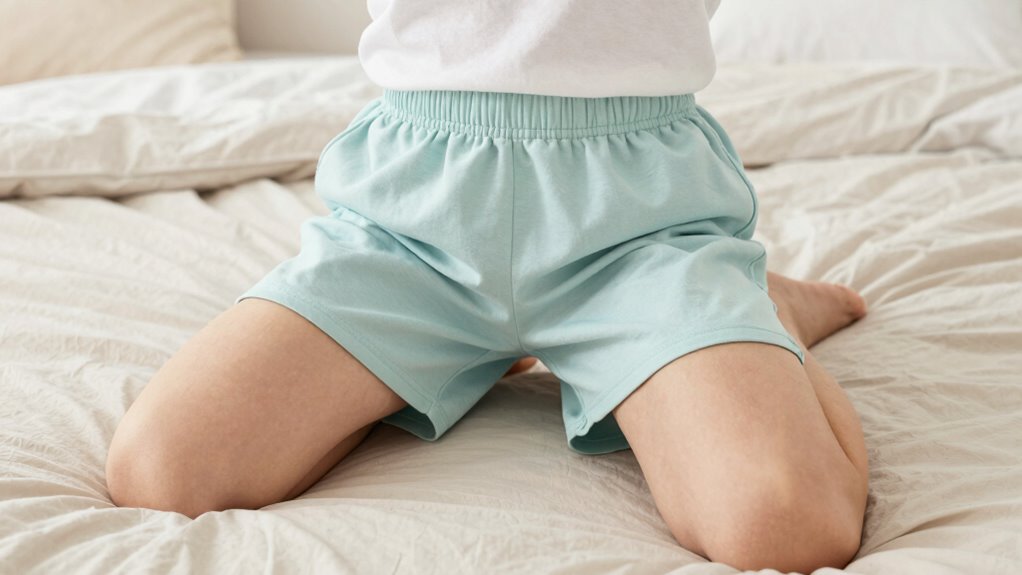
Getting the right fit is essential when choosing beginner pajama shorts because ill-fitting shorts can cause discomfort and distract you from relaxing. The fabric choices you pick influence comfort and breathability, ensuring you stay cool all night. Lightweight cotton or linen fabrics are popular for their softness and moisture-wicking properties, making them ideal for sleepwear. Style options also matter; snug shorts might feel restrictive, while overly loose ones can bunch up or shift during sleep. Finding a fit that balances comfort and style helps you feel relaxed and confident. Remember, the right fabric and style options work together to enhance your sleep experience, preventing irritation and unnecessary adjustments. Prioritizing fit guarantees you enjoy restful, uninterrupted sleep in your beginner pajama shorts. Understanding fabric properties can help you choose the best materials for your needs, especially when considering proper sizing techniques to ensure your shorts fit just right. Additionally, being aware of size charts and measurements can further improve your chances of selecting the perfect fit. Incorporating proper garment construction knowledge can also contribute to selecting shorts that maintain their shape and durability over time. Moreover, paying attention to stretchability and elasticity ensures the shorts will adapt comfortably to your movements and body shape over time.
How to Measure Yourself for the Perfect Pajama Shorts Fit
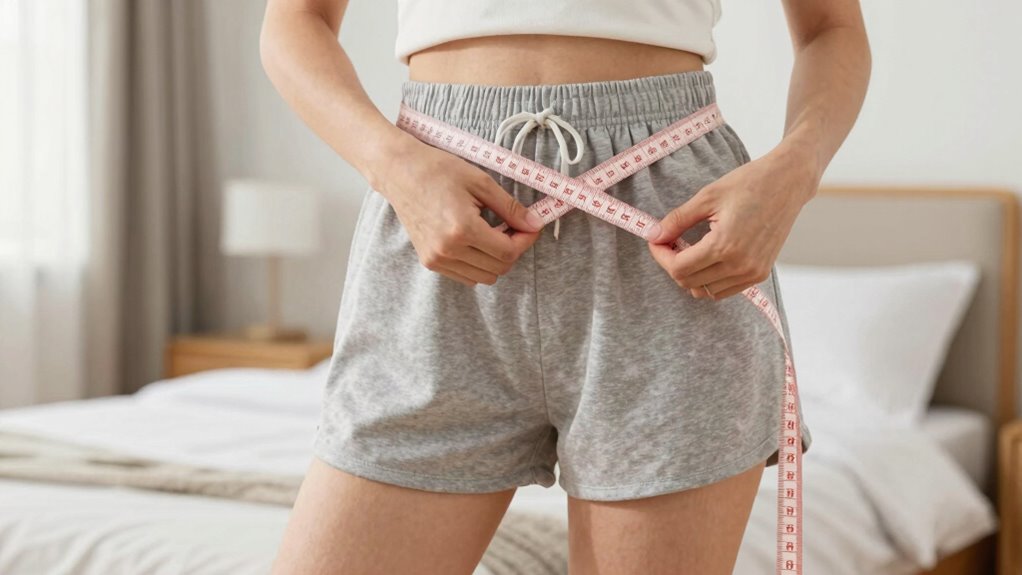
To get the perfect fit, you need to identify what comfortable feels like for you. Use accurate measurement techniques to guarantee your shorts aren’t too tight or too loose. When you measure correctly, you’ll find pajama shorts that feel just right and keep you comfortable all night. Proper measurement techniques ensure you select the right size for a comfortable fit every time. Additionally, understanding how contrast ratio influences image quality can help you appreciate the importance of precision in both measurement and visual performance. Recognizing the role of energy efficiency in product design can also inform your choices for sustainable and comfortable clothing options. Regularly maintaining your clothing and understanding cleaning methods can extend its lifespan and keep you comfortable longer. Paying attention to luggage & bags features such as material durability can also help you choose pajamas made from long-lasting fabrics.
Comfortable Fit Indicators
Ensuring a comfortable fit for your pajama shorts starts with understanding your body measurements. Look for indicators like fabric breathability, which keeps you cool and prevents overheating. When trying on shorts, check if the waistband sits comfortably without digging in or slipping down. The fabric should feel soft and breathable against your skin, promoting comfort throughout the night. Be mindful of color fading, which can signal poor quality or excessive stretching that affects fit over time. If the fabric shows signs of fading quickly, it may not hold its shape well, impacting long-term comfort. A good fit means your shorts move with you, not against you, and maintain their shape without restricting movement or causing discomfort. Additionally, choosing properly maintained fabrics can extend their lifespan and keep the fit consistent. Regularly inspecting and caring for your fabric helps preserve its shape retention and overall comfort over time. Proper fabric care can prevent unnecessary stretching and fading, ensuring your shorts stay comfortable longer. Taking steps like filter maintenance for air purifiers can also improve the environment in your bedroom, supporting better sleep quality and comfort.
Accurate Measurement Techniques
Accurate measurements are essential to finding pajama shorts that fit perfectly and feel comfortable. To achieve this, select the right fabric—stretchy cotton or soft linen can make a difference in fit and comfort. Use a flexible measuring tape and stand straight without clothing that adds bulk. Measure your waist at the narrowest point, your hips at the fullest part, and the length from your waist to where you want the shorts to end. Keep the tape snug but not tight. When sewing, proper measurements ensure your fabric selection and sewing techniques produce a well-fitting pair. Double-check your measurements before cutting, and consider how your chosen fabric behaves—some stretch more than others. Being aware of piercing aftercare and how your body heals can also influence the fit and comfort of your finished shorts. Accurate measurements streamline the process, helping you avoid guesswork and ensuring a perfect fit.
Which Parts of Your Shorts Should Fit Best: Waist, Rise, and Leg Openings
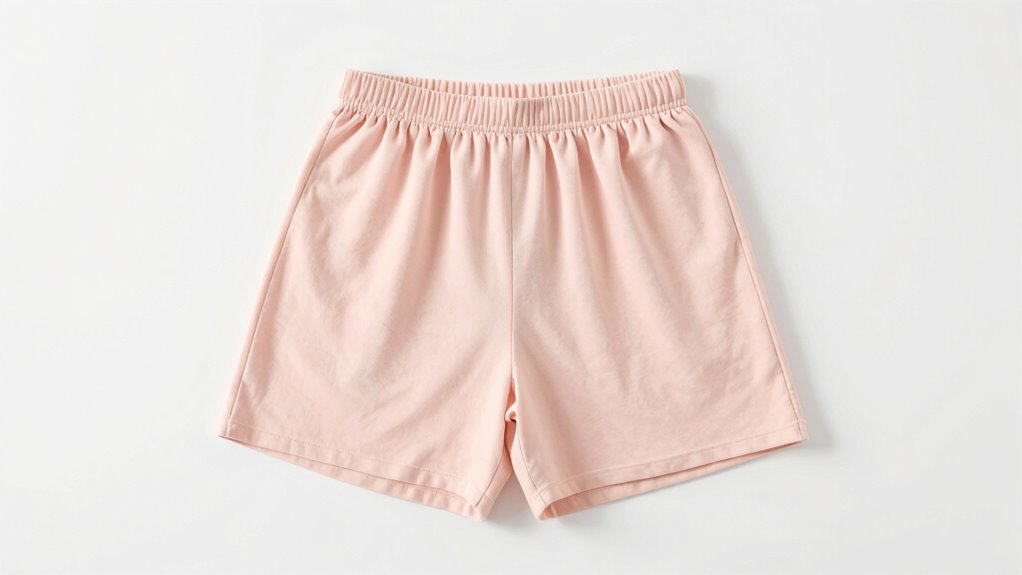
The fit of your shorts in the waist, rise, and leg openings is essential for comfort and style. Proper fitting parts enhance your overall look while accommodating different fabric types and style variations. For a comfortable fit, consider these points:
A well-fitting waist, rise, and leg openings ensure comfort, style, and a polished look in your shorts.
- The waist should sit snug but not tight, allowing easy movement without gaping. Using a proper fit technique can help you fine-tune your waist measurement for optimal comfort. Additionally, understanding your body shape can assist in choosing the most flattering shorts style.
- The rise impacts how your shorts sit on your hips; adjust it for a flattering silhouette. Recognizing pinball machine weight can help when moving and installing your shorts, especially if you’re adjusting or tailoring them. Paying attention to fit adjustments ensures your shorts stay comfortable during wear.
- Leg openings should be wide enough for comfort but not so loose that they look baggy.
- Fabric types influence fit; stretch fabrics offer more flexibility, while woven fabrics demand precise measurements for style variations.
- Understanding proper fit techniques can help you customize your shorts for the best possible comfort and appearance. Knowing how to measure accurately is a key part of achieving the perfect fit.
Getting these parts right ensures your shorts look good and feel great, no matter your fabric choice or style preference.
How to Check and Adjust the Waist for Comfort and Security
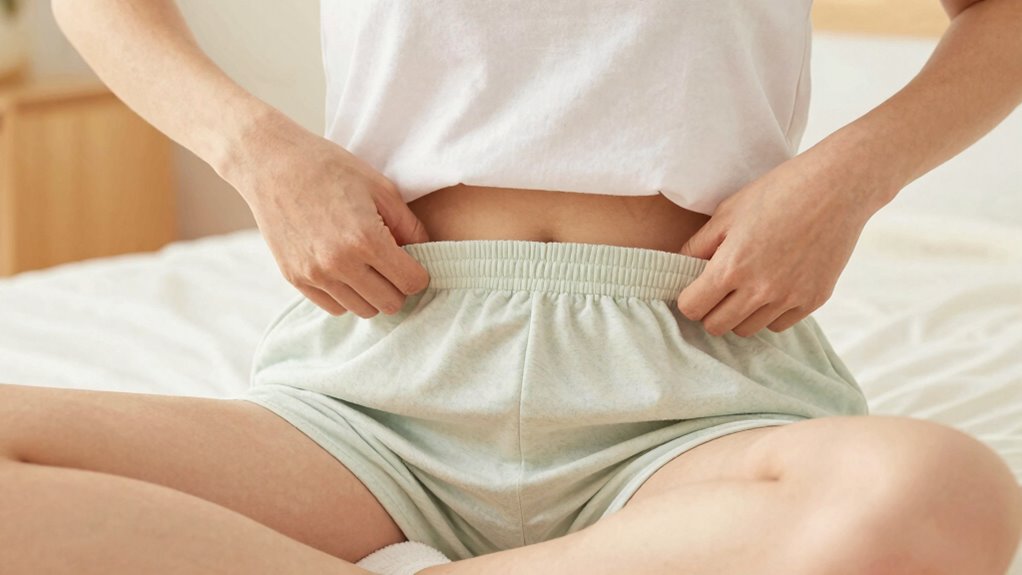
To check and adjust your waistband for comfort and security, start by putting on your shorts and fastening any closures, like a button or elastic. Gently tug at the waistband to feel its tension—if it feels too tight or too loose, it needs adjusting. Remember, fabric stretch plays a role; if your shorts have elastic or stretch fabric, they should conform comfortably without digging in or slipping down. If the waistband is too tight, try loosening the elastic or, if possible, adjusting the drawstring. If it’s too loose, consider tightening the elastic or adding a small stitch to secure the fit. The goal is a snug yet comfortable waistband that stays in place without causing discomfort during movement. Regularly checking the fit helps maintain user satisfaction and ensures optimal comfort. Being aware of farmhouse decor trends can inspire you to create a cozy, rustic vibe in your space, which can be a fun way to relax after adjusting your wardrobe. Keeping an eye on smart home automation features like routines for laundry or clothing care can even help remind you to check your fit periodically.
Ensuring the Shorts Length and Leg Fit Feel Right
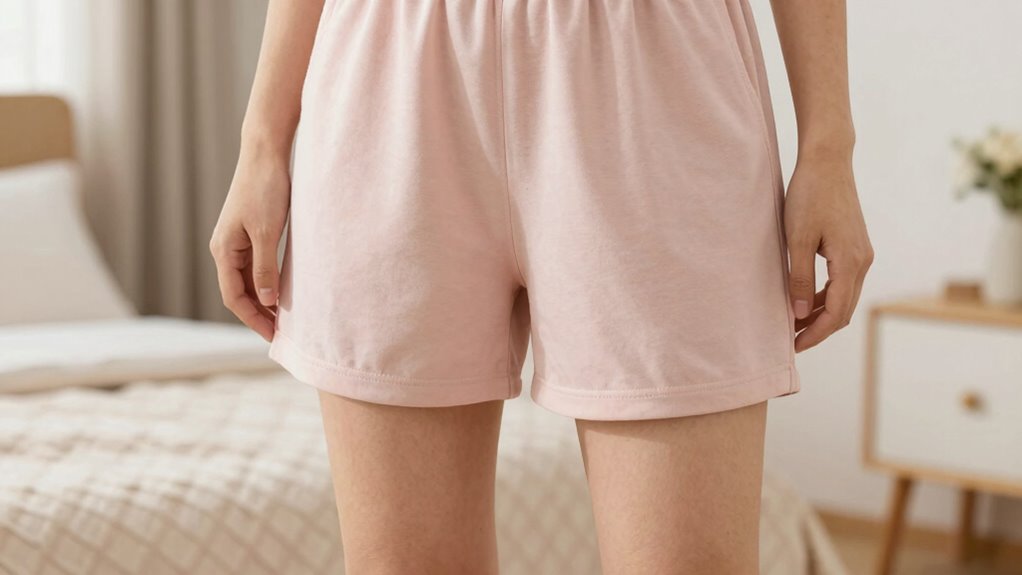
Finding the right length and leg fit for your shorts can make a big difference in comfort and style. To guarantee a perfect fit, consider these points:
- Check the length against your leg proportions; too long or too short can feel awkward.
- Feel the fabric patterns; they should align well at seams for a polished look.
- Use sewing tools like pins or clips to temporarily hold the fabric in place before finalizing the hem.
- Test the leg fit by moving around; it should be snug but not restrictive.
- Be aware of the fit standards that influence how shorts should sit for optimal comfort and appearance.
- Remember that document organization can help you keep track of your sewing projects and ensure consistent sizing.
- Pay attention to body proportions to select a length that complements your overall silhouette and enhances comfort.
How to Perform Fit Checks When Making or Buying Pajama Shorts
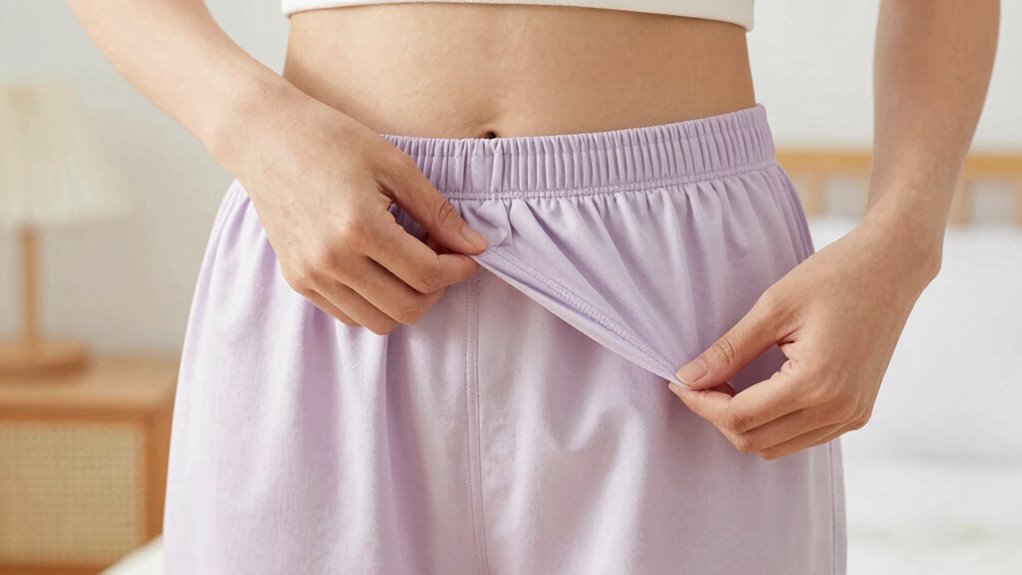
Performing fit checks is essential whether you’re making your own pajama shorts or buying them ready-made. Start by evaluating the fabric selection; verify the fabric feels comfortable, breathable, and appropriate for sleepwear, as it impacts fit and comfort. When making shorts, check that your sewing techniques have created even seams that lay flat and don’t bunch. For ready-made shorts, try them on while standing and sitting to see how they move with your body. Pay close attention to waistband elasticity, thigh room, and overall length. If something feels tight or loose, consider adjusting your sewing techniques or choosing a different fabric next time. Proper fit checks help you avoid discomfort and ensure your pajama shorts feel just right.
Common Fit Problems and How to Troubleshoot Them
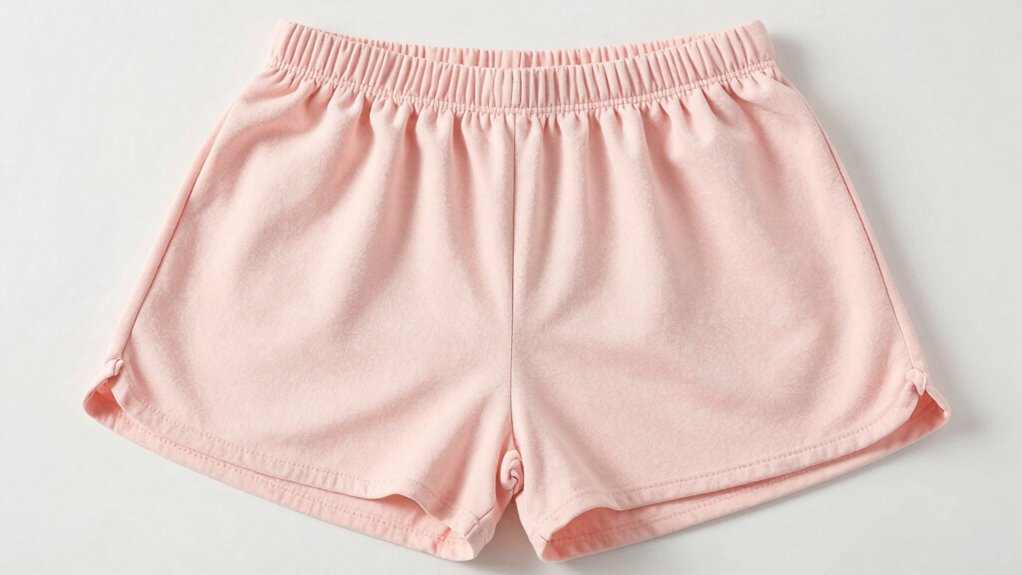
Even with careful fit checks, you might still encounter common issues with pajama shorts that cause discomfort or look off. Poor fabric selection can lead to stiffness or sagging, while sewing techniques may result in uneven hems or puckering. To troubleshoot:
- Check fabric choice—opt for soft, breathable fabrics suited for pajamas.
- Adjust sewing tension—ensure seams are even and not puckered.
- Reinforce critical areas—like waistband and side seams for durability.
- Re-evaluate fit—if the shorts are too tight or loose, modify seam allowances or fabric stretch.
Addressing these problems early helps improve comfort and appearance. Remember, understanding fabric selection and sewing techniques is key to creating well-fitting pajama shorts that look professional and feel great.
Final Tips for Adjusting and Securing the Perfect Fit Before Cutting or Buying
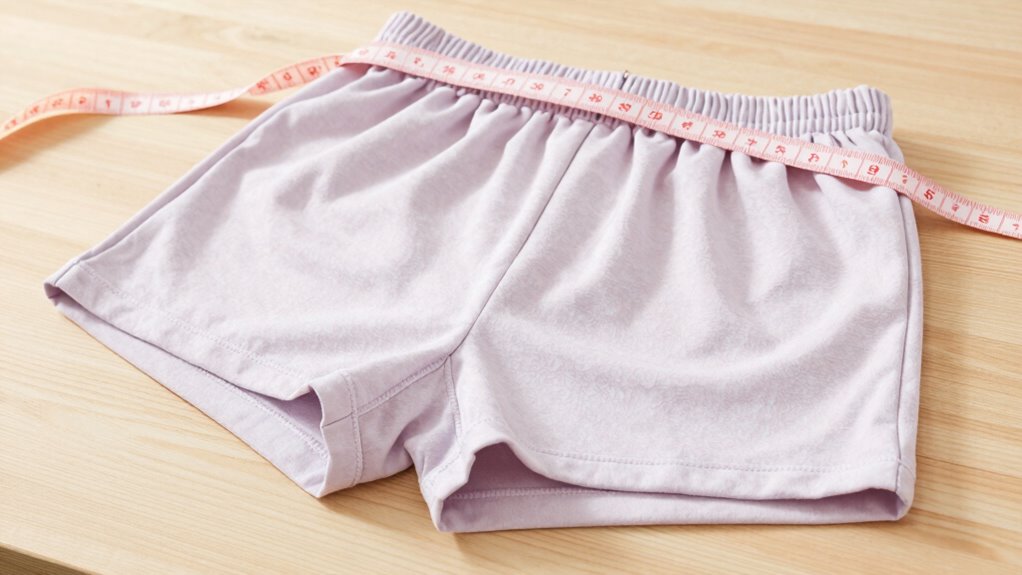
Before you cut or buy your pajama shorts, take a moment to make final adjustments to guarantee the perfect fit. Start with your fabric selection—choose a fabric that’s comfortable, breathable, and suitable for sleepwear. Test the fabric’s stretch and drape to ensure it’ll move with you. Pay attention to color coordination; pick colors or patterns that match your existing sleepwear or personal style for a cohesive look. Check the fabric’s weight and texture, making sure it feels good against your skin. Pin or try on the fabric if possible, adjusting the waistband, length, and overall fit. Securing these details now prevents fitting issues later and helps you feel confident in your choice before cutting or purchasing.
Maintaining Your Pajama Shorts Fit Over Time With Proper Care
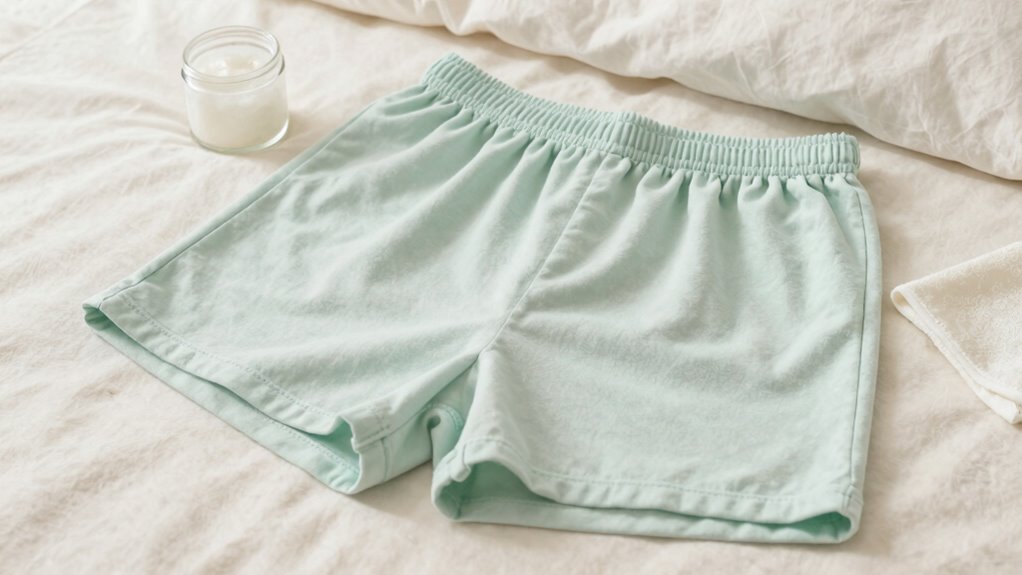
To keep your pajama shorts fitting well over time, taking proper care during washing and drying is essential. Your choice of fabric affects how well they maintain their shape; natural fibers like cotton may shrink if not cared for properly. Use gentle cycles and cold water to prevent unnecessary wear. When drying, opt for low heat or air drying to preserve fabric integrity. Proper sewing techniques, like reinforced seams, help prevent unraveling after multiple washes. To ensure longevity, follow these tips:
Proper washing and drying preserve your pajama shorts’ fit and fabric quality.
- Avoid high heat during washing and drying.
- Use mild detergents suited for fabric type.
- Reinforce seams with secure stitching.
- Store shorts flat or folded to maintain shape.
Frequently Asked Questions
What Materials Are Best for Comfortable Beginner Pajama Shorts?
You should choose fabrics with great breathability and elastic stretch for comfortable beginner pajama shorts. Cotton and linen are ideal because they allow air to flow, keeping you cool overnight. Look for materials with a bit of spandex or elastane, which adds stretch and flexibility for a better fit. These fabrics guarantee your shorts stay comfortable, move with you, and help you sleep peacefully without feeling restricted.
How Do I Choose the Right Style for My Body Shape?
To choose the right style for your body shape, consider your body proportions and look for styles that enhance your features. If you have a petite frame, go for high-waisted or slightly loose shorts to elongate your legs. For curvier figures, opt for a relaxed fit or drawstrings to balance your shape. Always prioritize comfort and style compatibility, ensuring you feel confident and comfortable in your pajama shorts.
Can I Alter My Pajama Shorts if They Don’t Fit Perfectly?
Did you know that your pajama shorts can be perfectly tailored with simple sewing adjustments? If they don’t fit just right, yes, you can alter them! Use alteration tips like taking in the seams or hemming the length for a better fit. With basic sewing adjustments, you’ll transform ill-fitting shorts into cozy favorites. Don’t hesitate to experiment — a few tweaks can make all the difference!
What Are Signs My Shorts Are Too Tight or Too Loose?
If your shorts feel uncomfortable, it’s likely they’re either too tight or too loose. For a fit assessment, check if the fabric bunches or presses uncomfortably, or if the waistband slips down. Tight shorts may cause pinching and leave marks, while loose ones might sag. Use sizing tips to select the right fit—aim for snug but not restrictive. Adjust accordingly for comfort and proper support.
How Often Should I Recheck the Fit After Initial Purchase?
You should recheck the fit of your pajama shorts regularly, especially after a few wears or washings. Fit maintenance is key to comfort, so look for signs of looseness or tightness that may indicate sizing adjustments are needed. Every few weeks, try them on and assess whether they still fit well. This helps you stay comfortable and ensures your shorts continue to provide the right fit over time.
Conclusion
Getting the perfect fit for your pajama shorts is like tuning a fine instrument—you’ll enjoy the harmony of comfort and style. By following these simple steps, you’ll guarantee your shorts fit just right, making bedtime a cozy retreat. Remember, a well-fitted pair is your secret weapon for relaxed nights and peaceful mornings. So, measure, adjust, and care for your shorts—they’ll be your trusted companion through many restful nights ahead.
Fall Picks
fall essentials
As an affiliate, we earn on qualifying purchases.