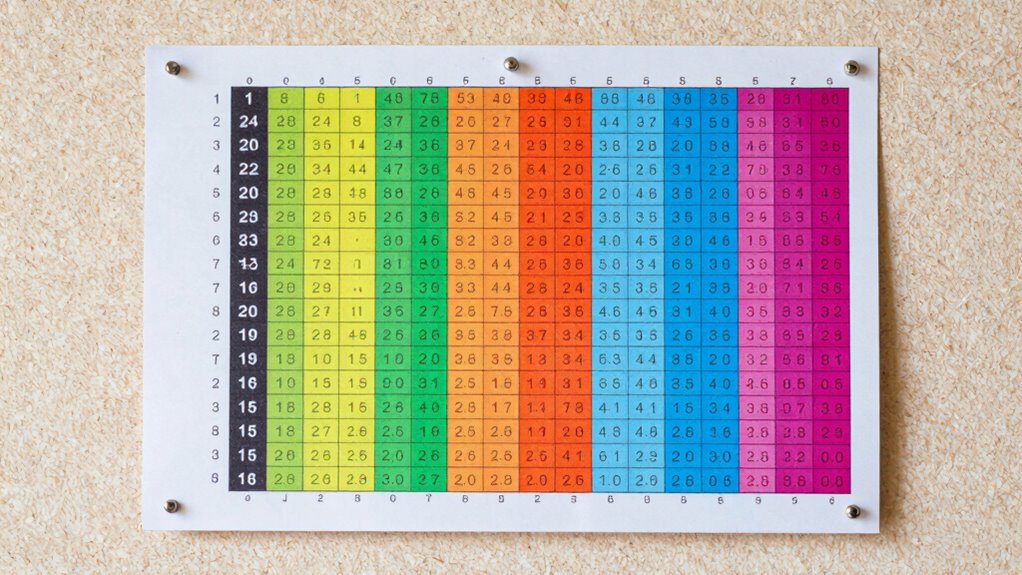

To understand pattern size charts without confusion, start by knowing which measurement system is used—US, UK, or EU—and compare your actual measurements to the chart’s figures. Focus on key areas like bust, waist, and hips, and make certain your measurements match the size that aligns most closely. Check for clear measurement labels and symbols, and remember that sizes may vary across brands. Keep reading to find more tips for confident pattern selection.
Key Takeaways
- Always identify the measurement units (inches, centimeters) and compare them to your body measurements for accuracy.
- Focus on the key body measurements (bust, waist, hips) rather than relying solely on size labels.
- Use the pattern’s measurement chart to match your measurements with the correct pattern size.
- Understand that sizing varies between brands; compare measurements across different charts before choosing.
- Take your own measurements carefully and test the pattern on scrap fabric if unsure to avoid discouragement.

Kitchen Conversion Chart Magnet-Measurement Refrigerator Magnet 8.58In, Imperial & Metric to Standard Conversion Chart,Cooking Measurement Conversion Chart – Measuring Weight, Liquid, Temperature
- Size: 8.58 x 6.65 inches
- Easy-to-Read: Clear data and images
- Strong Magnet: Holds securely on magnetic surfaces
As an affiliate, we earn on qualifying purchases.
As an affiliate, we earn on qualifying purchases.
Why Getting Your Pattern Size Right Matters for Confident Sewing
Getting your pattern size right is essential because it directly impacts how confident you feel while sewing and the fit of your finished garment. Choosing the correct size guarantees your fabric’s stretch and pattern ease work together for a comfortable, polished look. If your pattern size is too small, your garment may feel tight, restrict movement, or cause fabric bunching. Too large, and it might look bulky or unflattering. Understanding how fabric stretch influences pattern ease helps you select the right size. Some fabrics stretch more and require a smaller pattern size, while others have less give. Recognizing the importance of fabric stretch and how it affects pattern sizing helps you make better choices. Additionally, being aware of European cloud innovation can inspire you to adopt new techniques in your sewing projects, ensuring you stay current with industry trends. Getting this balance right means you’ll sew with confidence, reduce fitting frustrations, and end up with a garment that fits beautifully and feels comfortable.
The Key Parts of a Pattern Size Chart You Need to Know
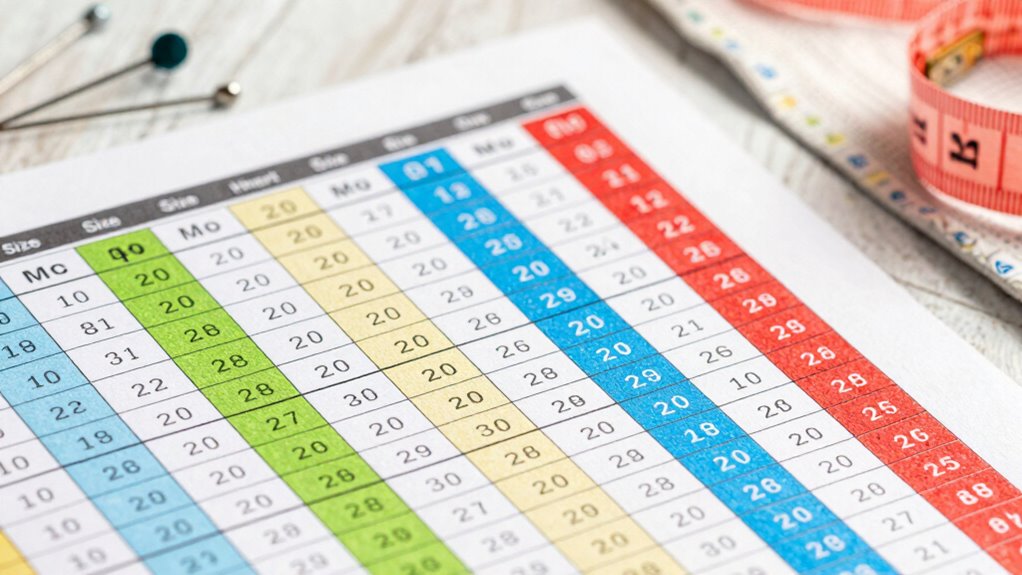
Understanding the key parts of a pattern size chart helps guarantee you choose the right size for your project. First, look for measurement clarity, which shows how sizes correspond to body measurements. Second, pay attention to the symbol significance, as different patterns may use varied symbols to indicate size ranges or design details. Third, identify the sizing labels, such as small, medium, or large, to ensure you’re selecting the correct category. Fourth, check the measurement units used, whether inches or centimeters, to avoid confusion. By understanding these parts, you can confidently interpret the chart and select your pattern size accurately. Clear measurement information and symbol significance are essential for a smooth sewing experience and a well-fitting finished garment.
How to Measure Yourself Accurately for Pattern Selection
To choose the right pattern size, you need to measure yourself accurately, as even small discrepancies can affect the fit. Use a flexible measuring tape and stand in a natural, relaxed posture. Measure key areas like your bust, waist, and hips, ensuring the tape sits snug but not tight. Keep the measuring tape level and parallel to the floor for consistent results. Remember, body proportion varies from person to person, so don’t rely solely on a single measurement; consider your overall body shape. Take multiple measurements if needed and record them carefully. Accurate measurements help you select the best pattern size, reducing the need for adjustments later. Precision here guarantees your finished garment will fit comfortably and look great. Additionally, understanding body measurements and how they influence pattern selection can help you make more informed choices. Being aware of your body shape can also assist in choosing styles that flatter your figure best. Recognizing body proportion is equally important, as it influences how different pattern sizes and styles will fit your unique form. Paying attention to your measurement consistency and body proportions ensures the most accurate sizing results.
Understanding Different Sizing Systems: US, UK, EU, and More
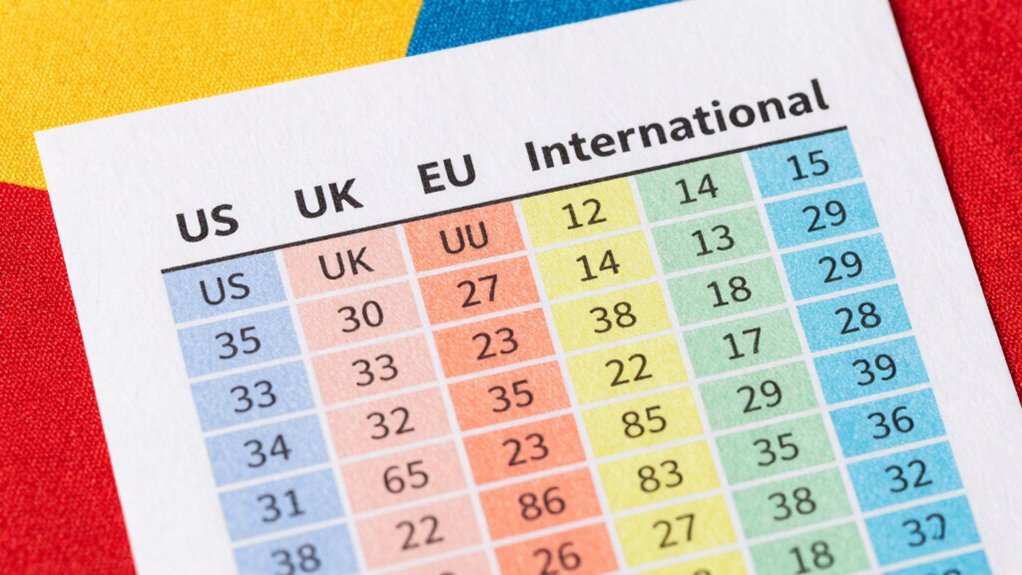
Different countries use various sizing systems, which can make pattern selection confusing if you’re not familiar with them. To navigate this, you need to understand the differences and use conversion charts effectively. Recognize that:
Understanding international sizing systems ensures accurate pattern selection and a perfect fit.
- US sizes often run numerically (e.g., 6, 8, 10).
- UK sizes tend to be slightly smaller, often with different numbering or letter abbreviations.
- EU sizes use centimeter measurements, like 36, 38, 40.
- Sizing abbreviations vary; always double-check the conversion chart to match patterns correctly.
Using these charts helps you translate sizes accurately across systems, avoiding mistakes. Familiarize yourself with the most common conversion charts for your patterns, and keep note of the sizing abbreviations used in each country. This knowledge streamlines pattern selection and guarantees a better fit.
Comparing Pattern Sizes Across Brands: Tips for Choosing the Best Fit
When comparing pattern sizes across brands, it’s important to realize that sizing can vary considerably even if the labels look similar. Different brands have their own sizing standards, which can affect your fabric comparison and fit. To help, use a size chart like this:
| Brand A | Brand B | Brand C |
|---|---|---|
| 8 | 10 | 36 |
| 10 | 12 | 38 |
| 12 | 14 | 40 |
| 14 | 16 | 42 |
| 16 | 18 | 44 |
This table shows how sizes shift between brands. Always check each brand’s sizing guide and compare measurement charts, especially when selecting pattern sizes for different fabric types. This will help you choose the best fit across brands. Additionally, understanding size variation among brands can prevent unnecessary frustration when shopping for patterns or clothing.
Troubleshooting Common Sizing Confusions and Picking Your Perfect Pattern
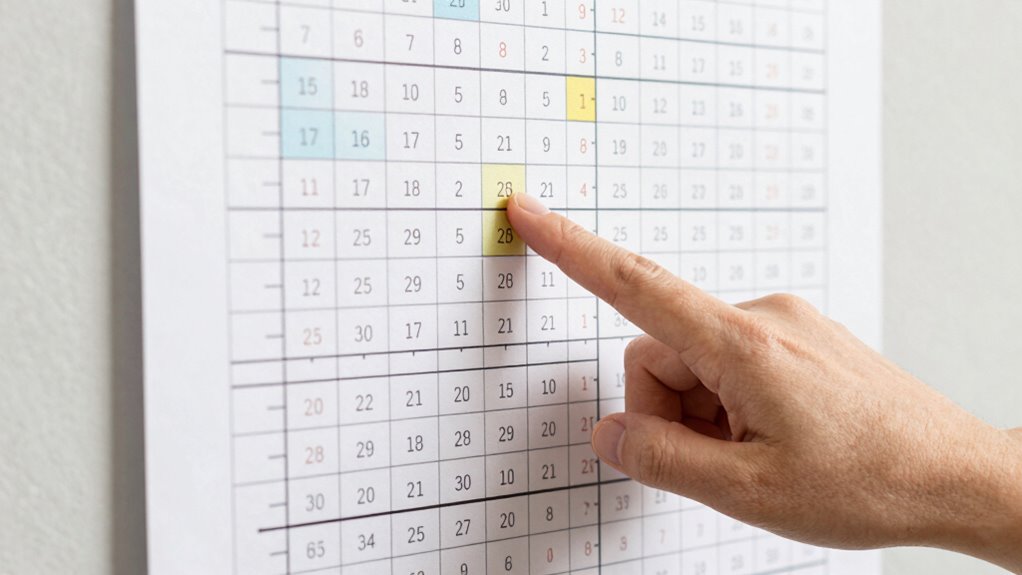
Sorting out sizing confusions can be tricky, but with a few strategies, you can confidently select the perfect pattern. First, consider fabric stretch: patterns for stretchy fabrics often require smaller sizing adjustments. Second, check for sizing consistency within the pattern brand by reviewing the pattern’s measurement chart. Third, measure yourself accurately and compare your measurements to the pattern’s size chart rather than relying solely on your usual size. Fourth, test the pattern’s fit on scrap fabric or muslin before cutting into your final fabric. This step helps you adjust for fabric stretch and ensures the pattern will fit as expected. Additionally, understanding pattern grading can improve your ability to select the right size across different pattern sizes. Recognizing the net worth of pattern designers and brands can also give you insights into their sizing standards and quality, making your selection process smoother. Being aware of pattern sizing standards can further clarify how sizing varies between brands and patterns. By paying attention to fabric properties and pattern sizing, you can troubleshoot common confusions and confidently choose the right pattern.
Frequently Asked Questions
How Do Pattern Sizes Differ Between Vintage and Modern Patterns?
Vintage sizing often uses different numbers than modern sizing, which can be confusing. For example, a vintage size 14 might fit like a modern size 8. To compare, you need to check the sizing charts carefully, as vintage sizing tends to run smaller. Always measure yourself and compare those measurements to the chart, rather than relying solely on the size number, to make certain of the best fit.
What Should I Do if My Measurements Fall Between Sizes?
If your measurements fall between sizes, don’t worry. You should employ size adjustment techniques, like grading methods, to customize the pattern. Start by choosing the larger size and then make gradual adjustments at the seams for a perfect fit. Pin and muslin the pattern first to test fit, then refine with pattern grading methods. This approach ensures your finished garment fits comfortably and looks professional.
Are Pattern Size Charts Standardized Across Brands?
Pattern size charts aren’t standardized across brands, so size chart inconsistencies can happen. When you compare brands, you might find different measurements for the same size. Always check each brand’s specific size chart before cutting or buying, rather than assuming sizes are the same. This approach helps you avoid confusion and guarantees a better fit, especially when switching between brands or patterns.
How Can I Modify a Pattern for a Better Fit?
Think of altering pattern pieces as shaping a masterpiece to fit your unique form. You can customize fit by taking in seams, adding darts, or adjusting hemlines. To modify a pattern, start with a muslin mock-up, then make small, deliberate changes. Pin, baste, and try on frequently to guarantee your adjustments enhance comfort and style. With patience, you’ll craft a perfect fit that feels like it was made just for you.
What Fabric Types Influence Pattern Sizing and Fitting?
Fabric types like stretch fabrics or non-stretch materials substantially influence pattern sizing and fitting. Stretch fabrics, with added stretch, often require less pattern ease, so you may size down for a snug fit. Non-stretch fabrics need more ease for comfort. Always consider fabric stretch when choosing your pattern size, and adjust pattern ease accordingly to ensure your finished garment fits perfectly and feels comfortable.
Conclusion
Remember, about 60% of sewists find pattern sizing confusing at first—but with practice, you’ll master it. Knowing how to read size charts confidently means better fits and more satisfying projects. So don’t get discouraged by the numbers; they’re just tools to help you create your best work. Keep measuring, comparing, and learning, and you’ll soon sew with confidence every time. Your perfect pattern fit is closer than you think!