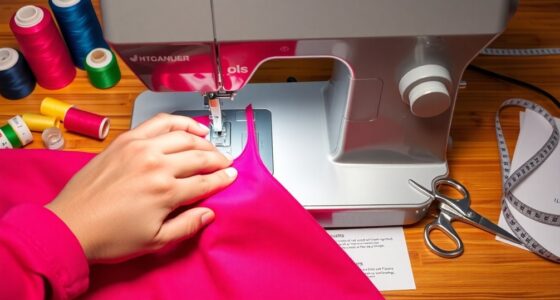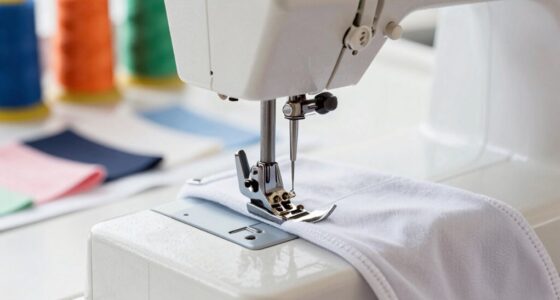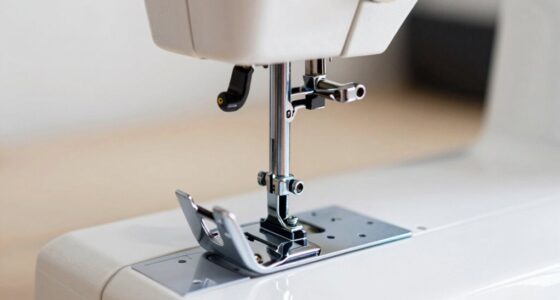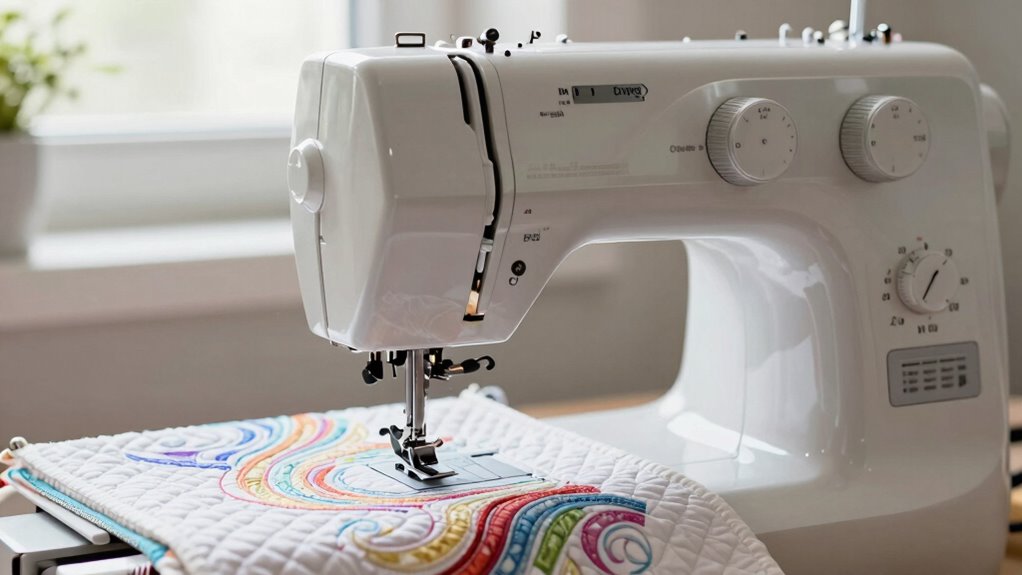
A good free-motion quilting machine gives you precise tension control, making it easier to create even stitches and avoid puckering. It should have easy needle changes, stable operation, and a smooth, reliable motor to handle large projects. Features like a large workspace and control enhancements help you maneuver fabric with confidence. When your machine balances these qualities, quilting becomes less stressful and more enjoyable. Keep exploring to discover all the tips for choosing the perfect quilting machine.
Key Takeaways
- Precise thread tension control ensures even stitches and reduces puckering or skipped stitches.
- Compatibility with various needle sizes and types allows versatility for different threads and fabrics.
- Machine stability and regular maintenance prevent fabric shifting and maintain consistent stitch quality.
- Features like free-motion feet, drop feed, and large workspace enhance control and ease of maneuvering.
- Overall reliable performance with smooth responsiveness and easy mode switching creates a stress-free quilting experience.
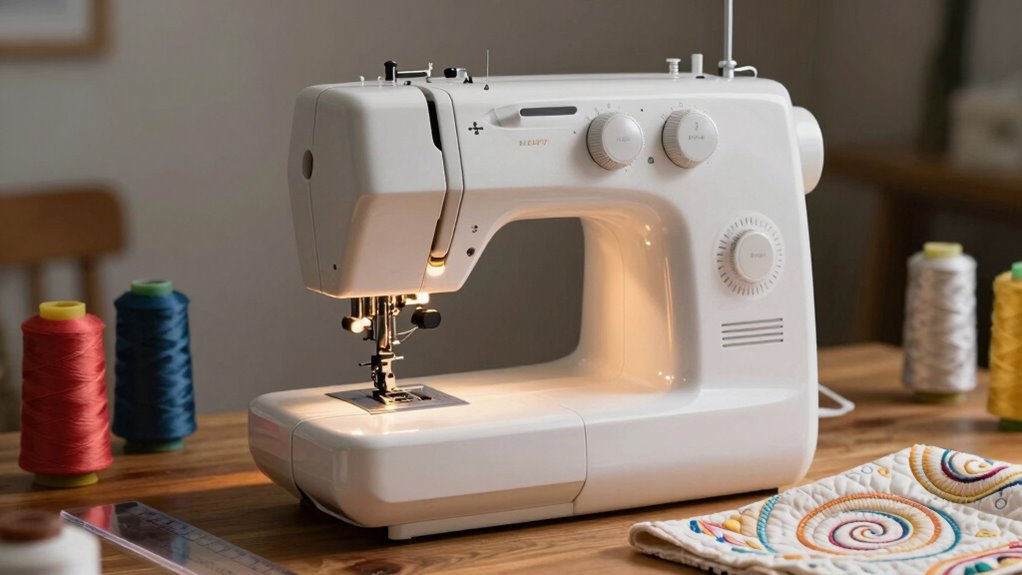
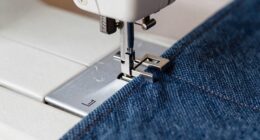
Ever wondered what features make a sewing machine ideal for free-motion quilting at home? The key lies in understanding how the machine handles thread tension and needle size, among other factors. When you’re quilting freely, your machine needs to be able to adjust the thread tension smoothly. Consistent tension ensures that your stitches are even and professional-looking, without puckering or loose stitches. A machine with adjustable thread tension gives you the control to match different threads and fabric types, making your quilting more enjoyable and less frustrating. It’s crucial because incorrect tension can ruin your project, causing skipped stitches or uneven quilting lines. Look for a machine that offers precise tension control, whether through a dial or digital interface, so you can fine-tune it to suit your specific needs. Having a stable and balanced machine also helps maintain even stitches and prevents shifting or bunching of your fabric during free-motion quilting. Additionally, a machine with features like a darning plate or free-motion foot can greatly enhance your control and precision. Needle size also plays an essential role in free-motion quilting. The right needle size depends on the thickness of your thread and fabric. A too-small needle might break or cause skipped stitches when working with thicker threads or layered quilts. Conversely, a needle that’s too large could leave noticeable holes or damage delicate fabrics. For most free-motion quilting, a universal or quilting needle size 75/11 or 80/12 works well because it provides the strength needed for various threads and fabrics without causing damage. Some advanced machines allow you to easily change needle sizes and types, which is a big plus as it gives you versatility and better control over your stitches. Proper machine maintenance can also improve your quilting experience by ensuring all components operate smoothly and prevent issues like tension imbalance or skipped stitches. To optimize your quilting results, it’s also beneficial to choose a machine with good stitch quality and consistent stitch length. In addition to thread tension and needle size, you should consider the machine’s overall stability and ease of maneuvering. When quilting freehand, you want a machine that glides smoothly and remains steady, preventing bunching or uneven stitches. A machine with a powerful motor and good balance makes it easier to move the fabric freely and maintain control over your designs. Many machines designed for quilting also have a large workspace, which makes handling big quilt tops more manageable. The presence of features like a drop feed or free-motion quilting mode simplifies the process, allowing you to lift the feed dogs or switch modes with ease. All these features combine to create a machine that not only produces beautiful quilting but also makes the process less stressful. When you’re focused on your designs and free motion, you don’t want to wrestle with your machine. Instead, you want a reliable, well-tuned device that responds to your commands. That’s what makes a sewing machine perfect for free-motion quilting at home—one that balances adjustable thread tension, compatible needle size, stability, and user-friendly features to bring your quilting visions to life.
free-motion quilting machine with adjustable tension
As an affiliate, we earn on qualifying purchases.
As an affiliate, we earn on qualifying purchases.
Frequently Asked Questions
Can I Upgrade My Regular Sewing Machine for Free-Motion Quilting?
Yes, you can upgrade your regular sewing machine for free-motion quilting by adjusting settings and adding specific accessories. Use thinner thread to improve tension and prevent puckering, and choose quality quilt batting for smoother quilting. Practice controlling the fabric to master free-motion techniques. You might also consider adding a darning or free-motion foot if your machine doesn’t already have one. These tweaks can make quilting easier and more enjoyable at home.
How Much Noise Should a Quilting Machine Make?
You should expect a quilting machine sound to be relatively quiet, with machine noise levels ideally staying below 70 decibels. While some noise is normal, loud or grinding sounds can indicate issues. A good quilting machine maintains a smooth, consistent stitching sound without excessive noise, allowing you to quilt comfortably at home. If your machine’s noise level exceeds this, consider maintenance or upgrading for a quieter quilting experience.
What’s the Ideal Size for a Quilting Workspace at Home?
You need a spacious, well-organized workspace, ideally at least 10×10 feet, to comfortably maneuver fabric and keep your quilting flowing smoothly. Ample room prevents clutter, so you can focus on fabric maneuvering without feeling cramped. Good workspace organization allows you to easily access tools and fabrics, reducing distractions. A larger area guarantees you can quilt freely, enjoy creative freedom, and handle larger projects with ease, making your quilting experience enjoyable and stress-free.
Do I Need Special Quilting Presser Feet?
You don’t necessarily need special quilting presser feet, but they can make free-motion quilting easier. For intricate quilting patterns, a darning or free-motion foot provides better control and visibility, helping you maneuver around quilt batting smoothly. These feet help you follow detailed designs more accurately, especially when working with different quilt batting types. Investing in the right presser foot can enhance your quilting precision and make your creative process more enjoyable.
How Do I Prevent Thread Breakage During Free-Motion Quilting?
To prevent thread breakage during free-motion quilting, start by checking your thread tension; it should be balanced, not too tight or loose. Use quilting gloves to maintain a good grip, helping you control your stitches smoothly. Also, make sure your needle and thread are compatible, and avoid pulling the fabric too hard. These steps keep your stitches even and reduce stress on the thread, preventing breaks.
Conclusion
Choosing the right machine can make or break your free-motion quilting experience at home. With features like smooth stitching, easy maneuverability, and adjustable controls, you’ll find yourself more confident and creative. Remember, the best machine for you fits your style and needs. So, why settle for less when the perfect quilting partner is just a machine upgrade away? Happy quilting!