
Using well-maintained rolling wagons can make your load-in much easier by enabling quick, organized movement of large booths and heavy equipment. They’re built to last and easy to maneuver, helping you avoid chaos and delays. Regular maintenance prevents breakdowns, saving time and reducing stress. Proper equipment management boosts safety and efficiency, making your work smoother. Keep going to discover how strategic planning and reliable gear can transform your entire load-in experience.
Key Takeaways
- Well-maintained rolling wagons ensure smooth, reliable movement of large booths, reducing delays and physical strain during load-in.
- Regular inspections prevent equipment breakdowns, minimizing unexpected disruptions and safety hazards.
- Strategically organized wagons streamline loading and unloading, saving time and labor efforts.
- Durable, easy-to-maneuver wagons protect equipment from damage, extending their lifespan and reliability.
- Proper planning and maintenance improve overall efficiency, making load-in less stressful and more manageable.
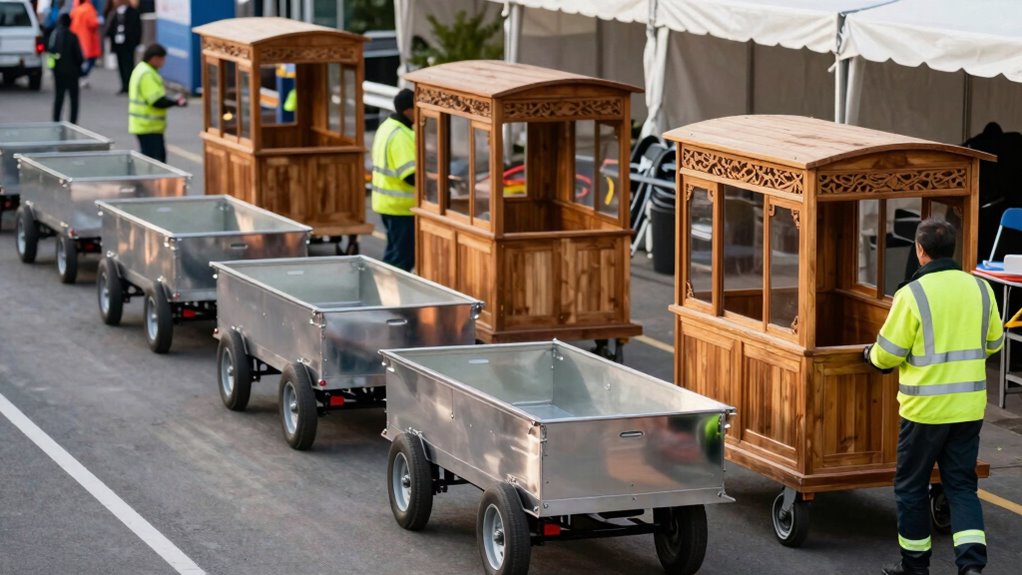
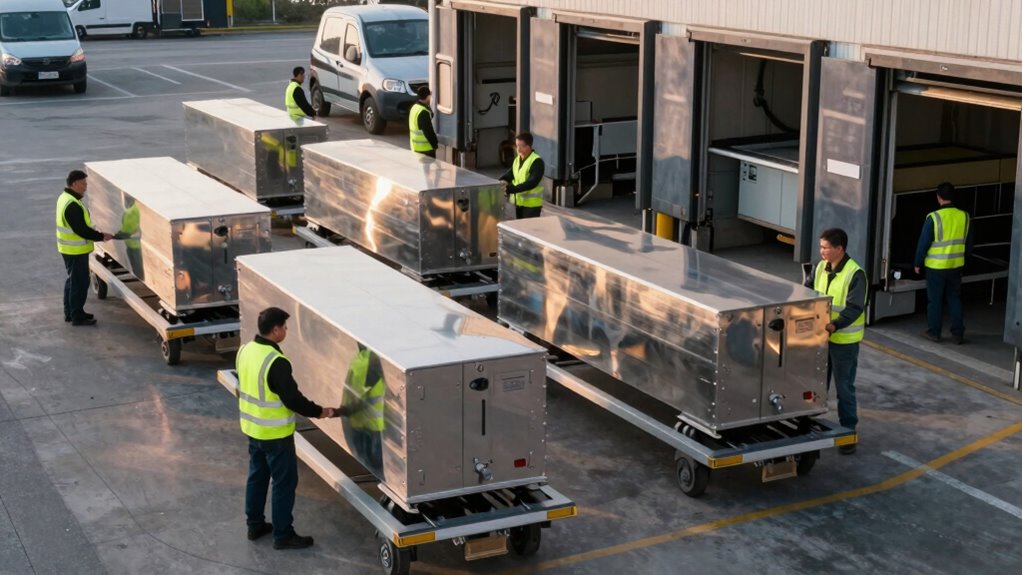
Ever wondered how large equipment and booths are moved efficiently across events and construction sites? The secret lies in well-planned rolling wagons and strategic transport methods that streamline load-in and load-out processes. When you’re handling hefty cargo, cargo handling becomes the backbone of a smooth operation. Properly designed rolling wagons are built for durability and ease of maneuvering, allowing you to load and unload heavy equipment with minimal effort. They help you avoid the chaos and delays that come with makeshift solutions, guaranteeing your setup stays on schedule. By investing in reliable rolling wagons, you’re not just simplifying transportation—you’re also protecting your equipment from damage during transit, which is essential for maintaining their longevity.
Reliable rolling wagons keep large equipment safe, efficient, and on schedule during load-in and load-out processes.
Equipment maintenance plays a critical role in guaranteeing that your transport systems operate flawlessly. Regular inspections and upkeep of wagons, wheels, and loading mechanisms prevent unexpected breakdowns that could derail your schedule. Well-maintained gear reduces downtime, allowing you to focus on the actual setup rather than troubleshooting mechanical issues. When your equipment is in top shape, it moves smoothly, reducing strain on operators and minimizing the risk of accidents. Keep an eye on wheel bearings, hydraulic systems, and structural integrity to make sure everything functions seamlessly. A little preventive maintenance now can save you a lot of headaches later, especially when you’re under tight deadlines in busy event environments. Additionally, understanding cargo handling best practices can further optimize your operations and reduce physical strain. Incorporating cloud server solutions can also help you keep track of maintenance schedules and inventory, streamlining your logistical planning. Developing a comprehensive maintenance plan tailored to your equipment’s needs can further enhance operational reliability and longevity. Employing CAD tools during planning can also improve the design and layout of your transport systems for maximum efficiency.
Using rolling wagons also enhances your cargo handling efficiency. You can quickly load large, awkwardly shaped booths or heavy machinery onto these wagons, then easily transport them from storage to the venue. This reduces manual lifting and the need for multiple workers, which cuts down on labor costs and physical fatigue. Plus, with the right equipment, you can stack and organize items more systematically, speeding up the entire load-in process. When you’re prepared with dependable wagons, you’ll find your team more confident and capable of handling larger, more complex setups without unnecessary stress.
Ultimately, making load-in less miserable depends heavily on your approach to cargo handling and equipment maintenance. Rolling wagons are more than just transport tools—they’re a fundamental part of your logistical strategy. By choosing sturdy, well-maintained wagons and ensuring your gear is routinely serviced, you’ll move larger loads more safely and efficiently. This not only saves you time and money but also keeps your team motivated, knowing they have reliable equipment on their side. When you streamline these elements, your load-in becomes less of a hassle, letting you focus on creating a successful event or project without the added stress of transportation woes.
heavy duty rolling wagon for equipment transport
As an affiliate, we earn on qualifying purchases.
As an affiliate, we earn on qualifying purchases.
Frequently Asked Questions
How Do I Choose the Right Rolling Wagon for My Needs?
You should choose a rolling wagon that fits your specific needs by considering wheel compatibility and storage solutions. Guarantee the wheels are sturdy and compatible with your terrain to make transport smoother. Think about how much space you need for tools or materials, and select a wagon with appropriate storage options. This way, you’ll efficiently move your items, reducing strain and making load-in much easier.
What Safety Precautions Should I Take During Transport?
Think of transport like a delicate dance—one misstep can cause chaos. Always wear appropriate safety gear like gloves and sturdy shoes, and secure your load with straps and padding. Packing tips, such as balancing weight evenly, prevent tipping or shifting. Check your wagon’s brakes and tires before moving. Staying alert and cautious guarantees your load stays safe, and everyone around you stays protected.
Are There Size Restrictions for Booth Transport Vehicles?
Yes, there are size restrictions for booth transport vehicles. You need to check your local regulations regarding vehicle dimensions, as oversized loads may require special permits. Make certain your vehicle’s dimensions stay within legal limits to avoid fines or delays. If your booth exceeds standard size limits, you’ll likely need permit requirements, which involve planning ahead and coordinating with authorities to ensure smooth transport.
How Can I Prevent Damage to My Booth During Transit?
Like a knight protecting their armor, you can prevent booth damage during transit by using secure packaging and proper handling techniques. Wrap fragile components in bubble wrap, foam, or corner protectors, and secure everything tightly in the wagon. Always lift with care, avoiding sudden movements. Regularly inspect your packaging before transit, ensuring nothing shifts. These steps keep your booth safe, arriving in pristine condition—ready to impress without a hitch.
What Is the Average Cost of Booth Transport Services?
The average cost of booth transport services varies widely, typically ranging from $300 to $1,500, depending on size, distance, and complexity. You should consider freight insurance to protect your booth during transit and make sure you have the necessary transport permits. These factors influence the total cost and help prevent unforeseen expenses, making your load-in smoother and more secure. Always get detailed quotes to compare prices and coverage options.
Conclusion
By embracing rolling wagons and streamlined booth transport, you turn the chaos of load-in into a well-choreographed dance. Think of your setup as a smooth sailing ship, gliding effortlessly through rough waters. With these tools, you’ll breeze past stress and delays, making your event setup feel like a walk in the park. So gear up, stay organized, and watch your load-in become a stress-free masterpiece—your secret weapon for a successful show!