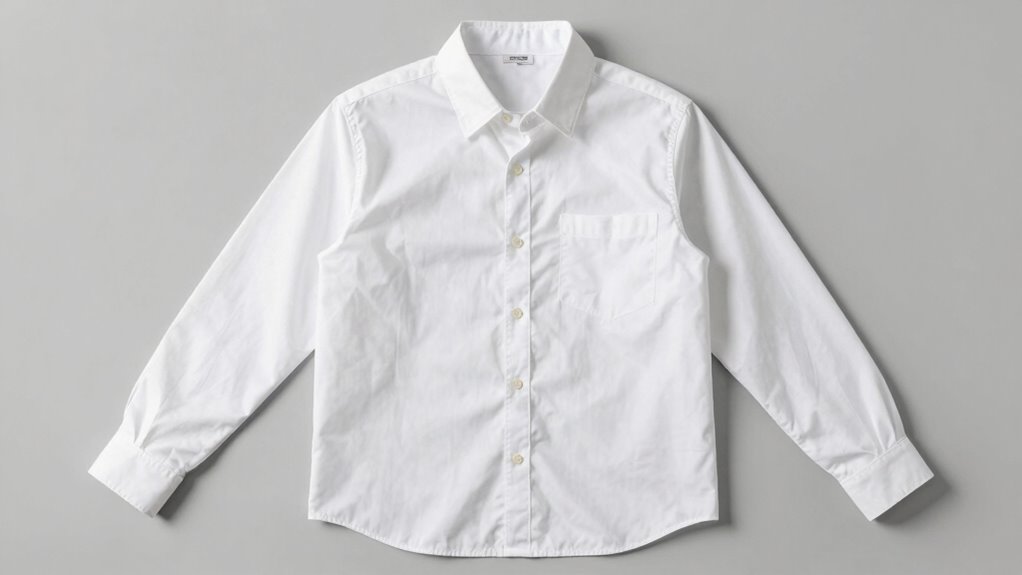

To upcycle a button-down shirt into a grocery tote with minimal cutting, choose a sturdy fabric like denim or canvas for durability. Keep most of the shirt intact and remove only the sleeves and collar if needed, sewing sturdy side seams and reinforced handles for strength. Add personal touches like pockets or handles for style. If you keep it simple and focus on reinforcement, you’ll create a functional, eco-friendly tote that lasts—more tips await if you continue further.
Key Takeaways
- Choose a sturdy, dark-colored button-down shirt with minimal embellishments to maximize durability and hide stains.
- Detach the sleeves and collar carefully to preserve the main body with minimal cutting.
- Sew side seams and reinforce the bottom and handles with double stitches for strength.
- Use the existing shirt collar as a decorative edge or pocket, reducing the need for additional cuts.
- Finish raw edges with zigzag stitching and add reinforced handles for maximum function and longevity.
Why Upcycling a Shirt Into a Grocery Tote Is a Smart Eco-Friendly Choice
Upcycling a shirt into a grocery tote is a smart eco-friendly choice because it reduces waste and minimizes the demand for new plastic or fabric bags. When you upcycle, you’re participating in recycling fashion, giving new life to old garments instead of throwing them away. This process prevents clothing from ending up in landfills and cuts down on the environmental impact of producing new textiles. Plus, by practicing sustainable sewing, you can create a durable, reusable tote with minimal materials and waste. Upcycling is an eco-conscious way to lower your carbon footprint while making a practical, stylish bag. It’s a simple step that supports waste reduction and promotes a more sustainable approach to fashion and everyday essentials. Additionally, understanding the importance of projector contrast ratio can help you appreciate how visual clarity improves in home cinema setups, much like how repurposing old items enhances functionality and sustainability in everyday life.
How to Choose the Best Shirt for Your Upcycled Tote
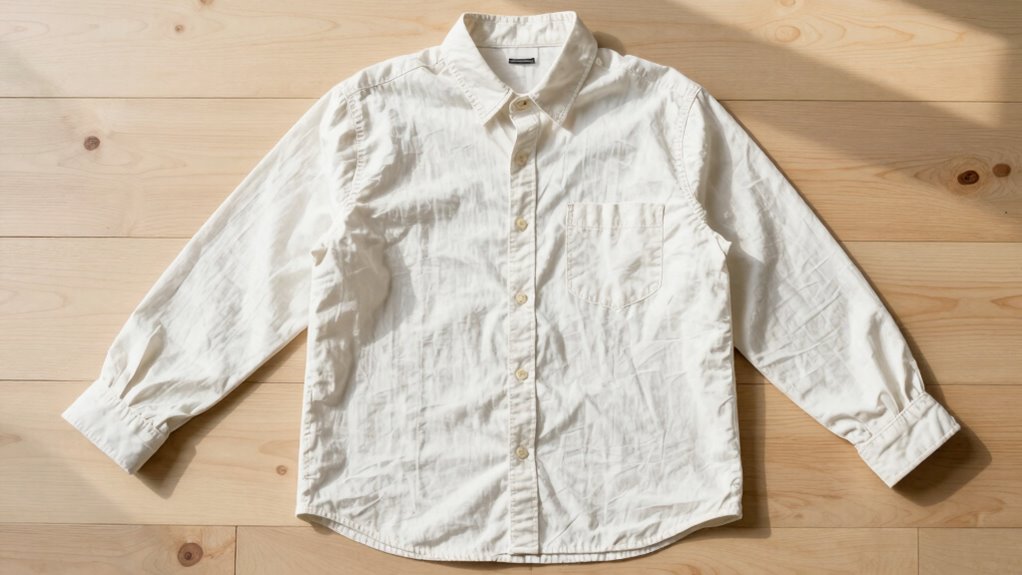
When selecting a shirt for your upcycled tote, focus on fabric durability and thickness to guarantee it can handle heavy loads. Consider the color and pattern to match your style and make the tote versatile. Also, choose a shirt that fits well and is the right size to create a practical and comfortable bag.
Fabric Durability and Thickness
Choosing the right shirt for your tote project starts with considering fabric durability and thickness. You want a fabric that can withstand frequent use without tearing or fraying. A seasonal checklists for cleaning and maintenance can also help ensure your tote stays in good condition over time. Here are three tips to help you select the best shirt:
- Opt for shirts made from thicker fabric, like denim or canvas, for better fabric thickness and strength.
- Check the fabric durability by feeling the material; sturdy fabrics resist wear and tear over time. Additionally, inspecting the fabric’s fiber content can give you a better idea of its overall resilience.
- Avoid lightweight or delicate fabrics, which tend to rip easily and won’t hold up to heavy groceries. Using a whole-house water filtration system can help preserve fabric quality by reducing mineral deposits and impurities that may weaken fibers over time. Incorporating musical therapy principles into your fabric selection process can also inspire choices that promote comfort and well-being through tactile qualities.
Color and Pattern Choice
Since your tote will be used frequently, selecting a shirt with a color and pattern that hides stains and wear can help it look good longer. Look for fabric patterns like small prints, busy designs, or darker shades that conceal dirt and scuffs. Bright or solid colors may show stains more easily, requiring frequent cleaning. Consider color coordination to ensure the tote complements your wardrobe; neutral tones or versatile patterns work well with various outfits. Avoid overly delicate or light-colored fabrics that might stain easily. The right pattern and color choice not only make your upcycled tote functional but also stylish, allowing it to stay looking fresh through repeated use. Additionally, choosing durable fabrics can help support kidney health by reducing the need for frequent replacements and minimizing waste. Selecting fabric quality carefully can also extend the lifespan of your tote, making it a more sustainable choice over time.
Shirt Size and Fit
Selecting the right shirt size and fit guarantees your upcycled tote is both sturdy and functional. You want a shirt that can handle weight without tearing or losing shape. Consider these points:
- Choose a shirt with a generous shirt size that matches your intended tote dimensions for durability.
- Opt for a fit that’s not too tight—looser fits provide more fabric for the tote and prevent stress on seams.
- Prioritize fit preferences that favor sturdiness over snugness, ensuring the tote can carry groceries comfortably without strain.
- Be mindful of piercing placement and how the fabric’s stretch or tension might impact the tote’s durability.
- Additionally, understanding breast tissue density can help in selecting fabrics that are less prone to stretching or tearing over time, enhancing the tote’s longevity.
- Considering the 16PF traits of the fabric—such as resilience and flexibility—can further inform your choice for a durable, long-lasting tote.
- Evaluating the fabric’s structural integrity can help ensure your tote remains durable through repeated use.
- Recognizing the fabric’s resilience helps you select materials that will withstand frequent use and washing, prolonging your tote’s lifespan.
Tools and Materials You’ll Need for the Upcycling Project
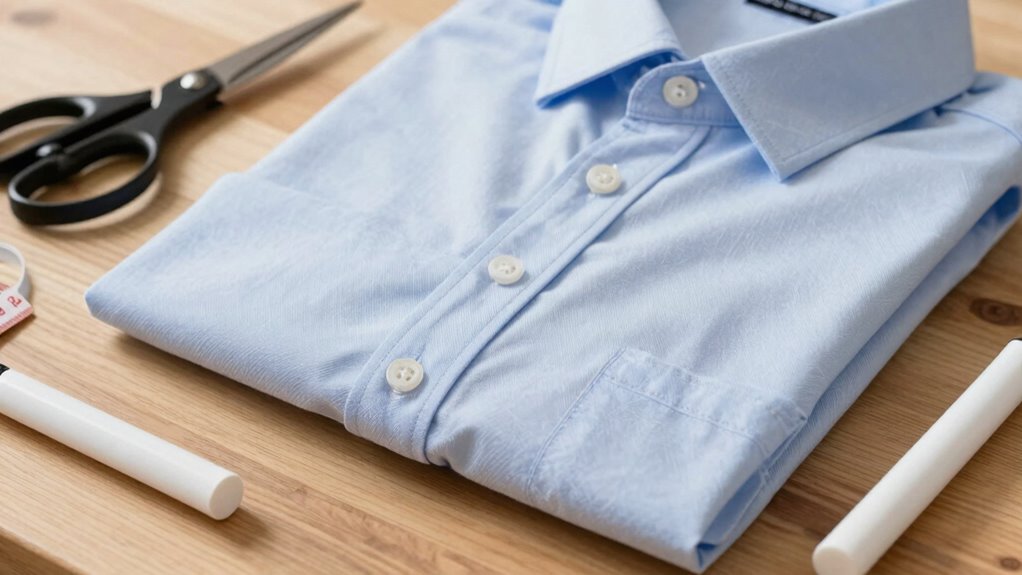
To transform your button-down shirt into a sturdy grocery tote, you’ll need a few essential tools and materials. Grab a pair of sharp fabric scissors to cleanly cut the fabric, and a sewing machine or needle and thread for reinforcement. Choose matching or contrasting thread based on your fabric patterns to add a personalized touch. Pins or clips will help hold pieces in place during sewing. Consider using fabric stabilizer for added durability. Keep in mind the upcycling ethics by selecting tools that minimize waste and using sustainable materials where possible. Before starting, wash and iron the shirt to ensure smooth fabric handling. These tools and materials make the process efficient, aligned with eco-conscious practices, and help you create a functional, stylish grocery tote.
Planning Your Upcycled Shirt Tote Design for Strength and Functionality

Planning your upcycled shirt tote design is essential to guarantee it’s both strong and functional. Start by considering fabric selection; choose sturdy shirts with durable fabric, like denim or thick cotton, to ensure the tote holds weight. Next, focus on seam reinforcement—double-stitch or zigzag critical seams, especially at handles and bottom, to prevent tearing. Additionally, fabric durability plays a crucial role in the tote’s longevity and ability to withstand daily use. Incorporating reinforced stitching techniques can significantly enhance the overall strength of your tote. Moreover, understanding load distribution helps in designing a tote that can carry heavier items without compromising its integrity. Applying principles of material strength can further optimize your design for maximum durability. Finally, decide on the tote’s size and shape based on what you’ll carry, making sure the design accommodates your needs without sacrificing strength. Incorporating compact living principles such as maximizing utility and durability ensures your tote is built for both strength and everyday use.
Step-by-Step: Cutting and Assembling Your Recycled Shirt Tote
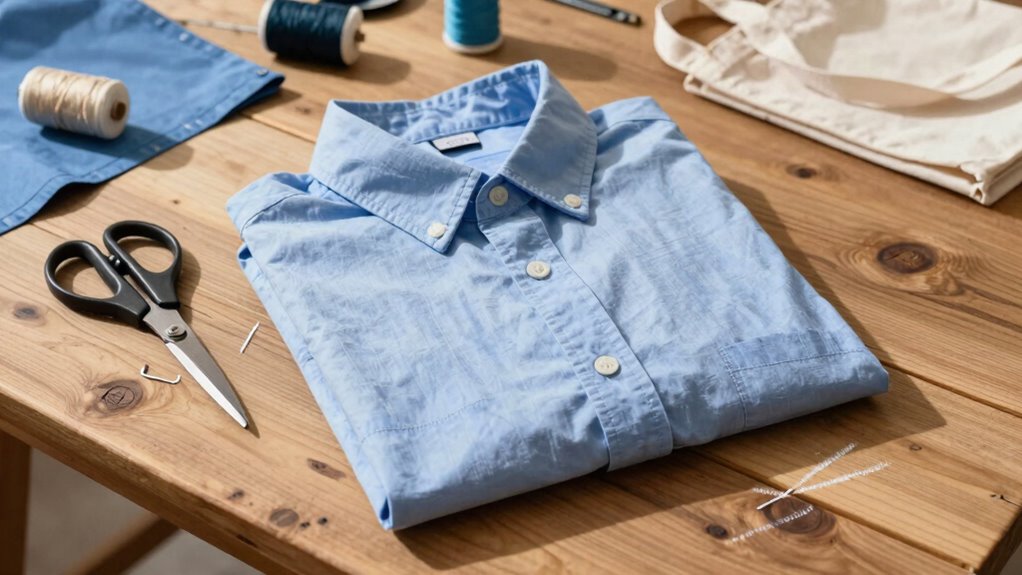
Start by carefully marking your cutting lines on the shirt to guarantee a clean shape. Next, remove any unwanted components like buttons or collar pieces, then sew the edges to prevent fraying. To enhance the durability of your tote, consider reinforcing the seams with a secure attachment technique. Finally, assemble the pieces, sew the seams, and finish with any extra touches to complete your tote.
Marking Cutting Lines
Before you begin cutting, double-check to confirm your fabric accurately to guarantee clean, straight lines. Properly marking your cutting lines ensures your tote will have neat edges and a professional look. Keep in mind that fabric patterns and shirt styles influence your markings. For example, horizontal stripes should be aligned carefully to prevent distortion, and button plackets may need special attention to avoid uneven seams. Incorporating precision tools can further improve your markings and cuts for a cleaner finish. Additionally, considering smart home automation principles, using tools like fabric markers with integrated rulers or laser guides can help achieve more precise and consistent lines. Employing thermal behavior awareness can also help you anticipate how the fabric may shift or stretch during cutting, ensuring your markings stay accurate. Paying attention to fabric stability can assist in maintaining the integrity of your markings throughout the process. Being mindful of fabric stretch can help prevent warping or distortion of your lines during cutting.
Removing Shirt Components
Carefully remove the shirt components you no longer need, such as collars, cuffs, buttons, and pockets, to create a clean canvas for your tote. Start with shirt sleeve removal by carefully cutting along the seams to detach the sleeves. If the shirt has a collar that you don’t want in your tote, perform collar detachment by gently cutting around the collar’s base, ensuring you don’t damage the fabric. Remove any extra buttons or embellishments that might get in the way. Take your time to make clean cuts, as this will make the sewing process easier later. Removing these components leaves you with a simplified shirt body, ready for folding or further modifications. This step ensures your tote has a sleek, functional shape without unnecessary details.
Sewing and Finishing
Once you’ve removed the unnecessary components, it’s time to cut and assemble your shirt into a functional tote. Start by sewing the side seams and bottom to create the bag shape, using a sturdy stitch and matching thread. For added durability, consider embellishment techniques like topstitching along the edges. When choosing thread, opt for a heavy-duty or all-purpose thread to withstand weight. Additionally, incorporating reinforced stitching techniques or wearable tech can help monitor the tote’s usage and ensure it remains in good condition over time. Proper seam construction is essential for ensuring the tote can carry heavier items without tearing or fraying. Here’s what to do next: 1. Sew the side seams and bottom, reinforcing with backstitching. 2. Finish raw edges with a zigzag stitch or serger to prevent fraying. 3. Add embellishments like decorative stitches or patches for a personalized touch. This process ensures your tote is both sturdy and stylish, ready for use.
Reinforcing Seams and Finishing Touches for a Durable, Stylish Tote
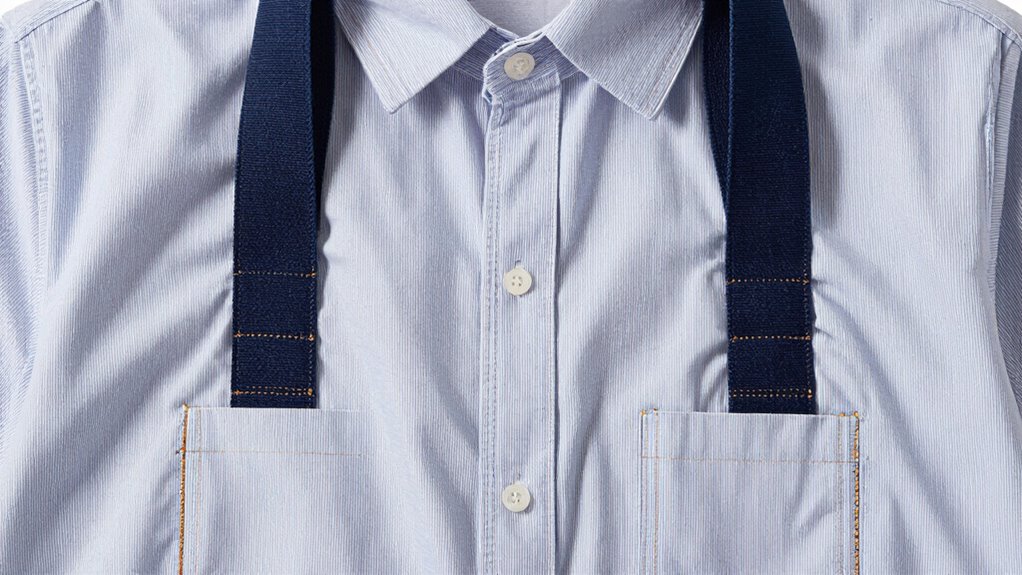
To make certain your upcycled tote is both durable and stylish, it’s essential to reinforce the seams and add finishing touches. Seam reinforcement ensures that the tote withstands regular use by strengthening stress points, especially along the handles and bottom. Use extra stitching or bias tape to reinforce these areas. Finishing techniques, like zigzag or overlock stitches, prevent fraying and give your tote a polished look. Consider trimming excess fabric neatly and pressing seams flat for a clean appearance. Adding topstitching along the edges not only enhances durability but also creates a professional finish. These simple steps help your tote hold up over time while elevating its style, making it a functional accessory you’ll be proud to carry.
Personalize Your Tote With Pockets, Handles, and Custom Details
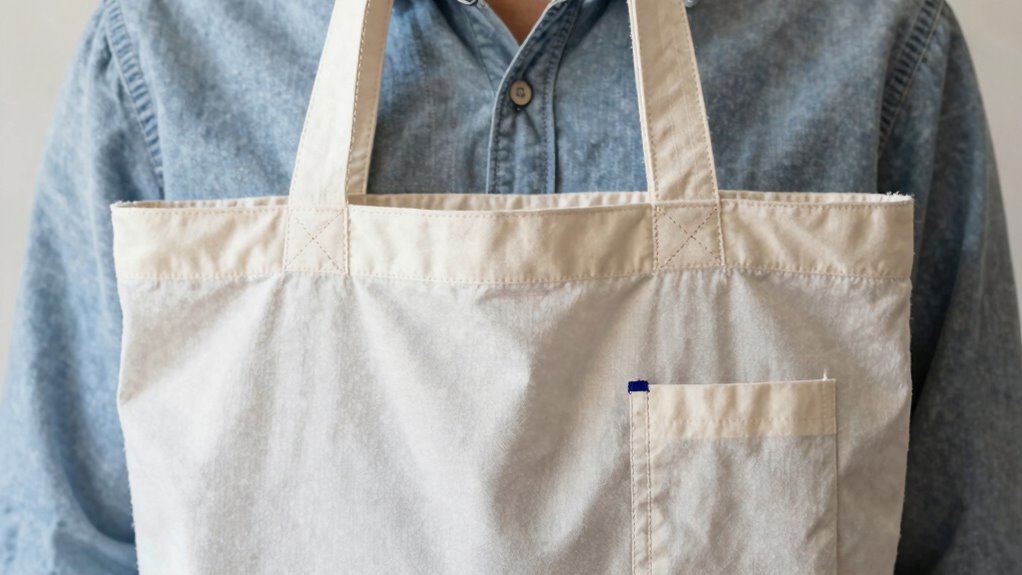
Adding personalized touches like pockets and custom handles transforms your tote from simple to unique. Start by choosing the right fabric selection that complements your style and needs. Then, consider design customization options to make your tote truly yours.
Adding personal touches like pockets and custom handles makes your tote uniquely yours.
Here are some ideas to get started:
- Add a front pocket using contrasting fabric for easy access to small items.
- Create sturdy handles with reinforced stitching, choosing a fabric that matches or contrasts for visual interest.
- Embellish with decorative details like embroidery, patches, or personalized labels.
These steps help you craft a functional, stylish tote tailored to your preferences. Personalization makes your upcycled shirt tote not just eco-friendly but also a reflection of your creativity.
Caring for Your Upcycled Shirt Tote to Keep It Looking Great
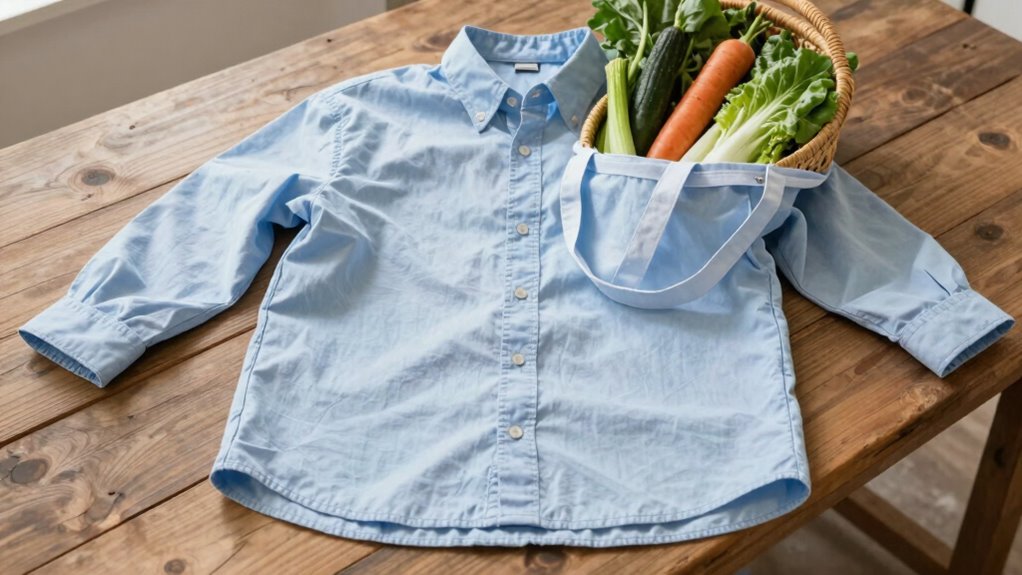
Proper care is essential to keep your upcycled shirt tote looking its best over time. To maintain its fabric, wash it gently in cold water and use mild detergent to prevent fading and wear. Avoid harsh chemicals that can damage the fabric. When stains occur, act quickly with stain removal techniques suited for fabric care—blot the stain instead of rubbing, and use a gentle stain remover or a mixture of water and vinegar. Always air dry your tote to prevent shrinking or fabric distortion, or tumble dry on low if necessary. Regularly inspecting and caring for your tote helps preserve its appearance and durability. With proper fabric care and prompt stain removal, your upcycled shirt tote will stay functional and stylish for many grocery trips ahead.
Benefits of Upcycling: Reduce Waste and Make a Unique Statement
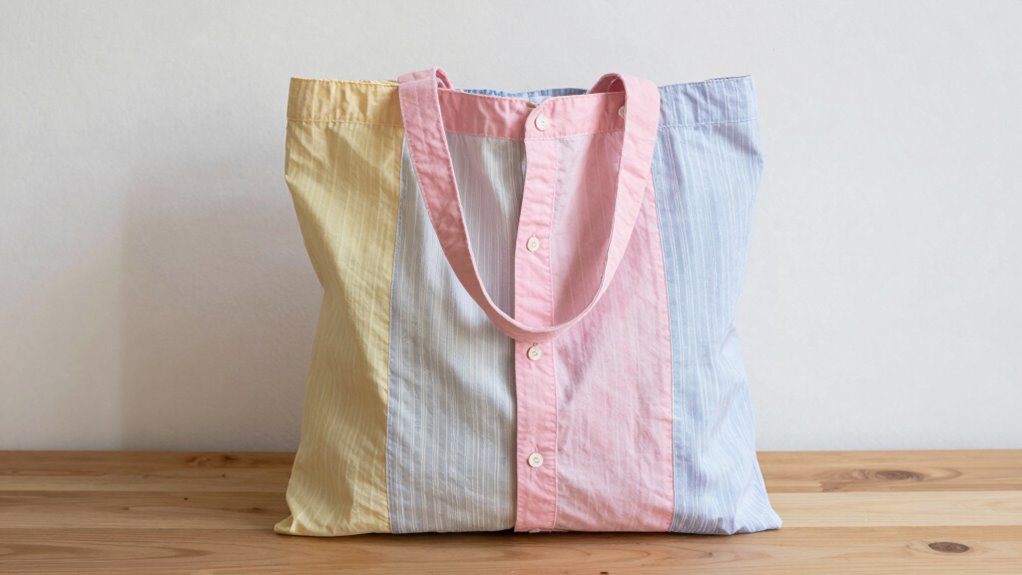
Upcycling your shirt tote not only extends the life of your clothing but also offers meaningful environmental benefits. By practicing creative reuse, you help reduce textile waste and lessen the demand for fast fashion, supporting sustainable fashion practices. This approach allows you to make a unique statement with a one-of-a-kind accessory that reflects your personality.
Here are some key benefits:
- Minimizes landfill waste by repurposing existing garments.
- Promotes sustainable fashion choices and reduces environmental impact.
- Encourages creativity, turning a simple shirt into a functional, stylish tote.
Upcycling empowers you to contribute positively to the environment while crafting something truly original. It’s an easy way to make a difference without sacrificing style or function.
Frequently Asked Questions
Can I Upcycle Shirts Made of Delicate Fabrics Like Silk?
Yes, you can upcycle shirts made of delicate fabrics like silk, but you need to take into account delicate fabric considerations and silk upcycling tips. Handle silk gently, use sharp scissors, and avoid excessive stretching or pulling. Reinforce seams with silk-safe stitches, and consider lining the tote for extra durability. With patience and careful techniques, you can create a stylish, functional grocery tote from delicate silk shirts.
How Long Does the Upcycling Process Typically Take?
The upcycling process usually takes about 30 minutes to an hour, depending on your skill level. If you’re experienced, you’ll complete it faster, likely closer to 30 minutes. Beginners might need up to an hour. Keep in mind, the time estimate includes gathering supplies, measuring, and sewing. With patience, you’ll turn your shirt into a functional tote quickly and enjoy the eco-friendly benefits of your upcycled creation.
Are There Any Safety Tips for Using Cutting Tools?
When using cutting tools, prioritize sharp tool safety by always handling them carefully and keeping blades pointed away from your body. Wear protective gear like gloves and safety glasses to prevent injuries from slips or flying debris. Make certain your workspace is clean and well-lit, and cut on a stable surface. Take your time, stay focused, and store tools properly after use to avoid accidents.
Can This Method Be Adapted for Larger or Smaller Shirts?
Imagine your tote as a chameleon, changing size to fit your needs. You can adapt this method for larger or smaller shirts by adjusting size and shape, ensuring fabric suitability. For bigger shirts, expand your cuts, and for smaller ones, tighten the seams. With a little creativity, you’ll craft a tote that’s perfectly tailored, turning any shirt into a versatile carrier that matches your shopping adventures.
What Are Eco-Friendly Dyes or Paints to Personalize the Tote?
You can personalize your tote with eco-friendly dyes like natural dyes derived from plants, roots, or berries, which are sustainable and non-toxic. Fabric paints made from natural ingredients also work well, allowing you to create vibrant designs without harming the environment. Both options help you customize your tote stylishly while reducing your ecological footprint, making your upcycling project even more eco-conscious and unique.
Conclusion
By upcycling that old shirt into a grocery tote, you’re not just creating a bag — you’re revolutionizing the way you shop, saving the planet one stitch at a time. Imagine turning everyday waste into a stunning, eco-friendly masterpiece that turns heads everywhere you go. This simple project transforms your trash into treasure, making you a hero for the environment. So go ahead, craft your ultimate reusable tote and make waste-watching world-changing!