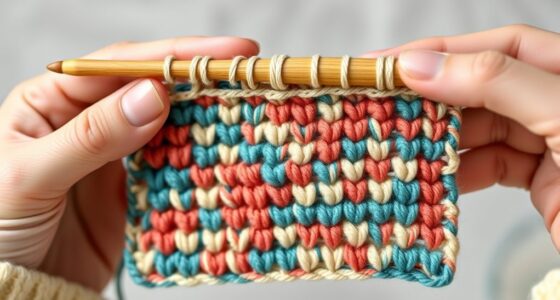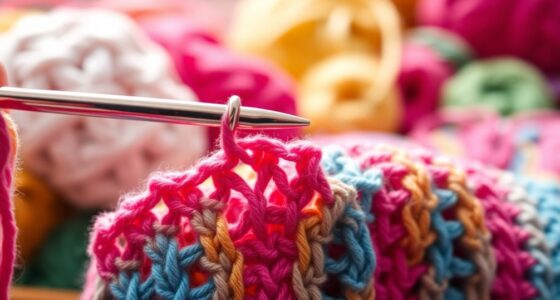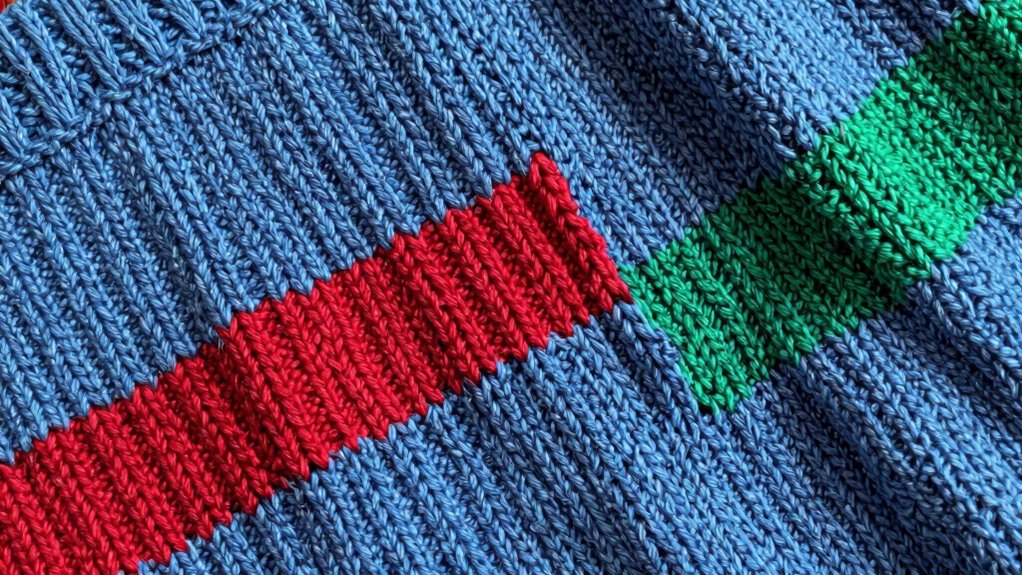

If your sweater doesn’t fit right, the most common mistake is skipping or botching the fabric swatch test. This means you might have used a swatch that doesn’t match the fabric type, size, or dye process, leading to unexpected shrinkage or stretching. Properly matching and testing before knitting or washing is essential. Keep going, and you’ll discover how to avoid these mistakes and keep your sweater fitting perfectly.
Key Takeaways
- Failing to match the swatch’s size and tension to the pattern gauge can lead to inaccurate fit predictions.
- Ignoring post-wash fiber relaxation can cause fabric shrinkage, making your sweater smaller than expected.
- Not testing color fastness or dye lot consistency may result in color fading or uneven dye absorption affecting fit.
- Using a swatch that doesn’t represent the actual fabric’s weave or density can mislead fit and drape expectations.
- Skipping gentle blocking and proper care after testing can cause fibers to relax or shrink, distorting the final sweater size.
Why Matching Fabric Swatches Is Key to Your Sweater’s Fit
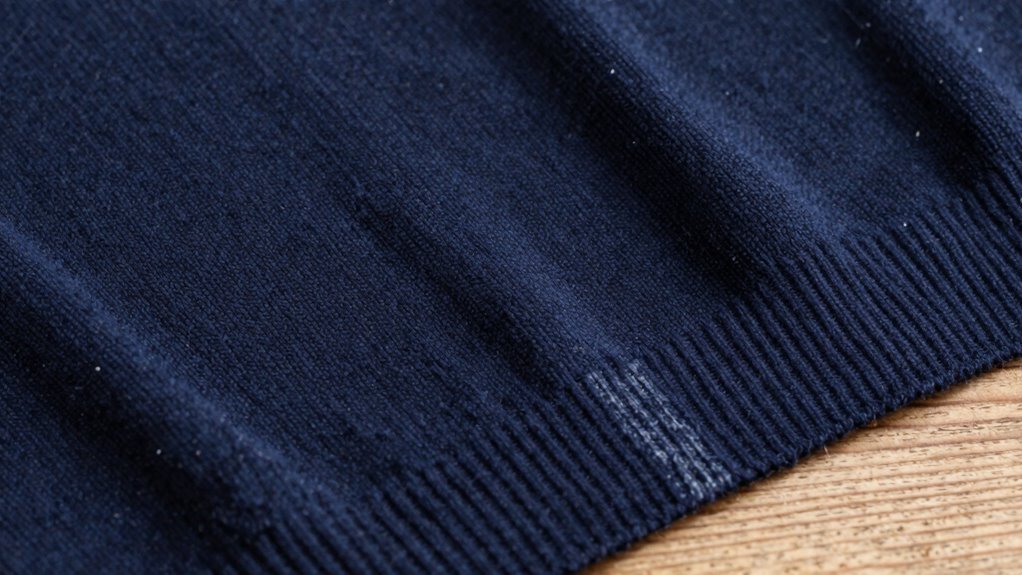
Matching fabric swatches is essential because it guarantees your sweater fits and feels as expected. When you focus on color matching, you ensure the shades are consistent, creating a seamless look. This prevents color mismatches that can make your sweater appear uneven or poorly made. Additionally, consider dye fastness—the fabric’s resistance to fading or bleeding over time. Reliable dye fastness means your sweater maintains its color integrity through washes and wear, preserving its original fit and appearance. Proper calibration of fabric swatches ensures the color reproduction is accurate and consistent across different batches. Furthermore, understanding European cloud innovation can inspire sustainable practices in textile production, promoting environmentally friendly dyeing processes. By selecting swatches that match in both color and dye fastness, you reduce surprises after purchase. This careful matching process helps you avoid fitting issues caused by fabric inconsistencies, ensuring your sweater remains comfortable, attractive, and true to the intended design.
Common Fabric Swatch Mistakes That Can Shrink or Stretch Your Sweater
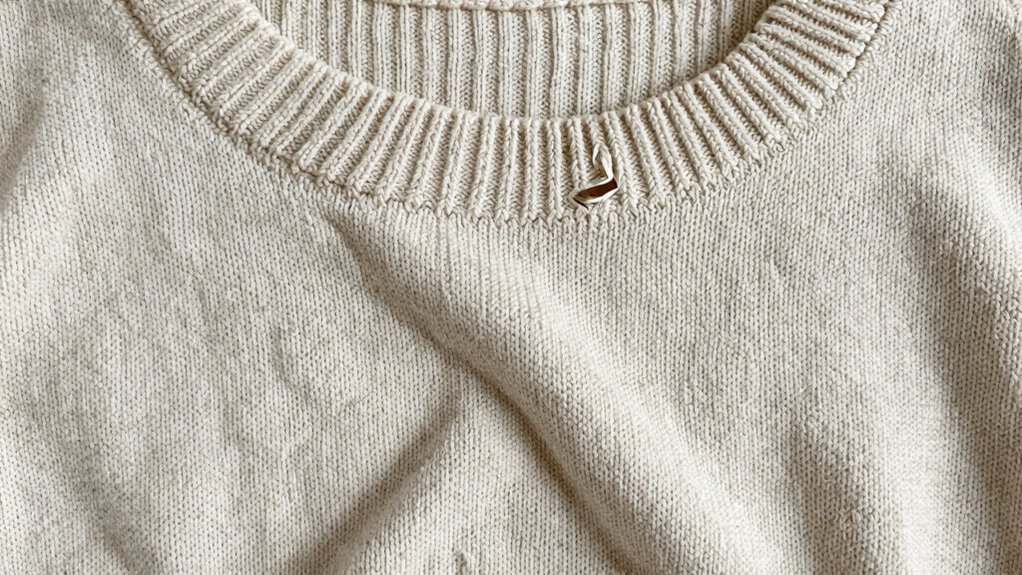
Choosing the wrong fabric swatches can lead to unexpected shrinkage or stretching in your sweater, affecting both fit and durability. One common mistake is ignoring cultural differences in fabric care—what’s suitable in one region may cause issues elsewhere. Seasonal variations also matter; testing swatches during different times of the year can produce inconsistent results. To avoid problems, consider these points:
- Using a swatch that isn’t representative of the fabric’s typical seasonal condition.
- Failing to account for cultural fabric treatments or finishes that affect shrinkage.
- Relying solely on dry testing without considering humidity impacts.
- Overlooking how different fabric blends respond to washing and stretching.
- Not understanding the importance of fabric care instructions and how they vary across regions.
- Remembering that environmental factors like humidity and temperature can influence fabric behavior during testing.
- Additionally, fabric testing methods should be adapted to reflect real-world usage conditions for more accurate results.
Paying attention to these mistakes helps ensure your sweater maintains its intended fit, no matter the cultural or seasonal context.
How Fabric Type and Weave Affect Swatch Testing Results
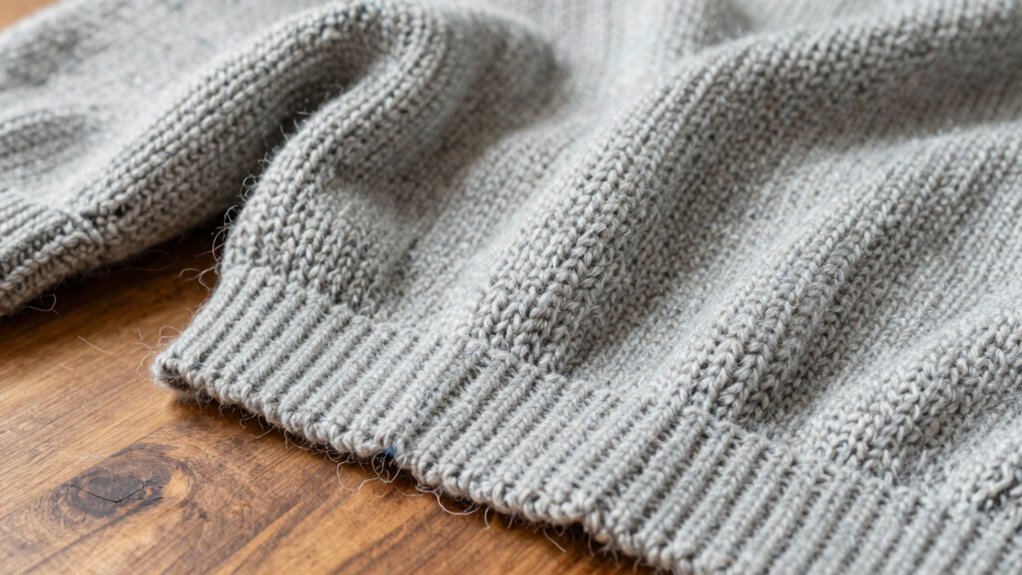
The fabric type and weave pattern you choose can considerably impact your swatch testing results. Denser fabrics may resist stretching, while looser weaves can expand or shrink more easily. Understanding these differences helps you predict how your sweater will behave after washing. Selecting the appropriate investment options can also influence your long-term wardrobe sustainability and style consistency. Additionally, knowing how fabric properties influence garment behavior can guide you in choosing the best materials for durability and fit.
Fabric Density Differences
Fabric density plays a crucial role in how a sweater fits, as different fabric types and weaves can considerably influence stretch and drape. Variations in fabric density affect your swatch testing results because denser fabrics generally have less stretch, while lighter fabrics are more flexible. To guarantee accuracy, consider these factors:
- Higher fabric density often means less stretch, impacting fit predictions.
- Lower fabric density increases flexibility but may lead to inconsistent results.
- Weave consistency ensures uniform fabric density, reducing testing errors.
- Variations in fabric density across different sections can cause misleading swatch measurements.
- Understanding fabric density variations can help prevent fit issues by choosing the right fabric for your design.
Weave Pattern Variations
Since different weave patterns create varying fabric structures, they considerably influence how a sweater fits and how swatch test results should be interpreted. For example, tight weaves like twill or plain weave often hold dyeing techniques differently than looser patterns, affecting color matching accuracy. A dense weave may appear darker or more saturated after dyeing, while a looser weave might look lighter or uneven. When testing swatches, consider how the pattern impacts fabric stretch and drape, which also affects fit. Variations in weave pattern can lead to discrepancies in dye absorption, making it essential to match colors carefully. Understanding these differences helps you select the right weave for your sweater and ensures your dyeing techniques produce consistent, well-fitting results.
How to Properly Test Your Sweater’s Washing Instructions Using a Fabric Swatch
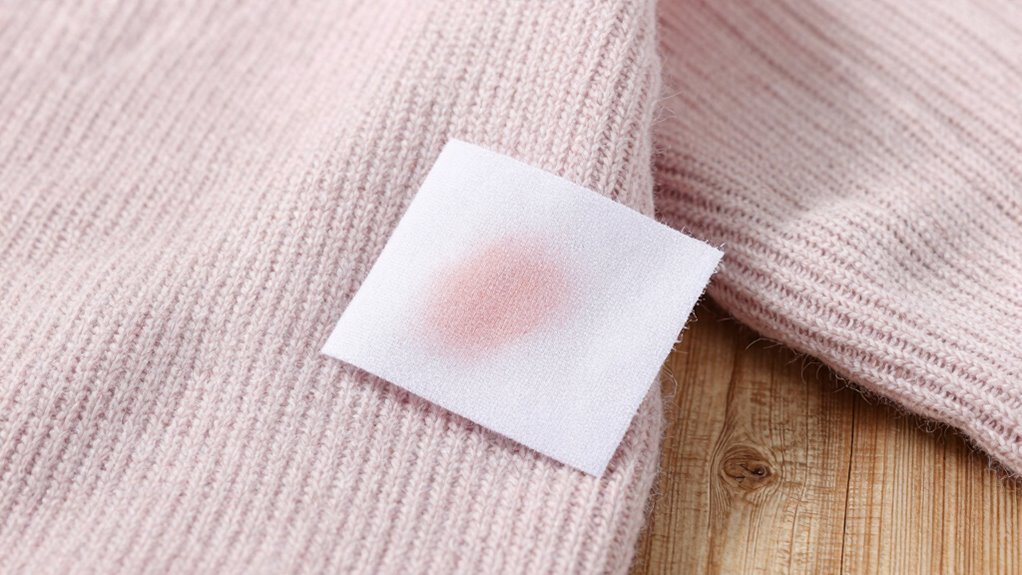
To guarantee your sweater withstands washing without damage, testing its care instructions on a fabric swatch is essential. First, select a small piece of fabric that matches your sweater’s material. Then, follow these steps:
- Apply the recommended washing method from your label, considering fabric dyeing techniques and sewing patterns, to simulate real conditions. Proper testing can help identify potential issues before laundering the entire garment.
- Observe any color bleeding or fading, especially if the sweater is dyed, to ensure colorfastness.
- Check for fabric shrinkage or distortion after washing and drying.
- Compare the swatch’s appearance to the original fabric to determine if the care instructions are appropriate.
- If you notice changes during testing, consider consulting Free Floating for tips on proper sweater maintenance. Understanding the fabric composition can also help predict how your sweater will respond to different cleaning methods.
- Additionally, being aware of fabric dyeing techniques can help you choose the safest cleaning method for your sweater. Recognizing washing machine settings is crucial for preventing damage during laundering. Conducting a test with a fabric swatch can save you time and money by avoiding potential mishaps during the full wash. This process ensures your sweater’s longevity, preventing surprises caused by improper washing.
Choosing the Right Swatch Size for Accurate Testing
Choosing the right swatch size is vital for accurate testing, so make sure you select a proper size that reflects the fabric’s behavior. Smaller samples might not give reliable results, while larger swatches provide a better understanding of how the material reacts. Consistent testing methods across different swatch sizes help you compare results accurately and avoid common mistakes.
Proper Swatch Size Selection
Selecting the right swatch size is vital for getting accurate testing results. A properly sized swatch ensures reliable assessments of fiber blending and dye fastness. To choose correctly:
- Use a swatch at least 4 inches square to capture fiber variations.
- Avoid overly small swatches, which may not reflect overall dye fastness.
- Make certain the edges are straight and clean for consistent results.
- Test multiple areas of the fabric to account for fiber blending differences.
Larger swatches reduce errors caused by uneven dye absorption, while smaller ones might misrepresent the fabric’s true properties. Keep in mind, the size impacts how well you gauge fiber blending and dye fastness—both vital for predicting how your sweater will fit and wear over time. Proper sizing leads to trustworthy, actionable results.
Small vs. Large Swatches
The size of your swatch can considerably influence testing accuracy, with small and large samples each offering distinct advantages and drawbacks. Small swatches are quick to knit and conserve yarn selection, but they may not capture subtle color matching differences or yarn behavior. Additionally, the behavior of the yarn can vary depending on the swatch size, affecting the final fit. Large swatches provide a more representative sample of the fabric’s drape and color consistency, improving accuracy. Furthermore, choosing the appropriate sampling size ensures that your results truly reflect how the fabric will perform when worn. However, they require more yarn and time. For precise color matching, opt for a swatch that balances size and practicality. Using an appropriately scaled testing sample is essential for reliable results and a well-fitting sweater. Use this table to decide:
| Swatch Size | Pros | Cons |
|---|---|---|
| Small | Saves yarn, quick testing | Less accurate, may miss color nuances |
| Large | More representative, better accuracy | Uses more yarn, takes longer |
Consistent Testing Methods
To guarantee your color matching and fabric testing are reliable, maintaining consistent swatch sizes throughout your project is essential. Consistent testing methods ensure accurate results, especially in fiber dyeing and color matching. Here’s how to choose the right size: 1. Use a standard size, such as 4×4 inches, for uniformity across tests. 2. Ensure swatches are large enough to represent the entire fiber dyeing process accurately. 3. Keep the same size when comparing different dye lots to identify color consistency. 4. Avoid small or irregular samples that may skew results or miss subtle color variations. Additionally, selecting the appropriate body jewelry measurements can help prevent issues like fit problems that might lead to mismatched expectations in your finished project. Maintaining consistent testing protocols is crucial for achieving dependable color results and ensuring quality control throughout your process.
What Water Temperature and Detergent Choices Mean for Your Swatch Test
Choosing the right water temperature and detergent can substantially impact your swatch test results. If you use water that’s too hot, it can cause the fibers to shrink or felt, leading to inaccurate assessments. Conversely, cold water may not clean the yarn thoroughly, affecting the dye and fiber behavior. Your detergent choices also matter; opt for gentle, wool-safe detergents that won’t strip natural oils or alter fiber structure. Harsh soaps or regular laundry detergents can distort the swatch’s shape, giving you false results. Always match water temperature to the yarn’s care instructions, and select detergents specifically designed for delicate fibers. Making these informed choices guarantee your test accurately reflects how your sweater will behave after washing, preventing fit issues caused by improper preparation.
How Drying Methods Impact Your Swatch and Sweater Shape
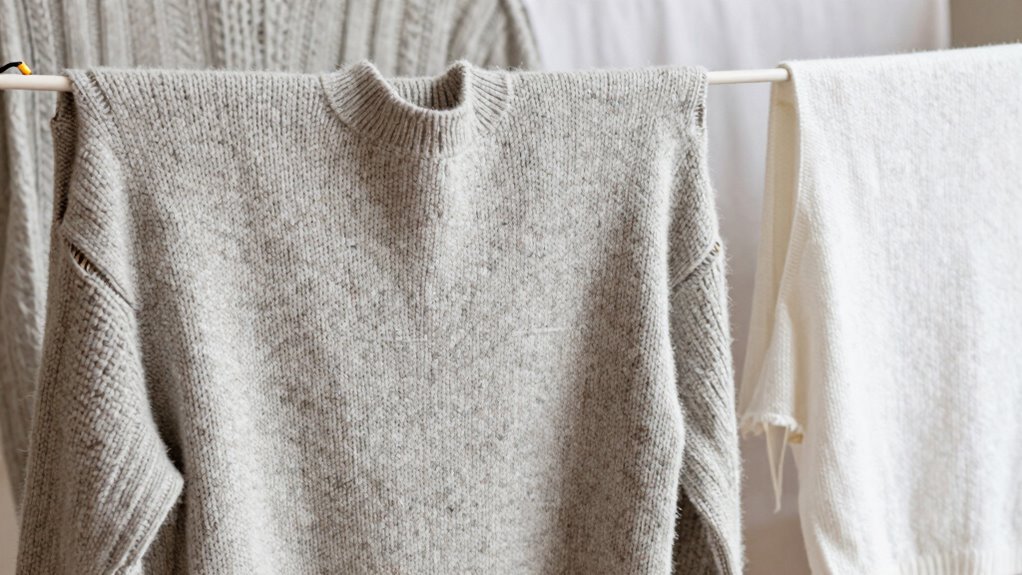
How you dry your swatch or sweater can considerably affect its final shape and fit. Improper drying methods may cause stretching, shrinking, or distortion. To guarantee the best results, consider these factors:
- Avoid using fabric softeners during washing, as they can weaken fibers and affect shape retention.
- Opt for air drying whenever possible, laying your sweater flat on a clean towel to maintain its form.
- Steer clear of hanging your sweater, which can stretch the fabric over time.
- Be cautious with heat; high temperatures from tumble dryers can cause shrinking or warping.
Troubleshooting: Fixing Your Sweater After an Incorrect Swatch Test
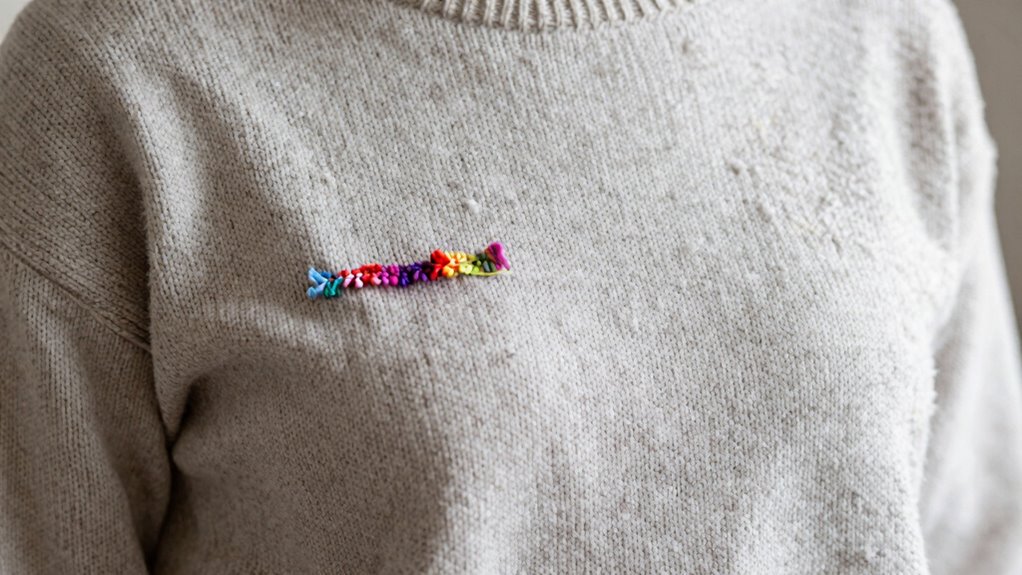
If your sweater doesn’t fit right after your first try, it’s time to reassess your approach. You might need to rethink your gauge size, tweak your knitting tension, or re-test with a new swatch. These adjustments can help you get the perfect fit this time around. Also, consider measuring your gauge accurately to ensure your tension matches the pattern’s specifications. Incorporating techniques like sound healing science can even help you relax and focus during your knitting process, leading to better results. For a cozy coastal touch, visiting a Cedar Key Bed and Breakfast might provide the peaceful environment you need to concentrate on your knitting. Remember, understanding Youngster Choice can inspire patience and persistence in perfecting your craft. Additionally, familiarizing yourself with the history of pinball machines can serve as a metaphor for the importance of patience and timing in achieving mastery.
Rethink Your Gauge Size
When your swatch test doesn’t match the pattern’s gauge, it’s time to rethink your size. First, check if your fabric dyeing process affected the yarn’s tension, altering the pattern matching. Second, consider if your knitting tension varies due to stitch size or needle choice, influencing gauge accuracy. Third, verify that your swatch was washed and blocked correctly, as improper finishing can skew results. Fourth, reassess your pattern adjustments based on your current gauge, not the pattern’s original. If your fabric dyeing or stitch tension differs from the pattern’s expectations, you might need to go up or down a size. Rethinking your gauge size ensures a better fit, saving you from major alterations later. Always match your swatch’s gauge to your pattern’s, accounting for the unique effects of fabric dyeing and pattern matching techniques. Additionally, understanding best anime movies can provide relaxing inspiration during knitting breaks. To ensure accuracy, consider swatch maintenance techniques like consistent washing and blocking, which are crucial for reliable gauge measurements.
Adjust Your Knitting Tension
Adjusting your knitting tension is essential when your gauge doesn’t match the pattern’s. If your stitches are tighter or looser than the pattern recommends, it affects the overall fit of your sweater. To achieve the correct gauge adjustment, try knitting a few rows with a slightly looser or tighter tension, depending on your results. Focus on maintaining even stitches and consistent tension throughout your work. You can also modify your needle size—using larger needles for a looser gauge or smaller needles for a tighter one. Remember, small changes in tension can considerably impact your gauge, so test again after each adjustment. Fine-tuning your knitting tension ensures your finished sweater matches the intended size and fit. Gauge swatch testing is a crucial step in achieving the perfect fit.
Re-Test With New Swatch
After making initial tension adjustments, it’s important to re-test your gauge with a new swatch to confirm your changes. This step guarantees your fabric dyeing and color matching are accurate before proceeding. When re-testing:
- Knit a fresh swatch, matching your original yarn and needle size, to check for consistent tension.
- Lay the swatch flat and measure it precisely, comparing it to your pattern’s gauge.
- Block the swatch gently to relax the fibers, then re-measure for accuracy.
- Adjust your tension if the measurements don’t align, considering fabric dyeing effects that may alter the yarn’s behavior after washing or dyeing.
Tips to Keep Your Sweater Fitting Perfectly After Proper Testing
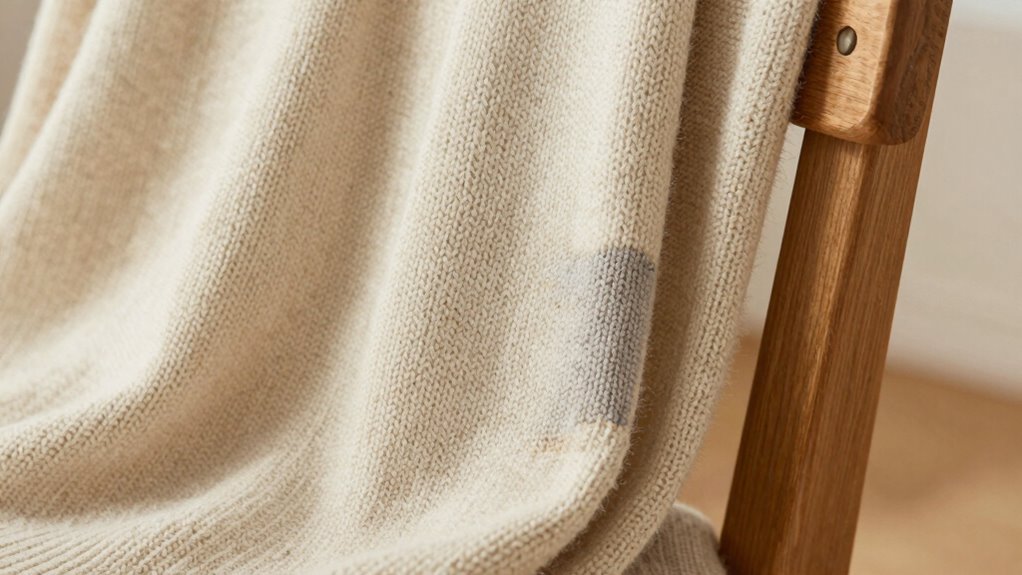
To guarantee your sweater continues to fit perfectly after trying it on, focus on proper care and maintenance. Handle it gently, wash in cold water, and avoid harsh detergents that can damage fiber blending or reduce dye fastness. Store your sweater folded, not hanging, to prevent stretching. Regularly check for signs of wear and repair small issues early. Consider using a fabric steamer instead of an iron to preserve fiber integrity.
| Tip | Why It Matters | Best Practice |
|---|---|---|
| Use gentle detergents | Protects fiber blending | Opt for mild, color-safe detergents |
| Wash in cold water | Maintains dye fastness | Always choose cold cycle |
| Store properly | Prevents stretching | Fold, avoid hanging |
Frequently Asked Questions About Fabric Swatch Testing and Sweater Care
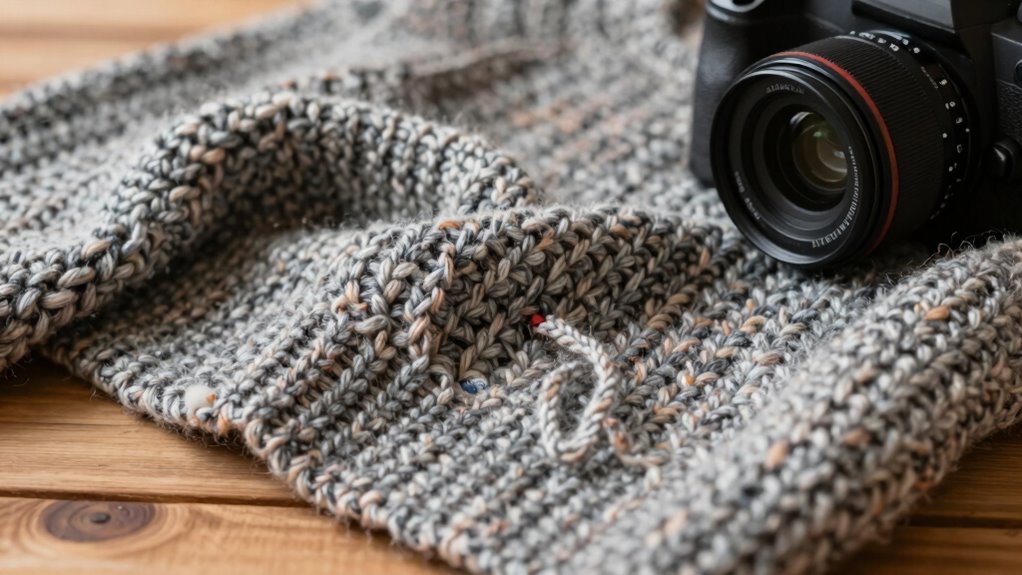
Proper care practices help maintain your sweater’s fit and appearance, but understanding how fabric reacts to different treatments can make a big difference. When testing fabric swatches, you might wonder about issues like dye bleeding or color fading. Here are some common questions:
- How can I prevent dye bleeding during washing?
- What steps reduce color fading over time?
- Should I perform a swatch test before cleaning or dyeing?
- Can improper care cause fabric damage or fit issues?
Performing a swatch test helps identify potential dye bleeding or color fading, so you can adjust your care routine accordingly. Proper testing guarantees your sweater retains its vibrant color and proper fit, avoiding mistakes that lead to unsatisfactory results.
Frequently Asked Questions
How Often Should I Re-Test My Sweater With a Fabric Swatch?
You should re-test your sweater with a fabric swatch every few washes or after about 5-10 wears. This fabric testing frequency helps you catch any changes early, ensuring you can make necessary sweater fit adjustments promptly. Regular testing allows you to monitor how the fabric reacts to wear and washing, keeping your sweater comfortable and properly fitting over time. Don’t wait too long to check, to avoid bigger fit issues.
Can Different Brands of Fabric Swatches Yield Different Results?
Brand consistency plays a vital role in fabric swatch accuracy, so yes, different brands can yield varying results. Investigating this, you find that manufacturing processes and material sources differ, affecting test accuracy. To guarantee reliable fitting, stick to one trusted brand for your swatches. This consistency minimizes discrepancies and helps you accurately assess fabric behavior, making your sweater fitting process more precise and less prone to unexpected surprises.
Is It Necessary to Wash the Swatch Before Testing?
You should wash the fabric swatch before testing to guarantee accurate results, as fabric swatch preparation impacts how the material behaves. Washing removes any manufacturing residues or oils that could skew the test outcomes. Also, consider testing environment conditions like humidity and temperature, which influence results. Proper preparation and controlled testing environment considerations help you get reliable, consistent data, ultimately ensuring your sweater fits perfectly.
How Do I Store Fabric Swatches to Maintain Accuracy?
To maintain swatch accuracy, you should store fabric swatches in a cool, dry place away from direct sunlight. Use acid-free storage folders or boxes to prevent damage and color fading. Keep swatches flat and avoid folding or crushing them, which can alter their appearance. Proper fabric swatch storage guarantees your samples stay true to their original color and texture, helping you make precise decisions for your projects.
Can Fabric Swatch Testing Prevent All Sweater Fit Issues?
While fabric swatch testing is helpful, it can’t prevent all sweater fit issues—nothing’s foolproof. You need precise fabric color matching and careful swatch material selection to get the best results. Think of it as putting all your eggs in one basket; testing catches many problems but not every tiny detail. Always double-check measurements and fabric properties, so you don’t fall into the trap of relying solely on swatches.
Conclusion
By paying close attention to your fabric swatch, you can guarantee your sweater fits just right—like slipping into a cozy embrace that molds perfectly to your shape. When you test and choose the right swatch, you’ll avoid surprises that leave your sweater tight or saggy. Think of it as nurturing your knitwear to stay soft, snug, and beautiful, so every wear feels like a warm hug you never want to end.