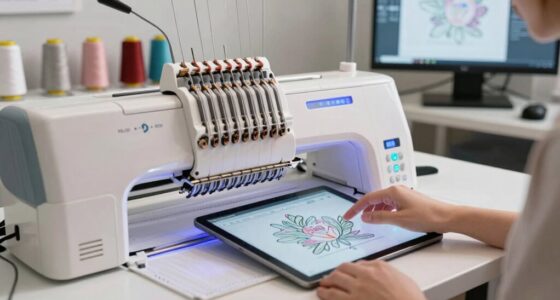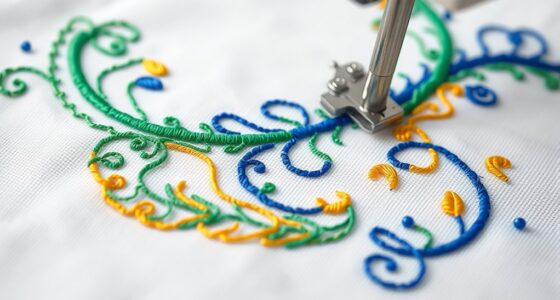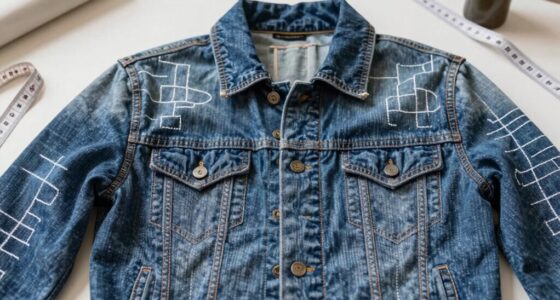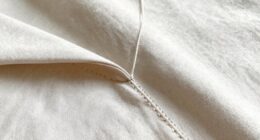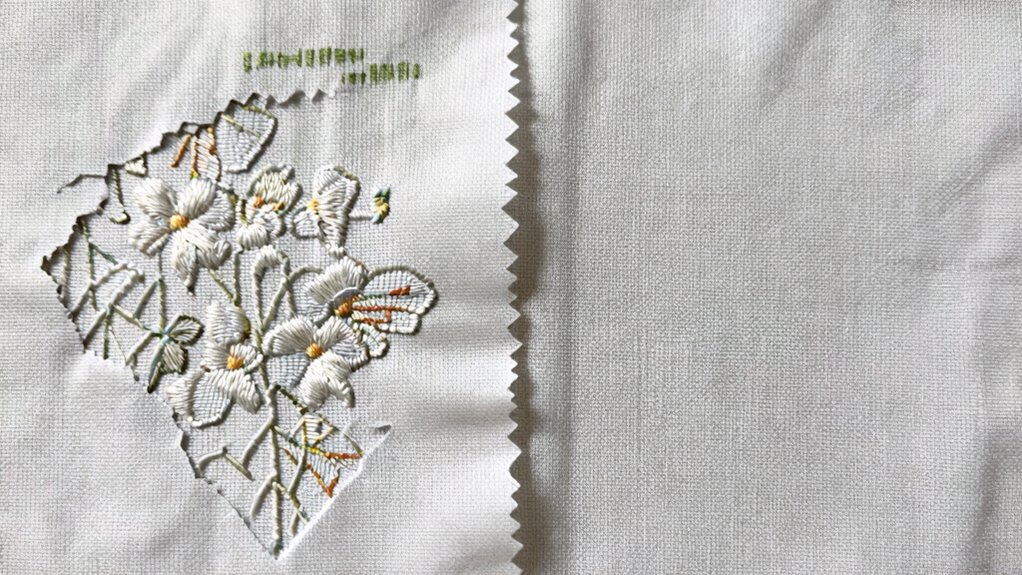

Choosing the right backing in embroidery is key to ensuring your design looks professional and lasts through washes and wear. It supports your stitches, keeps fabric flat, and prevents puckering or distortion. Different stabilizers suit various fabrics and project types, so selecting the proper one helps avoid uneven edges or damage. When you understand how backing affects your final outcome, you’ll create more durable, polished projects—if you keep exploring, you’ll find even more useful tips.

Get business pricing on tools and workshop supplies
- Business-only prices and quantity discounts
- Tax-exempt purchasing
- Multiple users, one account, clear invoices
Key Takeaways
- Proper backing supports stitches, ensuring a smooth, professional appearance and preventing puckering or distortion.
- Different stabilizers suit specific fabrics and designs, impacting the durability and finish of the embroidery.
- Correct backing choice facilitates neat trimming, framing, and finishing, enhancing overall presentation.
- Stabilizer compatibility influences how well embroidery withstands washing, wear, and long-term use.
- Selecting the right backing aligns with project goals, ensuring a durable, high-quality, and aesthetically pleasing result.

Have you ever wondered how the choice of backing can impact the final look and durability of your embroidery? The backing you select plays a crucial role in supporting your stitches, ensuring they lay flat and hold their shape over time. Whether you’re working on a delicate fabric or a sturdy canvas, the right embroidery stabilizers can make all the difference. These stabilizers provide the necessary support during stitching, preventing puckering, shifting, or distortion. Without proper backing, even the most carefully designed embroidery can look uneven or come apart after a few washes. Additionally, understanding the different types of CAD papers and 3D printing technologies can help you create more precise and professional finishes. Proper backing also enhances the efficiency of your workflow by reducing re-stitching or corrections, saving time and materials. Recognizing the importance of stabilizer compatibility ensures that your chosen backing aligns well with your fabric and design, leading to better results.
Choosing the correct backing is also essential for the finishing techniques you plan to use. Different types of stabilizers—tear-away, cut-away, and wash-away—are suited to specific projects and fabrics. Tear-away stabilizers are ideal when you want a clean finish on lightweight fabrics, as they can be easily removed after embroidery. Cut-away stabilizers are better for more substantial or stretchy fabrics, providing long-term support by remaining in the finished piece. Wash-away stabilizers dissolve in water, making them perfect for delicate fabrics or intricate designs that need a seamless appearance. Your decision influences not only how well the embroidery holds up but also how smooth and professional the final product looks. It’s important to match the stabilizer type to the fabric weight and the complexity of your design for optimal results.
Choosing the right stabilizer ensures a professional finish and lasting durability for your embroidery projects.
In addition, the backing you choose impacts your finishing techniques. For example, if you’re creating a patch or appliqué, you might opt for a sturdy cut-away stabilizer that can be trimmed close to the stitches without damaging the design. For more decorative embroidery on garments, tear-away stabilizers often suffice, as they’re removed once the stitching is complete. The stability provided by the right embroidery stabilizers also affects how neatly you can trim or frame your work, reducing fraying or fraying edges that could ruin the finished piece. Selecting the appropriate stabilizer also helps in achieving professional-looking results with minimal effort. Moreover, understanding how different stabilizers react to washing and wear can help you choose the best option for your project’s longevity.
Ultimately, your backing choice influences the entire process—from the initial stitching to the final presentation. It’s not just about making your embroidery look good now but ensuring it lasts through washes and wears. Proper backing supports the finishing techniques you use, helping you achieve a polished, durable result. So, before you start stitching, consider the fabric, design, and end-use of your project. Picking the appropriate embroidery stabilizers and understanding how they interact with your finishing techniques will lead to a more professional, long-lasting outcome that truly showcases your skills.
As an affiliate, we earn on qualifying purchases.
Frequently Asked Questions
How Do I Choose the Right Backing for Delicate Fabrics?
To choose the right backing for delicate fabrics, start by selecting a lightweight fabric stabilizer that offers support without adding bulk. An adhesive backing can help keep the fabric stable during embroidery but test it first to avoid damage. You want something gentle yet effective, ensuring your delicate fabric stays smooth and undistorted. Always do a small test embroidery to check how the backing interacts with your fabric before proceeding.
Can Backing Choices Affect Embroidery Durability Over Time?
Backing choices greatly impact embroidery durability over time. You might think fabric quality is enough, but backing stability ensures your stitches stay intact longer. When you select a backing that offers proper support and is compatible with your thread, you prevent puckering and unraveling. This combination helps maintain your embroidery’s appearance, even with frequent washing or wear. So, prioritize backing stability and thread compatibility to keep your embroidery looking fresh and durable.
Are There Eco-Friendly Backing Options Available?
Yes, eco-friendly backing options are available. You can choose sustainable materials like organic cotton or bamboo, which are biodegradable and reduce environmental impact. These biodegradable options offer a great alternative to traditional backings, helping you create embroidery projects that are both durable and environmentally conscious. By selecting eco-friendly backings, you support sustainability and contribute to reducing waste, making your embroidery finishing more eco-conscious and responsible.
How Do Backing Types Influence Embroidery Machine Settings?
Backing types directly influence your embroidery machine settings by affecting backing stability and stitch tension. For stable backing, you might need to adjust the stabilizer’s tightness or increase stitch tension to prevent puckering or shifting. Different backings, like tear-away or cut-away, require specific tension adjustments to guarantee the design stays crisp. By choosing the right backing, you optimize your machine’s performance, resulting in cleaner, more professional embroidery results.
What Are the Cost Differences Between Various Backing Materials?
You’ll find that the cost differences between backing materials vary widely. For example, embroidery stabilizers typically cost between $0.10 and $0.50 per yard, while backing adhesives can be more expensive, ranging from $0.20 to $1.00 per yard. Choosing the right backing depends on your project needs. Higher-quality stabilizers offer better support, but they may increase costs. Balancing quality and budget is key to effective embroidery finishing.
Conclusion
Choosing the right backing isn’t just a detail—it’s vital for a flawless finish. Your backing choice impacts durability, appearance, and overall quality, making it a key step in embroidery finishing. Did you know that 85% of embroidery failures are linked to improper backing selection? By paying attention to your backing, you guarantee your designs not only look great but last longer. So, next time, give this step the attention it deserves for professional results.
Fall yard work Picks
leaf blowers
As an affiliate, we earn on qualifying purchases.