Understanding fabric grain and nap is essential for sewing successful projects. The grain shows the fabric’s weave direction, and cutting along it helps the garment keep its shape and drape well. Nap refers to the surface fibers like velvet or suede that must be aligned in the same direction for a uniform look and feel. Remembering these details prevents stretching, puckering, or uneven surfaces, ensuring your sewing results look professional—if you want to get the most out of your fabric, keep these points in mind.
Key Takeaways
- Fabric grain refers to the direction of woven or knitted fibers, affecting how the fabric drapes and maintains shape.
- Cutting along the grain ensures garments retain their intended form and reduces distortion over time.
- Nap describes the surface texture of fabrics like velvet or corduroy, which has a specific direction impacting appearance and feel.
- Proper nap alignment prevents patchiness, dullness, and uneven surface in finished sewing projects.
- Identifying grain and nap directions before cutting helps achieve professional, durable, and visually consistent sewing results.
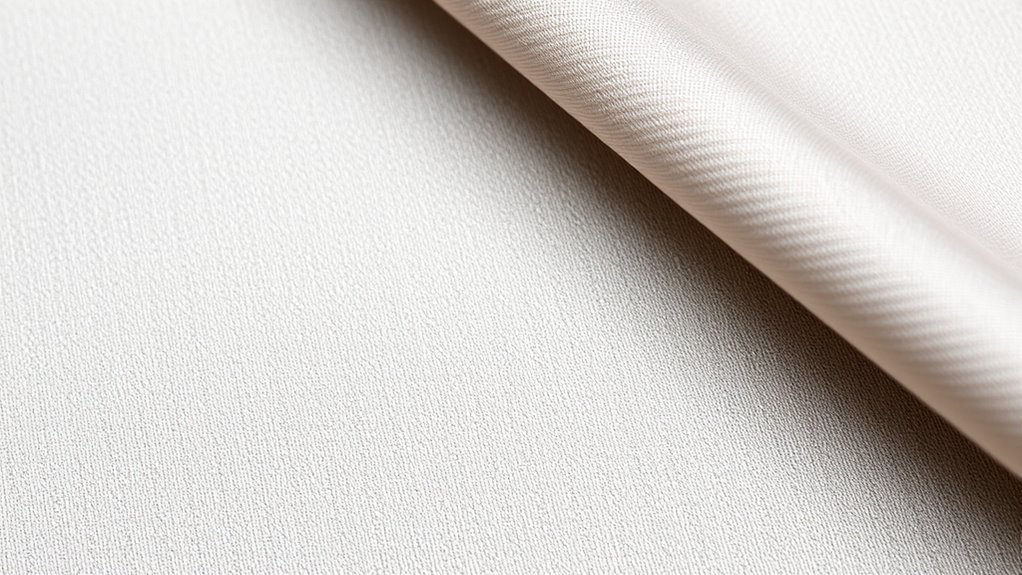
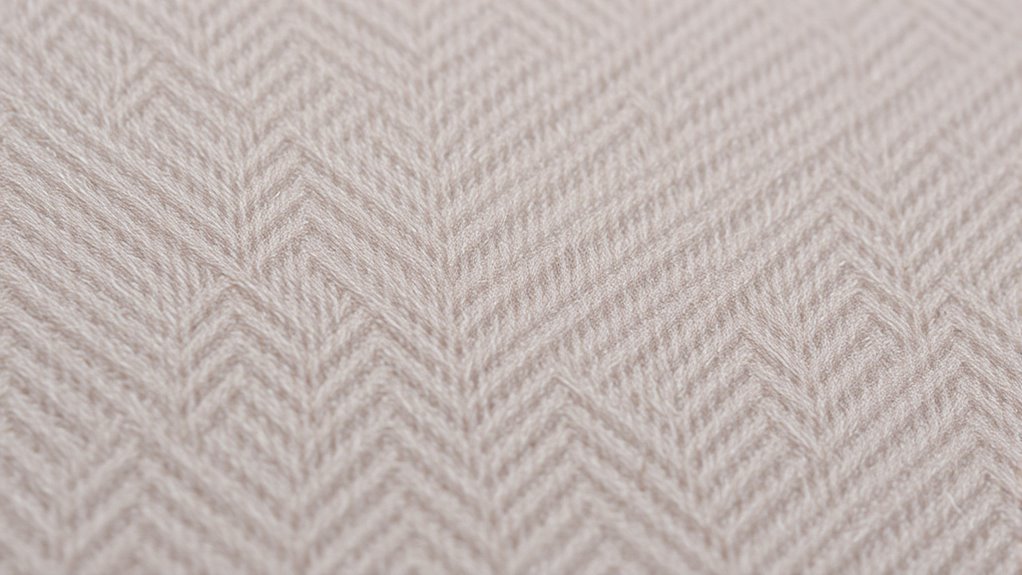
Have you ever noticed how fabric fibers run in specific directions, affecting the way a garment looks and feels? That’s because fabrics are woven or knitted with fibers aligned in particular ways, creating what’s called the fabric grain. Understanding this is vital to sewing well. When you work with fabric, you need to pay attention to fabric grain stability—that is, how well the fabric maintains its shape and structure along different grain lines. If you cut against the grain, your project might stretch out of shape or hang unevenly, making finishing touches tricky. On the other hand, cutting along the grain ensures your garment retains its intended form and drapes nicely. The stability of the fabric grain influences not just how your finished piece looks but also how durable it will be over time.
Alongside grain stability, nap direction importance plays an essential role, especially with fabrics that have a pile, like velvet, corduroy, or suede. Nap refers to the fuzzy or raised fibers on the surface of these fabrics, and their direction impacts both appearance and feel. When you’re cutting fabric with nap, it’s vital to align all pieces in the same direction. If you ignore the nap, your fabric may look uneven or patchy once sewn together. For example, a velvet dress with mismatched nap directions might look dull in some areas and shiny in others, ruining its overall look. The nap’s direction also affects how the fabric feels against your skin; running the fibers in the same direction creates a uniform surface that looks polished and feels comfortable.
Knowing how to identify the grain and nap direction helps you avoid common sewing mistakes. For instance, if you cut fabric with the grain running at an angle or against the nap, you risk stretching or puckering when you sew. It’s a good habit to always check the grain line and nap direction before cutting. Use your fingers or a ruler to feel the grain and look at the fabric’s surface to determine nap orientation. When you do this correctly, your sewing process becomes smoother, and the finished product looks professional.
Frequently Asked Questions
How Can I Identify the Fabric Grain at Home?
To identify the fabric grain at home, start by laying your fabric flat on a smooth surface. Look for the selvage edges; the grain runs parallel to these. To check the crosswise grain, gently pull the fabric in different directions; the true crosswise grain will stay stable and resist distortion. Align your pattern pieces along the grain for better sewing results, ensuring your fabric’s grain is properly aligned.
Does Fabric Nap Affect How the Garment Feels?
You might think fabric nap doesn’t matter, but it actually influences how the garment feels. The fabric texture varies with the nap, making some areas softer or rougher, which influences overall comfort. When sewing, aligning the nap correctly ensures a smooth, consistent feel across your garment. Ignoring the nap can result in uneven texture and less comfortable clothing, so paying attention to it improves both fabric texture and your garment’s comfort.
Can Fabric Grain and Nap Be Adjusted During Sewing?
Yes, you can adjust fabric grain and nap during sewing by paying close attention to grain alignment and nap consistency. To guarantee proper alignment, pin and sew with the grain lines straight. For nap, press fabric in one direction before cutting and sewing, maintaining nap consistency. This helps the finished garment look polished and ensures the fabric drapes correctly, giving you a professional result.
Are Certain Fabrics More Prone to Grain Distortion?
Like a delicate dance partner, some fabrics are more prone to grain distortion, easily swayed by handling. Fabrics with a loose weave or those with a pronounced nap, such as velvet or silk, lack the inherent stability to resist shifting. These textiles demand gentle care and attentive handling to maintain their grain integrity, ensuring your sewing project stays true to its intended shape and drape.
How Does Fabric Grain Influence the Durability of a Sewn Item?
You’ll find that fabric grain directly influences the durability of your sewn item. When you sew along the true grain, it enhances fabric strength and ensures seam stability, making your project more resistant to wear and tear. If you neglect the grain, your seams may weaken and the fabric could distort over time. Paying attention to the grain helps your finished piece stay strong, stable, and long-lasting.
Conclusion
Understanding fabric grain and nap is like having a secret map for sewing success. When you pay attention to these details, your projects come out smoother and more polished—like a finely tailored suit. Ignoring them is like sailing without a compass, risking uneven seams and puckering. So, always check the grain and nap before cutting. It’s your shortcut to professional-looking results, making every stitch feel confident and your finished piece truly worth showing off.