
Using shelf dividers and fold systems helps you organize your fabrics so you can see everything at a glance. They keep your textiles neatly stacked and separated, reducing clutter and making selection quick. Color-coded labels and transparent bins enhance visibility, while structured folds prevent damage. Combining dividers with fold systems maximizes space and keeps your fabrics accessible. Stay tuned to discover even more tips to elevate your fabric storage and keep everything beautifully organized.

Get business pricing on tools and workshop supplies
- Business-only prices and quantity discounts
- Tax-exempt purchasing
- Multiple users, one account, clear invoices
Key Takeaways
- Use clear, labeled shelf dividers to separate fabric sections for quick identification.
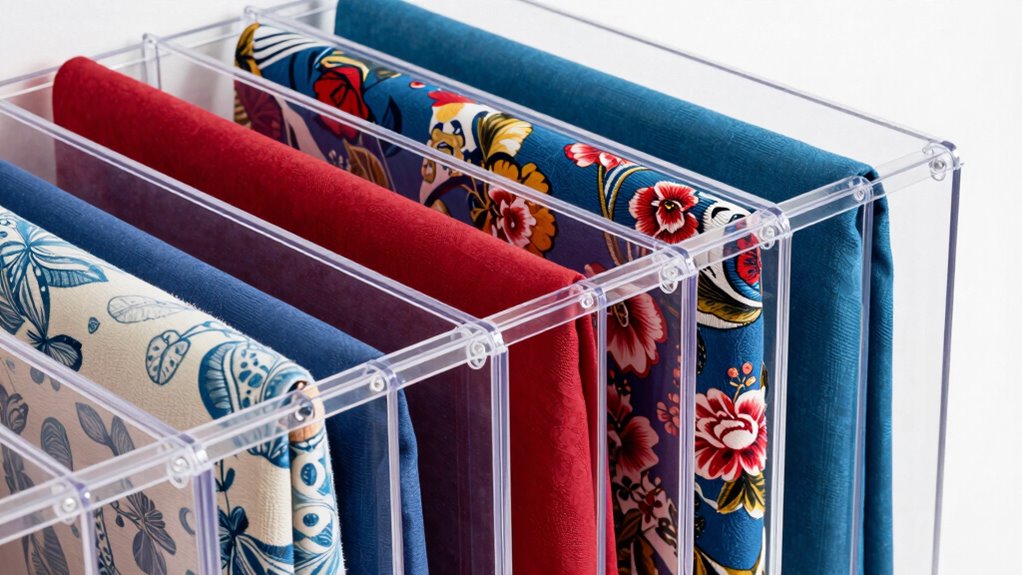
- Implement fold systems that display fabric edges visibly, allowing easy browsing.
- Incorporate transparent storage bins or sleeves to showcase delicate fabrics while protecting them.
- Opt for adjustable or stackable shelf dividers to accommodate various fabric sizes and maintain visibility.
- Combine color-coded labels with dividers to enhance fabric recognition at a glance.

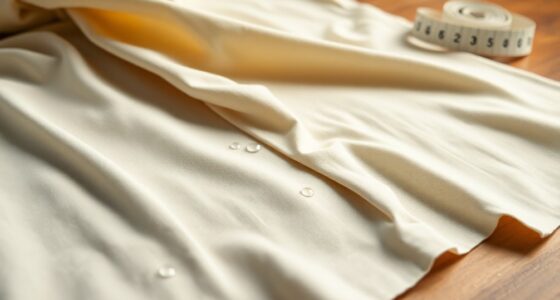
Fold systems complement shelf dividers by helping you store fabrics in a uniform way. Folding fabrics neatly and stacking them in designated sections ensures they stay tidy and visible. When you fold fabrics properly, you reduce the risk of creases and damage, and the uniform stacks make it easier to see all your options at a glance. Incorporating organization techniques like color-coding or labeling can further enhance visibility, letting you quickly pick the right fabric without rummaging through piles. Clear storage bins or fabric sleeves can also work well with fold systems, especially if you want to keep delicate or intricate textiles protected while still being easy to see.
You’ll find that the combination of shelf dividers and fold systems maximizes your storage space. Instead of wasting time searching or reorganizing every time you need a specific fabric, these methods streamline the process. As you develop a routine for folding and dividing, your shelves become a well-organized display rather than a mess. It’s especially helpful if you have a large fabric collection or if you’re working on projects that require quick access to multiple textiles. The key is to keep everything visible and accessible, which these organization techniques accomplish by reducing clutter and creating structure. Using fabric organization tips can further optimize your storage setup and maintain your system over time.
In addition to making your storage more efficient, shelf dividers and fold systems help preserve your fabrics’ quality. Proper folding prevents wrinkles and creases, and keeping fabrics separated with dividers reduces friction and potential damage. Regularly using storage solutions designed for textiles can also protect your fabrics from dust and pests. Implementing these strategies can help you maintain a clutter-free and organized space, making your fabric management more effective. Over time, you’ll notice how much easier it is to maintain your fabric collection when you have a clear system in place. This organized approach also promotes better fabric preservation by reducing wear and tear over time. Additionally, using labeling techniques can help you identify fabrics quickly and keep your system running smoothly. Not only does this save you time, but it also extends the life of your textiles, making your organization efforts worthwhile. Ultimately, these simple yet effective storage solutions turn a messy space into a clean, functional area where everything is easy to find and well-preserved.
Popular right now

Breville Bambino Espresso Machine, Brushed Stainless Steel

KitchenAid Classic Series 4.5 Quart Tilt-Head Stand Mixer K45SS, Onyx Black

Bose QuietComfort Wireless Noise-Cancelling Over-Ear Headphones, Black
As an affiliate, we earn on qualifying purchases.
Frequently Asked Questions
Are Shelf Dividers Suitable for All Types of Shelves?
Shelf dividers aren’t suitable for all types of shelves, but they excel with customizable options that enhance aesthetic appeal. You can choose dividers that fit specific shelf sizes and styles, guaranteeing a neat, organized look. For unique shelves or irregular spaces, you might need custom solutions. Overall, shelf dividers help improve shelf organization and visual appeal, but check compatibility and customization options to make certain they work well with your specific shelves.
How Do Fold Systems Prevent Fabric From Slipping?
Fold systems prevent fabric from slipping by securely holding each piece in place. They often feature adjustable straps or built-in edges that grip the fabric, ensuring it stays folded neatly. This helps with fabric organization, making it easier to find and access your textiles without unraveling or slipping. By keeping everything orderly, fold systems reduce frustration and save you time, especially when managing a large collection of fabric pieces.
Can These Systems Be Used in Humid Environments?
Yes, these systems can be used in humid environments if they’re made from moisture-resistant materials. Look for shelf dividers and fold systems specifically designed to prevent moisture buildup, which helps with mold prevention. Proper ventilation is also essential. When you choose moisture-resistant options, you’ll protect your fabrics from mold and damage, keeping your storage area cleaner and more durable over time.
What Materials Are Best for Durable Shelf Dividers?
You should choose shelf dividers made from materials with high material durability, like heavy-duty plastic, metal, or laminated wood, for long-lasting use. These materials resist wear and moisture, guaranteeing durability even in humid environments. Additionally, consider shelf compatibility to guarantee the dividers fit securely and don’t damage your shelves. Opt for rust-resistant metals or waterproof plastics to maintain their integrity over time while keeping your fabrics organized and visible.
Are Fold Systems Adjustable for Different Fabric Sizes?
Think of fold systems like a flexible ruler—adjustable to fit your needs. Yes, they are designed to be adjustable for different fabric sizes, making fabric stacking and storage organization a breeze. You can customize the compartments to match your fabric dimensions, ensuring neatness and easy access. This adaptability helps you keep your fabrics tidy without hassle, transforming your storage into a well-organized, visually appealing space.
Conclusion
By using shelf dividers and fold systems, you’ll find it easier to see and access your fabric stash. These tools help keep everything organized and in place, saving you time and frustration. Remember, a cluttered space is a cluttered mind — a tidy workspace sparks creativity. When your fabric is neatly sorted, you’ll enjoy sewing more and letting your imagination run wild. A little organization goes a long way toward turning chaos into calm.