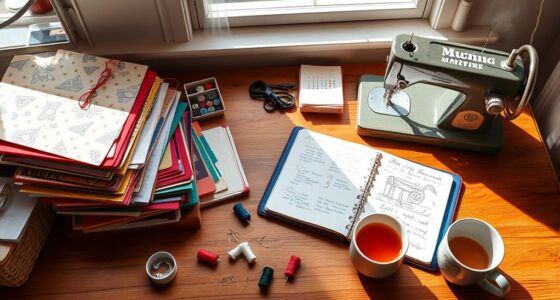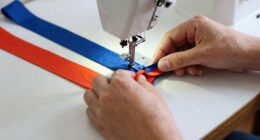
If your sewing setup hurts, it’s time to check your ergonomics. Adjust your work surface so your elbows stay close to your sides and your forearms are parallel to the ground. Use an ergonomic chair with lumbar support and support your feet flat. Position your sewing machine at waist level to reduce neck and shoulder strain. Keep tools within easy reach to avoid unnecessary stretching. Fixing these issues can boost comfort and prevent injuries—keep going to discover more helpful tips.
Key Takeaways
- Adjust your work surface and chair so your elbows stay close to your sides with forearms parallel to the ground.
- Ensure your sewing machine is at waist level to keep your arms relaxed and prevent neck or shoulder strain.
- Use ergonomic tools like supportive cushions, adjustable lighting, and fabric storage to promote proper body alignment.
- Take regular breaks to stretch, move, and change positions, reducing muscle fatigue and joint stress.
- Support your lower back with ergonomic chairs or cushions to maintain good posture during long sewing sessions.
Why Ergonomics Are Key to Sewing Comfort and Preventing Injuries
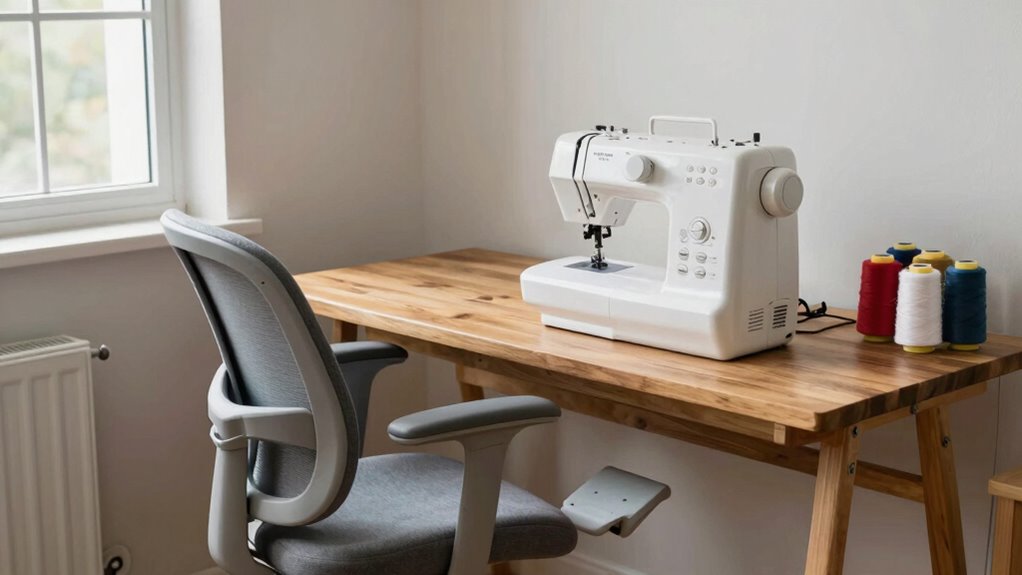
Since sewing involves repetitive motions and sustained postures, maintaining good ergonomics is essential for comfort and injury prevention. Your fabric selection can influence your sewing speed, which impacts how you hold your body. Choosing lightweight, easy-to-handle fabrics reduces strain and allows for more controlled sewing. When you adjust your sewing speed to match your comfort level, you minimize unnecessary tension on your muscles and joints. Rushing through projects or working with heavy fabrics can lead to poor posture and fatigue. Additionally, understanding the importance of projector contrast ratio can help you set up your workspace to reduce glare and eye strain, creating a more comfortable environment. Paying attention to ergonomic workspace setup ensures that your sewing station promotes proper posture and reduces physical stress. Incorporating ergonomic tools and accessories designed for sewing can further enhance comfort and reduce strain. Selecting the right safety glasses for 2024 can protect your eyes during detailed or prolonged sewing sessions. Being mindful of ergonomic principles can guide you in making adjustments that improve overall comfort and prevent discomfort during sewing. By focusing on ergonomic setup, you can sew more efficiently and comfortably, preventing issues like muscle strain or repetitive stress injuries. Proper ergonomics helps you maintain a steady pace, protect your body, and enjoy sewing longer without discomfort.
How to Recognize Posture and Setup Problems That Cause Discomfort
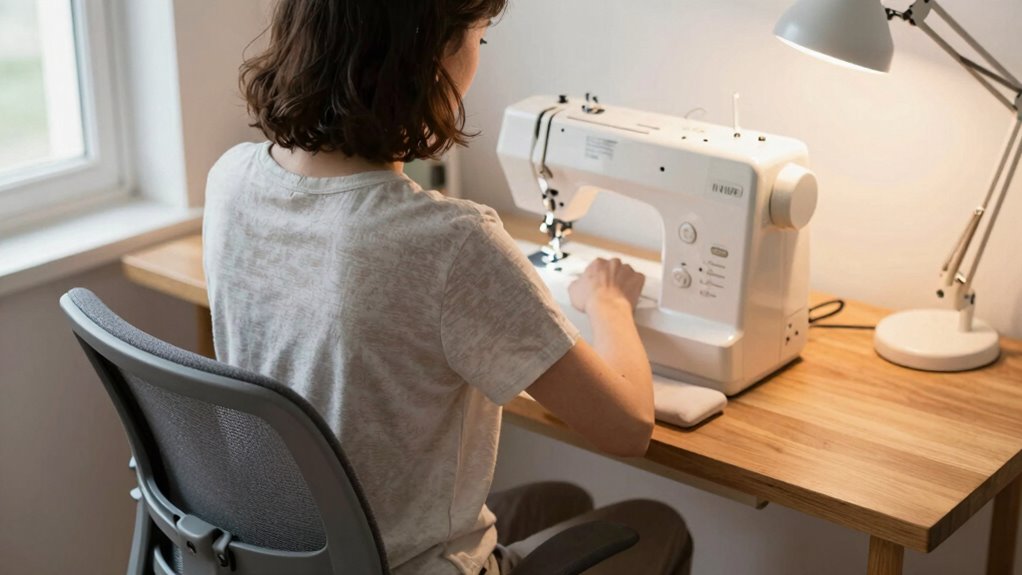
Recognizing posture and setup issues is key to maintaining comfort during sewing sessions. Poor posture often stems from improper workspace arrangement or fabric selection that forces you into awkward positions. Signs of discomfort include persistent back or neck pain, tingling in your hands, or eye strain from leaning too close or squinting. Your sewing speed can also reveal problems; rushing may cause you to hunch or twist unnecessarily. To identify issues, check if:
Maintaining proper posture prevents discomfort and enhances your sewing experience.
- Your fabric placement requires excessive reaching or twisting.
- Your chair height causes you to hunch over or strain your neck.
- Your sewing machine’s position makes you lean forward or bend awkwardly.
- You feel discomfort after long sewing periods, especially in your back or shoulders.
- Your workspace setup encourages ergonomic posture correction to support sustained comfort. Ensuring your workspace is ergonomically optimized can help you make simple adjustments that significantly improve your sewing comfort and reduce strain. Additionally, ensuring that your workstation setup promotes proper alignment can prevent long-term musculoskeletal problems.
Adjust Your Work Surface and Chair for Better Support
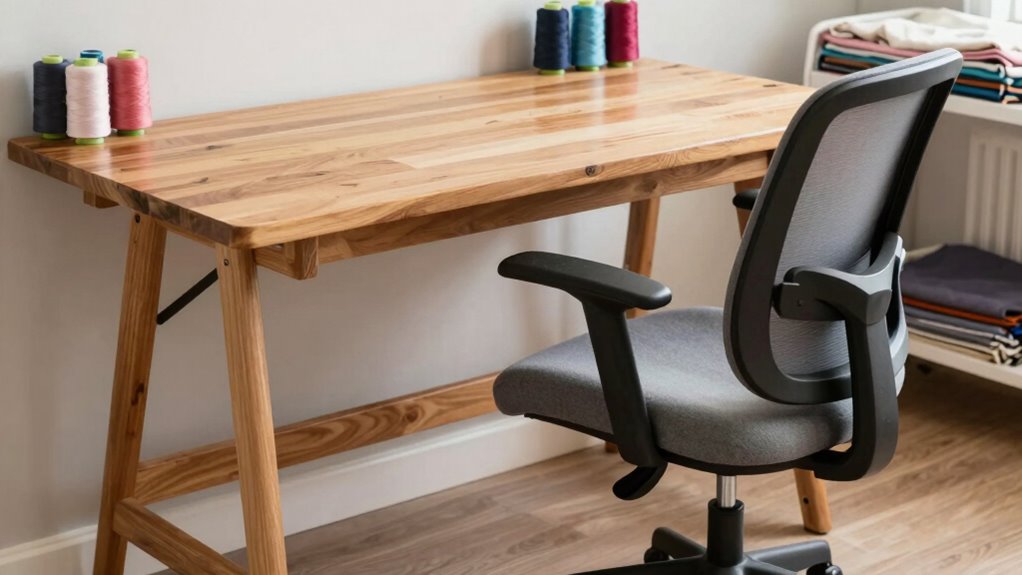
To improve your sewing comfort, start by adjusting your work surface and chair to provide proper support. Your sewing workspace should be at a height that allows your elbows to stay close to your sides and your forearms parallel to the ground. This reduces strain on your shoulders and neck. Make sure your chair adjustments support good posture—your feet should rest flat on the floor, and your hips should be slightly higher than your knees. Adjust the seat height and backrest so your lower back is supported and your spine stays aligned. A stable, ergonomic chair helps maintain comfort during long sewing sessions. Properly setting your work surface and chair creates a supportive environment that minimizes fatigue and promotes better posture. For optimal comfort, consider ergonomic workspace setup which can further reduce musculoskeletal strain during extended sewing periods. Additionally, integrating ergonomic accessories like lumbar cushions or footrests can enhance your overall comfort and support. Paying attention to your body position throughout your sewing can prevent discomfort and long-term issues.
Position Your Sewing Machine, Needle, and Thread for Ergonomic Comfort
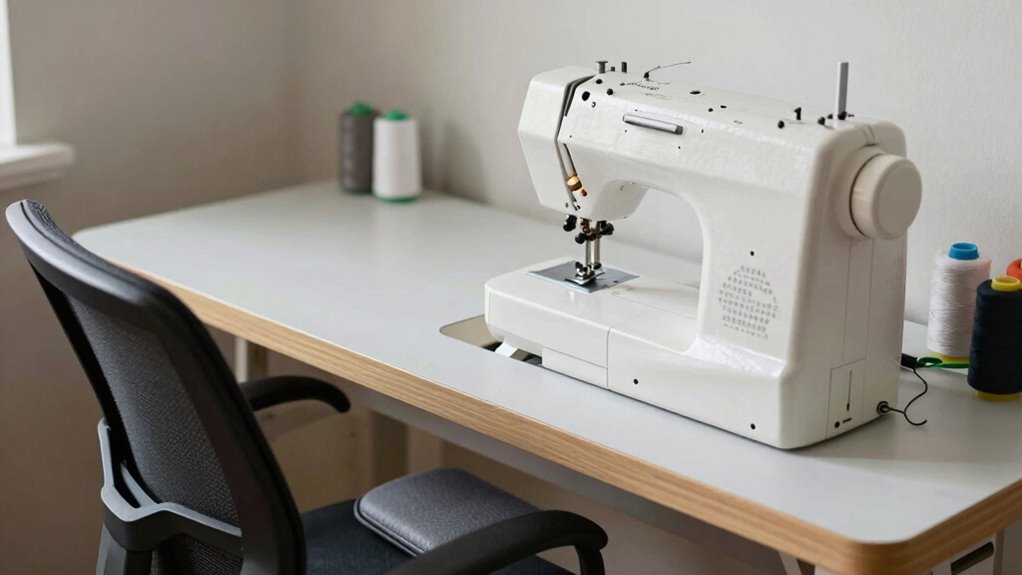
To sew comfortably, you need to position your machine at the right height so your arms stay relaxed. Make sure the needle and thread are aligned properly to prevent unnecessary strain and frustration. When these elements are set correctly, your sewing session becomes smoother and more ergonomic. Additionally, maintaining a healthy posture throughout your sewing can reduce fatigue and prevent discomfort.
Optimal Machine Height
Ensuring your sewing machine is at the right height is essential for reducing strain and maintaining control during your projects. An ideal machine height supports an ergonomic setup, preventing discomfort and fatigue. To achieve this, consider these factors:
- Adjust the machine so your elbows remain close to your sides, with your forearms parallel to the floor.
- Position the sewing surface at waist level, allowing a comfortable reach without bending or stretching.
- Use a sturdy table or surface that supports the machine securely at the correct height.
- Ensure your chair height allows your feet to rest flat on the floor, keeping your posture aligned.
Proper machine height promotes better control and reduces strain on your neck, shoulders, and wrists, making your sewing sessions more comfortable and sustainable.
Thread and Needle Alignment
Positioning your sewing machine, needle, and thread correctly is key to maintaining ergonomic comfort and avoiding strain. Proper alignment guarantees smooth stitching and reduces hand fatigue. Adjust the thread tension so the stitches are even, preventing unnecessary effort and frustration. Choose the right needle type for your fabric to avoid skipped stitches and uneven tension. Keep the needle straight and aligned with the thread path to minimize awkward movements. Ensuring proper setup can significantly improve your sewing experience and reduce physical discomfort. Additionally, paying attention to wiring basics and proper ventilation can contribute to a safer and more comfortable sewing environment. Incorporating ergonomically designed sewing tools can further enhance comfort during long sewing sessions.
Essential Ergonomic Accessories to Make Sewing Easier and Safer
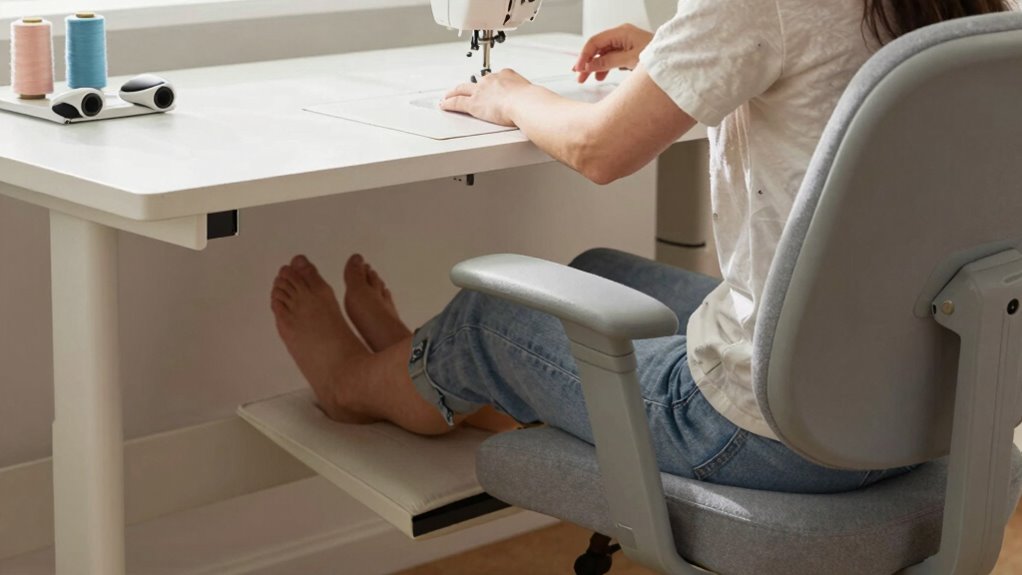
Using the right ergonomic accessories can considerably reduce fatigue and strain during sewing sessions, making your experience safer and more comfortable. First, invest in a sturdy fabric storage system to keep your materials organized and easily accessible, reducing unnecessary reaching. Second, improve your workspace lighting with adjustable lighting solutions to eliminate eye strain and enhance visibility. Third, consider an ergonomic sewing chair with proper lumbar support to maintain good posture. Fourth, add a sewing machine extension table to provide a larger surface area, reducing shoulder and arm fatigue. These accessories not only streamline your workflow but also promote better body alignment, helping you sew longer without discomfort or injury. Incorporating ergonomic design principles such as adjusting your setup for different temperatures can also improve comfort during long sewing sessions. Additionally, selecting appropriate workspace layouts can further optimize your sewing environment for comfort and efficiency. Paying attention to ergonomic micro-movements can help prevent repetitive strain injuries and improve overall sewing endurance. For example, ensuring your tools and accessories are within easy reach minimizes unnecessary movements, reducing strain. Prioritizing these ergonomic tools makes a noticeable difference in your sewing comfort and safety.
Create Ergonomic Habits for Long-Term Sewing Comfort

To enjoy sewing for years without discomfort, you need to develop good habits. Focus on maintaining proper posture, sitting in supportive chairs, and taking regular breaks to stretch your muscles. These simple practices will help you stay comfortable and avoid strain over the long haul. Incorporating ergonomic power tools into your workspace can further reduce fatigue and enhance your sewing experience. Additionally, investing in ergonomic accessories such as adjustable tables and padded supports can promote better alignment and reduce repetitive stress. Using ergonomic principles in your setup can make a significant difference in preventing long-term injuries and improving overall comfort. Paying attention to the performance ratings of your equipment can also ensure you choose tools that are both effective and comfortable to use. Embracing ergonomic design can help you create a sewing environment that supports your body and boosts productivity.
Maintain Proper Posture
Maintaining proper posture is essential for long-term sewing comfort, as it helps prevent strain and fatigue. When you sit correctly, you reduce tension in your neck, shoulders, and back, making sewing more enjoyable. To create ergonomic habits, focus on:
- Keep your back straight and shoulders relaxed to avoid strain.
- Position your fabric storage at waist level to prevent bending or reaching.
- Organize your thread and tools within easy reach to minimize unnecessary movements.
- Use a table height that allows your elbows to stay close to your body, reducing shoulder stress.
Use Supportive Seating
Choosing supportive seating is essential for long-term sewing comfort because it helps maintain proper posture and reduces muscle fatigue. Invest in ergonomic cushions to provide extra lumbar support and promote better spinal alignment. Supportive seating encourages you to sit correctly, preventing slouching or strain during extended sewing sessions. Look for chairs with adjustable height and backrest features to customize your setup. Using ergonomic cushions not only adds comfort but also cushions pressure points that can cause discomfort over time. Remember, a well-chosen chair supports your lower back and encourages a natural sitting position, making it easier to focus on your craft without unnecessary aches or tension. Prioritizing supportive seating is a simple but powerful step toward creating a sustainable, ergonomic sewing environment.
Take Regular Breaks
Taking regular breaks is essential for preventing strain and maintaining long-term comfort while sewing. Incorporate short pauses into your routine to give your muscles and joints a rest. During these breaks, focus on:
- Performing stretch breaks to loosen tight muscles and improve circulation.
- Doing wrist exercises to reduce the risk of repetitive strain injuries.
- Standing up and moving around to prevent stiffness.
- Adjusting your sewing position or workspace to maintain ergonomic alignment.
These small habits help you stay comfortable and avoid fatigue. Regularly stepping away not only relieves tension but also boosts your focus and productivity. Remember, consistent breaks are key to creating ergonomic habits that support your sewing enjoyment for years to come.
Frequently Asked Questions
How Often Should I Take Breaks During Long Sewing Sessions?
You should take a break every 30 to 60 minutes during long sewing sessions. Maintaining good sewing posture is key, so use ergonomic accessories like adjustable chairs and proper lighting to reduce strain. Regular breaks help prevent fatigue and repetitive strain injuries. During breaks, stretch and move around to keep your muscles relaxed. Listening to your body guarantees you stay comfortable and avoid long-term issues while enjoying your sewing projects.
What Are the Signs of Poor Ergonomic Habits While Sewing?
If you notice persistent neck pain or tingling in your hands, these are signs of poor ergonomic habits. For example, slouching while sewing strains your posture, causing discomfort. You should practice posture correction and use wrist support to prevent injuries. Pay attention to aches or numbness during sewing, as they indicate your setup isn’t ergonomic enough, and adjusting your position can make a big difference.
Can Ergonomic Adjustments Improve Sewing Accuracy?
Yes, ergonomic adjustments can improve sewing accuracy. By maintaining proper sewing posture, you reduce fatigue and strain, allowing you to focus better on your work. Using ergonomic sewing tools, like adjustable chairs and proper lighting, helps keep your hands steady and your eyes aligned, resulting in more precise stitches. When your setup supports good posture, you’re less likely to make mistakes, ultimately enhancing your sewing quality and enjoyment.
Are There Specific Ergonomic Tools for Left-Handed Sewists?
Absolutely, there are ergonomic tools tailored for left-handed sewists that can transform your experience. Left-handed tools like scissors, rotary cutters, and rulers make a huge difference, allowing you to sew with precision and ease. Pair these with ergonomic chair adjustments that support your posture, preventing strain. These tools and tweaks can turn your sewing space into a haven, making every stitch feel effortless and almost magical.
How Does Lighting Affect Ergonomic Comfort When Sewing?
Lighting greatly impacts your ergonomic comfort by ensuring your workspace is well-lit, reducing eye strain and fatigue. When your lighting conditions are ideal, you can see details clearly without leaning forward or straining your eyes. This allows you to maintain good posture and focus comfortably. To improve your sewing setup, invest in adjustable, bright lighting that covers your entire workspace, helping you work efficiently and comfortably for longer periods.
Conclusion
By making small, mindful adjustments to your sewing space, you’re planting seeds for a more comfortable, injury-free experience. Think of your setup as a cozy garden where each element nurtures your well-being. When you tend to your posture and tools with care, you’ll find sewing becomes a gentle breeze rather than a tangled storm. Embrace these ergonomic habits, and watch your sewing journey blossom into pure joy and lasting comfort.