
To clean your sewing machine between projects, unplug it and remove the bobbin case, then use a small brush or soft cloth to sweep away lint and dust, especially around the race and tension areas. Use compressed air for stubborn debris and gently inspect for any damage. Clean the tension discs and lightly oil if needed, testing on scrap fabric. With proper maintenance, your machine stays in top condition—keep going to discover more helpful tips.

Get business pricing on tools and workshop supplies
- Business-only prices and quantity discounts
- Tax-exempt purchasing
- Multiple users, one account, clear invoices
Key Takeaways
- Unplug the machine and remove the bobbin case before cleaning.
- Use a small brush or soft cloth to remove lint and dust from the race and tension area.
- Employ compressed air for stubborn lint without disassembly.
- Gently clean and check the bobbin case for damage or wear.
- Lightly oil the tension mechanism, then test on scrap fabric for proper tension.
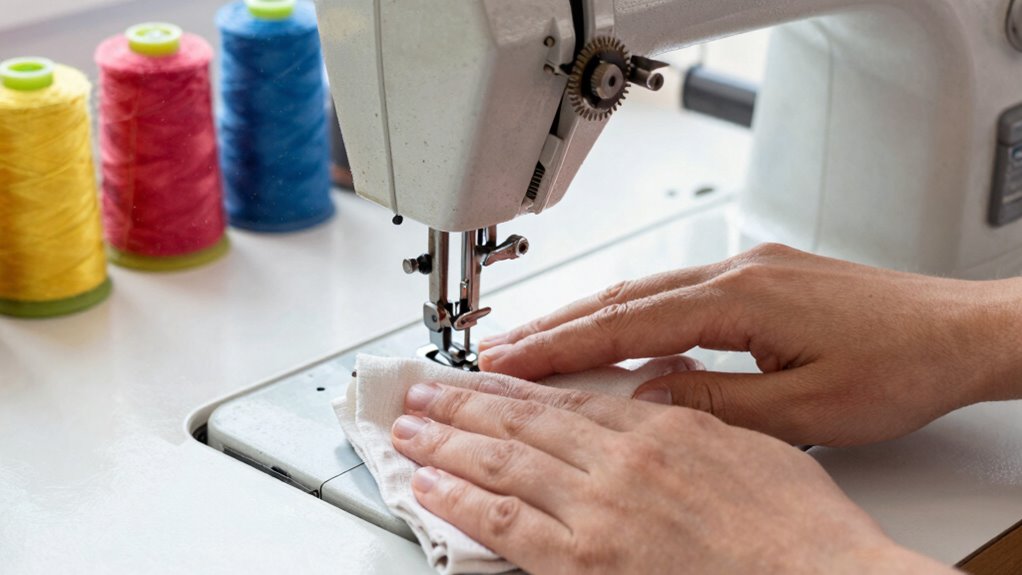
Keeping your sewing machine clean is essential for smooth operation and long-lasting performance. When you’re transitioning between projects, taking a few moments to clean your machine helps prevent issues like uneven stitches or thread jams. A clean machine runs more efficiently, and you’ll notice improved stitch quality every time you sew. One of the key areas to focus on is the bobbin case, which often collects lint, dust, and stray threads. If the bobbin case isn’t clean, it can cause tension problems that affect your thread tension, leading to skipped stitches or puckering fabric. Regular cleaning of this part ensures that the thread tension remains consistent and that your stitches are neat and even. Proper cleaning and maintenance also extend the lifespan of your kitchen appliances, much like caring for your sewing machine preserves its functionality.
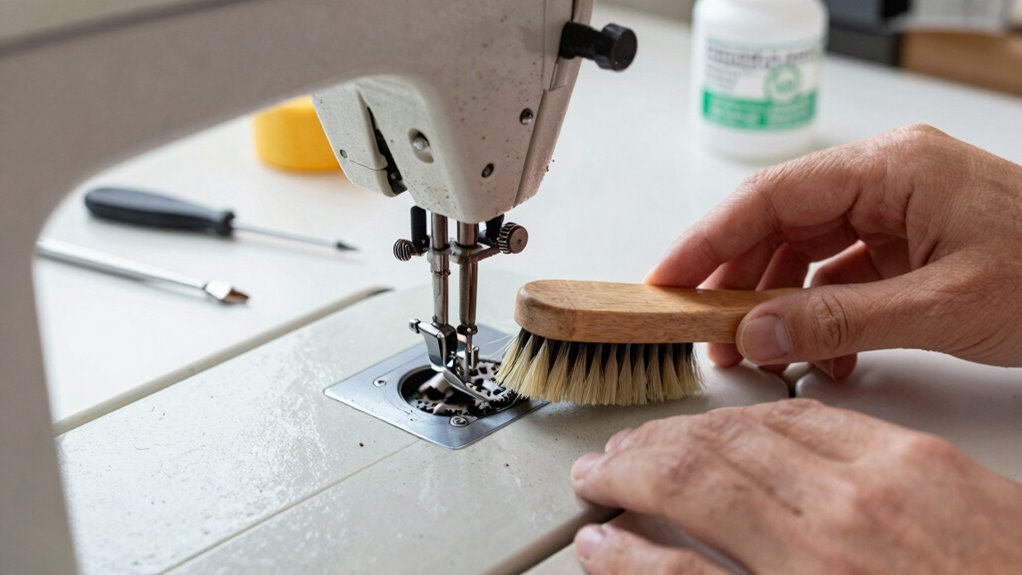
To start, unplug your sewing machine to ensure safety. Remove the bobbin case and set it on a clean surface. Use a small brush or a soft cloth to gently sweep away lint and dust from the bobbin case, paying close attention to the race and tension area. If there’s stubborn lint, a burst of compressed air can help dislodge it without disassembling too much. Be careful not to force anything or damage delicate parts. Once the bobbin case is free of debris, check for any damage or wear that might affect its function. Regular cleaning of essential sewing machine parts helps prevent buildup that could cause operational issues. Additionally, inspecting the internal mechanisms periodically can help catch issues early before they develop into more serious problems. Understanding how these machine components work together can make your maintenance routine more effective and less intimidating. Doing so can also help you understand how your machine operates, making maintenance easier. Reinsert it carefully, making sure it clicks into place correctly.
Next, focus on the thread tension mechanism. It’s crucial that the tension discs are free of lint and thread remnants, as these can cause tension inconsistencies. Open the cover to access the tension discs and use a small brush to remove lint. If you notice thread buildup, gently remove it with tweezers or a needle. For a more thorough cleaning, you can lightly oil the tension mechanism, but only with sewing machine oil recommended by your manufacturer. Avoid over-oiling, as excess oil can attract more lint and dust. After cleaning, test your machine on scrap fabric to ensure the tension feels balanced and stitches are even. Proper maintenance of these critical components helps ensure your machine operates smoothly and reduces the chance of future issues.
As an affiliate, we earn on qualifying purchases.
Frequently Asked Questions
How Often Should I Clean My Sewing Machine?
You should clean your sewing machine after every few projects or roughly every 8-10 hours of sewing. Regular machine maintenance helps prevent lint buildup, which can affect thread tension and overall performance. Make certain to remove lint from the bobbin area and needle plate, and oil if necessary. Keeping your machine clean ensures smooth sewing, maintains proper thread tension, and extends its lifespan.
Can I Use Household Cleaners to Clean My Sewing Machine?
You shouldn’t use household cleaners on your sewing machine. Many household cleaners contain safe chemicals, but they can be too harsh for delicate machine parts and may cause damage or corrosion. Instead, opt for manufacturer-recommended cleaning solutions or gentle, machine-specific products. This approach guarantees your sewing machine stays in top condition, avoiding unnecessary wear, and prolongs its lifespan, giving you smooth sewing experiences every time.
Is It Necessary to Oil My Sewing Machine During Cleaning?
Yes, oil application is essential for proper machine maintenance. You should oil your sewing machine during cleaning to keep its moving parts operating smoothly and prevent rust. Regular oil application reduces wear and tear, ensuring your machine runs efficiently. Be sure to use the manufacturer-recommended sewing machine oil, applying it sparingly to the designated areas. Proper maintenance like this keeps your sewing machine in top condition for many projects ahead.
What Tools Are Best for Cleaning Hard-To-Reach Areas?
To clean hard-to-reach areas, you should use a small, soft brush or a can of compressed air to carefully remove dust and lint. First, remove the thread and needle to access tight spots easily. Use the brush to dislodge debris, especially around the bobbin case and feed dogs. Proper thread removal and regular needle maintenance guarantee smooth operation, while these tools help keep your machine clean and functioning well.
How Do I Prevent Lint Buildup in the Future?
To prevent lint buildup, regularly check your thread tension to make sure it’s balanced, which minimizes lint accumulation. Maintain your needle by replacing it frequently, especially if it becomes bent or dull, as a sharp needle reduces lint. After each project, gently clean the bobbin area and lint trap to prevent debris from building up. Consistent maintenance keeps your machine running smoothly and reduces the need for deep cleanings.
Conclusion
Now that you know how to clean your sewing machine properly, you can keep it running smoothly and avoid any unwanted hiccups. Just imagine yourself as a seasoned seamstress, gently tending to your trusty machine like a delicate Victorian lady. With regular cleaning, you’ll guarantee your sewing adventures stay as seamless as a well-stitched tapestry. Keep your tools in tip-top shape, and your creative spirit will always be ready to conquer new projects.
Fall Picks
fall essentials
As an affiliate, we earn on qualifying purchases.