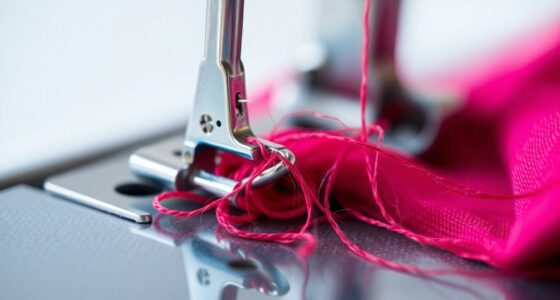
To thread your machine, start with the needle in the highest position, open the bobbin compartment, and follow your model’s threading path carefully, adjusting tension if needed for balanced stitches. To wind the bobbin, place it on the spindle, wrap the thread, and start winding until full. Before sewing, insert the bobbin correctly and re-thread if necessary. Keep practicing these steps, and you’ll soon master smooth, trouble-free sewing.
Key Takeaways
- Turn off the machine, raise the needle, and open the bobbin compartment before threading.
- Follow the specific threading path, ensuring the thread passes through tension dials and guides correctly.
- Wind the bobbin by placing it on the spindle, wrapping thread, and engaging the winder until full.
- Check and install the bobbin in the case, ensuring it unwinds in the correct direction and clicks securely.
- Re-thread the machine if needed, then test on scrap fabric to adjust tension for balanced stitches.
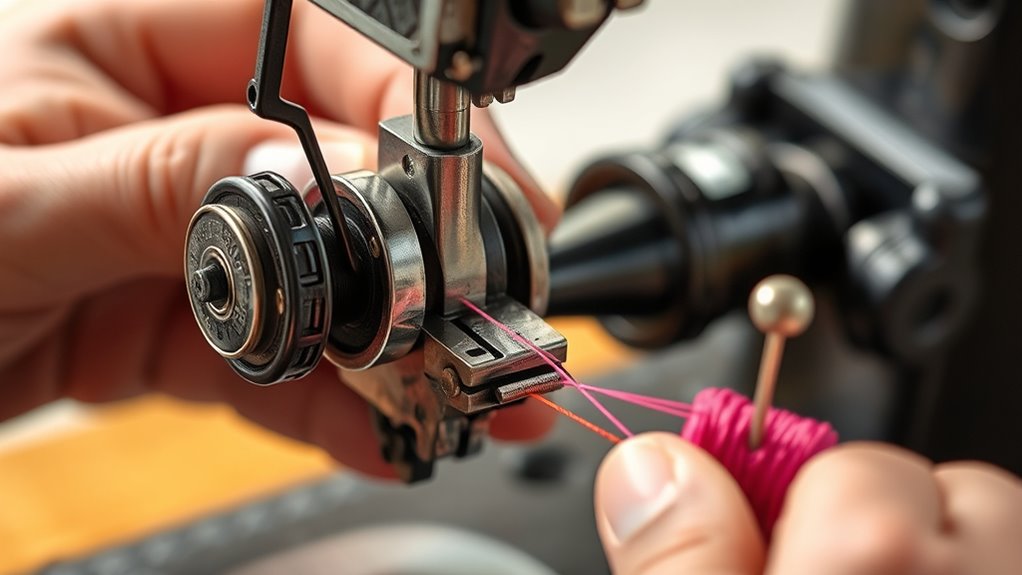
Threading your sewing machine and winding a bobbin are vital steps to guarantee smooth sewing progress. Proper threading ensures your stitches are even and secure, while a correctly wound bobbin prevents frustrating tangles and thread jams. Before you start, make certain your machine is turned off to avoid any accidents. Begin by raising the needle to its highest position, then open the bobbin compartment. Place the spool of thread on the spool pin, ensuring it’s secure, and guide the thread through the machine’s threading path, following the specific instructions for your model. As you thread the machine, pay close attention to the thread tension adjustment. Proper tension is essential; too tight, and your stitches may pucker or break, too loose, and they might be loose or uneven. Most machines have tension dials or sliders—adjust these gradually, testing on scrap fabric until your stitches are balanced. Maintaining the correct thread tension is key to achieving professional-looking results and preventing issues down the line.
Next, winding your bobbin properly is equally important. Take a fresh bobbin and place it on the bobbin winder spindle, following your machine’s threading path for the bobbin winding system. Wrap the thread around the bobbin a few times, then engage the winder and press the foot pedal or start button to wind the thread evenly onto the bobbin. Keep an eye on the winding process, stopping when the bobbin is full—overfilling can cause tangles or jams. Once filled, remove the bobbin carefully and trim any excess thread. Before installing it, check the bobbin case for dust or lint, and perform bobbin case maintenance if needed. A clean, well-maintained bobbin case ensures smooth thread feeding and helps prevent skipped stitches or jams. When inserting the bobbin, make sure it’s placed correctly—usually with the thread unwinding in the direction indicated by your machine—and that it clicks into place securely.
After installing the bobbin, pull a few inches of thread through the bobbin case to keep it ready for sewing. Re-thread the machine if necessary, making sure the upper thread and bobbin thread are correctly engaged. Always test your setup on scrap fabric before starting your actual project. This quick check helps identify any issues with tension or threading, saving time and frustration later. Regularly inspecting and maintaining your bobbin case, along with adjusting thread tension as needed, will keep your machine running smoothly and extend its lifespan. With proper threading and bobbin winding, you’ll enjoy consistent stitches and trouble-free sewing sessions.
Frequently Asked Questions
Can I Use Any Thread Brand for My Machine?
You can’t use any thread brand for your machine without verifying for thread compatibility. Some brands may not work well with your machine’s tension or fabric, leading to issues. Always opt for high-quality thread because it’s more consistent and less likely to break or cause jams. While you can try different brands, ensure they meet your machine’s specifications and suit your project to achieve the best sewing results.
How Often Should I Replace My Bobbin or Thread?
To keep your sewing smooth, replace your bobbin or thread regularly, especially when you notice issues like tangles or skipped stitches. Typically, change your thread when it shows signs of wear or runs out, and swap your bobbin when it’s empty or damaged. Frequent thread replacement promotes thread durability and prevents sewing problems. Remember, consistent changing maintains your machine’s marvelous, mess-free performance and prolongs the life of your lovely, loyal sewing machine.
What Do I Do if My Machine Jams During Winding?
If your machine jams during winding, first stop the machine and unplug it for safety. Check for tangled thread, lint buildup, or any loose parts. Clear out any obstructions carefully, then reassemble the machine. Regular machine maintenance helps prevent this issue. Use troubleshooting tips like cleaning the bobbin area and ensuring correct threading. If problems persist, consult your machine’s manual or seek professional repair to keep your machine running smoothly.
Is It Necessary to Clean the Bobbin Area Regularly?
Yes, regular cleaning of the bobbin area is essential for smooth sewing. You might think thread storage alone keeps your machine running well, but dust and lint can hide there, causing jams or skipped stitches. Proper bobbin maintenance guarantees consistent tension and prevents future issues. So, make it a habit to clean your bobbin area often, especially if you sew frequently, to keep everything functioning smoothly.
Can I Wind a Bobbin While the Machine Is Turned On?
No, you shouldn’t wind a bobbin while the machine is turned on. For machine safety, always turn it off to prevent accidents. Winding a bobbin with the machine on can also cause issues with thread compatibility, as the machine might malfunction or damage the thread. Make sure to follow your sewing machine’s safety guidelines, turn it off, and use compatible thread for smooth, safe winding.
Conclusion
Now that you know how to thread your machine and wind a bobbin, you’re ready to start sewing with confidence. Did you know that properly wound bobbins can reduce thread breakage by up to 30%? Taking these simple steps guarantees smoother stitching and fewer frustrations. Practice makes perfect, so keep at it, and soon you’ll be creating beautiful projects effortlessly. Happy sewing!