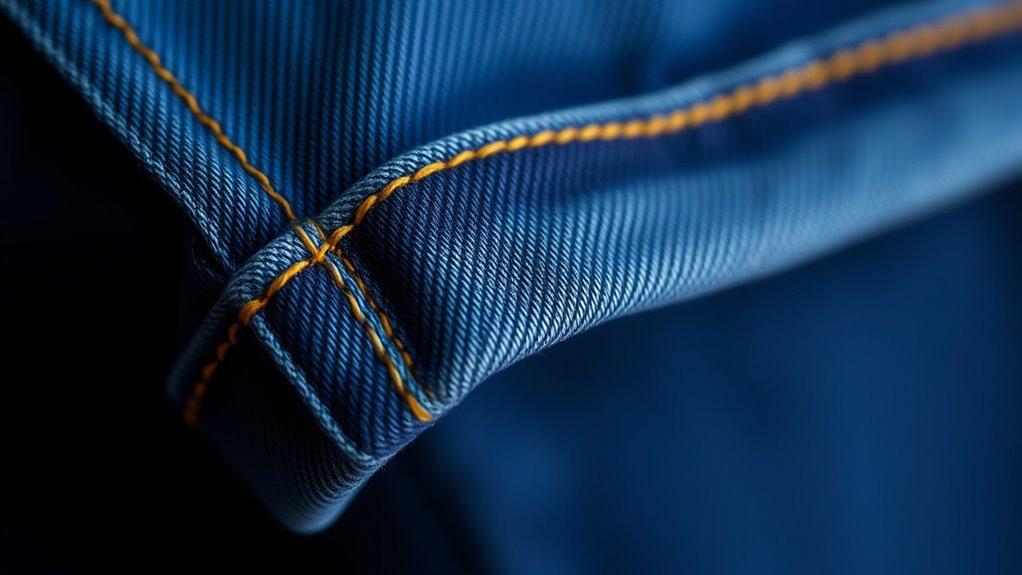

To hem jeans while keeping the original hem intact, fold the fabric to your desired length and pin it securely, avoiding any cutting. Use fabric clips or small stitches for a temporary cuff, and press the fold with an iron for a clean finish. This method maintains the hem’s original appearance and allows easy adjustments later. If you want to learn more about achieving a professional look, continue exploring these techniques.
Key Takeaways
- Use folding, pinning, or fabric clips to temporarily cuff jeans without altering the original hem.
- Press the folded cuff with an iron and pressing cloth to create a neat, professional appearance.
- Reinforce the cuff edges with small, removable stitches for durability without permanent changes.
- Avoid cutting or sewing; opt for reversible methods that preserve the original hem for future adjustments.
- Visualize different cuff styles with alteration tools before finalizing, ensuring flexibility and fabric integrity.

Hemming jeans is a quick way to customize your fit, but many people want to preserve the original hem for a more polished look or future alterations. Keeping the original hem intact allows you to switch up styles, such as cuffing styles, without permanently altering the fabric. If you plan to cuff your jeans for a casual, trend-forward appearance, maintaining the original hem is essential for versatility and a cleaner finish. This approach also ensures you can revert to the original length if your style preferences change or if you need to pass the jeans on to someone else.
To achieve this, you’ll need the right alteration tools, such as fabric clips, pins, or tailor’s chalk, to mark and hold the cuffs in place. These tools help you visualize cuffing styles like rolled cuffs, double cuffs, or pinrolled looks without altering the hem permanently. Once you’re satisfied with the cuffing style, you can fold the fabric to your desired length, ensuring a neat appearance. Using alteration tools during this process keeps the fabric flat and helps you achieve even, professional-looking cuffs.
When you want to keep the original hem untouched, avoid cutting or sewing the fabric unless you’re confident in your skills. Instead, opt for temporary methods like folding and pinning, which allow you to experiment with cuffing styles without damaging the jeans. If you do want a more secure cuff, you might consider using small stitches or fabric glue on the inside of the fold—these are removable and won’t affect the original hem. This way, you’re preserving the integrity of the hem while still customizing your look.
Another technique involves carefully pressing the cuffs with an iron, which helps set the fold and makes the style more polished. A pressing cloth can prevent any shine or damage to the fabric. For added stability, especially if you plan to wear the cuffs repeatedly, small stitch reinforcements at the inside edge of the cuff can keep the fold crisp without altering the original hem. This approach is ideal if you want a tidy cuffing style that lasts, but still preserves the original hem for future use. Additionally, understanding denim fabric properties can help you select the best methods to avoid damage when pressing or folding.
Frequently Asked Questions
Can I Hem Jeans Without Sewing Skills?
Yes, you can do DIY hemming without sewing skills by using no-sew methods like fabric glue, fusible hem tape, or iron-on hem adhesive. These options let you shorten jeans while preserving the fabric’s original look and feel. Just measure carefully, follow the product instructions, and press firmly. This way, you can achieve a clean, professional finish without traditional sewing, making fabric preservation simple and accessible for everyone.
What Tools Are Necessary for Professional Hemming?
You’ll need a sharp pair of fabric scissors, a sewing machine or needle and thread, tailor’s chalk, and pins for professional hemming. Different fabric types demand distinct hemming techniques, so choose your tools wisely. Skip these, and your jeans might end up looking like a toddler’s craft project. With these tools, you can master the art of hemming, ensuring your jeans fit perfectly and look polished, no matter the fabric.
How Do I Prevent Fraying After Hemming?
To prevent fraying after hemming, you should focus on edge finishing and fabric reinforcement. Use a zigzag stitch or a serger along the raw edges to secure the fabric, preventing fraying over time. Additionally, applying a fabric sealant or fray check can provide extra reinforcement. Always press the hem after sewing to ensure a clean, professional finish, which helps maintain the integrity of the edge and prolongs the life of your hem.
Is It Possible to Hem Jeans at Home Easily?
Did you know that over 60% of people prefer DIY hemming to save money? Yes, you can hem jeans at home easily with basic tools like a sewing machine or even by hand. Use simple hemming tips such as measuring twice, cutting once, and finishing edges neatly. With patience and practice, you’ll master DIY hemming, making your jeans fit perfectly without needing professional help.
How Long Does a Professional Hemming Process Take?
A professional hemming process usually takes about 30 minutes to an hour, depending on fabric selection and hemming techniques. If your jeans have intricate details or delicate fabric, it might take a bit longer. You should plan for this time so your tailor can carefully measure, pin, and sew your jeans to guarantee a perfect fit. Trust their expertise to handle various fabrics and techniques efficiently.
Conclusion
Hemming your jeans while preserving the original hem gives your jeans a tailored, professional look without losing their unique style. It’s a simple technique that saves you money and maintains the fabric’s integrity. Some might worry it’s too tricky or risks damage, but with patience and the right tools, you’ll find it’s easier than you think. Once you master it, you’ll enjoy perfectly fitted jeans that look store-bought—no special skills required.