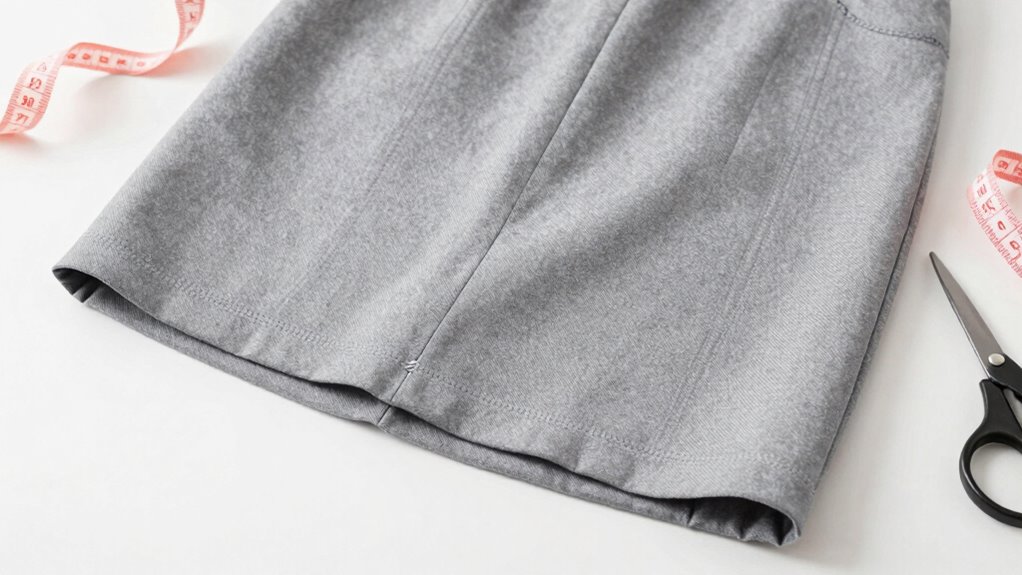

To shorten a lined skirt without distorting the hem, turn it inside out and carefully measure the new length, marking with fabric chalk. Cut both the fabric and lining together for an even cut, ensuring you avoid cutting the lining separately. Fold the hem inward by the same width as the original, press it smoothly, and sew close to the fold. Reinforce any raw edges with zigzag stitching or hem tape. If you want to master a flawless finish, keep exploring for more tips.

Get business pricing on tools and workshop supplies
- Business-only prices and quantity discounts
- Tax-exempt purchasing
- Multiple users, one account, clear invoices
Key Takeaways
- Turn the skirt inside out and mark the new hemline, ensuring the lining and fabric are aligned before cutting.
- Cut both the fabric and lining together to maintain their original relationship and prevent distortion.
- Fold the hem inward by 1-2 inches and press firmly to keep the shape intact.
- Reinforce raw edges with a zigzag stitch or hem tape to prevent fraying and maintain stability.
- Sew close to the fold, keeping stitches even, and press again for a smooth, professional finish.
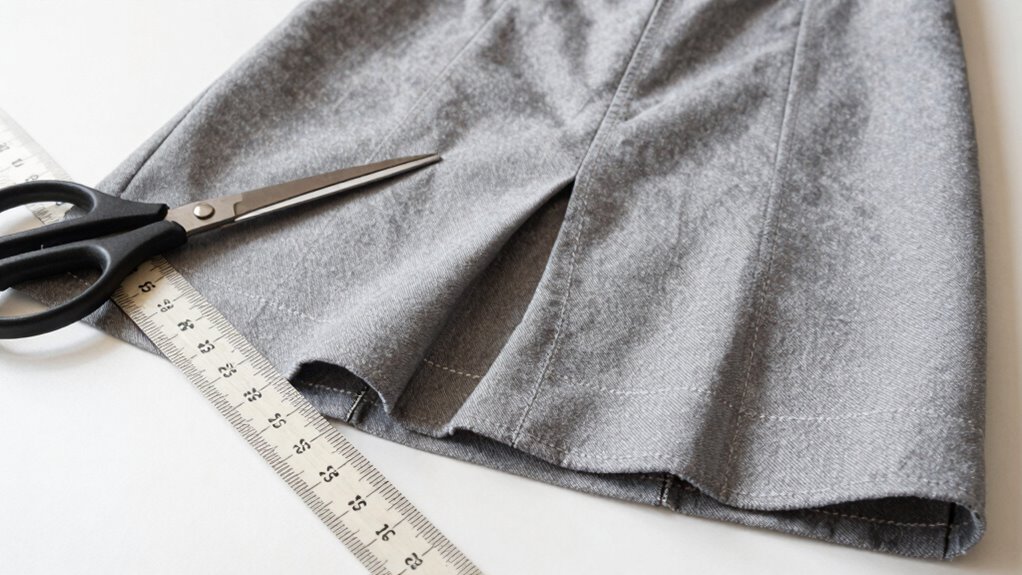
Ever wondered how to shorten a lined skirt without ruining its finish? It’s a common concern, especially when you want the alteration to look seamless and professional. The key lies in understanding how to handle the hem properly, making sure it stays neat and durable after trimming. To do this, you’ll need to focus on hem reinforcement and fabric matching to maintain the skirt’s original look and structure. Ensuring fabric matching is precise can make all the difference in blending the new hem with the original material.
Start by turning the skirt inside out and carefully measuring how much you want to shorten it. Mark the new hemline with fabric chalk or a fabric marker, making sure your measurements are precise. When you cut, be cautious not to cut into the lining separately; instead, cut through both layers at once to keep everything aligned. This approach helps prevent uneven hems and preserves the original design.
Turn the skirt inside out, measure precisely, and cut both layers together to keep the hem even and intact.
Once you’ve cut the excess fabric, it’s time to reinforce the hem. Hem reinforcement is vital because it provides extra stability, especially if the skirt’s fabric is lightweight or prone to fraying. You can sew a narrow zigzag stitch along the raw edge or apply a hem tape inside the hemline. This step strengthens the edge and prevents fraying over time, giving your shortened skirt a professional finish. Additionally, choosing the right sewing technique for the fabric type can further improve durability. Proper finishing techniques are essential for ensuring longevity and a polished look.
Next, consider fabric matching. If you’re attaching a new hem, try to match the fabric type and color as closely as possible to the original. This ensures the alteration blends seamlessly with the rest of the skirt. For a clean look, fold the hem inward by about 1 to 2 inches, depending on the original hem’s width, and press it with an iron. Pin it in place for extra security before sewing. Use a straight stitch close to the fold, following the original hem’s style if possible, to keep the look consistent.
If the skirt has a lining, pay close attention to matching the lining’s length with the new hemline. Trim the lining accordingly, and reinforce it with a similar stitch or hem tape. When sewing, keep your stitches even and close to the fold to maintain a smooth, professional appearance. Once you finish, press the hem again to set the stitches and make sure everything looks polished. Remember that proper preparation and attention to detail are essential for a professional-looking finish.
Popular right now

Breville Bambino Espresso Machine, Brushed Stainless Steel

De'Longhi Linea Classic Espresso Machine with Adjustable Milk Frother

Breville Barista Pro Espresso Machine with Grinder, Brushed Stainless Steel
As an affiliate, we earn on qualifying purchases.
Frequently Asked Questions
Can I Shorten a Lined Skirt Without Removing the Lining?
Yes, you can shorten a lined skirt without removing the lining by using skirt alteration techniques. First, carefully hem the outer fabric, then replace the lining’s hem to match the new length. This lining replacement guarantees the interior looks neat and maintains the original fit. Use a dressmaker’s chalk and a sewing machine for clean, precise results, avoiding distortion of the hem while achieving a shorter, polished look.
What Tools Are Best for Trimming a Lined Skirt?
You’ll need fabric scissors to accurately trim the skirt, ensuring clean, precise cuts without fraying. A seam ripper is essential for carefully removing stitches if you need to adjust seams or hemline length. Use the scissors for the main trimming, and the seam ripper to undo any stitches gently. Together, these tools help you shorten your lined skirt neatly, maintaining the integrity of both the fabric and the lining.
How Do I Measure the Correct Length for Shortening?
To measure the correct length, put on the skirt and mark where you’d like it to end with a fabric chalk or pin. Keep fabric preservation in mind by adding a seam allowance—usually about half an inch—to your mark. Use a measuring tape to check the distance from your waistband to the mark, ensuring it’s even all around. This careful measurement helps maintain the skirt’s original shape and hem integrity.
Will Shortening Affect the Skirt’s Original Fit?
Shortening your lined skirt might slightly change the fit, especially if the fabric patterns are intricate or the lining is thick. To keep the original fit intact, make sure you reinforce the hem before cutting, preventing stretching or distortion. Carefully measure and mark the new length, matching the fabric patterns if possible. This way, you preserve the skirt’s shape, and the hem remains neat and secure after adjustments.
How Can I Prevent the Lining From Bunching After Shortening?
Imagine slipping into your perfectly shortened skirt, only to find the lining bunching uncomfortably. To guarantee this, make precise lining adjustments before hemming, carefully removing excess fabric and smoothing it evenly. When sewing, use a gentle hand or a zigzag stitch to maintain flexibility. This bunching prevention technique ensures your lining stays smooth and sleek, matching your new length beautifully without sacrificing comfort or style.
Conclusion
Now that you’ve learned how to shorten your lined skirt without messing up the hem, you’re ready to breathe new life into your favorite piece. Think of your skirt as a canvas waiting for a fresh brushstroke—each careful cut and stitch adds a splash of personality. With patience and a steady hand, you’ll craft a perfect fit that flows like a gentle river, seamlessly blending style and function into a masterpiece you’ll love to wear every day.