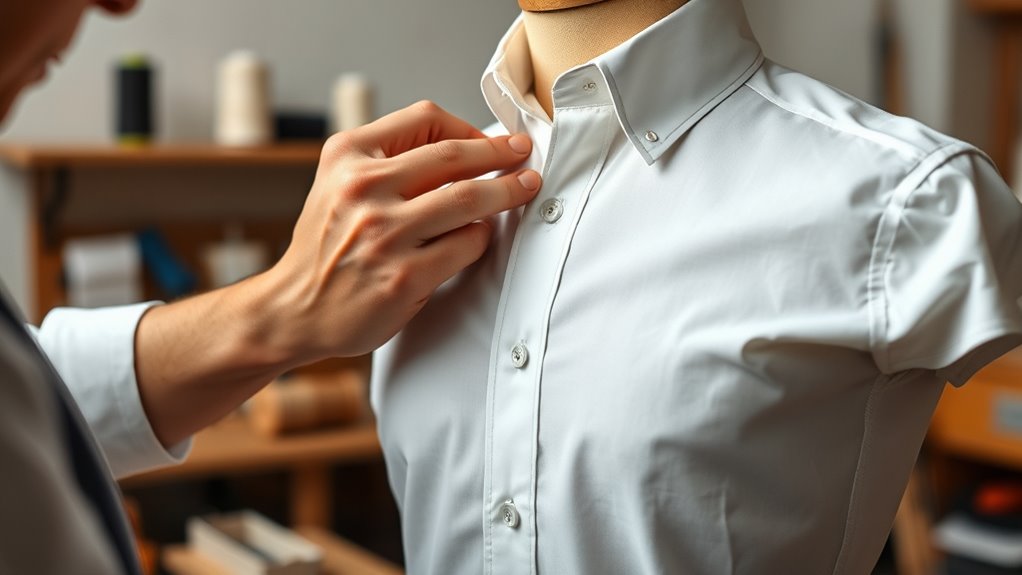

To slim down your button-up shirt for a better fit, focus on tailoring the sleeves and side seams. Take the shirt to a professional tailor who can carefully reduce sleeve width and slim the side seams without altering the shoulder seams. Proper adjustments will create a more fitted, streamlined silhouette that feels comfortable. If you want to learn specific steps and tips, keep exploring how precise tailoring can transform your shirt’s look and feel.
Key Takeaways
- Focus on narrowing the sleeves at the cuffs and upper arms for a sleeker, more fitted appearance.
- Have the side seams taken in to reduce overall width and create a slimmer silhouette.
- Adjust the back yoke by removing excess fabric for a more tailored fit across the shoulders.
- Ensure the sleeve seams align properly after alterations to maintain comfort and natural movement.
- Work with a professional tailor to achieve precise, balanced slimming adjustments without sacrificing comfort.

A well-tailored men’s shirt can substantially enhance your appearance and boost your confidence, but achieving that perfect fit requires attention to detail. One of the most important aspects of tailoring a button-up is selecting the right fabric. The fabric you choose impacts not only how the shirt looks but also how it feels and moves with you. Opt for high-quality cotton or cotton blends with a bit of stretch for comfort and durability. Heavier fabrics tend to hold their shape better and give a more structured look, while lighter fabrics can offer a softer, more casual appearance. When selecting fabric, consider your usual activities and personal style to find a balance between form and function.
Once you’ve picked the fabric, the next step involves adjusting the sleeves to guarantee a clean, tailored fit. Sleeve adjustment is vital because poorly fitted sleeves can ruin the overall look of an otherwise perfect shirt. If your sleeves are too loose, they can look baggy and detract from your silhouette. Conversely, sleeves that are too tight restrict movement and cause discomfort. To get this right, you should try on the shirt and examine how the sleeves sit on your arms. Ideally, the sleeve should hug your arm comfortably without excess fabric bunching up or pulling tight. When tailoring, a professional can take out excess fabric at the cuff or upper arm to create a sleeker, slimmer profile. This process often involves narrowing the sleeve width while maintaining the integrity of the shoulder seam, which is essential for a natural look.
In addition to sleeve adjustments, paying attention to other details such as the side seams and back yoke will help slim down the shirt for a sharper fit. But sleeve adjustments are often the most noticeable and can dramatically improve how a shirt contours to your arms. When you work with a tailor, communicate exactly how you want the sleeves to fit—whether you prefer a more fitted or slightly relaxed look. Remember, the goal isn’t just to make the shirt smaller but to create a harmonious silhouette that complements your body shape.
Frequently Asked Questions
Can I Tailor a Shirt Without Professional Help?
Yes, you can tailor a shirt yourself if you’re careful. Focus on preserving the fabric by using proper sewing techniques, and start with small adjustments to avoid damage. Keep cost considerations in mind—using basic tools and materials helps save money. Practice on an old shirt first to build confidence. With patience and attention to detail, you can achieve a better fit without professional help.
How Much Does It Cost to Alter a Men’s Shirt?
You can expect suit tailoring to alter a men’s shirt costs between $10 and $30, depending on the work needed. If you’re concerned about fabric shrinkage, a professional tailor can help manage it during alterations. Keep in mind, minor adjustments like slimming the sides are usually affordable, but more complex changes may increase the price. Always ask your tailor for a quote before proceeding to guarantee it fits your budget.
Will Tailoring Affect the Shirt’s Fabric or Color?
If you tailor your shirt, the process typically preserves fabric and color if done correctly. For example, a tailor might take in the sides of your shirt, ensuring fabric preservation and color maintenance. You won’t notice fading or damage if they use proper techniques. Be sure to choose an experienced tailor to prevent any issues, so your shirt retains its original look and quality after alteration.
How Long Does a Typical Shirt Alteration Take?
A typical shirt alteration takes about 1 to 2 hours, depending on the adjustments needed. During this process, you’ll notice fabric stretching slightly as the tailor refines the fit, especially around the waist and sleeves. Seam reinforcement is also performed to ensure durability after slimming the shirt. Communicate your time expectations clearly to your tailor, and they can prioritize the work to suit your schedule.
Can I Tailor a Shirt Myself With DIY Methods?
Yes, you can try DIY tailoring for beginner adjustments, but it requires patience and some basic sewing skills. Start with simple fixes like taking in the sides or adjusting the sleeves. Use a sewing kit and follow online tutorials to guide you through the process. Keep in mind, careful measurements and steady sewing are key to achieving a better fit, so proceed gradually and practice on an old shirt first.
Conclusion
Remember, a well-fitted shirt not only looks sharp but also boosts your confidence. Tailoring may seem like a small step, but it makes a big difference in your overall style. Don’t be afraid to customize your wardrobe to suit your body perfectly. As the saying goes, “The devil is in the details,” so take the time to get it just right. When your shirt fits like a glove, you’ll feel unstoppable.