
TL;DR

Get business pricing on tools and workshop supplies
- Business-only prices and quantity discounts
- Tax-exempt purchasing
- Multiple users, one account, clear invoices
Hunker reports on a DIY project that turns the bottom half of a clean plastic milk jug into a woven-style vase using twine, jute rope and hot glue. The finished piece is intended for faux flowers; the source does not establish that it is watertight or suitable for fresh blooms.
Hunker has reported on a DIY craft that repurposes the bottom half of a plastic milk jug as a small woven-style vase, using twine, jute rope and hot glue. The project offers a way to reuse household packaging for decorative faux-flower arrangements, though the source does not say the finished container is watertight.
The design comes from On 9 Sky DiY, which Hunker identifies as the creator of a short YouTube video showing the basic method. The jug is cut horizontally, with its upper portion discarded. The sides of the remaining bottom section are then marked at even intervals and cut into narrow vertical strips, stopping before the plastic curves down toward the base.
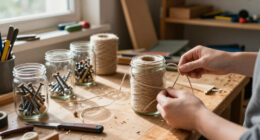
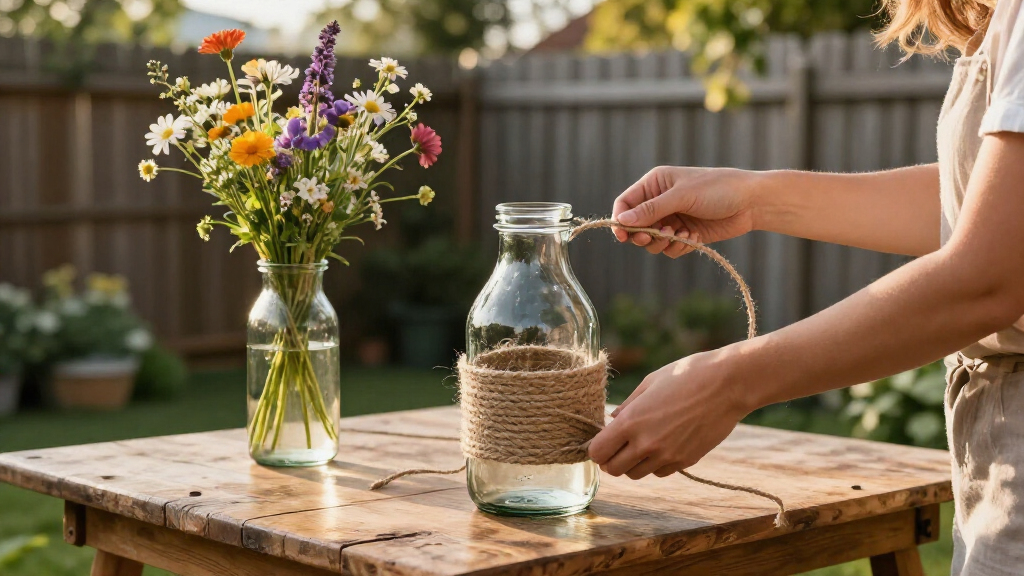
After the strips are flexed outward, thin twine is woven around them, starting near the bottom and continuing upward. The weave stops about a quarter-inch below the top edge. Jute rope is glued around the top rim and around the base, where it spirals outward from the center and climbs the sides to conceal the plastic. The project calls for a ruler, marker, scissors and hot glue, in addition to the jug and fiber materials.
Hunker says an optional piece of burlap or additional twine can cover exposed plastic inside the bottom. The report also suggests replacing the jute with colored cotton macrame cord or yarn for a different finish. It describes the resulting vase as suitable for faux flower arrangements, pairing their color with the earthy texture of the fibers.
A Second Use for Milk Jugs
The project gives readers a practical example of reusing a common plastic container rather than immediately discarding it. It also relies on accessible craft materials and a short sequence of steps, making the idea adaptable for people who want a small decorative project without buying a purpose-made vase.
The environmental benefit should not be overstated: the source presents this as one reuse idea, but provides no figures on waste reduction, material savings or the craft’s overall environmental impact. Its immediate value is more modest and specific: a milk jug can serve as the hidden structure for a handmade decorative object, while twine or rope changes its appearance.
There is also a functional limitation. Because the instructions describe covering a plastic jug section and do not provide a test of its seal, the report supports using it for faux flowers, not treating it as a proven water-holding vessel. Readers considering fresh flowers would need a separate watertight insert rather than assuming the woven exterior itself can hold water.
Popular right now

Shark Rocket Pet Plus Corded Stick Vacuum, Lightweight, Bordeaux, HV322

Apple AirPods Pro 3 Wireless Earbuds with Active Noise Cancellation

Dyson Airwrap i.d. Multi-Styler for Straight and Wavy Hair
As an affiliate, we earn on qualifying purchases.
The Video Behind the Craft
Hunker’s article is based on a video by On 9 Sky DiY, rather than a reported product launch or a newly announced commercial item. The supplied report gives a step-by-step description of the technique and names the materials, but does not state when the video was posted or provide details about testing the finished vase.
The craft follows a straightforward construction approach: cut plastic becomes a frame, twine forms the woven sides, and jute rope hides the cut edges and base. Hunker notes that the fibers are relatively inexpensive and gives one example, saying a roll of PerkHomy natural jute twine was listed for about six dollars on Amazon. That is a price example in the report, not a guarantee of current pricing or availability.
“With some twine and a plastic milk jug, you can create a stunning vase, perfect for holding faux flower arrangements.”
— Hunker, describing the project
Water Use and Durability Are Unverified
The source does not say whether the finished craft has been tested for leaks, long-term durability or stability. It recommends faux flowers but does not explicitly explain whether a separate container is required for fresh flowers. Readers should not infer from the word “vase” that the woven piece is watertight.
Other details are also absent from the supplied report, including the video’s publication date, the exact amount of twine or rope needed, and the time required to finish the project. The approximate twine price cited by Hunker may also change. These gaps do not alter the described method, but they limit what can be concluded about the craft’s cost, performance and suitability for uses beyond decoration.
Check Fit Before Adding Flowers
Anyone following the instructions can begin with a clean, half-gallon-sized jug and the listed tools, then adjust the fiber color or finish to suit the intended display. Because the method involves cutting and gluing, work carefully with scissors and hot glue, following the tool maker’s safety directions and allowing glue to cool before handling finished sections.
For the use described by Hunker, the next step is to add faux stems and check that the vase sits securely on its display surface. If fresh flowers are intended, use a separate watertight container inside the decorative shell unless its ability to hold water has been independently checked. The supplied report announces no follow-up testing or additional development.
Key Questions
What do I need to make the milk-jug vase?
The instructions call for a clean plastic milk jug, thin twine, jute rope, hot glue, scissors, a ruler and a marker. Burlap or extra twine can be used to cover exposed plastic inside the base.
Can the finished vase hold fresh flowers?
The report describes it as being for faux flower arrangements and does not confirm that it holds water. Use a separate watertight container for fresh flowers unless the finished piece has been checked for leaks.
How are the sides made?
Cut evenly spaced vertical strips into the lower half of the jug, stopping before the plastic curves toward the base. Flex the strips outward, then weave twine around them from the bottom upward.
Can I change the color or texture?
Yes. Hunker suggests swapping jute twine and rope for colored cotton macrame cord or yarn. The source presents this as an optional customization, not a required part of the method.
Source: hunker.com