To prevent tangles and breaks when embroidering with metallic threads, choose the right needle, like one with a larger eye, and handle the thread gently to avoid tension. Use longer stitches and keep your workspace organized so you can easily untangle knots. Store your threads properly and test different types on scrap fabric first. For more tips on mastering metallic embroidery without issues, keep exploring ways to make this shimmering craft easier.
Key Takeaways
- Choose the right needle with a large eye and sharp tip designed for metallic threads.
- Use longer, gentle stitches to reduce stress and prevent thread breakage during embroidery.
- Store metallic threads properly and untangle frequently to avoid knots and fraying.
- Test thread length and type on scrap fabric to identify the best handling techniques.
- Keep workspace organized, pause to rethread if tangling occurs, and handle threads carefully.
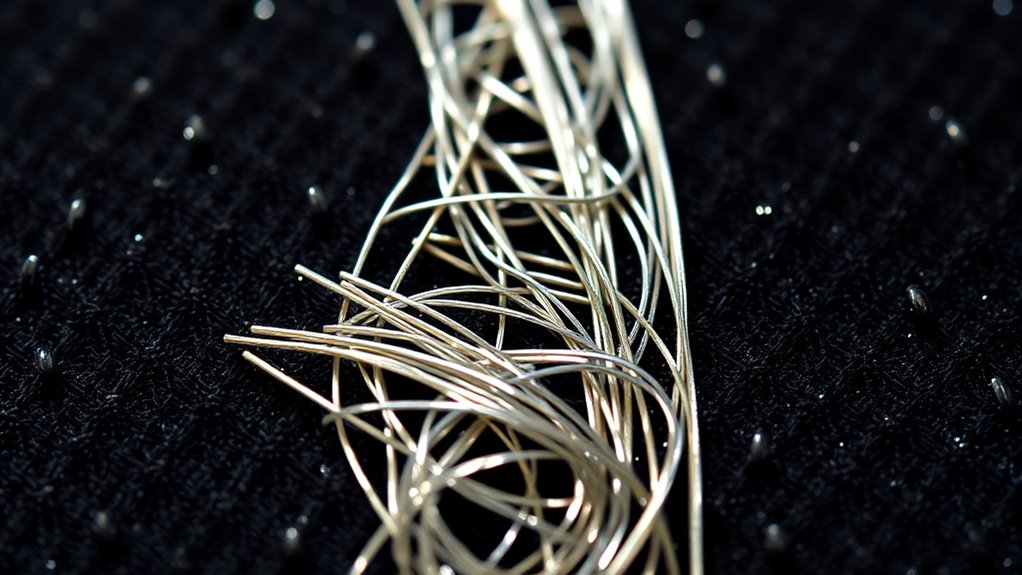
Have you ever wondered how to add a touch of glamour to your embroidery projects? Metallic threads instantly elevate your work, giving it a luxurious shimmer that catches the eye. But working with these threads can be tricky—they tend to tangle, break, or fray if you’re not careful. To master metallic embroidery, understanding the different metallic thread types and choosing the right embroidery needle are essential first steps. Metallic threads come in various forms, including stranded, ribbon, and smooth or monofilament types. Stranded metallic threads are composed of multiple fine metallic strands twisted together, which makes them shiny but prone to splitting and tangling. Ribbon metallic threads, thicker and more textured, create bold, reflective lines but require careful handling to prevent fraying. Monofilament metallic threads are smooth, nylon-like strands that glide easily through fabric, reducing tangling risks. Knowing which type you’re working with helps you adapt your technique accordingly.
Next, selecting the proper embroidery needle plays a crucial role in preventing breakage and tangles. Not all needles are created equal, especially when working with metallic threads. Look for needles labeled specifically for metallic or heavy embroidery work—these usually have a sharper point and a larger eye. The larger eye allows the metallic thread to pass through more smoothly, reducing friction and tension that can cause breaks. Using a needle with a ballpoint or a specially designed eye can further decrease snagging. When threading your needle, be gentle and avoid pulling the thread too tightly, as excessive tension can also lead to breakage. It’s a good idea to test different needle sizes and types on scrap fabric before starting your main project. This way, you can find the combination that works best for your specific metallic thread and fabric. Additionally, storing your metallic threads properly to prevent tangling can help maintain their quality and make your embroidery process more efficient.
In addition to choosing the right thread and needle, consider your stitching technique. Use longer stitches and avoid pulling the thread tight—this minimizes stress on the metallic fibers. When working with metallic threads, also keep your workspace organized; untangle threads regularly and store them properly to prevent knots. If you notice your thread starting to tangle or fray mid-stitch, pause and rethread your needle, or switch to a new length of thread. Taking these small steps can considerably reduce the risk of tangles and breaks, making your embroidery experience smoother and more enjoyable. With patience and the right tools, you’ll find metallic embroidery not only manageable but also incredibly rewarding, adding that glamorous, shimmering touch to your creations.
Top picks for "embroidery metallic thread"
Open Amazon search results for this keyword.
As an affiliate, we earn on qualifying purchases.
Frequently Asked Questions
Can Metallic Threads Be Used on All Fabric Types?
Yes, metallic threads can be used on most fabric types, but fabric compatibility varies. You’ll find that their thread versatility makes them suitable for both delicate and sturdy materials. However, to prevent tangles and breaks, choose the right needle and adjust your tension. Test on scrap fabric first to make certain of smooth stitching. With proper technique, metallic threads can add a stunning metallic shine to your embroidery projects on various fabrics.
Is Special Needle Size Recommended for Metallic Embroidery Threads?
You should definitely use a special needle size for metallic embroidery threads. A finer needle, like a size 75/11 or 70/10, helps prevent tangles and breaks. Adjust your thread tension slightly lower to reduce stress on the thread. Using the right needle size makes your stitches smoother, keeps your metallic threads intact, and prevents frustrating breaks, making your embroidery project look flawless and professional.
How Do I Store Metallic Threads to Prevent Damage?
To prevent damage, store metallic threads in a cool, dry place away from direct sunlight. Use sealed containers or zip-lock bags to keep them dust-free and prevent tangling. Wrap the threads loosely on spools or bobbins, avoiding tight coils that can cause breaks. Regularly check your storage to guarantee no moisture or pests have contaminated your threads. Proper storage tips help maintain their shine and durability for your embroidery projects.
Are Metallic Threads Suitable for Machine Embroidery or Hand Sewing Only?
Metallic threads are suitable for both machine embroidery and hand sewing, depending on their compatibility and your chosen techniques. You should check the metallic thread’s compatibility with your sewing machine to avoid breaks or tangles. Use suitable sewing techniques, like reducing tension and using sharp needles, to guarantee smooth stitching. With proper handling, metallic threads add a stunning shine to your projects whether you sew by hand or machine.
Can Metallic Threads Be Washed Repeatedly Without Tarnishing?
Yes, metallic threads can be washed repeatedly without tarnishing if you follow proper care instructions. To maintain their tarnish resistance, gently hand wash or use a delicate cycle with mild detergent. Avoid harsh chemicals and excessive agitation, as these can cause tarnishing or damage. Dry flat and store in a cool, dry place. Proper care guarantees your metallic threads stay shiny and vibrant, even after multiple washes.
Conclusion
To prevent tangles, breaks, and frustration, always choose the right needle, keep your threads smooth, and handle them gently. Stay patient, stay cautious, and stay consistent. When you select the proper tools, maintain your tension, and take your time, you’ll create beautiful metallic embroidery without mishaps. Remember, success with metallic threads comes from attention, care, and practice. Keep these tips in mind, and your embroidery will shine with brilliance and durability every time.