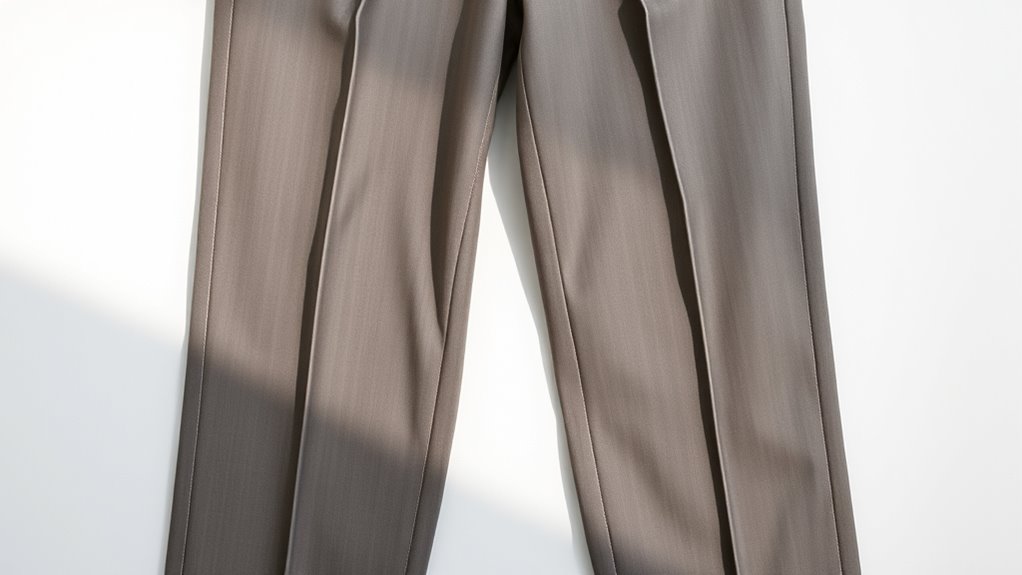

To narrow your trousers for a slimmer silhouette, try on the pants inside out and mark the desired taper with fabric chalk or a marker. Use a flexible ruler to make sure symmetry and cut carefully with sharp scissors or a rotary cutter. Sew a straight, gradually tapering stitch along the new line, reinforcing the seam for durability. Choosing the right fabric and style helps achieve a clean finish—continue exploring to master the perfect taper for your look.
Key Takeaways
- Choose lightweight, flexible fabrics like cotton blends or lightweight wool for easier, cleaner tapering results.
- Try on the pants inside out and mark the desired taper with chalk, ensuring symmetry on both legs.
- Sew a new, gradually tapering seam from the knee to the ankle using a straight stitch for a sleek, slim silhouette.
- Reinforce seams to prevent fraying and ensure durability of the tapered area.
- Start with conservative adjustments, then try on the pants to make further refinements for a perfect fit.
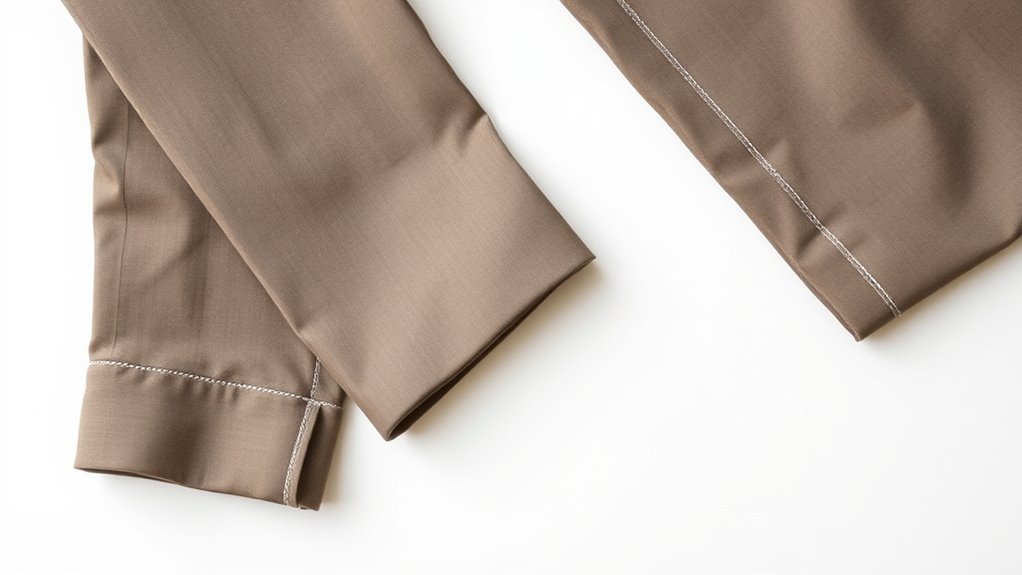
Ever wondered how to give your pants a sleek, modern look? Tapering your pant legs is a great way to achieve that slim, tailored silhouette. The process might seem daunting at first, but with the right approach, you can transform your existing trousers into stylish, figure-flattering pieces. The key to successful tapering begins with careful fabric selection and considering style compatibility. Not all fabrics respond equally well to alterations, so choosing the right material is crucial. Thinner, more flexible fabrics like lightweight wool, cotton blends, or stretch denim tend to be easier to work with because they hold shape well and are less prone to puckering or distortion during the alteration process. Conversely, thicker or stiffer fabrics, such as heavy denim or canvas, may require more skill and caution to ensure a clean, smooth finish.
Once you’ve selected a fabric that suits your style, it’s essential to think about style compatibility. Tapering can dramatically change the look of trousers, so consider how the altered fit complements your overall wardrobe. If your pants are already slim-fitting, tapering might just sharpen the silhouette. For looser styles, you might want to gradually narrow the legs to avoid an overly tight or awkward fit. Think about your body shape and personal style—aim for a tapered look that enhances your natural lines without sacrificing comfort. It’s also worth considering the occasion or setting where you’ll wear the pants. Slimmer, tapered trousers often look more polished and modern, making them suitable for both casual and formal settings. Additionally, understanding the fabric behavior can help you determine the best approach to tapering without causing unwanted puckering or distortion.
When it comes to execution, start by trying the pants on inside out and marking the desired taper with tailor’s chalk or fabric marker. Use a flexible ruler or measuring tape to ensure symmetry on both legs. It’s better to cut a little conservatively at first—you can always take in more if needed. Use sharp scissors or a rotary cutter for precise cuts, and sew the new seam with a straight stitch, gradually tapering toward the ankle. Reinforce the seams if necessary to prevent fraying. If you’re unsure about sewing skills, consider taking your pants to a professional tailor who can achieve a clean, precise taper with minimal risk.
Ultimately, tapering your pant legs is about balancing style, comfort, and fabric behavior. When done thoughtfully, it’s a simple way to customize your wardrobe and give your trousers a fresh, modern upgrade. With attention to fabric choice and style compatibility, you’ll craft a sleek, tailored look that’s uniquely you.

Fiskars 8" RazorEdge Fabric Scissors, Heavy Duty & Sharp Fabric Shears
- Blade Material: Premium-grade stainless steel blades
- Cutting Precision: Ultra-sharp, precise cutting to tip
- Cutting Action: Smooth cutting performance
As an affiliate, we earn on qualifying purchases.
As an affiliate, we earn on qualifying purchases.
Frequently Asked Questions
Can Tapering Be Done on Any Fabric Type?
Tapering can be done on many fabric types, but fabric considerations are important. For stretchy or soft fabrics like knits, you’ll need different tapering techniques compared to sturdy fabrics like denim or wool. Thinner fabrics may require careful sewing to avoid puckering, while thicker materials need more precise cutting. Always assess the fabric’s weight and stretch to choose the right tapering techniques, ensuring your trousers stay comfortable and maintain their shape.
How Much Should I Taper My Pants for a Natural Look?
To achieve a natural look, you should taper your pants gradually, aiming for a subtle fit rather than a drastic change. Use precise sewing techniques, like sewing with a slight inward stitch, and consider fabric considerations—stretchy fabrics may need less tapering, while stiffer fabrics can handle a more noticeable change. Test on scrap fabric first, then make small adjustments until the taper complements your silhouette smoothly and comfortably.
Is Professional Tailoring Necessary for Effective Tapering?
Think of DIY adjustments like tuning a guitar—it’s possible but tricky. Professional tailoring isn’t always necessary, especially if you understand fabric considerations and have a steady hand. A tailor can verify precise tapering, avoiding puckering or uneven lines. If you’re comfortable with sewing and fabric types, you can try tapering your pants yourself, but for a crisp, polished look, a pro’s touch often makes the difference.
Will Tapering Affect the Durability of My Trousers?
Tapering your trousers shouldn’t affect their durability if you care for them properly. When you or a tailor sew the new stitches, use high-quality sewing stitches and avoid over-tightening, which can stress the fabric. Remember to follow fabric care instructions to prevent weakening the material over time. Properly done tapering guarantees your trousers stay durable and stylish, maintaining their fit and longevity.
How Do I Maintain the New Fit After Tapering?
Once you’ve tapered your trousers, you need to keep the style consistent and care for the fabric properly. To maintain the new fit, wash them according to the care label, avoid over-washing, and hang or fold them neatly. Regularly check the stitches and address any wear promptly. Think of it as keeping the ball rolling—good fabric care and consistent style, and your trousers will stay sharp and fitted for the long haul.
Conclusion
By tapering your pant legs, you can instantly achieve a sleeker, more streamlined look. Imagine Sarah, who loved her jeans but felt they looked bulky. After narrowing the leg openings, she gained confidence and a modern silhouette. Whether you’re tailoring your favorite pair or updating an old wardrobe staple, a simple taper can make all the difference. So, give it a try—you’ll love how fresh and polished your style becomes in just a few easy steps.