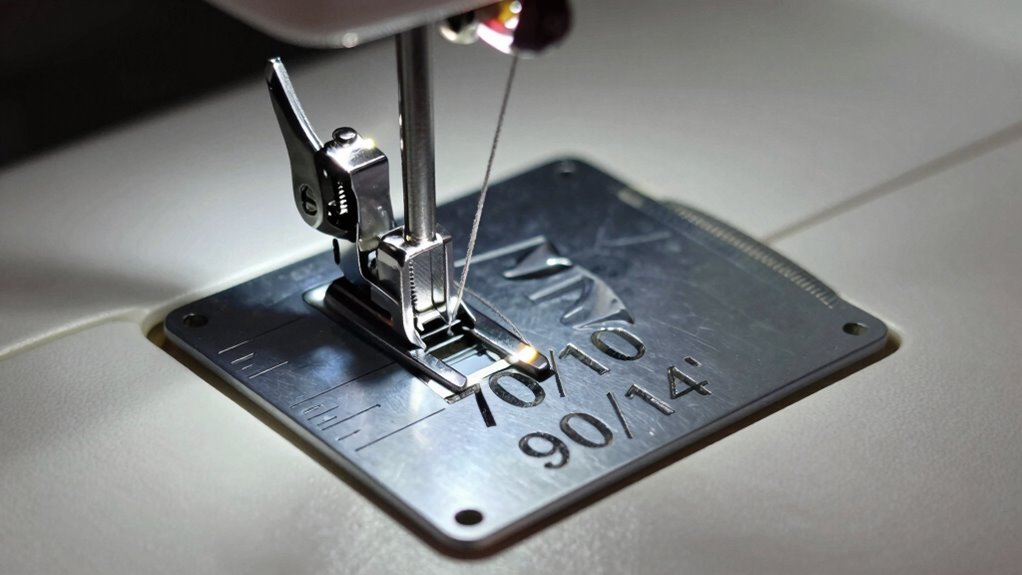

Needle sizes like 70/10 and 90/14 tell you the needle’s diameter and length, ensuring you pick the right one for your fabric. The first number (70, 90) indicates thickness, with smaller numbers for delicate fabrics and larger for heavy-duty projects. The second number relates to length or strength. Understanding this system helps prevent issues like skipped stitches. If you want to master selecting the perfect needle, keep exploring for more tips.
Key Takeaways
- Needle sizes like 70/10 and 90/14 indicate both diameter (metric) and European size, affecting fabric and thread suitability.
- The first number (e.g., 70) shows needle diameter in hundredths of a millimeter, determining fabric delicacy.
- The second number (e.g., 10) represents the European sizing, correlating with needle thickness and strength.
- Thinner needles (e.g., 70/10) are for delicate fabrics, while thicker ones (e.g., 90/14) are for heavier textiles.
- Color coding on packaging helps quickly identify needle sizes and compatible sewing projects.

SCHMETZ Universal Sewing Machine Needles, Three 10-Pack Assortment, 30 Needles, 70/10, 80/12, 90/14, 100/16
Three Cards of Assorted Universal Needles (130/705 H), 30 Needles Total
As an affiliate, we earn on qualifying purchases.
As an affiliate, we earn on qualifying purchases.
What Do Needle Sizes Like 70/10 and 90/14 Mean?

Needle sizes like 70/10 and 90/14 provide important information about the needle’s thickness and length. The first number indicates the needle’s diameter, which relates to fabric blending—thinner needles for delicate fabrics, thicker ones for heavier materials. The second number corresponds to the needle length or size, often linked to the needle’s overall strength and suitability for specific projects. Needle color coding helps you quickly identify these sizes, with different colors representing various thicknesses and types. For example, a smaller size like 70/10 might have a specific color to guide you in selecting the right needle for lightweight fabrics, while a larger size like 90/14 has its own color code for sturdier fabrics. Understanding these codes ensures you choose the correct needle for your fabric blending needs. Additionally, European standards often influence needle sizing and color coding, ensuring consistency across brands and types. Recognizing needle size coding patterns can help you make better choices and avoid damage to your fabrics.

SCHMETZ Jean & Denim Sewing Machine Needles – Precision Needles for Heavy Fabric, Size 110/18, 5-Needle Cards, Pack of 1
MASTER EVERY STITCH: Compatible with all home sewing machines, SCHMETZ Jean & Denim Needles handle thick fabric like…
As an affiliate, we earn on qualifying purchases.
As an affiliate, we earn on qualifying purchases.
How Do Needle Sizes Use Both Metric and Imperial Measurements?
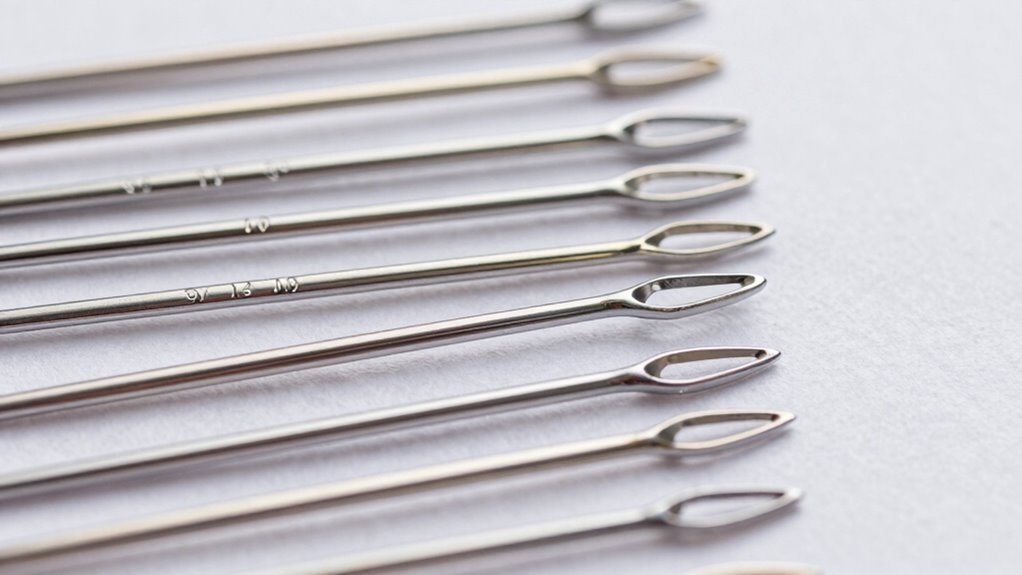
Because needle sizes are expressed using both metric and imperial measurements, understanding these two systems helps you select the right needle. The metric size, like 70, indicates the diameter of the needle in hundredths of a millimeter, which relates to fabric properties—thinner needles work better for delicate fabrics, while thicker ones suit heavier materials. The imperial number, such as 10, refers to the needle’s overall thickness or the size of the eye, affecting thread compatibility. Knowing both measurements guarantees you choose a needle that matches your fabric’s requirements and thread type. This dual measurement system helps you avoid issues like skipped stitches or fabric damage, making your sewing experience smoother and more precise. Additionally, needle size systems are standardized worldwide, ensuring consistent results regardless of where you purchase your supplies. Being familiar with measurement conversions can further help you compare needle sizes across different brands and regions, especially when dealing with international sewing standards.
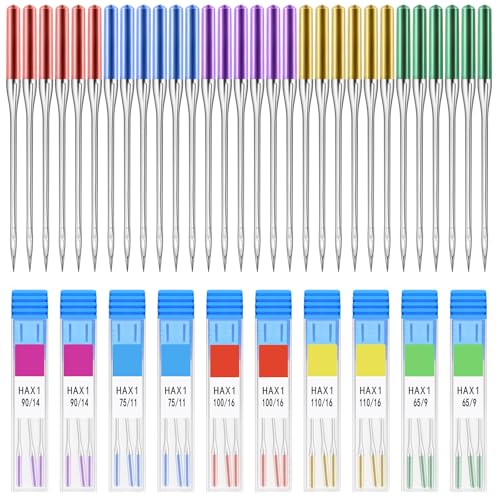
30 PCS Universal Sewing Machine Needles, Compatible with Singer, Brother and Old Sew Machines, Sizes 9, 11, 14, 16, 18, Bright Color, Regular Point Sewing Needles
What You Get: Universal sewing machine needles pack includes 30 count needles in sizes 65/9, 75/11, 90/14, 100/16,…
As an affiliate, we earn on qualifying purchases.
As an affiliate, we earn on qualifying purchases.
Why Do Needle Sizes Matter for Your Fabric and Thread Compatibility?

Choosing the right needle size is essential to guarantee your fabric and thread work together seamlessly. The correct size ensures proper stitching, prevents damage, and maintains thread compatibility. For fabrics with stretch, use a finer needle like 70/10 to avoid skipped stitches. Thicker fabrics or heavy‑duty projects require larger needles like 90/14 to handle the material’s density. Using incompatible needle sizes can cause skipped stitches, fabric puckering, or thread breakage. Needle Selection is crucial for achieving professional results and avoiding common sewing issues. Additionally, understanding needle size standards helps you select the appropriate tools for various sewing tasks. Being familiar with sizing conventions can further improve your sewing accuracy and efficiency. Recognizing fabric types and how they relate to needle sizes can also improve your overall sewing experience. Furthermore, knowing how celestial influences might subtly impact personal traits can be an interesting addition to your understanding of self and style.

Sewing Machine Needles, 50 PCS Universal Sewing Machine Needle, Compatible with Singer, Brother, Janome, Varmax, Sizes HAX1 65/9, 75/11, 90/14, 100/16, 110/18 (50 PCS)
PREMIUM QUALITY MATERIAL: Made of top quality high-strength steel, sharp smooth, sturdy and durable, not easy to bend,…
As an affiliate, we earn on qualifying purchases.
As an affiliate, we earn on qualifying purchases.
How to Choose the Right Needle for Your Fabric Type and Project Goals?

Selecting the right needle for your fabric and project starts with understanding your goals. First, consider your fabric stretch, as needles designed for stretch fabrics, like ballpoint needles, prevent sniking. Second, check thread compatibility; using the correct needle type guarantees smooth stitching with your thread. Third, match the needle size to your fabric weight: smaller sizes for lightweight fabrics, larger for heavy-duty textiles. Fourth, align your needle choice with your project goals—fine needles for delicate work, sturdier ones for heavy or layered projects. Additionally, understanding needle sizes and types ensures you select the most appropriate tools for your sewing tasks. By focusing on fabric stretch, thread compatibility, size, and project type, you ensure better stitch quality and fewer frustrations. Making informed choices helps your sewing projects turn out cleaner and more professional.
What Are the Most Common Needle Sizes and Their Typical Uses?
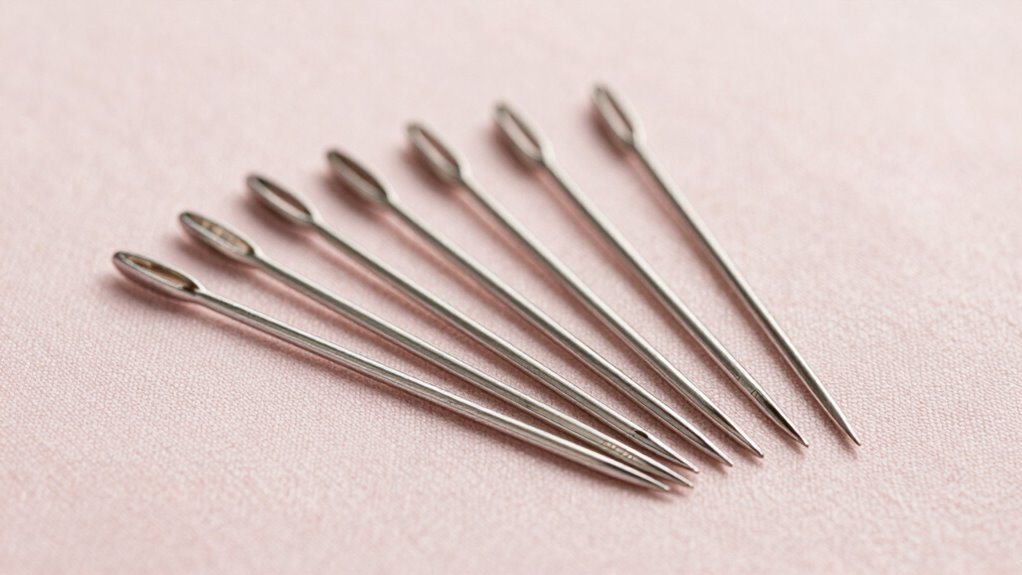
The most common sewing needle sizes range from 60/8 to 110/18, each designed for specific fabric weights and project types. For lightweight fabrics like silk or chiffon, you’ll typically use smaller sizes such as 60/8 or 70/10, which glide smoothly through delicate material. Medium-sized needles like 80/12 and 90/14 suit quilting, dress fabrics, and fabric blends, providing strength and precision. Choosing the right needle size and type can help you select the best tools for different projects and improve your overall sewing results. Proper needle selection minimizes fabric damage and thread breakage, ensuring cleaner stitches. Heavy fabrics like denim or canvas require larger sizes like 100/16 or 110/18 for durability. Needle coatings also matter: titanium or chrome coatings reduce friction and increase longevity, especially when working with tough fabric blends. Selecting the appropriate needle material can enhance performance and durability, depending on your sewing needs. Being aware of fabric weight assists in matching the needle size to your specific project, ensuring optimal results. Additionally, understanding needle point types can help prevent skipped stitches and fabric snags, making your sewing experience smoother.
How Can You Read Needle Packaging and Labels to Find the Right Size?
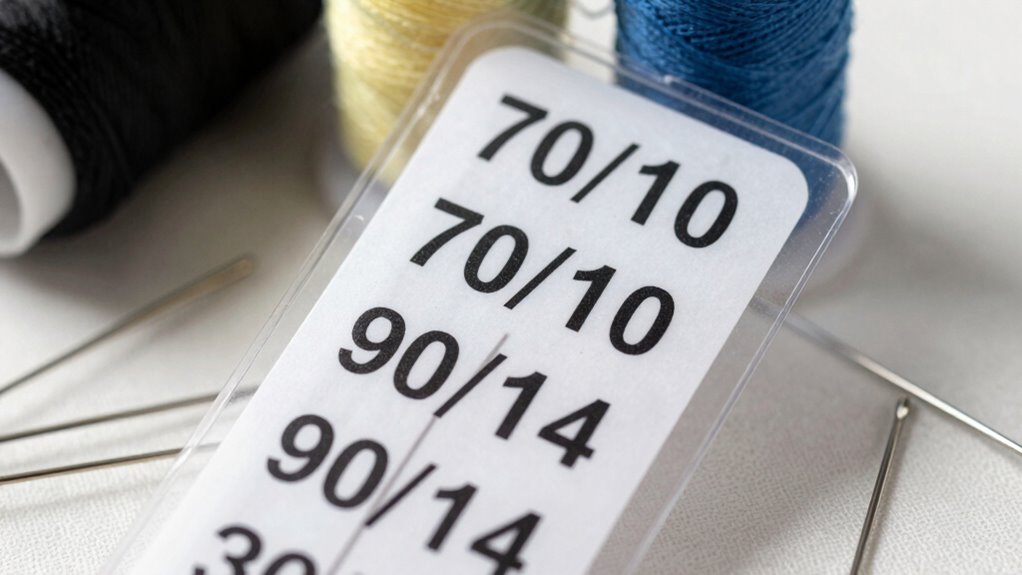
To find the right needle size, you need to understand how to read packaging labels carefully. Look for clear information on needle sizes and types to match your specific needs. Knowing how to interpret these labels helps guarantee you select the best needle for your task. Additionally, being aware of proper handling techniques ensures safe and effective use of needles. Being transparent about product information can also assist in making informed decisions. For example, understanding needle packaging labels can help identify the appropriate size quickly and accurately. Familiarity with affiliate disclosures can also inform you about potential recommendations or sponsored content related to needle products. Moreover, understanding market trends can help you choose products that are both reliable and up-to-date.
Understand Packaging Labels
Ever wonder how to quickly find the right needle size just by looking at the packaging? It’s easier than you think. First, check the label for the size code, like 70/10 or 90/14. Next, note the manufacturer’s symbols or color codes that indicate the needle type. Then, look for fabric care instructions, which can guide you on needle strength and material compatibility. Fourth, confirm if the packaging mentions sewing machine maintenance tips, ensuring the needle matches your machine’s requirements. Lastly, verify any other symbols or numbers that specify needle length or special features. By understanding these packaging labels, you’ll effortlessly select the right needle for your project, protecting your fabric and ensuring smooth sewing. Proper packaging reading simplifies needle selection and keeps your sewing machine in top shape.
Interpret Needle Sizes
Have you ever looked at a needle package and felt unsure about which size to choose? To interpret needle sizes, start by understanding the numbers on the packaging. The first number (like 70 or 90) refers to the metric size, indicating the diameter of the needle shaft; the higher the number, the thinner the needle. The second number (such as 10 or 14) is the European sizing system. When selecting a needle, consider your thread tension and sewing machine settings. A thinner needle (like 70/10) works well with delicate fabrics and fine thread, while a thicker needle (like 90/14) suits heavier fabrics. Matching needle sizes to your project guarantees proper thread tension and smooth sewing, preventing skipped stitches and fabric damage. Additionally, understanding Gold IRA Markets can help you make informed investment decisions for your financial future.
Match Needle Types
Reading needle packaging and labels carefully is essential to selecting the correct needle size and type for your project. To match needle types effectively, consider these steps:
- Check the fabric compatibility listed on the package to ensure the needle suits your material—whether it’s denim, silk, or stretch fabric.
- Identify the needle type, such as universal, ballpoint, or sharp, based on your fabric’s needs.
- Look at the packaging for size indicators, like 70/10 or 90/14, to verify the appropriate size for your project.
- Confirm that the needle’s shank matches your sewing machine’s requirements for proper fit and function.
This careful review helps guarantee smooth sewing and excellent results.
What Are the Best Tips for Troubleshooting Needle Issues and Ensuring a Perfect Stitch?
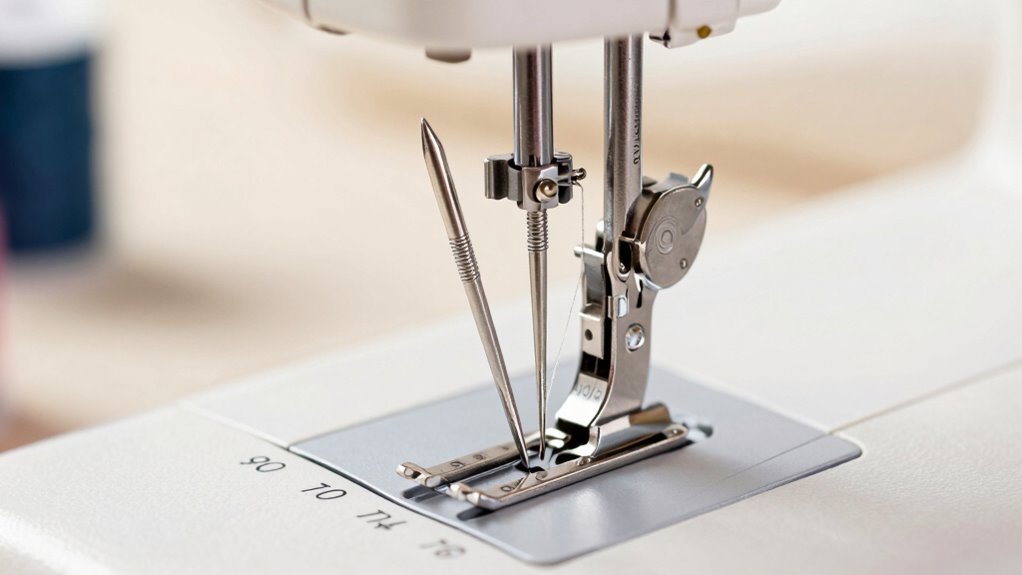
When you notice skipped stitches, uneven tension, or fabric puckering, troubleshooting your needle setup can often resolve the issue quickly. First, check your thread tension; if it’s too tight or too loose, it can cause irregular stitches. Adjust it gradually until stitches appear balanced. Next, examine needle alignment—ensure the needle is straight and properly inserted. A bent or improperly seated needle can lead to skipped stitches and uneven sewing. Also, confirm you’re using the correct needle size and type for your fabric and thread. Regularly cleaning your machine and replacing needles after every few projects can prevent many issues. Additionally, understanding your machine’s filtration system can help ensure dust and lint don’t interfere with smooth operation. Proper machine maintenance is essential for consistent performance and longevity. These simple steps help maintain consistent tension and proper needle positioning, resulting in a smooth, professional-looking stitch every time. Paying attention to needle compatibility can also prevent common sewing problems and improve your overall sewing experience. Understanding your machine’s safety features can help prevent accidents and ensure safe operation during troubleshooting.
Frequently Asked Questions
How Do Different Needle Sizes Affect Sewing Speed and Stitch Quality?
Different needle sizes impact your sewing speed and stitch quality. Smaller needles, like 70/10, move faster and are great for lightweight fabrics but can cause thread tension issues if not compatible. Larger needles, such as 90/14, suit thicker fabrics and provide stronger stitches. Always match needle size with your fabric and thread type to avoid tension problems and guarantee smooth, even stitching. Proper needle compatibility enhances both speed and stitch quality.
Are There Specific Needle Sizes Recommended for Specialty Fabrics Like Leather or Denim?
You’ll want specialty fabric needles, like leather sewing needles, for your projects. These needles are designed to pierce tough materials smoothly, preventing damage and ensuring clean stitches. For leather, choose a sturdy, sharp needle that handles the thickness and texture. Don’t settle for generic; the right needle size and type make all the difference, turning your sewing into a flawless journey through rugged terrains of fabric.
Can Using the Wrong Needle Size Lead to Machine Damage?
Using the wrong needle size can definitely damage your machine. It can cause skipped stitches, broken needles, or even harm the bobbin mechanism. Always check your machine compatibility before changing needle sizes, and store your needles properly to avoid rust or damage. Correct needle selection guarantees smooth sewing, extends your machine’s lifespan, and prevents costly repairs. Stay attentive to needle size to keep your machine running flawlessly.
How Often Should Sewing Needles Be Replaced for Optimal Performance?
You should replace your sewing needles after about 8 to 12 hours of use or every 6 to 8 projects, depending on your needle’s lifespan and the fabric type. Regular replacement guarantees peak performance, prevents skipped stitches, and reduces fabric damage. Keep an eye out for dullness, burrs, or bending, and swap out needles promptly for smooth sewing and to avoid machine issues.
Do Needle Sizes Vary Between Sewing Machine Brands or Models?
Did you know there are over 20 different sewing machine brands, each with unique requirements? Needle sizes do vary between brands and models, making brand compatibility essential. Some brands design needles for specific machines, meaning not all needles are interchangeable. Always check your machine’s manual to verify the needle size and type match, preventing damage and ensuring smooth sewing. Staying aware of these differences keeps your projects running flawlessly.
Conclusion
Now that you’ve cracked the code of needle sizes like 70/10 and 90/14, you’re practically a sewing superhero! With this knowledge, you’ll dodge broken threads, skipped stitches, and fabric disasters like a pro. No more guesswork or needle nightmares—just smooth, flawless sewing adventures ahead. So go ahead, wield those needles with confidence, and turn your fabric dreams into reality faster than you can say “sew perfect!”