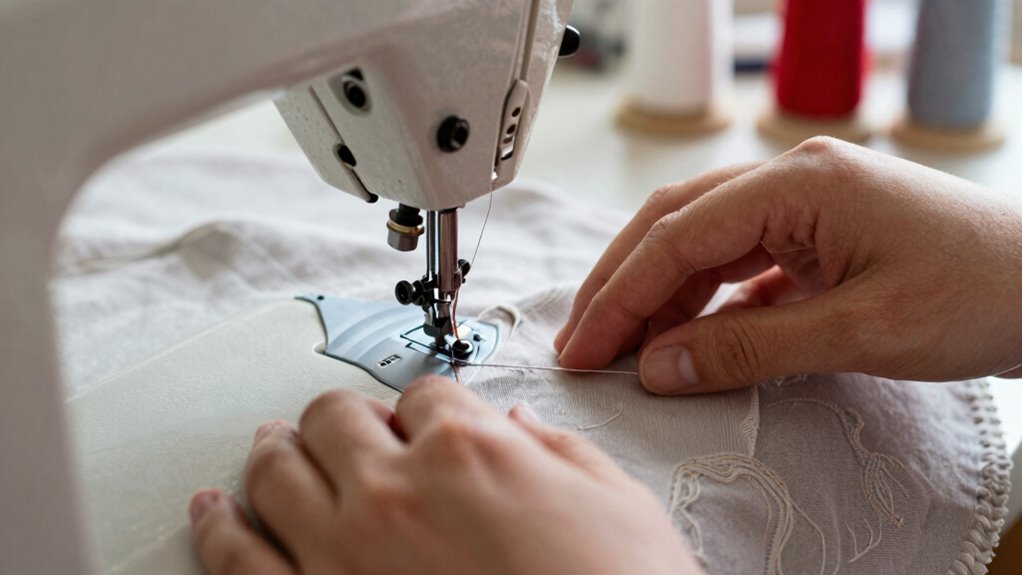
Slow sewing helps you focus on details like thread tension and fabric choice, which reduces mistakes and rework. By controlling your speed, you guarantee consistent, high-quality stitches and catch issues early, preventing larger problems later. Paying attention and being patient leads to a smoother sewing process overall. If you stay mindful and patient, you’ll finish faster with better results—and there’s more to discover about making your sewing even more efficient.
Key Takeaways
- Slow sewing allows for careful attention to detail, reducing mistakes and rework later.
- Steady pace helps maintain consistent stitch quality and tension control.
- Taking time ensures proper fabric handling, minimizing errors like puckering or uneven seams.
- Early troubleshooting of issues prevents larger problems, saving time overall.
- Mindful sewing fosters precision, resulting in fewer corrections and faster completion in the long run.
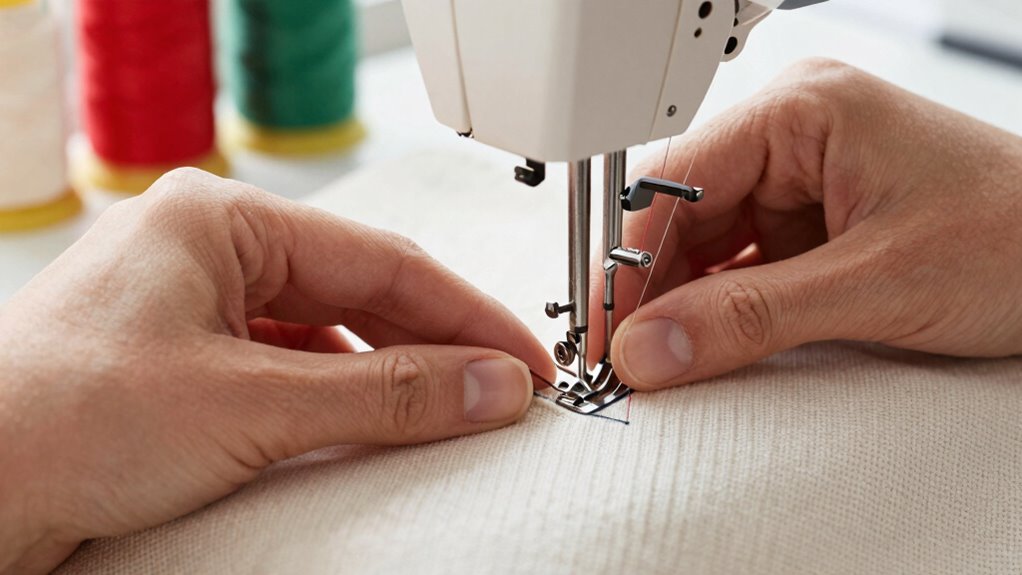
Many people believe that rushing through sewing projects saves time, but in reality, slow and deliberate stitching often leads to faster, better results. When you take your time, you’re more likely to pay attention to details like thread tension and fabric choice, which are essential for a smooth sewing process. Proper thread tension ensures your stitches are even and secure, preventing issues like puckering or skipped stitches that can slow you down with constant fixes. Instead of rushing to finish, you focus on adjusting your tension as needed, which pays off in the long run by reducing the need for reworking sections.
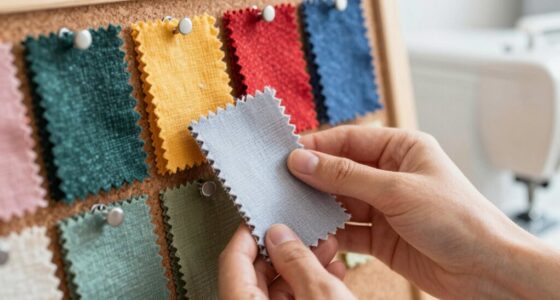
Fabric choice plays a significant role in how quickly your project comes together. If you select the right fabric for your pattern and intended use, you’ll find sewing becomes more straightforward. For example, lightweight cotton is easier to handle than slippery silk or thick denim. When you’re patient with fabric selection, you minimize frustrations like slipping fabric or uneven seams, which can prolong your work. Taking the time to prepare your fabric—pre-washing, ironing, and cutting accurately—also helps your project progress faster because you avoid issues caused by fabric distortion or inaccuracies later on. Being mindful of fabric handling techniques can further streamline your sewing process.
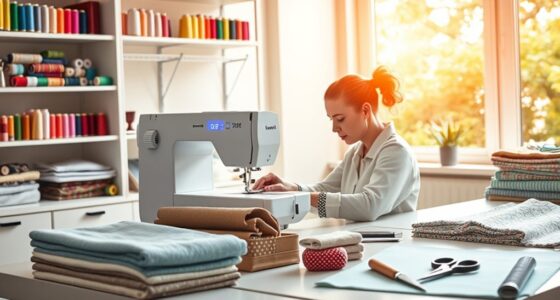
Sewing slowly doesn’t mean working at a snail’s pace, but rather maintaining a steady, controlled rhythm. When you sew too quickly, it’s easy to overlook important details like adjusting your thread tension or guiding the fabric properly. This oversight often leads to mistakes that require undoing stitches and starting over, which wastes time. Conversely, slow stitching gives you better control over your machine’s feed and stitch quality, reducing errors and the need for corrections. This careful approach means you spend less time troubleshooting and more time sewing efficiently. Developing a sewing rhythm helps maintain consistency and precision throughout your project. Additionally, slowing down allows you to better monitor your progress, ensuring each step aligns with your overall goal.
Additionally, being deliberate with your stitching allows you to develop a feel for your machine and fabric, helping you recognize issues early on. For instance, if your stitches start to look uneven, you can stop and check your thread tension or fabric alignment before the problem worsens. This proactive mindset saves you from fixing larger problems later, streamlining your workflow. When you combine mindful fabric choice with proper thread tension adjustment, you build a foundation of sewing precision that makes the entire sewing process smoother and faster. Ultimately, the patience you invest in slow sewing results in a cleaner, more professional finish and a more enjoyable experience overall.
automatic thread tension sewing machine
As an affiliate, we earn on qualifying purchases.
As an affiliate, we earn on qualifying purchases.
Frequently Asked Questions
How Does Patience Improve Sewing Accuracy?
Patience improves sewing accuracy by allowing you to carefully adjust thread tension and maintain consistent seam allowances. When you take your time, you’re less likely to rush, which reduces mistakes and uneven stitches. You can better monitor your machine’s settings and make precise adjustments. This deliberate approach helps guarantee each seam is accurate, resulting in a professional-looking finished project and saving you time fixing errors later.
Can Slow Sewing Reduce Material Waste?
Yes, slow sewing can reduce material waste. When you sew slowly, you’re more precise, which helps conserve fabric and minimizes mistakes. This careful approach supports eco-friendly craftsmanship by reducing scraps and discarded material. By taking your time, you guarantee each stitch is accurate, preventing unnecessary rework or fabric loss. Ultimately, slow sewing promotes sustainability and fabric preservation, making your project more efficient and environmentally conscious.
What Tools Help Slow Sewing Stay Precise?
If you want slow sewing to stay precise, tools like a fine seam gauge and a reliable seam ripper are your best friends, ensuring perfection at every stitch. Adjust your thread tension meticulously—think of it as the heartbeat of your sewing machine—and keep your seam allowance steady as a metronome. These tools and techniques help you control every detail, making even slow sewing faster in results and flawless in finish.
Does Slow Sewing Require More Skill?
Yes, slow sewing requires more skill because it demands better hand-eye coordination and refined motor skills. When you sew slowly, you need to focus on every stitch, ensuring precision and consistency. This careful approach helps develop your fine motor skills over time. While it might seem challenging initially, practicing slow sewing improves your overall craftsmanship, making faster, more confident sewing easier as you gain better control and accuracy.
How Does Slow Sewing Affect Overall Project Quality?
Slow sewing improves your overall project quality by giving you more control over fabric selection and thread tension. When you take your time, you can carefully choose the best fabric for durability and appearance. It also allows you to adjust thread tension precisely, resulting in even stitches and fewer mistakes. This meticulous approach leads to a polished, professional finish, making your sewing projects stronger and more visually appealing.
Conclusion
When you slow down and sew with care, you’re planting seeds for quicker, better results in the long run. Rushing is like racing through a maze—you might reach the end, but you’ll miss the beauty and precision along the way. Embrace patience, and you’ll find that steady, mindful sewing transforms each stitch into a confident step forward. In this dance of thread and fabric, slow and steady truly wins the race.